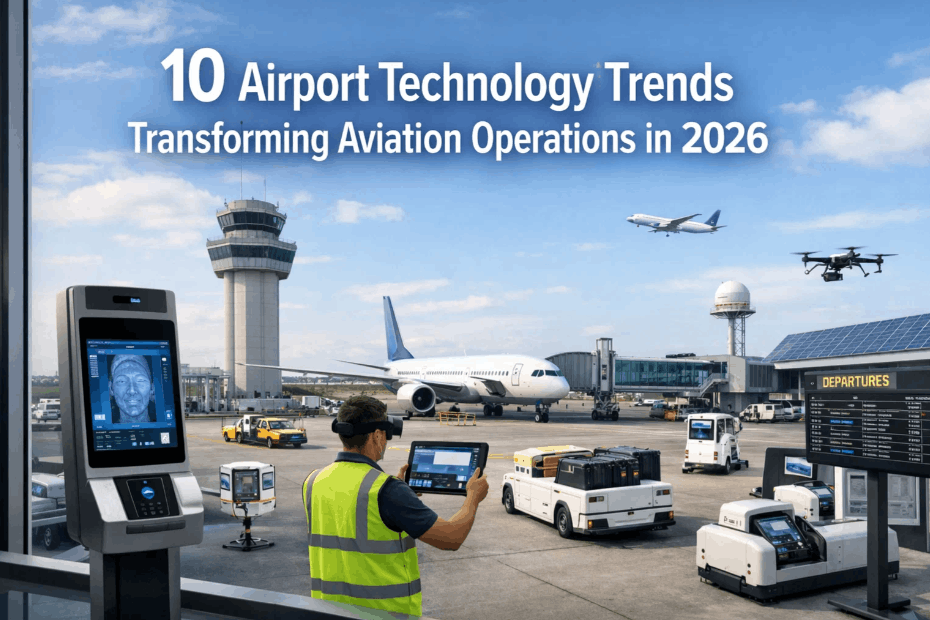
Airport technology trends in 2026 are redefining what it means to operate a modern aviation hub. From AI-driven predictive analytics and digital twin simulations to fully biometric passenger journeys and autonomous ground service equipment, the pace of airport digital transformation has accelerated beyond any previous decade. Airports that fail to adopt smart airport technology risk falling behind on operational efficiency, passenger satisfaction scores, regulatory compliance, and sustainability benchmarks — while their competitors unlock measurable gains across every terminal and tarmac. This guide breaks down the 10 most impactful airport innovation trends of 2026, with actionable insights for operations directors, technology planners, and aviation leadership teams evaluating their next wave of capital investment.
Modernize Your Airport Operations with AI-Powered Analytics
iFactory's AI-Powered Analytics Platform gives aviation operations teams real-time visibility, predictive maintenance intelligence, and digital twin capabilities — purpose-built for next-gen airport operations.
Why 2026 Is a Turning Point for Smart Airport Technology
The global aviation industry carried over 4.7 billion passengers in 2025, and that number keeps climbing. This surge puts compounding pressure on airport infrastructure — longer queues, higher equipment utilization, tighter compliance scrutiny, and passenger expectations for seamless contactless experiences. Airport automation trends have responded with a generational leap, moving from isolated point solutions toward integrated, AI-orchestrated ecosystems. In 2026, the airports leading in OTP performance, passenger satisfaction, and sustainability reporting are those that invested earliest in connected digital infrastructure — book a demo to see how iFactory fits your facility.
Airports deploying integrated AI-powered analytics platforms report 41% faster incident response, 33% reduction in ground equipment downtime, and a 28% improvement in on-time departure performance versus pre-digitalization baselines.
The 10 Airport Technology Trends Reshaping Aviation in 2026
These are not theoretical future-state scenarios — each of the following airport innovation trends is actively deployed at scale in major aviation facilities globally. Understanding which technologies are delivering the highest ROI is critical for airport leadership teams prioritizing capital allocation decisions in the current fiscal cycle. For airports actively evaluating analytics platforms, you can book a demo with iFactory to see how AI-powered operations intelligence translates to real performance gains.
AI-Driven Predictive Maintenance
IoT sensors monitor runway lighting, jet bridges, baggage conveyors, and HVAC units continuously — detecting failure signatures weeks before breakdown. Airports report 35–50% fewer unplanned stoppages, directly improving OTP and reducing costly delay cascades.
AI AnalyticsDigital Twin Airport Simulation
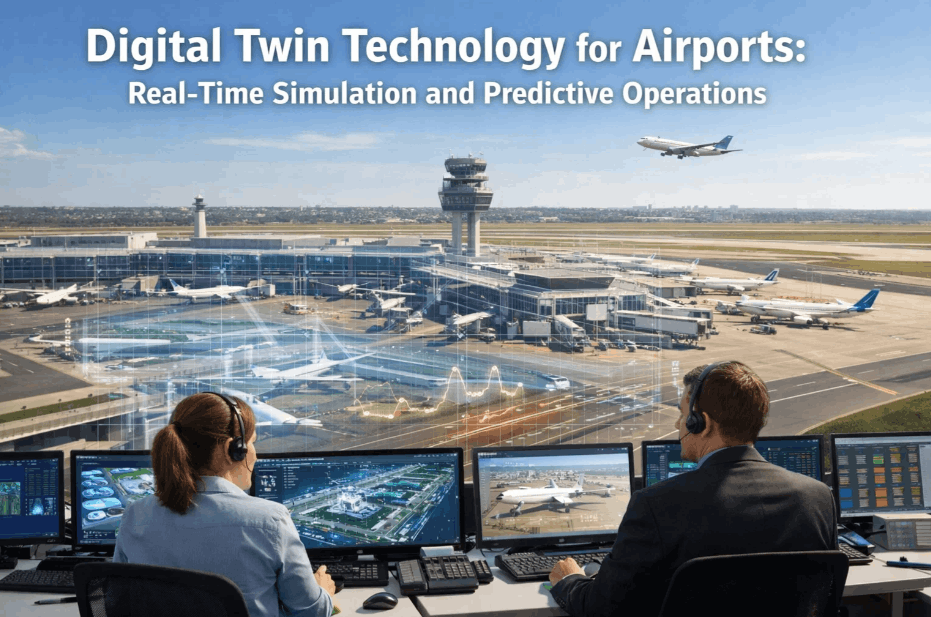
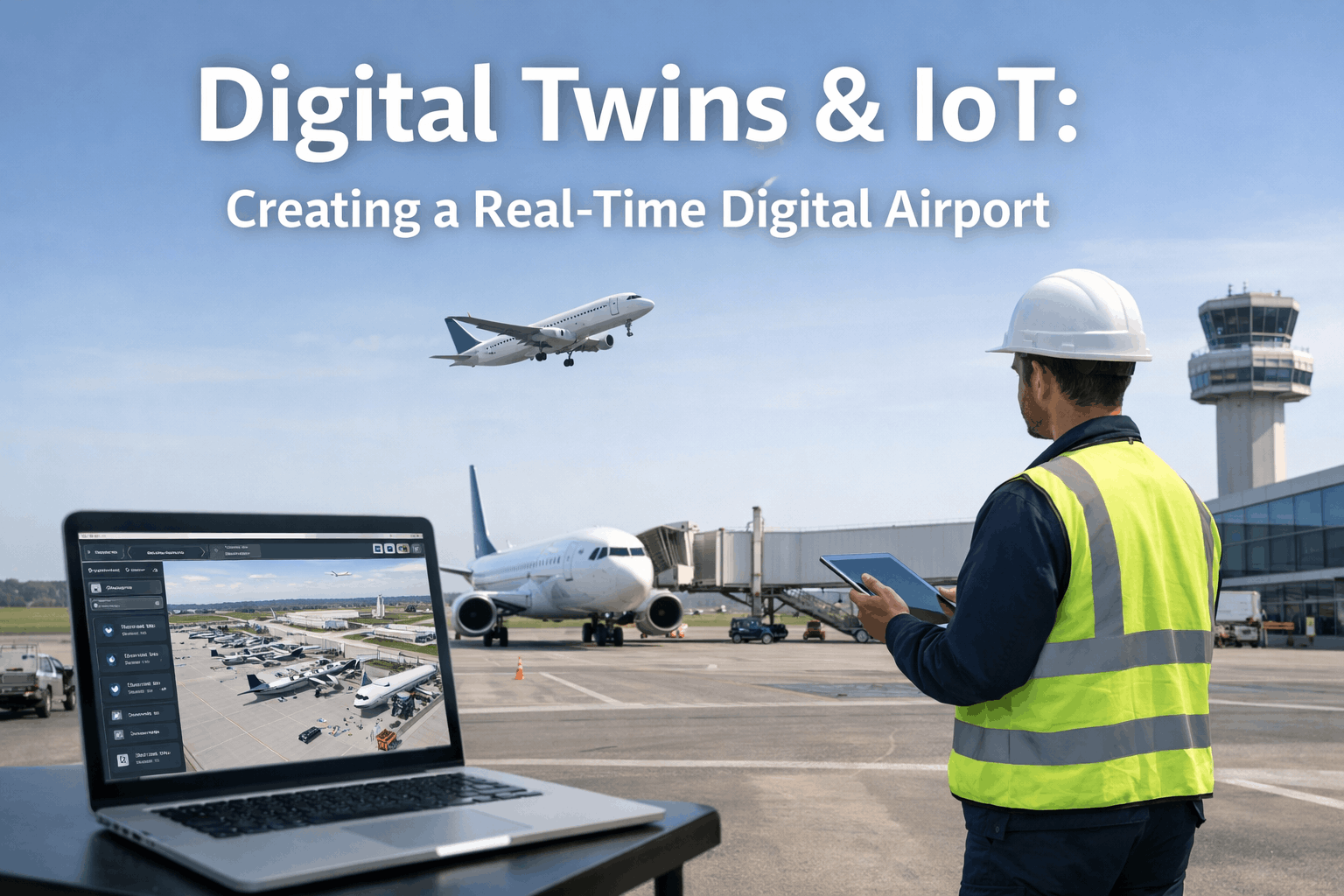
Live operational mirrors of physical airport infrastructure ingest ATC feeds, gate data, and ground handling APIs in real time. When a gate changes or weather compresses arrival windows, the digital twin instantly recalculates downstream impacts — enabling 41% faster incident response.
Digital TwinBiometric Airport Systems
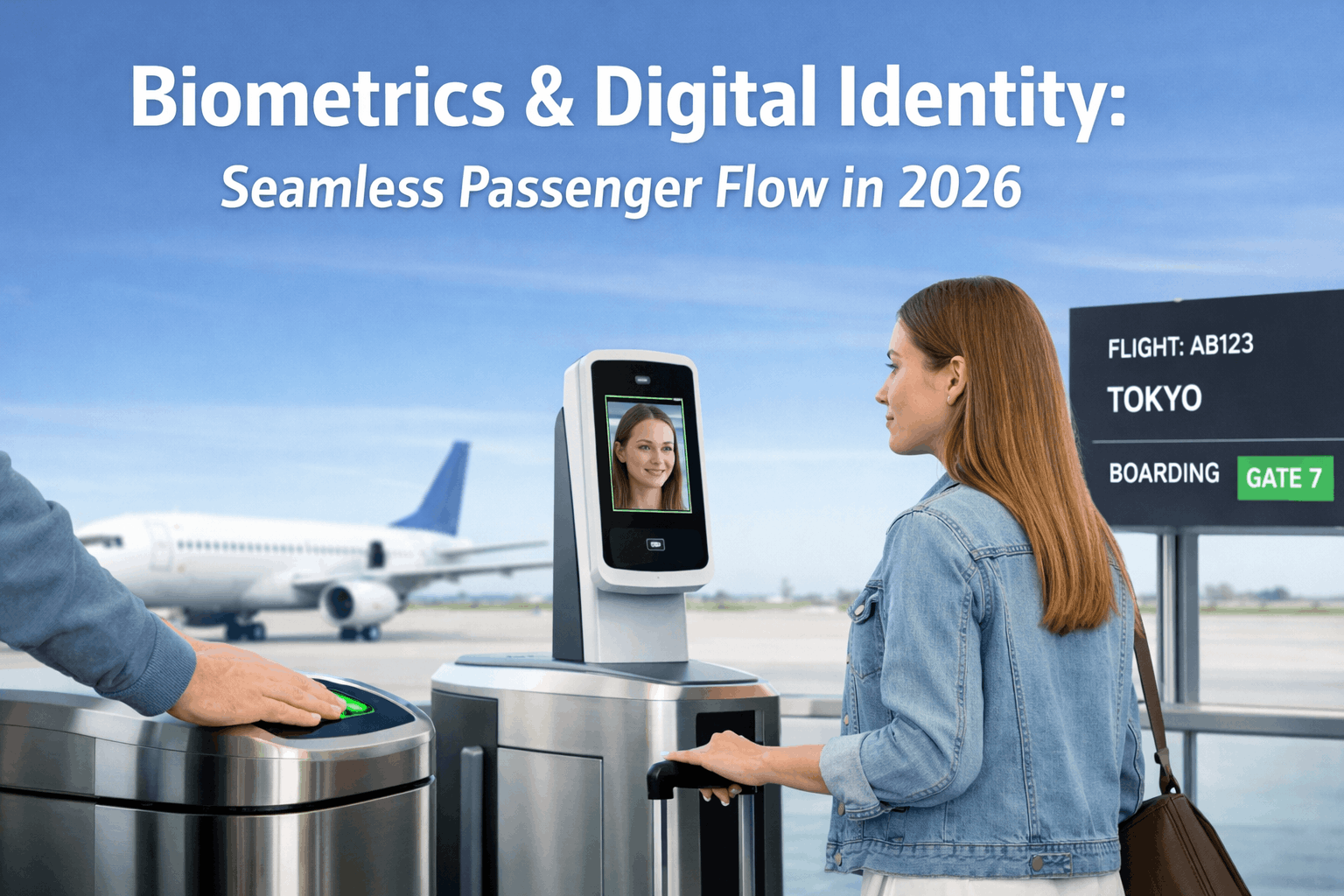
End-to-end facial recognition handles check-in, bag drop, security, and boarding without passengers presenting physical documents. Airports with full biometric corridors report 30–40% faster boarding and 22% shorter security queues during peak periods.
BiometricsAutonomous Ground Service Equipment (GSE)
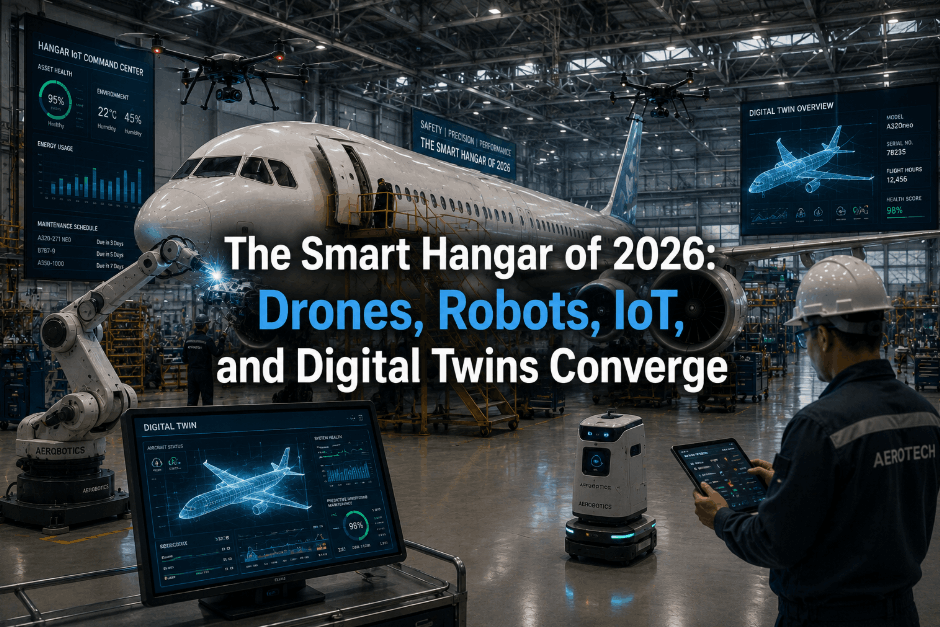
Self-driving baggage tractors, autonomous pushback vehicles, and robotic fueling systems use LiDAR and computer vision to navigate the apron safely. Autonomous GSE cuts turnaround times, reduces ramp incidents, and addresses persistent labor shortages without compromising safety standards.
RoboticsAirport IoT Technology and Asset Tracking
RFID, BLE, and UWB networks track ground equipment, tooling, and catering containers in real time. IoT-connected jet bridges and conveyor belts push live health data directly into AI analytics platforms — creating a 33% reduction in GSE downtime at leading facilities.
IoT SensorsAI-Powered Queue Management
Computer vision and flight schedule data predict security queue peaks 45–90 minutes in advance, enabling proactive lane decisions before congestion develops. Airports using AI queue management report 18–25% shorter wait times with no increase in staffing levels.
AI AnalyticsAirport OT Cybersecurity
As more systems connect — baggage PLCs, SCADA networks, ATC interfaces — the attack surface expands. AI-driven anomaly detection monitors OT networks governing physical infrastructure, catching intrusions before they escalate. ICAO and TSA guidance in 2026 has made OT security a compliance mandate.
CybersecuritySmart Energy Management and Sustainability
AI optimizes terminal HVAC, gate electrification, apron lighting, and ground power units dynamically based on occupancy and flight schedules. Leading airports achieve 20–30% energy reductions while automated Scope 1, 2, and 3 emissions reporting satisfies ICAO CORSIA and ESG requirements.
SustainabilityAdvanced AODB and Next-Gen Operations Centers
The Airport Operations Database now integrates with airline DCS, ATC, ground handlers, and predictive analytics to give controllers a unified real-time picture. AI decision support surfaces gate reassignments and resource moves with outcome modeling — helping teams respond in seconds, not minutes, during IROPS and weather events.
Operations IntelligenceCloud-Native Airport Platform Architecture
The foundational shift enabling all other trends is moving to cloud-native, API-first architecture. Siloed legacy systems are replaced by connected platforms that share data in real time, deploy new capabilities rapidly, and scale dynamically during peak periods. Aviation teams evaluating platforms can book a technical briefing with iFactory to assess integration fit.
Cloud ArchitectureHow AI-Powered Analytics Connects All 10 Airport Technology Trends
Each of the ten trends above generates data — and each performs significantly better when that data is analyzed alongside every other system. AI-Powered Analytics is the integration layer that transforms ten separate investments into a coherent, self-improving airport intelligence platform. iFactory provides pre-built connectors, a unified aviation data model, and an analytics engine trained on aviation-specific failure patterns — so airports activate AI insights across every operational domain without building custom pipelines. For a live demonstration, book a demo today.
| Technology Trend | Primary Benefit | Key Performance Metric | iFactory Coverage | Adoption Stage (2026) |
|---|---|---|---|---|
| AI Predictive Maintenance | Unplanned downtime elimination | 35–50% fewer stoppages | Native | Mainstream |
| Digital Twin Simulation | Operations scenario modeling | 41% faster incident response | Integrated | Early majority |
| Biometric Processing | Passenger throughput speed | 30–40% faster boarding | Data integration | Mainstream |
| Autonomous GSE | Ramp safety + turnaround time | 22% turnaround reduction | Fleet telemetry | Early majority |
| IoT Asset Tracking | Real-time equipment visibility | 33% GSE downtime reduction | Native | Mainstream |
| AI Queue Management | Passenger experience improvement | 18–25% wait time reduction | Analytics layer | Early majority |
| OT Cybersecurity | Infrastructure protection | Compliance + risk reduction | Integration support | Growing |
| Smart Energy Management | Sustainability + cost savings | 20–30% energy reduction | Native | Early majority |
| AODB / AOC Integration | Operational decision speed | Unified real-time ops picture | Full integration | Mainstream |
| Cloud-Native Architecture | Platform agility + scalability | Rapid capability deployment | Core platform | Mainstream |
Building the Business Case for Airport Digital Transformation
Airport leadership teams evaluating technology investment programs in 2026 face a common challenge: ROI from digital transformation is distributed across multiple departments, making it hard to construct a single business case for finance committees. The most effective frameworks unbundle value creation into four buckets — operational efficiency, passenger revenue, compliance risk, and sustainability — then aggregate the total impact. Book a demo to walk through an ROI model built around your facility's baseline.
Equipment Reliability ROI
Unplanned failures cost $8,000–$45,000 per incident. AI predictive maintenance eliminates 35–50% of these events — recovering $2–8M annually at mid-size airports in avoided disruption costs.
Concession Revenue Uplift
Faster biometric processing increases secure-zone dwell time before boarding. Airports report a 12–18% concession revenue uplift when checkpoint speeds improve by 20% or more.
Audit Readiness Value
Digital maintenance and inspection records cut FAA/EASA audit preparation time by 4–6x, reducing compliance labor costs by $150,000–$500,000 per year.
Energy and Carbon Savings
Smart energy platforms deliver 20–30% consumption reductions, translating to $1–5M in annual utility savings while satisfying ICAO CORSIA and ESG reporting mandates.
Implementation Roadmap: Activating Airport Technology Trends at Scale
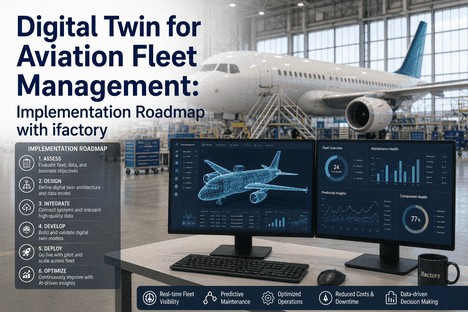
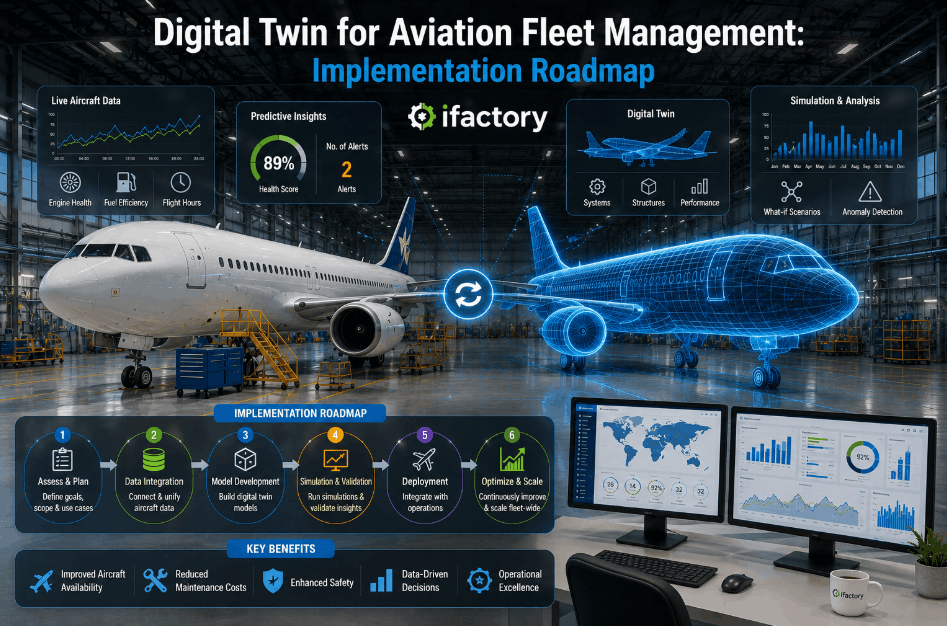
Airports that attempt to deploy all ten technology trends simultaneously typically encounter integration complexity, change management resistance, and budget overruns that delay value realization by 18–36 months. The most successful aviation digitalization programs follow a phased implementation sequence that prioritizes high-impact, fast-payback use cases in the early phases while building the platform foundation needed for more complex capabilities. For airports ready to begin their implementation planning, connect with iFactory's aviation team for a structured readiness assessment tailored to your facility's current technology baseline.
Data Foundation and IoT Infrastructure
Deploy IoT sensor networks across critical equipment, establish cloud data platform, integrate existing AODB and maintenance systems via API. Activate real-time equipment monitoring dashboards and baseline performance measurement. This phase creates the data foundation that all subsequent analytics capabilities depend on, and typically delivers immediate visibility value within 30 days of sensor activation.
AI Analytics and Predictive Maintenance Activation
Machine learning models trained on facility-specific equipment data. Predictive maintenance work order automation activated. AI queue analytics integrated with security checkpoint operations. Energy management AI connected to building management systems and smart metering infrastructure. Digital twin simulation environment commissioned and calibrated against live operational data streams.
Biometrics, Autonomous Systems, and Advanced Integration
Biometric identity corridor deployment across check-in, security, and boarding touchpoints. Autonomous GSE fleet integration with centralized dispatch and telemetry monitoring. OT cybersecurity monitoring layer activated across all connected industrial control systems. Full AODB integration with AI decision support activated in Airport Operations Center.
Continuous Optimization and Sustainability Reporting
AI models continuously refined against expanding operational data. Sustainability performance dashboard activated with automated ICAO carbon reporting. Cross-system optimization algorithms identify performance improvement opportunities across all connected domains simultaneously. Executive KPI dashboards deliver real-time airport performance intelligence to leadership teams across every operational domain.
Evaluating Airport Technology Vendors: Questions That Reveal the Difference
The airport technology vendor market has become increasingly crowded in 2026, with general-purpose IoT platforms, industrial AI vendors, and legacy airport systems providers all positioning their solutions as aviation-native. Asking the right evaluation questions separates purpose-built aviation analytics platforms from repurposed industrial tools. Teams in active vendor evaluation can book a demo with iFactory and bring these questions directly to a live product session.
AI and Analytics Depth
- Are models pre-trained on aviation failure patterns, or do they need 12–18 months of your data first?
- Can the platform ingest data from both IT systems (AODB, DCS) and OT systems (PLCs, SCADA) without custom middleware?
- Does it provide explainable AI — showing why a prediction was made, not just what it predicts?
- How does model accuracy improve as facility-specific data accumulates over time?
Integration Architecture
- Are AODB integrations pre-certified, or billed as custom development to the airport?
- Can new IoT sensors or ground handler APIs be onboarded without vendor professional services?
- How does the platform handle data sovereignty and GDPR/PDPA compliance across jurisdictions?
- Does the architecture scale during peak periods without overprovisioning on-premise infrastructure?
Operational Value Delivery
- What verified benchmarks has the vendor achieved at comparable airport facilities?
- How many weeks from contract signing to first live AI insights in the Operations Center?
- Does the implementation team include aviation domain experts, not just IT project managers?
- Who owns the cost of AI model updates as airport operations and equipment evolve?
See iFactory's Aviation AI Platform in Action
Purpose-built for airport operations — predictive maintenance analytics, digital twin integration, IoT asset tracking, and real-time compliance dashboards in a single connected platform. No custom development required.
Airport Technology Trends by Operational Domain
One of the most useful frameworks for evaluating airport innovation investments is mapping technology trends to the specific operational domains where they deliver the highest value. This domain-based view helps operations leaders build business cases aligned with departmental KPIs and helps technology teams prioritize integration sequencing. Book a demo to see how iFactory maps across your airport's operational domains.
- Biometric passenger processing corridors
- AI queue prediction and lane management
- Smart energy management for HVAC and lighting
- IoT-connected retail occupancy analytics
- Autonomous GSE fleet management
- IoT aircraft ground power unit monitoring
- AI jet bridge predictive maintenance
- Real-time FOD detection systems
- Integrated AODB with AI decision support
- Digital twin scenario planning environment
- Cross-system IROPS response automation
- Real-time OTP analytics and prediction
- Runway and taxiway lighting AI maintenance
- Building management system AI optimization
- OT cybersecurity monitoring across all systems
- Sustainability reporting automation
Frequently Asked Questions: Airport Technology Trends 2026
Conclusion: Choosing the Right Technology Foundation for Next-Gen Airport Operations
The ten trends shaping airport operations in 2026 are not independent investments — they compound in value when built on a unified AI-powered foundation. Airports that choose platforms with integration-first architecture will move faster and spend less than those stitching together point solutions. iFactory delivers the aviation-specific data model, pre-built integrations, and machine learning capabilities airports need to lead in the current era of digital transformation. Book a personalized demo to see how it fits your facility.
AI Analytics. Predictive Maintenance. Digital Twin. One Platform.
Pre-configured for airport operations — IoT integration, aviation-specific AI models, and real-time compliance dashboards. Live in weeks, not months.