-fleet-management-electrification,-tracking,-and-predictive-pm.png)
Modern airport aprons require absolute efficiency across complex vehicle pools. Implementing comprehensive ground support equipment analytics enables operations managers to transition from reactive spreadsheet tracking to purely predictive asset lifecycle management. Book a demo to discover how our AI driven GSE fleet management platform tracks electric tugs, belt loaders, fuel trucks, and pushback tractors to maximize fleet utilization, enforce battery management strategies, and ensure flawless ground handling operations.
What Is GSE Fleet Management AI and Why Do Airports Need It?
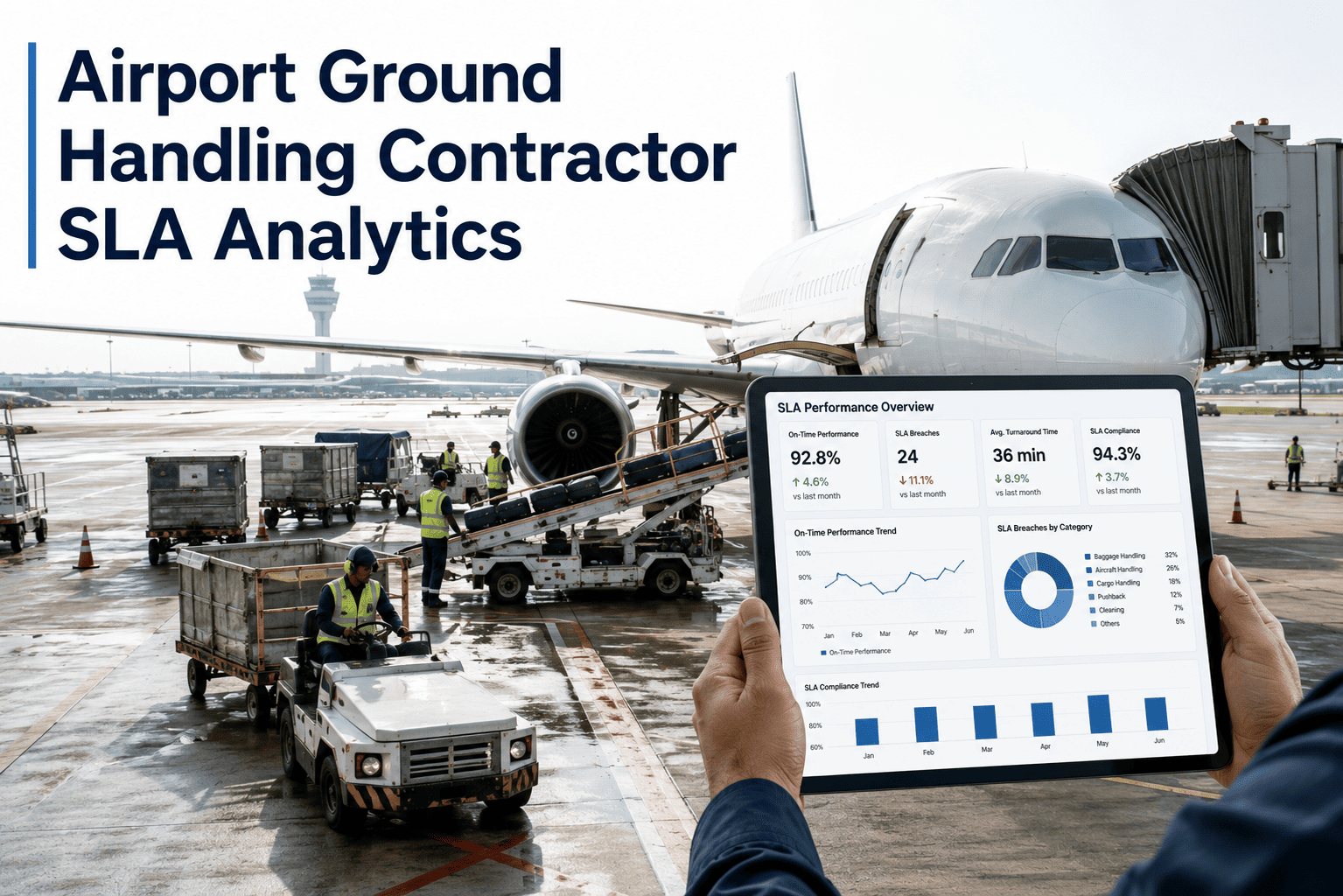
True GSE fleet management utilizes advanced telemetry to provide a continuous real-time replica of every vehicle operating on the tarmac. Unlike generic GPS trackers, this specialized ground support equipment analytics platform is purpose-built to ingest massive telemetry streams directly from electric airport equipment—from baggage carts to heavy pushback tractors.
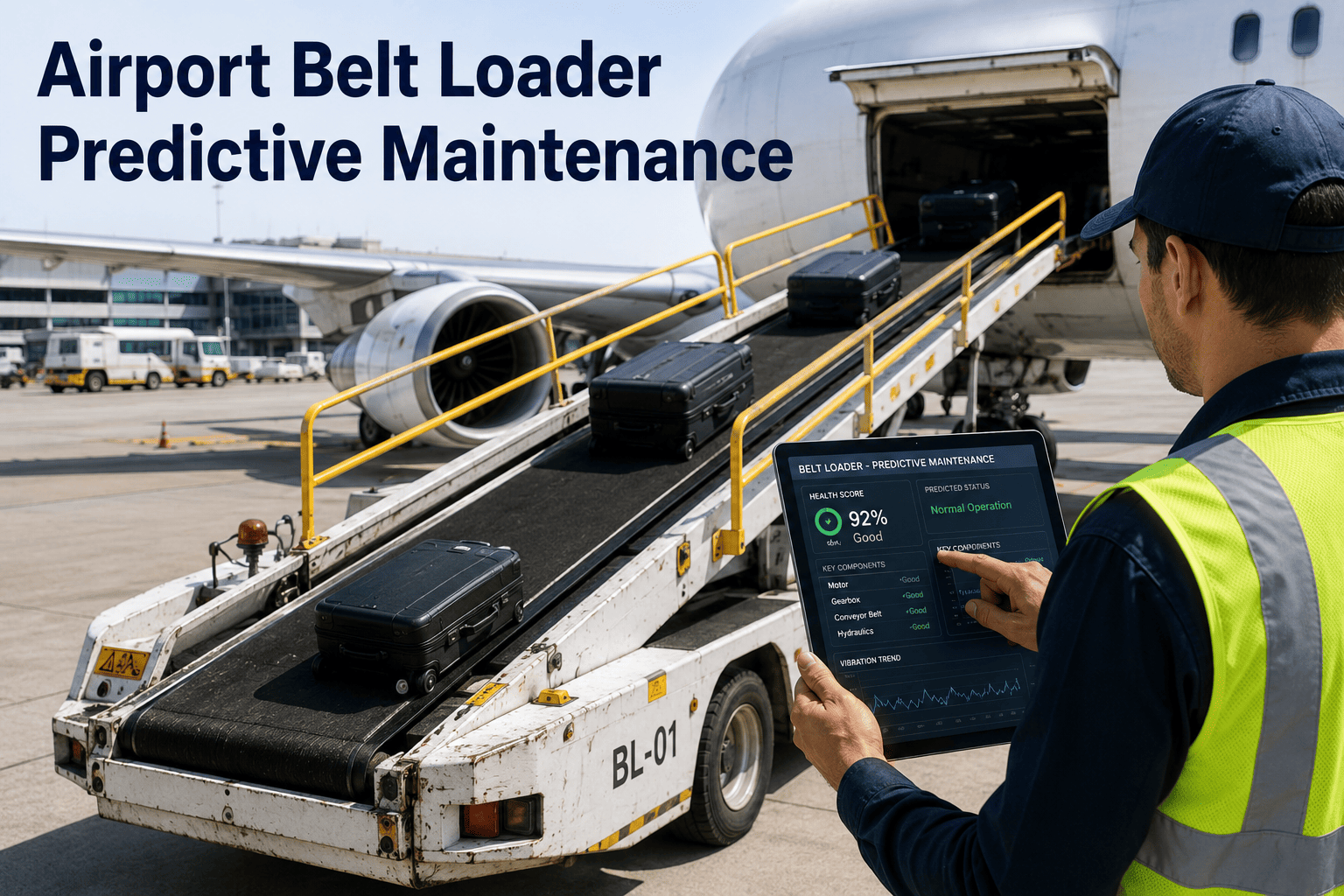
The core advantage is proactive insight. While legacy systems document maintenance after a belt loader analytics trigger indicates failure, an AI driven GSE predictive analytics engine actively monitors battery voltages, kinesthetic stress, and utilization cycles. It automatically maps this data to pending gate schedules to stop failures before they disrupt departures. Operations leaders who book a demo instantly see the compounding value of treating their motorized assets as a unified digital ecosystem.
The 6 Core Features Every GSE Fleet Management Platform Must Have
Handling the relentless data output on a massive apron requires an industrial-grade system. When assessing ground handling equipment AI driven tracking, these six architectural features distinguish robust fleet solutions from basic vehicle tracking dashboards. Book a demo to see these features in action.
Unifying the Tarmac: Overcoming Heterogeneous Equipment Fleets
Modern airports deploy a chaotic mix of diesel vehicles alongside modern electric machinery. An airport tug analytics module is useless if it cannot also correlate the diesel fuel truck schedules within the exact same software pane. Ground support equipment analytics brings this mixed-fleet chaos under a singular digital umbrella. Book a demo to centralize your operations today.
By centralizing data, operations leaders can view the big picture. When a rapid sequence of widebody gates opens, the GSE tracking AI driven logic identifies exactly where the necessary heavy tugs and loaders are currently pooled, eliminating dispatch confusion. Tarmac controllers who book a demo marvel at the sheer fluidity achieved when pooling optimization clicks into place.
Asset Diversity: Dominating the Ground Handling Roster
Managing airport vehicle fleet management means accounting for machines with vastly different functional mandates. A specialized pushback tractor requires vastly different predictive PM logic than a standard baggage cart. Without an intricately categorized database, diagnostic signals rapidly turn into meaningless background noise.
Our GSE predictive analytics matrix parses every vehicle exactly as intended. Supervisor dashboards segregate electric fleet demands from legacy fluid checks intuitively. To witness the platform filter through 1,000+ localized assets without lag, book a demo.
| Asset Category | Tarmac Density | Integration Metric | Primary KPI Target | Predictive Impact |
|---|---|---|---|---|
| Pushback Tractors | 10–40 units | Kinematic Stress Load | Zero Delay Block Release | Critical |
| Electric Baggage Tugs | 100–500 units | GSE Battery Management | Constant Pooling Optimization | Critical |
| Mobile Belt Loaders | 50–150 units | Hydraulic Tension Limits | Damage-Free Cargo Loading | High |
| Aviation Fuel Trucks | 20–50 large vehicles | Pump Vibration & Dispense Logs | Safety & Compliance Routing | Critical |
| Lavatory / Water Service | 10–30 units | Capacity Sensor Verification | Immediate Gate Clearances | High |
| Catering High-Loaders | 30–80 trucks | Lift Mechanism Precision | Safe Airframe Docking | Critical |
| Passenger Boarding Stairs | 40–120 units | Deployable Ramps Status | Passenger UX / Speed | Moderate |
| De-icing Vehicles | Seasonal Fleets | Fluid Utilization vs Ambient Temp | Winter Weather Resilience | High |
Offline Resiliency: Keeping Ground Handlers Mobile in Radio Deep-Zones
The complex physical infrastructure of modern terminals—packed with rebar, concrete overhangs, and deep baggage tunnels—creates massive RF dead zones. An airport vehicle fleet management system entirely dependent on cloud persistence fails instantly when an electric tug descends into the subterranean network. Book a demo to experience flawless offline resilience.
Our GSE tracking AI driven architecture secures critical data natively on the mobile device. Mechanics repairing a pushback tractor underneath concourse B maintain absolute access to service manuals, previous predictive PM logs, and part inventories. Once the tractor drives back into the 5G or Wi-Fi canopy, the decentralized app autonomously feeds the updated asset lifecycle management data back to the central server. Operations that adopt this tool consider it foundational to uninterrupted throughput.
Analog Scrambling vs. Predictive Scale: Changing the GSE Paradigm
Running ground support equipment operations utilizing whiteboards and localized radio chatter breeds chaos during weather delays. It actively punishes proactive electric GSE management. Upgrading from isolated dispatch offices to a hyper-connected GSE electrification strategy ensures equipment isn't just tracked—it is mathematically utilized. Book a demo to end terminal chaos and fleet bloat.
Transitioning out of reactive panic towards a unified intelligence platform dramatically flattens capital expenditure. Centralized airlines governing multiple hubs seamlessly compare the belt loader analytics in Chicago against identical electric tug metrics in London. A stark contrast emerges between antiquated legacy silos and dynamic global airport fleet tracking.
Translating Analytics into Turnaround Margins: The Engine of Efficiency
Raw GPS coordinates provide zero intrinsic value. When an electric tug generates thousands of positional and thermal data streams, airport vehicle fleet management relies heavily on AI to filter out the noise. Merging flight schedules directly against ground support equipment analytics bridges the massive gap between data and direct action.
This intelligence directly accelerates aircraft turnaround times. A thermal anomaly inside a baggage loader triggers an immediate directive. The AI bypasses a generic alert, isolates the exact failing linkage against historical precedents, validates replacement parts, and routes an offline-capable field engineer perfectly. To see these analytics applied live, Book a demo.
Executing the GSE Fleet Strategy: Seamless Implementations
Reforming an entire terminal's ground operation cannot be a dangerous "rip-and-replace" gamble. Our GSE predicting deployment phases integration gracefully, tapping into modern OBD and CAN bus layers without pulling physical vehicles off duty. The AI ingests the baseline airport tug analytics rapidly, comprehending your exact operational cadences.
The implementation leans heavily on unifying communication. Bridging the digital divide between FIDS (Flight Information Display Systems) and GSE dispatching guarantees that when predictive PM alerts trigger, the overarching operations structure is fully aligned. Transforming from analog reactionary scrambling to algorithmic perfection happens safely and decisively.
Tarmac Financial Defense: Rapid Asset Lifecycle ROI
Ground handler profitability collapses entirely during a multi-hour gate hold resulting from simple belt loader failure. The justification for investing in electric GSE management and AI predictive frameworks is heavily tilted toward incredible ROI. Ensuring pushback tractors engage seamlessly every time yields profound macroeconomic improvements, slashing unneeded capital fleet bloat permanently. Book a demo to unlock this ROI immediately.
Frequently Asked Questions: GSE Fleet & Predictive Analytics
No. Our integration hardware securely taps into standard industrial protocols mapping to extensive legacy fleet tracking systems, bringing older diesel loaders seamlessly into the exact same AI digital twin as your brand new electric airport equipment.
Fully certified and totally continuous. When the GSE tracking AI driven algorithm flags a delayed arrival, it dynamically re-pools pushback tractors and lavatory trucks, ensuring ground handling equipment isn't left idling and burning fuel pointlessly on the apron.
Absolutely. Strict GSE battery management metrics are heavily baked into the dashboard, plotting out exact charge cycles, thermal output limitations, and carbon deflection statistics needed to justify aggressive environmental ESG reporting protocols.
Our mobile architecture relies on dense local caching. Everything from pushback tractor PM service checklists to offline parts logs remain identically accessible inside concrete tunnels. Signatures and photo evidence log flawlessly, syncing instantaneously to the cloud upon resurfacing.
The system institutes a generalized baseline relying closely on enormous cloud historical aviation datasets. Within 72 hours of live edge telemetry polling spanning your specific airport vehicle fleet management geometry, the algorithm dials in to produce remarkably accurate pooling recommendations.