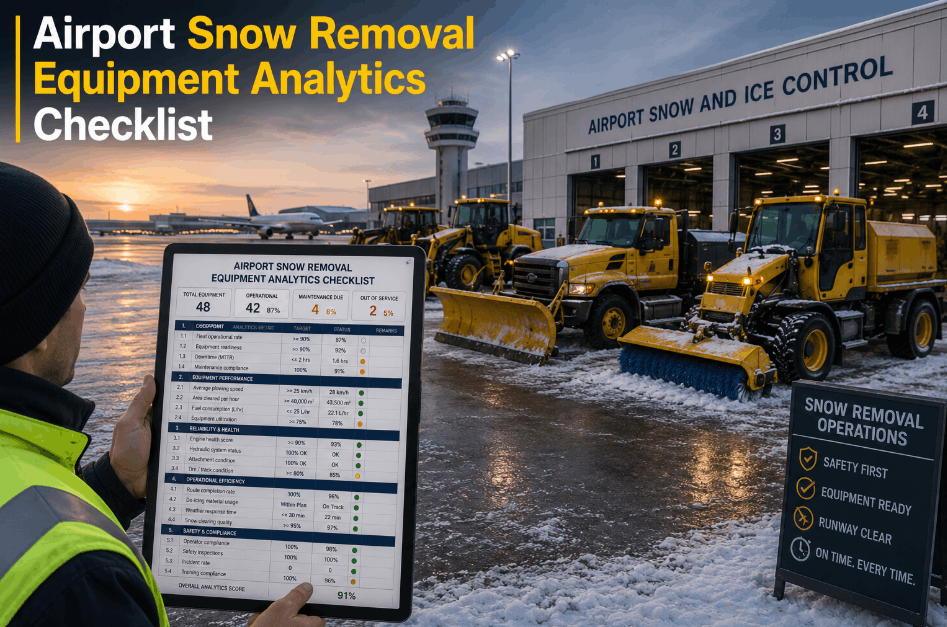
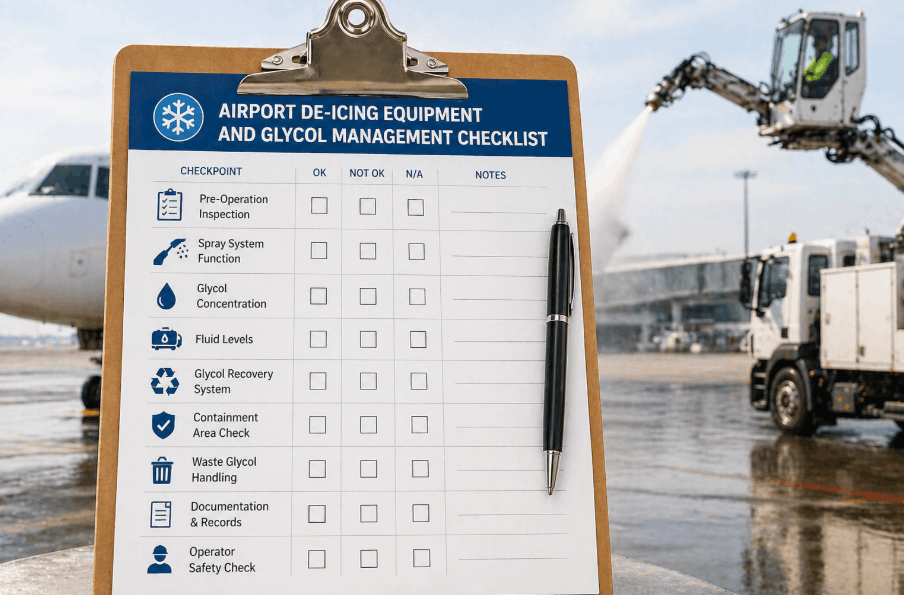
Airport snow removal equipment operates in the most demanding conditions in aviation infrastructure management — required to clear active runways, taxiways, and aprons within FAA-mandated response windows while sustaining maximum mechanical availability through the most severe weather events of the operating year. A comprehensive airport snow removal equipment maintenance checklist covering snowplow blade condition, sweeper broom systems, blower impeller readiness, de-icing truck calibration, and pre-season preparation protocols ensures your winter operations fleet meets FAA Advisory Circular 150/5200-30 runway condition reporting requirements when the season's first storm arrives. Book a Demo to see how digital preventive maintenance platforms replace paper-based snow equipment inspection logs with automated pre-season readiness tracking, real-time equipment availability dashboards, and audit-ready winter operations documentation across your entire ground equipment fleet.
SNOW EQUIPMENT MAINTENANCE
FAA WINTER OPS
AIRFIELD SAFETY
Digitize Airport Snow Equipment Maintenance — Automate Winter Operations Readiness Records
Track snowplow blade inspections, sweeper broom conditions, de-icing truck calibrations, blower system checks, and pre-season equipment readiness with audit-ready documentation for every vehicle in your airport winter operations fleet.
Why Structured Snow Equipment Maintenance Is Critical for Airport Winter Operations
Equipment Failures During Snow Events Directly Compromise Runway Safety
FAA Advisory Circular 150/5200-30 requires airports to maintain runway surface conditions within reporting thresholds that allow commercial aircraft to operate safely. Snow equipment mechanical failures during active snow events — hydraulic failures on plow blades, seized broom systems, or de-icing truck pump failures — extend runway closure periods, trigger TAF and PIREP adverse condition reports, and expose airport operators to liability when aircraft operations continue on uncleaned surfaces while equipment is unavailable for service.
Pre-Season Preparation Determines Entire Season Availability and Response Capacity
Snow removal equipment that has not received documented pre-season maintenance — hydraulic fluid changes, blade replacement, broom adjustment, and de-icing system calibration — enters the winter season with accumulated deferred maintenance that manifests as failures during the first storm event of the year when the equipment faces its initial high-demand operation after months of summer storage. Structured pre-season inspection documentation demonstrates readiness to FAA certification inspectors reviewing winter operations plans.
PREVENTIVE MAINTENANCE
DIGITAL INSPECTION
Ready to Digitize Snow Equipment Maintenance and Automate Winter Operations Readiness Records?
Automate pre-season equipment readiness checks, storm deployment inspections, de-icing calibration documentation, and post-season preservation records — with real-time fleet availability dashboards across your entire airport winter operations equipment fleet.
Airport Snow Removal Equipment Maintenance FAQs
1. Which FAA guidance governs airport snow removal equipment readiness requirements?
FAA Advisory Circular 150/5200-30 (Airport Field Condition Assessments and Winter Operations Safety) establishes the framework for airport winter operations programs, including equipment requirements for runway condition reporting. AC 150/5220-20 covers airport snow and ice control equipment standards. Airport operators are required to document equipment availability and operational status as part of their FAA-approved Snow and Ice Control Plan (SICP).
2. How frequently should airport snow removal equipment receive preventive maintenance?
Snow equipment maintenance programs typically include pre-season complete inspection before the first storm event of the season, post-storm condition checks after each significant snow event, scheduled monthly inspections during the active winter season, and annual post-season preservation treatment before summer storage. Equipment that has experienced any operational deficiency during a storm event requires inspection and corrective action before the next deployment.
3. What are the most common snow equipment failures during actual storm events?
The most frequent in-storm failures include hydraulic hose failures from cold-temperature brittleness on plow systems, broom drive belt or chain failures from deferred maintenance, de-icing pump seal failures from chemical corrosion accumulated during storage, battery failures after cold-soak during extended storm events, and radio failures from moisture intrusion — all preventable with documented pre-season inspection programs.
4. Are digital snow equipment maintenance records acceptable for FAA winter operations plan compliance?
Yes — FAA guidance for airport Snow and Ice Control Plans accepts digital maintenance records provided they include timestamped entries, equipment identifier references, technician identification, and corrective action documentation. Digital platforms that enforce pre-season checklist completion before equipment is certified as winter-ready provide stronger compliance documentation than paper logs, which frequently contain incomplete entries under the time pressure of pre-season preparation periods.
GET STARTED
DIGITIZE TODAY
Digitize Your Airport Snow Equipment Maintenance Program Today
Join airport winter operations programs that have automated FAA-compliant snow equipment maintenance documentation, improved pre-season readiness verification, and achieved higher fleet availability during critical storm events with structured digital inspection workflows across every vehicle in the winter operations fleet.



-pre-operation-inspection-checklist.png)