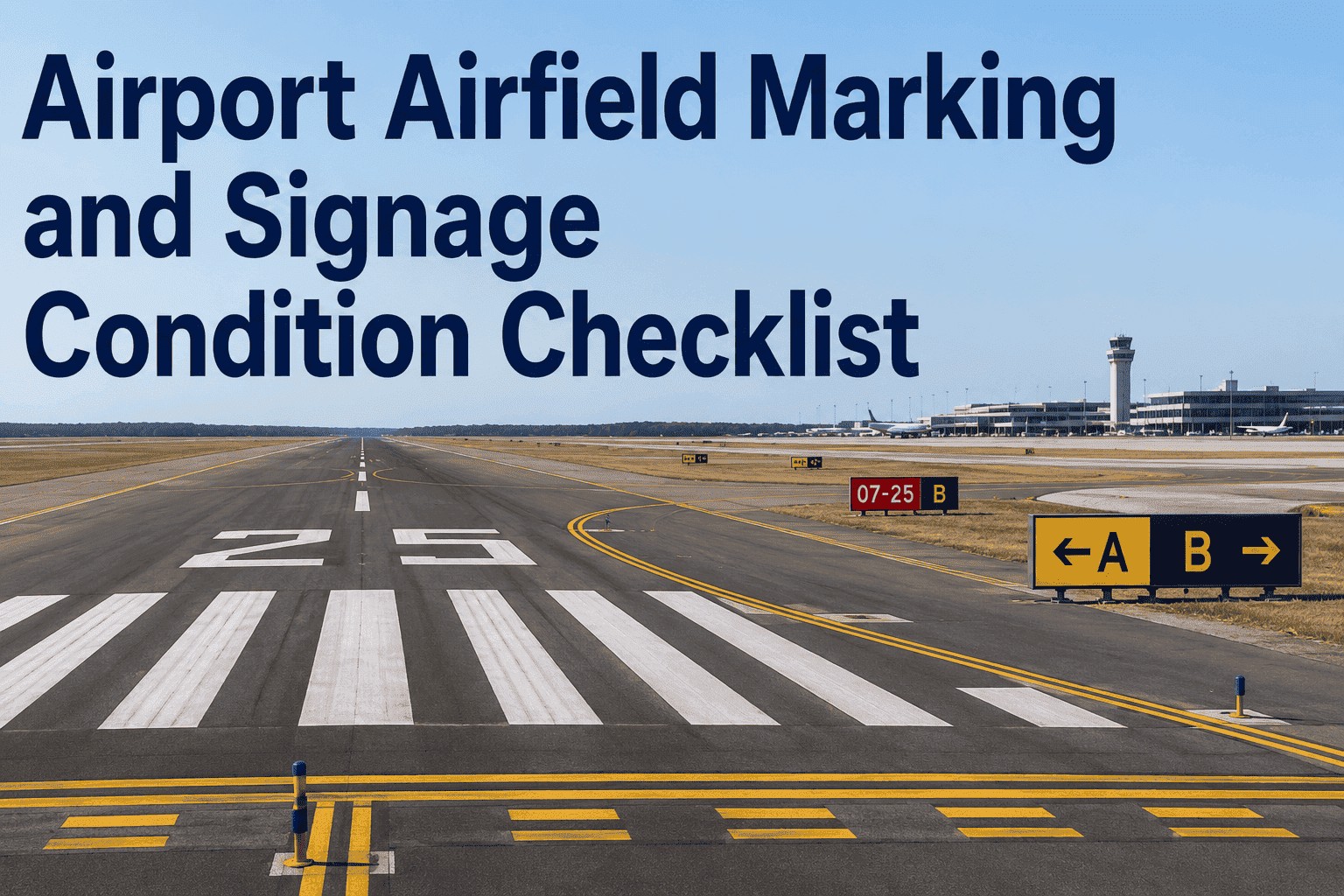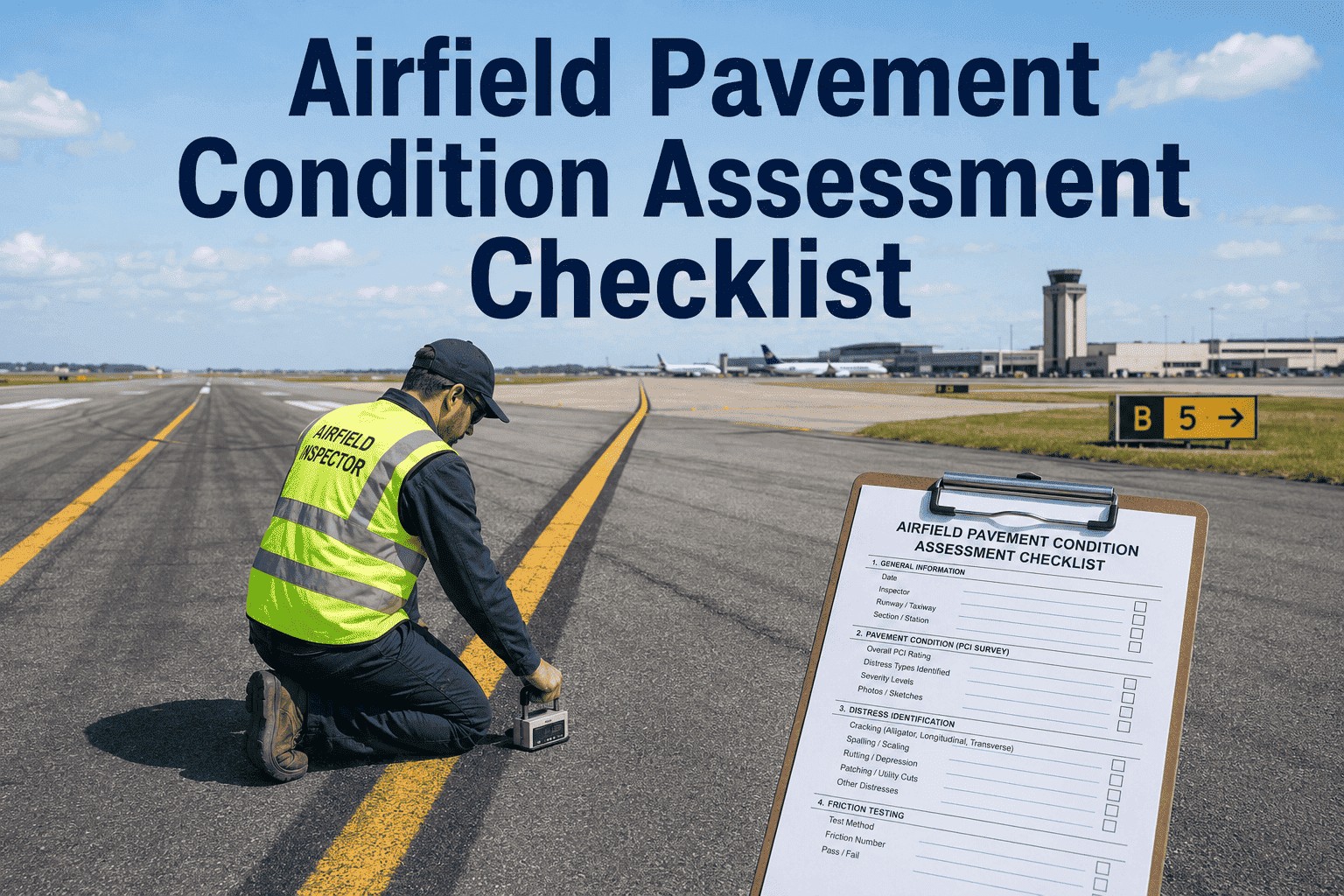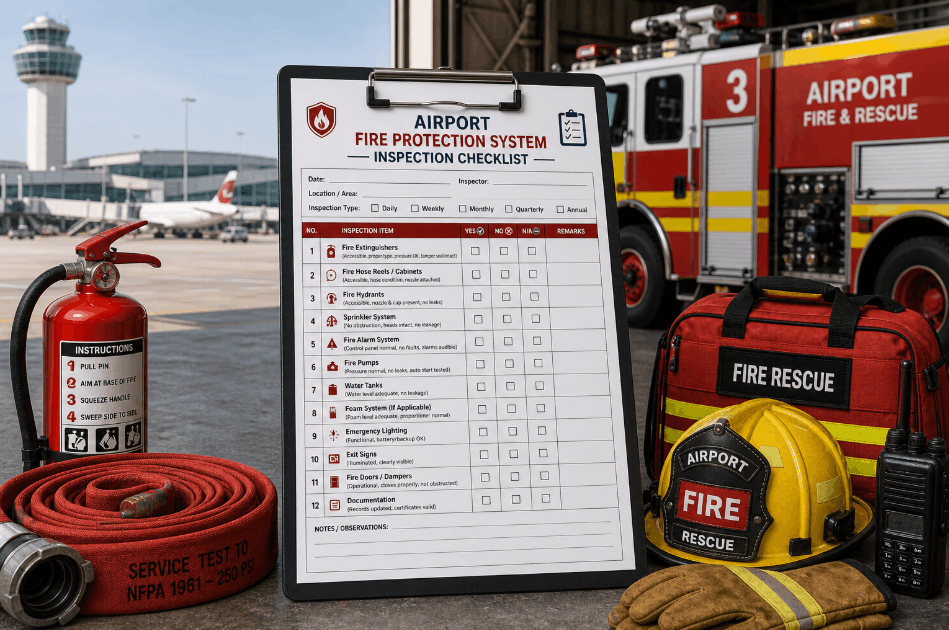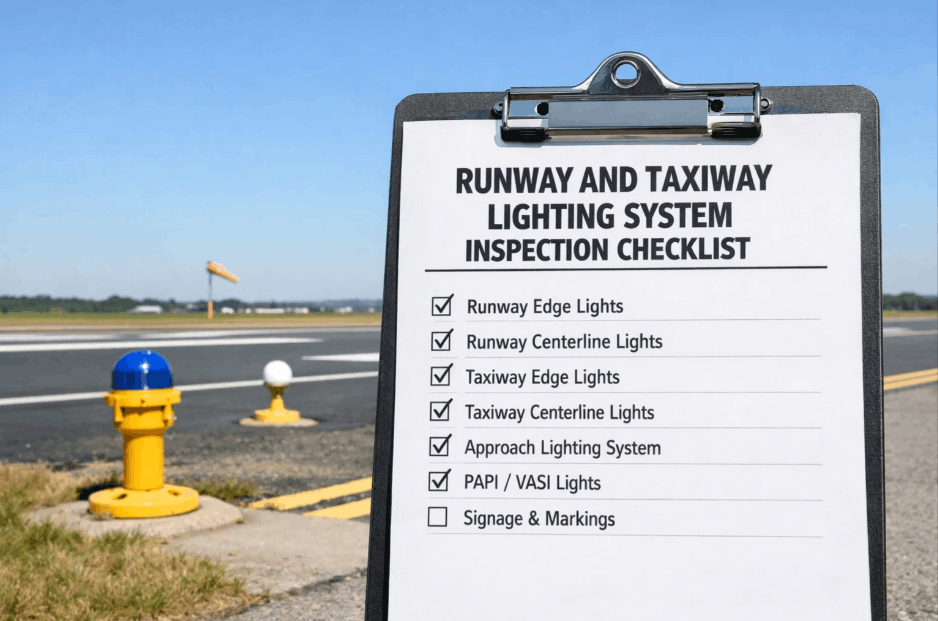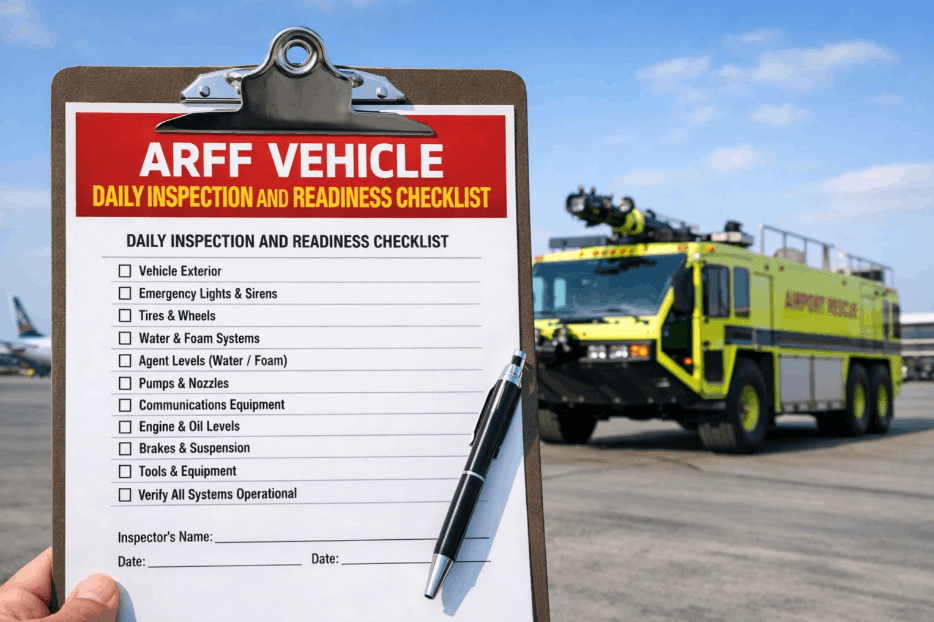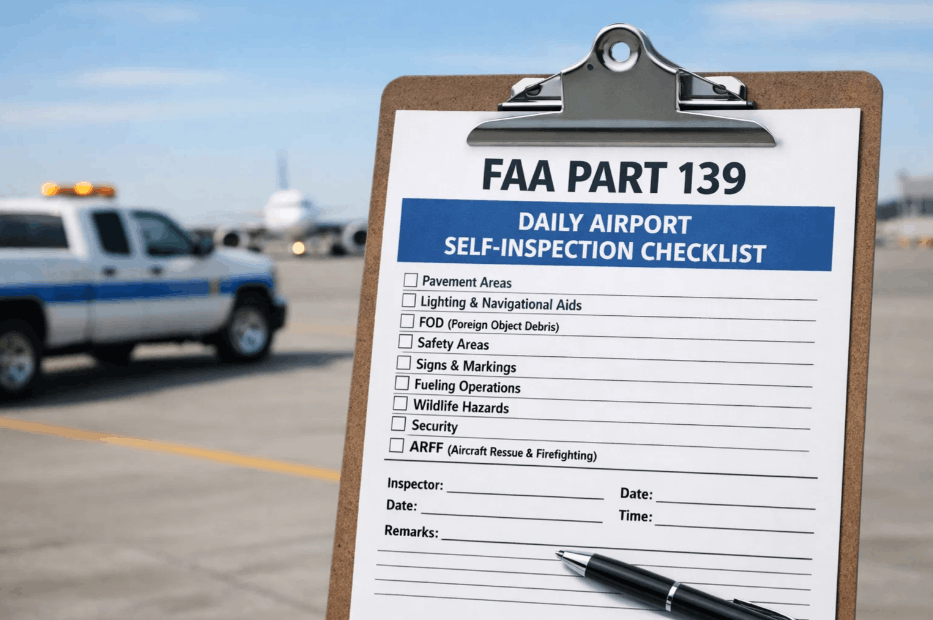
Airport operators certificated under FAA Part 139 must conduct daily self-inspections of all movement areas before the first aircraft operation and maintain written records of every finding and corrective action taken. A missed item during an FAA ramp check can trigger certificate suspension or operational curtailment. This checklist covers runways, taxiways, safety areas, lighting, signage, NOTAMs, and construction zones — mapped to AC 150/5200-18C and Part 139 regulations. Book a demo to see how iFactory automates daily inspection scheduling, discrepancy tracking, and FAA-compliant audit trails for airport operations teams.
Section 1: Runway Condition and Surface Inspection
Runway surface condition is the highest-priority element of every Part 139 daily inspection. Any defect, FOD, or marking deficiency must be identified and corrected — or addressed via NOTAM — before the first scheduled departure. Book a demo to learn how iFactory digitizes runway inspection records and flags overdue corrective actions automatically.
Walk or Drive the Full Runway Length and Inspect Surface Condition
Check for pavement cracking, spalling, heaving, and rutting. Document defect location and severity using centerline distance markings. Any defect affecting aircraft directional control must be addressed before the next operation.
Conduct FOD Sweep Across Entire Runway Width Including Shoulders
Inspect for rocks, hardware, wildlife remains, ice, and any debris capable of causing engine damage. Remove all FOD before clearing the runway for use and document the type, location, and probable ingress source.
Assess Runway Marking Visibility — Threshold, Centerline, Edge, and Designation Numbers
Verify all markings meet FAA contrast requirements. Markings faded below 70% reflectivity or obscured by rubber deposits must be documented and scheduled for repainting before the next operational period.
Inspect Runway End Safety Area (RESA) for Obstructions and Grading Failures
Check both RESA surfaces for ruts, debris, standing water, and unauthorized equipment. Any obstruction must be corrected or the runway operationally shortened with a NOTAM and appropriate threshold displacement markings.
Assess Runway Friction and Contamination Following Adverse Weather
Following precipitation, snow, or frost, assess surface friction per the RCAM and publish updated runway condition codes (RwyCC) on ATIS and NOTAM before the first arrival or departure on the affected runway.
Section 2: Taxiway and Apron Surface Inspection
Taxiway and apron surfaces deteriorate faster than runways due to vehicle traffic, jet blast, and utility access density. Any condition impairing aircraft ground movement must be documented and resolved before aircraft use. Schedule a demo to see how iFactory tracks taxiway discrepancies from finding to verified correction.
Inspect All Taxiway Centerline and Edge Markings for Continuity
Verify markings are continuous, high-contrast, and undamaged — especially on curves and complex intersections. Any gap that could cause a pilot to lose centerline reference must be scheduled for immediate repainting.
Verify Runway Holding Position Markings Are Intact at Every Intersection
Confirm all four-line holding position markings are complete, correctly oriented, and clearly visible. Degraded or missing markings are a documented runway incursion risk requiring same-day corrective action.
Inspect Taxiway and Apron Pavement for FOD and Surface Defects
Check all surfaces for spalling, joint seal failures, and utility access panel condition. Any panel with an edge deviation exceeding 0.5 inch must be flagged immediately as a potential nose gear hazard.
Check Apron Edge, Gate Lead-In, and Aircraft Parking Position Markings
Verify apron safety lines, gate lead-in lines, and parking position markings are visible and undamaged. Confirm no ground support equipment is positioned within aircraft wingtip clearance zones.
Section 3: Airfield Lighting System Inspection
Airfield lighting failures directly affect IFR minimums and low-visibility operations. All lighting discrepancies must be identified and either corrected or NOTAMed before any approach category operation that depends on that lighting system.
Test Runway Edge Lighting, Threshold Lights, and Runway End Identifier Lights
Activate all runway lighting circuits and verify every fixture is operational at all required intensity steps. Any outage affecting IFR minimums or the minimum required lighting configuration requires immediate NOTAM issuance.
Verify Taxiway Blue Edge Lights and Green Centerline Lights Are Operational
Check all taxiway lighting circuits for outages, displaced fixture bases, and obscured lenses. Outages on low-visibility taxiways must be NOTAMed and may require segment closure during night operations.
Inspect Approach Lighting System (ALS) Components for Outages
Verify all approach light bars and sequenced flashers are operational. Approach light outages directly affect published minimums and must be NOTAMed before the next IFR approach on the affected runway.
Check PAPI/VASI Alignment and Confirm Full Light Bar Operation
Inspect PAPI or VASI units for correct glide path alignment and clean lenses. Outages or alignment discrepancies must be reported to the FAA Flight Procedures Office and NOTAMed before the next instrument approach on the affected runway.
Section 4: Airfield Signage Inspection
Faded, damaged, or misaligned signs are a direct runway incursion risk factor identified in the FAA ASIAS runway safety program. All mandatory and directional signs must be legible, correctly positioned, and compliant with AC 150/5340-18. Talk to our team about how iFactory tracks sign inspection findings and generates compliance reports for FAA program reviews.
Inspect All Runway Holding Position Signs for Placement and Legibility
Verify every red-background holding position sign is present, correctly labeled, and structurally intact per AC 150/5340-18 clearance requirements. A missing or illegible sign at any intersection must be replaced before the runway returns to service.
Verify Taxiway Location and Direction Signs Are Correctly Labeled
Confirm location signs (yellow on black) and direction signs (black on yellow) are present, correctly designated, and visible from required approach distances. Signs referencing decommissioned taxiway designations must be corrected before aircraft movement resumes.
Confirm ILS Critical Area Boundary Signs Are Posted and Illuminated
Verify ILS critical area signs are posted at all applicable taxiway hold positions, legible, and illuminated during active ILS operations. Confirm vehicle and aircraft compliance with ILS hold short instructions when approaches are in progress.
Section 5: Safety Area and Obstacle Clearance Inspection
Runway and taxiway object free areas, obstacle free zones, and safety areas must be continuously free from any object, vegetation, or equipment not required for air navigation. Any encroachment must be removed immediately or the affected area operationally restricted.
Inspect Runway Object Free Area (ROFA) for Equipment and Vegetation Encroachments
Survey both sides of the runway ROFA for staging equipment, construction materials, and vegetation. Any object exceeding the allowable height must be removed or the runway closed pending removal, with GPS location and source documented.
Verify Runway Safety Area (RSA) Grading and ARFF Access Condition
Inspect RSA surfaces on all four sides for erosion, rutting, and standing water. Confirm surfaces can support ARFF vehicles without bogging. Any grading deficiency impairing emergency access must be corrected before the next operation.
Check Obstacle Clearance Surfaces for New Penetrations Including Vegetation
Review approach and transition surfaces for new construction or vegetation growth penetrating Part 77 imaginary surfaces. Any confirmed penetration must be field-surveyed and reported to the FAA Airports District Office immediately.
Confirm Wildlife Attractants Are Absent From Safety Areas and Approach Corridors
Inspect drainage ditches, open turf, and perimeter areas for standing water, seed-bearing vegetation, and rodent burrows. Log all wildlife observed and report any runway strike per the airport's FAA-approved wildlife hazard management plan.
Section 6: Construction Zone Inspection
Active construction adjacent to movement areas requires the most intensive Part 139 scrutiny. FAA AC 150/5370-2 requires inspection of all construction zones before each operational period. Book a demo to see how iFactory manages NOTAM coordination and construction zone compliance tracking in one integrated platform.
Verify All Construction Zone Barricades, Closure Markings, and Lighting Are in Place
Confirm barricades, taxiway closure X markings, and exclusion fencing are positioned per the approved CSPP. Any perimeter gap allowing aircraft or vehicle access to the restricted zone must be corrected before operations begin.
Confirm No Construction Equipment or Material Is Outside the Authorized Work Zone
Walk construction zone boundaries and verify no vehicles, fuel storage, or material stockpiles are outside the CSPP-approved area. Unauthorized overnight equipment positions are among the most common airfield safety area encroachments found during Part 139 inspections.
Verify Active NOTAMs Accurately Reflect Current Construction Closures
Compare all active construction NOTAMs against actual field conditions. Cancel any NOTAM describing a corrected condition and file new NOTAMs for any newly identified NOTAM-threshold deficiency before the first aircraft operation.
Inspect FOD Containment Measures at Construction Vehicle Exit Routes
Confirm vehicle wash-down stations and tire cleaning pads are functional. Inspect the first 300 feet of any vehicle exit for gravel or debris tracking onto movement areas and correct the ingress source at the contractor checkpoint.
Section 7: NOTAM Review and Coordination
NOTAM coordination must be completed before the first scheduled operation each day. Airport operators are responsible for ensuring all NOTAMs accurately reflect current field conditions found during the morning inspection — before aircraft arrive. Talk to our engineers about linking inspection findings directly to NOTAM coordination workflows in iFactory.
Review All Active Airport NOTAMs for Accuracy Before First Daily Operation
Pull the full active NOTAM list and compare each entry against current field conditions. Cancel any NOTAM describing a corrected condition and file new NOTAMs for any newly identified deficiency meeting issuance thresholds.
Issue NOTAMs for All New Lighting Outages, Marking Deficiencies, and Taxiway Closures
File NOTAMs for every new deficiency meeting FAA thresholds — approach lighting outages, runway edge light failures affecting instrument approaches, and taxiway closures — with correct airport identifier, ICAO indicator, and date/time information.
Coordinate With ATC to Confirm ATIS Reflects Current Field Conditions
Contact ATC and confirm ATIS content reflects all current closures, RwyCC values, and operational restrictions. Any post-ATIS field condition change requires immediate ATC notification before the next affected aircraft operation.
Confirm ARFF Staffing Meets Minimum Index Requirements for Scheduled Operations
Verify ARFF personnel are on duty and meet the required Index level before the first air carrier arrival. Any staffing deficiency dropping below the required Index must be NOTAMed and air carrier operators notified before operations commence.
Frequently Asked Questions
FAA Part 139.327 requires at minimum one complete inspection daily before the first air carrier operation. Airports with adverse weather events or active construction are expected to conduct additional inspections as conditions warrant. Many ACMs specify pre-dawn, mid-day, and pre-dusk inspection requirements for high-traffic airports.
Inspections must be conducted by airport operations personnel trained per the airport's ACM and familiar with all applicable FAA Advisory Circulars. Most Part 139 airports require an Airport Certified Employee — Operations (ACE-O) credential or equivalent internal certification covering all inspection categories and NOTAM filing protocols.
FAA Part 139.301 requires a minimum of 12 consecutive calendar months. FAA program guidance and most ACMs recommend retaining records for at least three years to support certification renewals, insurance audits, and incident investigations. Digital CMMS records provide the most defensible audit trail with timestamped, GPS-tagged findings.
Deficiencies affecting aircraft safety — FOD on a runway, a missing holding position sign, or a failed approach light bar — must be corrected before that area reopens, or a restricting NOTAM must be issued. Less critical deficiencies must be documented, assigned, and tracked to verified closure within the ACM-specified timeframe.
A CMMS automates daily inspection work order generation, routes assignments to qualified personnel, captures findings with photo documentation and GPS coordinates, tracks discrepancies to verified closure, and generates the complete inspection history FAA Program Managers review during certification renewals — eliminating documentation gaps that trigger enforcement action.