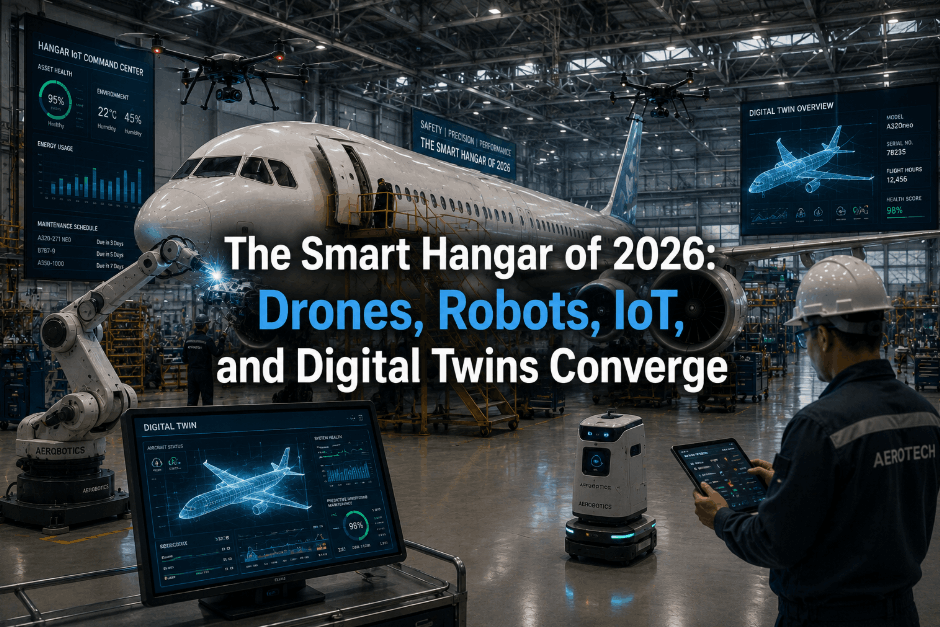
The aviation hangar, once a purely physical space of mechanical labor and manual record-keeping, is undergoing its most significant evolution since the dawn of the jet age. By 2026, the leading MRO facilities have transitioned into "Smart Hangars"—intelligent ecosystems where autonomous drones, industrial robotics, high-density IoT sensor networks, and real-time digital twins converge to eliminate operational friction. This transformation is driven by a global "MRO Capacity Crunch," where the demand for maintenance slots outpaces available hangar space and skilled labor. In this high-pressure environment, iFactory's Smart Hangar platform provides the connective tissue for disparate technologies, unifying raw sensor data into a single, actionable intelligence layer that turns static infrastructure into a high-speed production line. Book a Demo to see how iFactory unifies your hangar's digital and physical assets.
The Convergence of Industry 5.0 in Aviation MRO
Beyond Automation: Building a Collaborative Intelligence Environment
The Smart Hangar of 2026 is defined not just by the presence of robots, but by the seamless communication between them. Industry 5.0 introduces the concept of human-centric automation, where robotic systems handle the fatigue-intensive, repetitive tasks (such as fuselage cleaning, chemical stripping, or structural drilling), while AI-driven drones execute precision inspections at heights and angles that would normally require complex scaffolding. This shift allows human technicians to move from manual labor to "System Orchestration," focusing on high-value troubleshooting and quality assurance while the automated systems maintain the operational tempo.
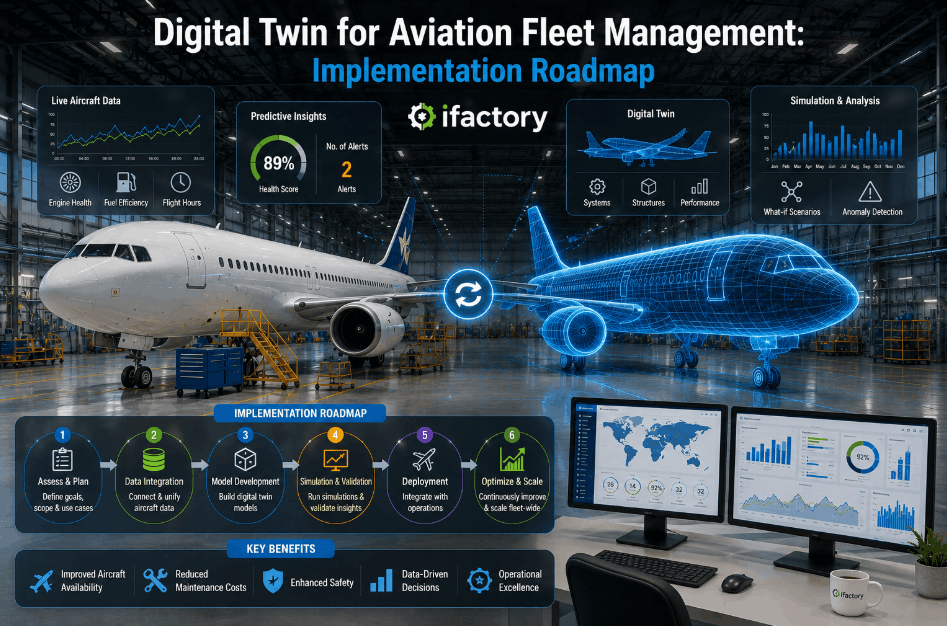
All these activities are mirrored in a 1:1 Digital Twin of the hangar, a real-time 3D simulation that updates every millisecond based on IoT sensor data. This twin allows managers to "play back" maintenance events for audit compliance, simulate future aircraft layouts to maximize floor utilization, and predict bottlenecks before they ground a tail number. The result is a hangar environment that is safer, faster, and significantly more predictable than legacy facilities, providing a massive competitive advantage in the global MRO market.
The 5 Pillars of the 2026 Smart Hangar
Core Technologies Powering the Future of Maintenance Facilities
A true Smart Hangar requires more than a few gadgets; it requires a foundational architecture that supports data-intensive operations at scale. iFactory structures this transformation across five critical pillars of connectivity and automation, ensuring that every sensor and robot contributes to the facility's overall intelligence score.
AI-Driven Predictive Resource Allocation
Optimizing Staff and Tooling Cycles Before the Aircraft Arrives
The bottleneck in most hangars is not the lack of tools, but the lack of "Ready Tools" at the right gate. iFactory's AI engine analyzes upcoming maintenance schedules and historical component failure rates to predict exactly which specialized tools, calibration equipment, and technician skill sets will be required for each tail number. The system automatically triggers calibration cycles for tools 14 days before they are needed and reserves bay-side equipment to ensure that when the aircraft enters the hangar, every required asset is already staged and verified.
This predictive layer extends to workforce management. By correlating aircraft age, route history, and environmental exposure, the AI predicts the likely "Scope Creep" of a heavy check—identifying which airframes are likely to require extensive structural repair vs. standard component swaps. This allows hangar managers to adjust staffing levels dynamically, ensuring that specialized sheet metal or composite technicians are allocated to the projects where they will have the most impact on TAT.
Smart Hangar Maturity: A Risk-Adjusted Implementation
Sequencing High-Tech Infrastructure Adoption for Maximum ROI
Building a smart hangar is an iterative process. Most facilities begin with connectivity and tracking before moving into full-scale automation and digital twin integration. This roadmap ensures that each technology wave builds upon the data infrastructure established in the previous phase, minimizing operational risk and maximizing capital efficiency. iFactory guides your team through this transition, ensuring that legacy systems are integrated rather than replaced, protecting your existing capital investments.
Smart Hangar ESG Impact: Sustainability Through Precision
Reducing Energy, Waste, and Carbon in Heavy Maintenance Operations
The Smart Hangar is also a Green Hangar. By using robotic systems for chemical application and painting, MROs can reduce material waste by 30-40% through precise, non-overspray application. Furthermore, the Digital Twin optimizes hangar lighting, HVAC, and power consumption based on the actual occupancy and maintenance activity of each bay, significantly lowering the facility's Scope 2 emissions. iFactory's ESG reporting module automatically captures these savings, providing audit-ready data for corporate sustainability disclosures.
Additionally, by compressing turnaround times and improving first-time fix rates, the Smart Hangar reduces the total energy required per maintenance event. Predictive asset tracking also ensures that GSE and tugs are only moved when necessary, lowering ramp-side emissions and reducing the wear-and-tear on your electric GSE fleet. In 2026, sustainability is not a side project—it is an embedded feature of a well-engineered maintenance operation.
The Productivity Gap: Legacy vs. Smart Hangar Operations
Quantifying the Competitive Advantage of iFactory Integration
The difference between a legacy hangar and a Smart Hangar is measured in hours, error rates, and capital utilization. MROs that fail to modernize find themselves unable to compete on TAT with facilities that have integrated autonomous inspection and real-time asset visibility. iFactory provides the intelligence bridge that turns a standard facility into a high-performance MRO hub, providing a 10x ROI over the first 24 months of operation.
| Hangar Operational Metric | Legacy Facility (Manual) | iFactory Smart Hangar | Improvement Factor |
|---|---|---|---|
| Surface Inspection Time | 3–5 Days (Manual Staging) | 4–6 Hours (Autonomous Drone) | 10–12× Speed Increase |
| Tool/Asset Searching | 15–20% of Labor Hours | <1% (UWB Real-Time Tracking) | Significant Labor Recovery |
| Maintenance Record-Keeping | Paper-Based / Manual Entry | Automated Digital Logbook Sync | Instant Audit Readiness |
| Hangar Slot Optimization | Reactive / Spreadsheet-Based | Digital Twin Predictive Simulation | 30% Utilization Gain |
| Drilling & Fastening Error | Variable (Human Fatigue) | Sub-Millimeter (Robotic Precision) | Eliminated Rework Costs |
| Energy Consumption | Static Hangar Lighting/HVAC | AI-Dynamic Power Management | 25% Lower Utility Cost |
| Material Waste (Paint/Chem) | 15-25% Manual Overspray | <3% Robotic Precision | 35% Reduction in Waste |
Risk Factors in Smart Hangar Implementation
Common Bottlenecks and How iFactory AI Prevents Them
Frequently Asked Questions
Does the Smart Hangar replace human maintenance technicians?
No. The Smart Hangar follows the Industry 5.0 philosophy of "Augmented Intelligence." Robots and drones handle repetitive, high-risk, or fatigue-prone tasks, allowing human technicians to focus on complex troubleshooting, engineering decision-making, and high-level quality assurance where human judgment is irreplaceable. We aim to make technicians 3x more productive, not replace them.
What is the biggest technical challenge in smart hangar implementation?
Data Silos. Most hangars have tools, drones, and software that don't talk to each other. iFactory's Smart Hangar platform solves this by acting as the unified integration layer, translating various protocols into a single, standardized data stream for the Digital Twin. We integrate with existing SAP, AMOS, and Trax systems seamlessly.
How does automated drone inspection comply with aviation regulations?
Our drone systems are designed to supplement, not bypass, regulatory inspections. The high-resolution imagery and AI analysis provide a "digital second set of eyes" that actually improves auditability by providing a permanent, timestamped visual record of every square inch of the airframe, which regulators increasingly favor for compliance audits.
Can a Smart Hangar be retrofitted into an existing legacy facility?
Yes. Most iFactory implementations are retrofits. By deploying low-power IoT networks and mobile robotic cells, we can modernize a legacy hangar without the need for major structural construction. We focus on the "Intelligence Layer" of the operation, digitizing existing processes through the iFactory platform.
What is the typical ROI timeline for a smart hangar project?
Facilities usually see measurable ROI within 9–12 months. Initial savings come from reduced tool-searching time and compressed inspection windows, followed by long-term gains in hangar floor utilization, reduced rework costs from robotic precision, and significant energy savings in facility management.
How does the Digital Twin handle multiple concurrent aircraft?
The Digital Twin is a dynamic environment. It tracks the 3D footprint, power requirements, and maintenance status of every aircraft in the hangar simultaneously, alerting managers to potential GSE path conflicts or logistical bottlenecks across multiple tail numbers. It acts as a 4D air traffic control for the maintenance floor.