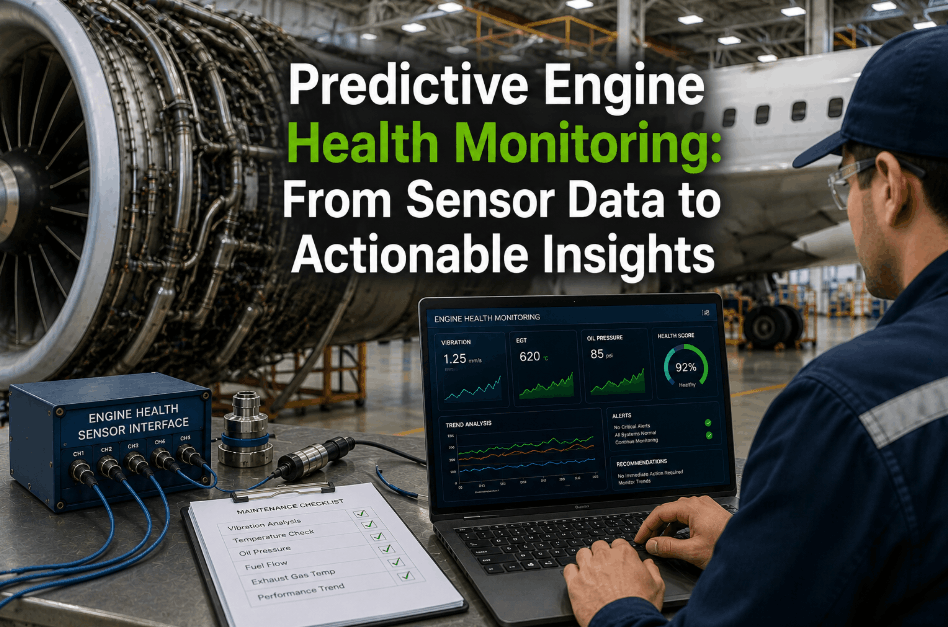
In the 2026 aviation environment, the aircraft engine is no longer just a mechanical propulsion unit; it is the most data-dense asset in the fleet, generating over 1,000 parameters per second during peak operation. The historical reliance on "Time-on-Wing" (ToW) maintenance schedules is rapidly being replaced by "Health-on-Wing" (HoW) strategies, where every maintenance intervention is driven by the actual mechanical condition of the turbine. ifactory's Predictive Engine Health Monitoring (EHM) platform integrates raw sensor data from IoT nodes, ACARS streams, and Flight Data Recorders (FDR) into a unified intelligence engine. By transforming these millions of data points into actionable insights, aviation operators can extend engine life cycles by 25% and identify failure signatures weeks before they result in an unscheduled grounding. To see how ifactory's IoT engine health dashboard stabilizes your propulsion assets, Book a Demo with our engine analytics engineering team today.
Unlock Your Engine's Potential with Real-Time Health Intelligence
ifactory's engine intelligence platform connects your ACARS data, vibration sensors, and maintenance records into a unified analytics engine — detecting turbine degradation signals before they become AOG events.
The Direct Link Between Sensor Density and Engine Reliability
The transition from reactive to predictive engine maintenance is entirely dependent on the resolution of the sensor data ingested. Traditional engine monitoring often relies on "snapshot" data — single data points taken during takeoff or cruise. ifactory eliminates this visibility gap by capturing high-frequency, continuous telemetry throughout the entire flight envelope. By analyzing the relationship between Exhaust Gas Temperature (EGT), fuel flow, and vibration harmonics in real-time, the platform identifies the subtle "thermal and mechanical drifts" that indicate the early stages of compressor stall, blade creep, or bearing wear. This is not just data collection; it is a systematic 100% reduction in the "information lag" that causes unpredicted engine failures.
Fleet operators who continue to rely on manual data downloads and periodic analysis are effectively flying blind between inspections. By the time a mechanical fault is visible to a human analyst through standard reports, the opportunity for a low-cost, scheduled intervention has often passed. Real-time engine health systems that utilize advanced AI-driven clustering algorithms close this gap entirely, surfacing anomalies within minutes of their occurrence. If your maintenance team is still reviewing engine data in batches, your reliability program has a structural blind spot — and booking a demo with a modern engine analytics platform is the fastest way to stabilize your fleet availability.
Five Pillars of the ifactory Predictive Engine Analytics Engine
Automated EGT Margin Trend Analysis
The Exhaust Gas Temperature (EGT) margin is the primary indicator of an engine's internal health and efficiency. ifactory's analytics engine automatically normalizes EGT data against ambient temperature, altitude, and thrust settings to provide a "clean" health score. When the EGT margin begins to drift outside validated patterns, the system flags the engine for wash or inspection, preventing the catastrophic thermal degradation that leads to premature overhaul events and millions in lost capital.
High-Resolution Vibration Harmonic Fingerprinting
Mechanical imbalances in the N1 and N2 shafts are the earliest precursors to bearing and blade failure. Our IoT dashboard utilizes Fourier Transform algorithms to analyze vibration signatures across the entire frequency spectrum. By identifying "harmonic spikes" that deviate from the engine's unique baseline, ifactory can predict bearing wear or blade fatigue with 95% accuracy, allowing for targeted inspections during scheduled ground time rather than emergency gate responses.
Fuel Flow and Burn Variance Detection
Unexplained increases in fuel burn are often the result of internal aerodynamic degradation or fuel metering malfunctions. ifactory correlates fuel flow with engine speed and thrust output to detect "burn variance" anomalies. This provides double value: it serves as a diagnostic tool for engine health while simultaneously identifying the fuel-efficiency gaps that account for up to 3% of an airline's total operating costs.
Oil System Health and Debris Monitoring
Oil pressure fluctuations and temperature spikes are critical "near-fail" indicators for the engine's internal rotating components. Our dashboard integrates data from chip detectors and oil sensors to provide a real-time picture of lubrication health. Automated trend analysis identifying a gradual increase in oil consumption or pressure drop triggers immediate maintenance work orders, preventing the metal-on-metal events that result in total engine loss.
Condition-Based Overhaul Scheduling
ifactory transforms MRO from a calendar-based discipline into a condition-based science. By aggregating all health scores into a unified "Engine Stress Index," the platform allows operators to delay overhauls for healthy engines while prioritizing those showing genuine degradation. This "intelligent lifing" strategy recovers millions in capital by ensuring that every engine overhaul is performed only when truly necessary, maximizing the return on investment for each turbine.
Predictive Engine Intelligence: Moving From Reactive to Preventive
Predictive analytics for engine health represents the maturation of MRO from a documentation discipline into a genuine risk intelligence function. Instead of confirming that a fault occurred — which is what traditional monitoring does — ifactory's predictive models identify the mechanical conditions that historically precede failures and surface early warning signals before the AOG event materializes. For engine managers, these capabilities operate across three primary data domains: thermal margins, mechanical vibrations, and fluid systems health. When these three data streams are analyzed together by a unified engine health dashboard, the predictive signal quality improves dramatically. Operators using integrated predictive analytics report significant reductions in unscheduled engine changes and a measurable improvement in overall fleet fuel efficiency — outcomes that directly stabilize the airline's bottom line. Explore how these capabilities work in practice by booking a demo with our aviation analytics team.
Engine Maintenance ROI: Manual Monitoring vs. ifactory Analytics
| Cost Category | Manual Monitoring Risk | With ifactory Analytics | Economic Impact |
|---|---|---|---|
| Unscheduled Engine Change (UEC) | High (Reactive response at gate) | Zero (Predictive intervention) | $450K – $1.2M Saved per incident |
| Engine Overhaul Intervals | Fixed (Time-based / 20k Cycles) | Flexible (Condition-based / HoW) | 25% Extension in Time-on-Wing |
| Annual Fuel Burn Variance | Undetected (Manual review lag) | Real-Time Burn Optimization | 1.5% – 3% Fuel Cost Reduction |
| MRO Labor Utilization | Reactive (Emergency Overtime) | Scheduled (Optimized Shift Work) | 20% Labor Cost Efficiency |
| Asset Capital Recovery | Pre-mature Overhaul (Lost cycles) | Maximized Life Cycle Utilization | $2.4M Recovered per Engine Life |
Key Features of the ifactory IoT Engine Health Dashboard
Not all engine monitoring platforms deliver equal analytics capability. As aviation managers evaluate predictive tools, the following features separate genuinely intelligent platforms from repackaged data visualization systems. Understanding these distinctions helps directors of maintenance make technology investments that deliver measurable reliability gains rather than simply digitizing existing manual spreadsheets.
Real-Time ACARS/FDR Ingestion
Direct integration with aircraft communication systems to capture engine data continuously throughout the flight — not just at takeoff. Our pipelines ensure that health scores are updated in milliseconds, allowing for a maintenance decision before the aircraft even reaches the gate.
Cross-Fleet Health Benchmarking
The ability to compare an individual engine's performance against the entire fleet average. ifactory identifies "outlier" engines that may be technically within limits but are performing poorly relative to their peers, highlighting hidden efficiency gaps.
Automated AD/SB Compliance Linkage
Every engine health alert is automatically linked to relevant Airworthiness Directives (AD) and Service Bulletins (SB). This ensures that predictive maintenance actions are always in 100% alignment with regulatory safety requirements and manufacturer recommendations.
Digital Twin Thermal Modeling
Every turbine is mirrored in a digital twin that simulates internal stress based on specific flight routes, ambient temperatures, and pilot handling styles. This allows for hyper-individualized maintenance plans that maximize the life of each specific asset.
Predictive Parts Inventory Sync
The engine dashboard is integrated with your MRO inventory. Identifying a developing fault automatically checks part availability and reserves the necessary components (e.g., fuel pumps or bearings), ensuring that the hangar team is ready the moment the aircraft arrives.
Inspector-Ready Health Records
ifactory assembles the comprehensive health records required for airworthiness certification on demand. By maintaining a continuous, timestamped digital audit trail of engine health, we eliminate the manual documentation scramble during regulatory inspections.
How Operational Risk Analytics Reduces Engine Lifecycle Costs
Predictive engine health is not just about avoiding failures; it is about capital management. An engine is a $20M+ asset, and every cycle of Time-on-Wing has a specific dollar value. When an engine is pulled for an overhaul 1,000 cycles too early due to conservative manual scheduling, the airline is effectively throwing away millions in asset value. Conversely, flying an engine 100 cycles too long through a developing failure path can result in a catastrophic event that costs 5x more than a scheduled overhaul. ifactory's operational risk analytics provides the "precision window" where engine life is maximized without compromising safety. Book a Demo to understand how automated engine analytics directly addresses asset depreciation and AOG risk before your next fleet planning cycle.
Building an Engine Health Program Around Analytics: A Practical Framework
Audit Your Telemetry Ingestion Architecture
Map your current data sources — ACARS, FDR, Quick Access Recorders (QAR) — and identify the latency between data generation and analyst review. This audit defines your baseline and identifies the "visibility gaps" where engine faults currently go undetected during active flight operations.
Implement Baseline Health Scoring and EGT Normalization
Establish the digital baselines for every engine in your fleet. Utilize ifactory's normalization algorithms to remove the "noise" of ambient temperature and thrust variations, revealing the underlying mechanical health of the turbine. This step is the foundation of a condition-based maintenance strategy.
Configure Multi-Variable Alert Thresholds
Move beyond simple single-parameter alerts. Configure the ifactory engine dashboard to trigger alerts based on correlated anomalies — such as a simultaneous EGT spike and N1 vibration shift. This multi-variable approach identifies complex failure modes that legacy systems miss entirely.
Integrate Engine Intelligence with MRO Scheduling
Connect the predictive engine health signal directly to your maintenance planning workflow. Ensure that every "High-Risk" engine alert automatically generates a prioritized inspection task in your CMMS, ensuring that technical insights result in physical hangar actions without administrative delay.
Execute Continuous Reliability Optimization Loops
Review your engine performance metrics on a weekly cadence with flight ops and maintenance leadership. Use ifactory's reporting tools to demonstrate program ROI, identify emerging fleet-wide patterns, and refine your predictive models to further extend Time-on-Wing and reduce fuel burn variance. Many operators find that scheduling a platform demo helps them benchmark their engine reliability against global industry standards.
Frequently Asked Questions: Engine Health Monitoring and Analytics
What is the difference between EHM and traditional engine maintenance?
Traditional maintenance is time-based (overhaul every X cycles). Engine Health Monitoring (EHM) is condition-based. It uses real-time sensor data to determine when an engine actually needs service, allowing healthy engines to stay on wing longer while identifying at-risk engines before they fail.
Can ifactory's engine dashboard integrate with our existing ACARS provider?
Yes. ifactory features native, open API integrations with all major ACARS and flight data service providers. We can ingest your existing data streams in real-time, providing an immediate intelligence layer over your current communications infrastructure.
How does the platform handle 'EGT Margin' normalization?
Our algorithms automatically adjust raw EGT data based on altitude, OAT (Outside Air Temperature), and thrust settings. This removes the environmental "noise" and provides a true EGT margin score that reflects the actual mechanical health of the engine's hot section.
Is the ifactory engine module compliant with FAA airworthiness standards?
Absolutely. ifactory is designed to support Part 121 and Part 145 operations. All predictive maintenance actions and health records are stored in a secure, immutable digital audit trail that meets or exceeds FAA and EASA documentation requirements for airworthiness certification.
What is the typical ROI for an engine analytics implementation?
Most operators see a full return on investment within the first 12 months. This is driven by the elimination of just one unscheduled engine change (UEC) or the recovery of asset value by extending an overhaul interval for a healthy turbine.
Transform Your Engine Maintenance Into a Profit Center
ifactory's engine intelligence platform integrates your sensor data, flight telemetry, and MRO records into a unified analytics engine — extending asset life and keeping your fleet flight-ready around the clock.