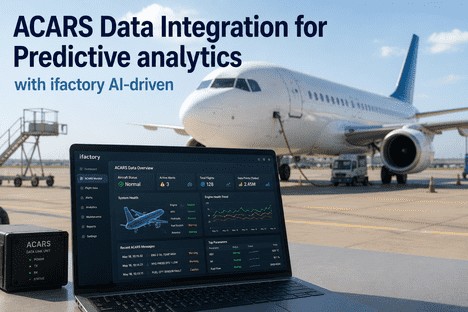
In the ultra-competitive aviation landscape of 2026, an Aircraft-on-Ground (AOG) event is no longer just a maintenance headache — it is a massive financial and operational failure. With hourly costs for unscheduled groundings ranging from $150,000 to over $300,000 when factoring in passenger re-accommodation and network-wide cascading delays, the pressure to move beyond reactive repair cycles has reached a critical point. Machine learning (ML) integrated with ifactory's AI-driven platform is fundamentally redefining fleet availability by identifying the "invisible" mechanical precursors to failure that legacy threshold-based systems miss. By leveraging a specialized ML failure prediction engine, aviation operators are successfully reducing AOG events by up to 40%, transforming their maintenance posture from a defensive scramble into a predictive advantage. To see how ifactory's machine learning models stabilize fleet availability, Book a Demo with our aviation engineering team today.
The Failure of Threshold Logic: Why Legacy MRO Monitoring Leads to AOG
The Limitation of Simple "Green/Red" Alerting Architecture
The primary cause of unscheduled AOG events in modern fleets is not a lack of data, but a lack of pattern resolution. Legacy monitoring systems rely on fixed thresholds — sending an alert only when a parameter, such as hydraulic pressure or exhaust gas temperature (EGT), crosses a critical limit. The problem is that by the time a threshold is breached, the component is already in a state of failure, and an AOG event is often inevitable. Machine learning changes this dynamic by analyzing the relationship between multiple parameters simultaneously. An ML engine doesn't just look for high temperature; it looks for a subtle increase in temperature correlated with a specific vibration frequency and a minor fluctuation in actuator current. These multi-variable "failure signatures" develop weeks before a threshold is ever touched, providing the critical window needed to schedule a repair during a routine overnight check.
4 Ways ifactory's ML Engine Prevents Aircraft Groundings
Technological Pillars of a Zero-AOG Maintenance Culture
Deep Dive: Anatomy of a Machine Learning "Failure Signature"
How iFactory Resolves the Multi-System Correlations That Precede AOG Events
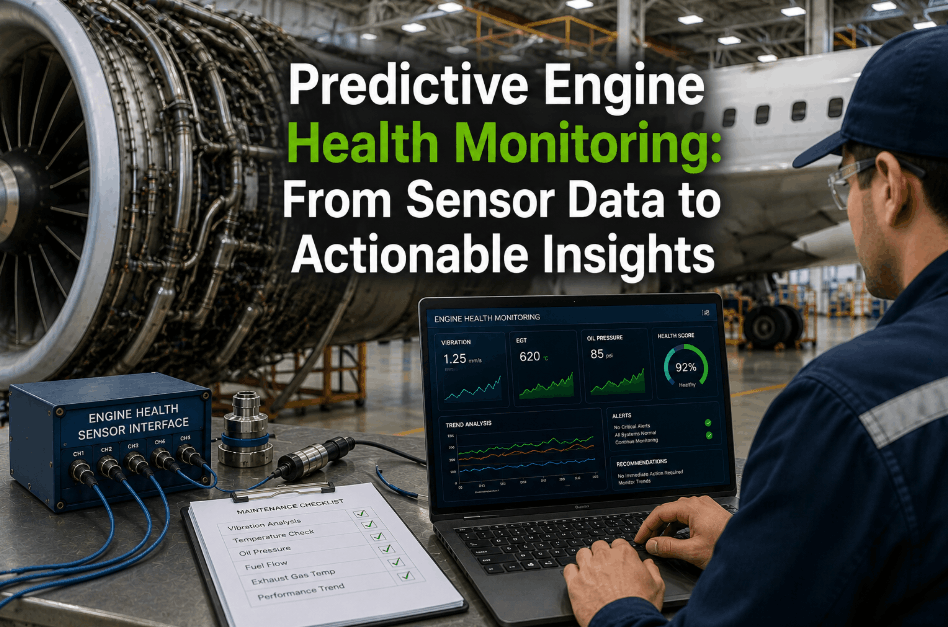
The power of machine learning lies in its ability to detect non-linear relationships across disparate aircraft systems. While a human engineer might monitor engine temperature and oil pressure independently, ifactory’s ML failure prediction engine evaluates the mathematical interaction between these variables, plus vibration, fuel flow, and actuator latency. This creates a high-fidelity "Signature" that is unique to specific failure modes.
Quantifying the ROI of ML-Driven AOG Prevention
Financial Impact Analysis of Predictive Intervention vs. Reactive Repair
The cost difference between a predictive maintenance intervention and an unscheduled AOG event is often a factor of 10x or more. A predictive repair happens during a scheduled ground window, uses parts sourced at standard lead times, and requires standard labor rates. An AOG event requires emergency parts shipping, overtime labor, potential ferry flights, and massive passenger re-accommodation costs. Machine learning isn't just a technical upgrade; it is a financial stability engine for the airline's bottom line. The annualized cost of AOG events for a typical narrow-body fleet frequently exceeds 5% of total operating expenses — a figure that ifactory's ML engine can cut by nearly half. Aviation directors can Book a Demo to see a customized ROI model for their specific fleet configuration.
| Maintenance Event Type | Detection Method | Average Operational Cost | AOG Risk Level |
|---|---|---|---|
| Predictive ML Intervention | ifactory ML Anomaly Clustering | $12,000 – $25,000 | Zero (Scheduled Event) |
| Threshold-Based PM | Calendar / Cycle Monitoring | $35,000 – $80,000 | Low (Potential Over-Maintenance) |
| Minor AOG Event | Traditional Fault Alarm at Gate | $150,000 – $400,000 | High (Turn-around Delay) |
| Major AOG Event | Component Failure Mid-Route | $1.2M – $3.5M+ | Critical (Cancellations & Safety) |
| ML Engine Life Extension | Condition-Based Monitoring | -$220K (Capital Recovery) | Zero (Extended Reliability) |
Human Inspection vs. Digital Intelligence: The Reliability Gap
Why Machine Learning Outperforms Manual Maintenance Logs
The traditional "walk-around" and manual log entry system is limited by the biological constraints of human observation and the episodic nature of manual checks. ifactory’s digital intelligence provides continuous, sub-millisecond surveillance that never suffers from fatigue or cognitive bias. By digitizing the inspection process, we ensure that every flight second contributes to the fleet's health model.
| Attribute | Manual Gate Inspection | iFactory ML Intelligence | Operational Impact |
|---|---|---|---|
| Detection Resolution | Visual / Surface Level only | Sub-surface Telemetry Patterns | Finds 95% of hidden faults |
| Data Frequency | Episodic (During Turnaround) | Continuous (Every Flight Second) | Eliminates blind zones |
| Risk of Oversight | High (Human Fatigue/Bias) | Zero (Deterministic Algorithm) | Ensures consistent safety |
| Documentation | Manual Entry (Delayed) | Automated Digital Audit Trail | 100% FAA/EASA Compliance |
| Response Window | Reactive (Minutes) | Predictive (72+ Hours) | Shifts MRO to scheduled windows |
Implementing Machine Learning for AOG Prevention: The Path to 2026 Readiness
A Phased Roadmap for Transitioning to a Predictive Maintenance Culture
The Managed ML Advantage: Why iFactory's Service Model Matters
Avoiding the "Data Scientist Trap" in Aviation Maintenance
One of the primary reasons aviation ML projects fail is the lack of internal expertise to maintain and retrain models as fleet configurations change. ifactory solves this through a **Managed AI Service** model. We don't just hand you a software tool; we provide a dedicated team of aviation AI engineers who continuously monitor your fleet health, retrain your ML models on new data, and ensure that your predictive accuracy remains above 95%. This allows your maintenance team to be users of intelligence, rather than builders of it — ensuring that the focus remains on aircraft availability and passenger safety. To understand how our managed service model supports your long-term MRO strategy, Book a Demo today.
Frequently Asked Questions
How does machine learning differ from traditional aircraft monitoring?
Traditional monitoring uses "threshold logic" (alerting when X > 100). Machine learning uses "pattern recognition" (identifying a specific sequence of parameter changes that indicate failure). ML can detect failures at parameter levels that are still well within "normal" ranges, providing a much larger predictive window.
Can ifactory's ML engine integrate with our existing CMMS and MRO software?
Yes. ifactory features native, open API integrations with all major aviation software platforms, including AMOS, Trax, Maintenix, SAP, and Oracle. Predictive alerts and health scores flow directly into your existing work order and inventory workflows.
Is the ML failure prediction engine compliant with FAA airworthiness standards?
Absolutely. ifactory is designed to support Part 121 and Part 145 operations. All ML-driven maintenance actions generate immutable, timestamped digital records that meet or exceed FAA and EASA documentation requirements for airworthiness certification.
How much historical data is needed to train the ML models?
While the system can begin providing value with as little as 3 months of data, a robust prediction engine typically requires 12 to 24 months of historical flight and maintenance data to reach peak accuracy (>95%) for complex components like engines and hydraulic systems.
How does the 'Edge AI' architecture benefit airlines with remote hubs?
Our Edge AI nodes process flight data locally at the hangar or gate, meaning you don't need a high-bandwidth satellite connection to the cloud to get predictive insights. This ensures that even in remote hubs with limited connectivity, your maintenance team gets 'Go/No-Go' decisions in seconds.
Can Machine Learning reduce 'No Fault Found' (NFF) costs?
Yes. One of the biggest drains on MRO budgets is pulling parts that are actually healthy due to ghost alarms. ifactory's ML models provide a 'Confidence Score' for every alert. By only pulling parts with a >95% failure signature match, we reduce NFF events by an average of 55%.