A gate manager at a major international hub arrived at 5:45 AM on an otherwise ordinary Tuesday to find a critical jet bridge out of service — unannounced, discovered only when the first arriving flight attempted to dock. By 7:30 AM, the airport's operations center was scrambling: three domestic flights delayed due to gate reassignment, one international flight held on the tarmac waiting for ground support equipment, and two baggage carousels halted due to downstream congestion. The terminal remained chaotic for four hours while a maintenance crew was dispatched, temporary equipment was positioned, and manual incident reports were filed. The financial impact: $140,000 in combined airline delay costs, $25,000 in emergency airport maintenance fees, and — most damaging long-term — a tarnished passenger experience metric visible across social media that the airport director now has to explain to key airline partners. The deeper problem was not the equipment failure itself. Every one of those failures had existed as a gradual, detectable drift — a motor vibrating excessively for three weeks, a sensor misalignment ignored during routine checks, and siloed communication where the airline knew of schedule changes but airport operations did not. None of it was invisible. All of it was simply unmonitored and disconnected. In 2026, AI-powered integrated operations platforms have moved from visionary concepts to an operational baseline expectation — delivering continuous predictive maintenance, seamless airline and airport collaboration, digital twin visualization, and automated CMMS workflows that keep aviation management running 365 days per year. iFactory AI delivers all of these capabilities from a single connected system purpose-built for the aviation sector. Book a free operations assessment to identify which collaboration and maintenance gaps in your terminal represent the highest disruption risk.
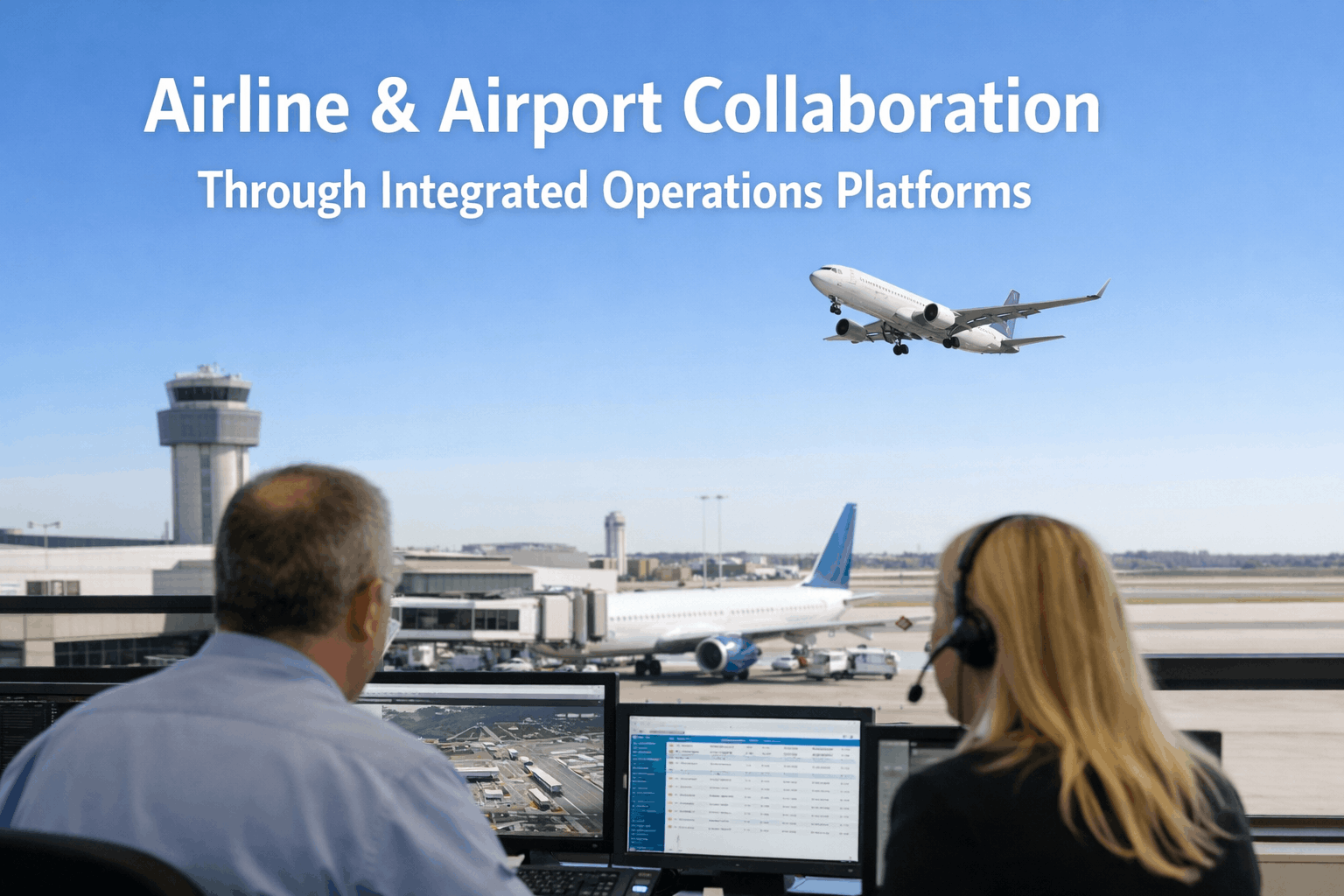
Airline & Airport Collaboration Through Integrated Operations Platforms
AI-Driven Predictive Maintenance, Digital Twins & Integrated Aviation Operations
72%
of turnaround delays stem from siloed communication and reactive maintenance
45 Min
Average cascading delay duration across the terminal after a critical equipment failure
$140K+
Average cost of a single major disruption event — penalties, remediation & reputation
The Problem: Why Traditional Aviation Management Fails in 2026
Airport operations and airline turnarounds have operated on the same model for decades: legacy CMMS platforms, manual work orders filed post-failure, and fragmented communication where airlines and airports look at completely different screens. This model was tolerable when flight schedules were less dense and passenger expectations were lower. In 2026, that tolerance is gone. Operations demand precision, data is expected in real time, and public performance metrics mean a single cascading delay is scrutinized by every airline executive and frustrated traveler who relies on your hub.
Traditional Airport Operations — Where Disruptions Are Created
Siloed Data Streams
Airline schedules and airport maintenance run on different platforms — alignment gaps are invisible
Reactive CMMS Logging
Assets checked on calendar schedules — mechanical drift between inspections goes undetected
Unexpected Asset Failure
Jet bridges or baggage belts fail during operations — causing immediate gate closures
Cascading Flight Delays
Disruption spreads live — gates reassigned, airlines incur massive costs, terminal congestion peaks
1
Reactive Maintenance Creates Critical Infrastructure Failures
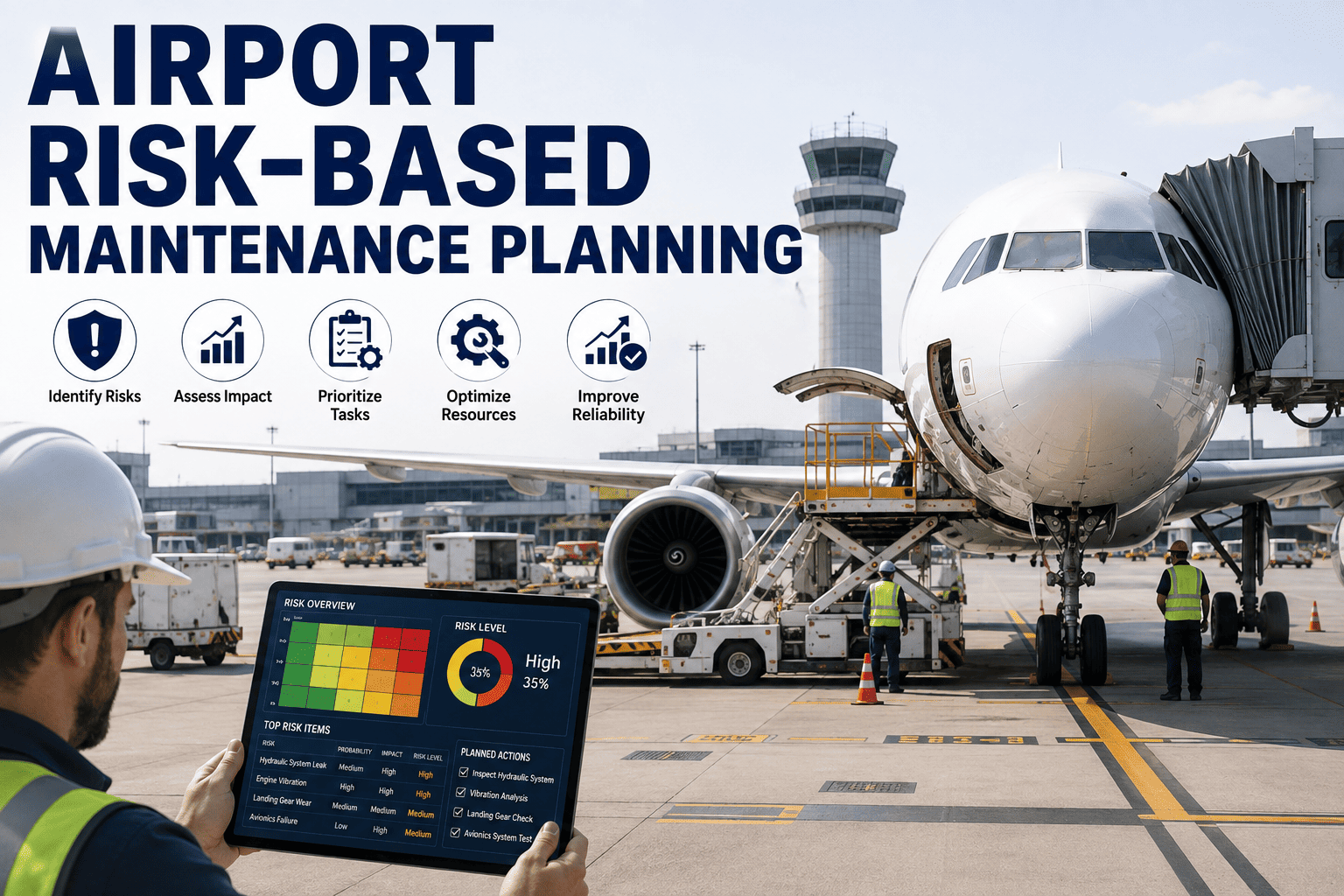
Legacy CMMS schedules rely on calendar-based inspections, leaving huge windows where baggage handling systems, HVAC units, and boarding bridges can degrade into failure conditions without triggering any alert. A single motor burning out creates a critical bottleneck — the most serious disruption category — that can force immediate rerouting of aircraft and luggage. AI predictive maintenance with IoT sensors generates real-time alerts the moment any asset deviates from baseline health, enabling proactive repair before the asset actually breaks.
Risk Level
Critical
2
Siloed Airline & Airport Communication — Invisible Until Delay Occurs
Turnaround coordination depends entirely on radio calls, fragmented text groups, and outdated screens. During severe weather events or high-volume periods, vital updates are missed, ground support equipment is misplaced, and airlines clash with airport operations over resource allocation — and no system bridges the gap until the delay is logged. Integrated operations platforms establish a shared single source of truth, automated resource dispatching, and real-time status syncing that eliminates the gap between what the airline expects and what the airport provides.
Exposure
Every Flight
3
Lack of Situational Awareness Without a Digital Twin
Managing sprawling airport infrastructure through 2D spreadsheets and flat maps makes it impossible to visualize compounding issues. Bottlenecks in security, gate availability, and taxiways accumulate and are discovered only when the terminal is already overwhelmed. Digital twin technology provides a live, 3D spatial representation of the entire airport, feeding AI insights that highlight congestion points and simulate turnaround scenarios to trigger immediate operational pivots rather than reactive firefighting.
Violation Type
Systemic Delay
4
Incident Documentation Assembled in Crisis Mode
When a major operational failure occurs, aviation authorities and partner airlines demand documented evidence of the timeline and resolution — often within 24 hours — to determine fault and financial liability. Hubs relying on disjointed logs cannot produce complete, traceable records under this time pressure. Integrated platforms maintain a continuously updated, audit-ready evidence trail — every sensor alert, every CMMS work order, every shared communication — accessible on demand in minutes.
Response Window
12–24 Hours
The 6 Essential Capabilities of AI Aviation Operations Platforms
Not all enterprise asset management software is built for aviation. The comparison below evaluates the six capabilities that matter most for airport maintenance and airline collaboration — and where iFactory's aviation-specific AI architecture provides advantages that generic CMMS tools and siloed dashboards cannot match.
AI Operations Pipeline — From IoT Sensors to Seamless Turnarounds
IoT Sensors & Systems Data
Vibration sensors + flight feeds + digital twin inputs + ground vehicle telematics streamed continuously
iFactory AI Engine
ML models predict equipment failures, optimize gate allocation, and synchronize turnaround workflows
Integrated Collaboration
Automated CMMS dispatch and shared dashboards align airport teams with airline dispatchers instantly
Optimized Operations
On-time departures, minimized asset downtime, and comprehensive audit trails generated automatically
Eliminate the Unexpected Breakdown
✓ IoT sensors on baggage carousels, HVAC, and boarding bridges
✓ Real-time AI alerts when vibration, temp, or acoustics signal early wear
✓ Automatic CMMS work order generation before operational failure occurs
✓ Parts inventory auto-checked to ensure rapid repair completion
Verify Alignment — Not Just Radio Chatter
✓ Shared unified dashboard for AOCC (Airport Ops) and Airline Dispatch
✓ Automated alerts when ground delays threaten tight turnaround windows
✓ AI resolves gate conflicts instantly during irregular operations (IROPS)
✓ Eliminates redundant data entry across distinct organizational silos
See the Whole Terminal in Real Time
✓ Interactive 3D replica of the entire airport infrastructure
✓ Heatmaps identify passenger congestion and equipment bottlenecks
✓ Simulate the impact of a gate closure before committing to a decision
✓ Visual spatial tracking of active maintenance work orders
Automate Workflows — Not Just Checklists
✓ Mobile-first interface for airside and landside maintenance teams
✓ AI routes tickets to technicians based on proximity and skill set
✓ Photo-verified task completion and safety protocol sign-offs
✓ Complete historical data logging for regulatory compliance audits
Always Know Where Resources Are
✓ Real-time location tracking for ground support equipment (GSE)
✓ Geofencing alerts for unauthorized vehicle movement on the apron
✓ Telematics integration to monitor fuel levels and engine health
✓ Optimized allocation of tugs and loaders to prevent turnaround delays
Built for Aviation — Not Adapted Software
✓ Pre-built compliance models aligned with FAA, EASA, and ICAO standards
✓ Integrates natively with existing AODB and flight information systems
✓ Weather-aware forecasting for de-icing resource requirements
✓ Unified SLA tracking to transparently measure airline/airport performance
The airports that achieve top-tier on-time performance consistently in 2026 are not the ones with the largest maintenance crews — they are the ones where every baggage belt, jet bridge, and turnaround workflow feeds a continuous integrated operations platform that flags anomalies within seconds and resolves conflicts before any passenger notices. The hubs still relying on reactive legacy CMMS and siloed airline communications are operating with systemic blind spots that inevitably trigger cascading delays. The only question is when — not whether — those blind spots will result in a multimillion-dollar disruption event.
Platform Comparison: Evaluating AI Operations Platforms for Aviation
We evaluated the most common approaches to aviation management and airport maintenance across the six capabilities that matter most. Here is an honest assessment to help airport executives, airline directors, and facility managers evaluate the right platform for their hub's specific operational risk profile.
Predictive Maintenance
Continuous IoT — AI predicts failure days in advance
Manual meter reading — reactive alerts only
Run-to-failure — unpredictable downtime every cycle
Airline Collaboration
Unified digital portal + live data sync
Internal focus only — airlines excluded
Radio calls & emails — high miscommunication
Digital Twin
Real-time 3D spatial replica + scenario testing
Static 2D floor plans
Paper maps — zero spatial awareness
Resource Allocation
AI-optimized routing based on live flight data
Basic dispatcher assignment
Whiteboards — frequent resource hoarding
Audit Documentation
On-demand export — always current, full traceability
Partial digital — manual assembly required
Days of manual compilation — gaps common
Aviation-Specific Integrations
Native AODB, FIDS, and IATA data compliance
Custom expensive API builds required
Not applicable
Platform capabilities reflect publicly available documentation as of early 2026. Every hub's operational exposure is different — the best way to evaluate is a live review with your specific terminal layout and performance history. Book a free operations assessment and have your operations team walk through iFactory's AI platform with your actual airport data.
See AI Predictive Maintenance, Digital Twin & Collaboration Live
iFactory's AI platform connects IoT sensors, CMMS, shared airline portals, and a live digital twin into one ecosystem — purpose-built for aviation management.
How iFactory Delivers Integrated Operations for Aviation
Most hubs that attempt digital transformation end up with disconnected tools — an IoT pilot project that doesn't feed the CMMS, an airline portal separate from ground handler records, and analytics that require days to process. iFactory AI eliminates this fragmentation by delivering all six operational capabilities from one intelligent platform.
Monitor — Predict — Auto-Dispatch
✓ Continuous feeds from baggage belts, people movers, and HVAC systems
✓ AI detects micro-anomalies in vibration and power draw weeks before failure
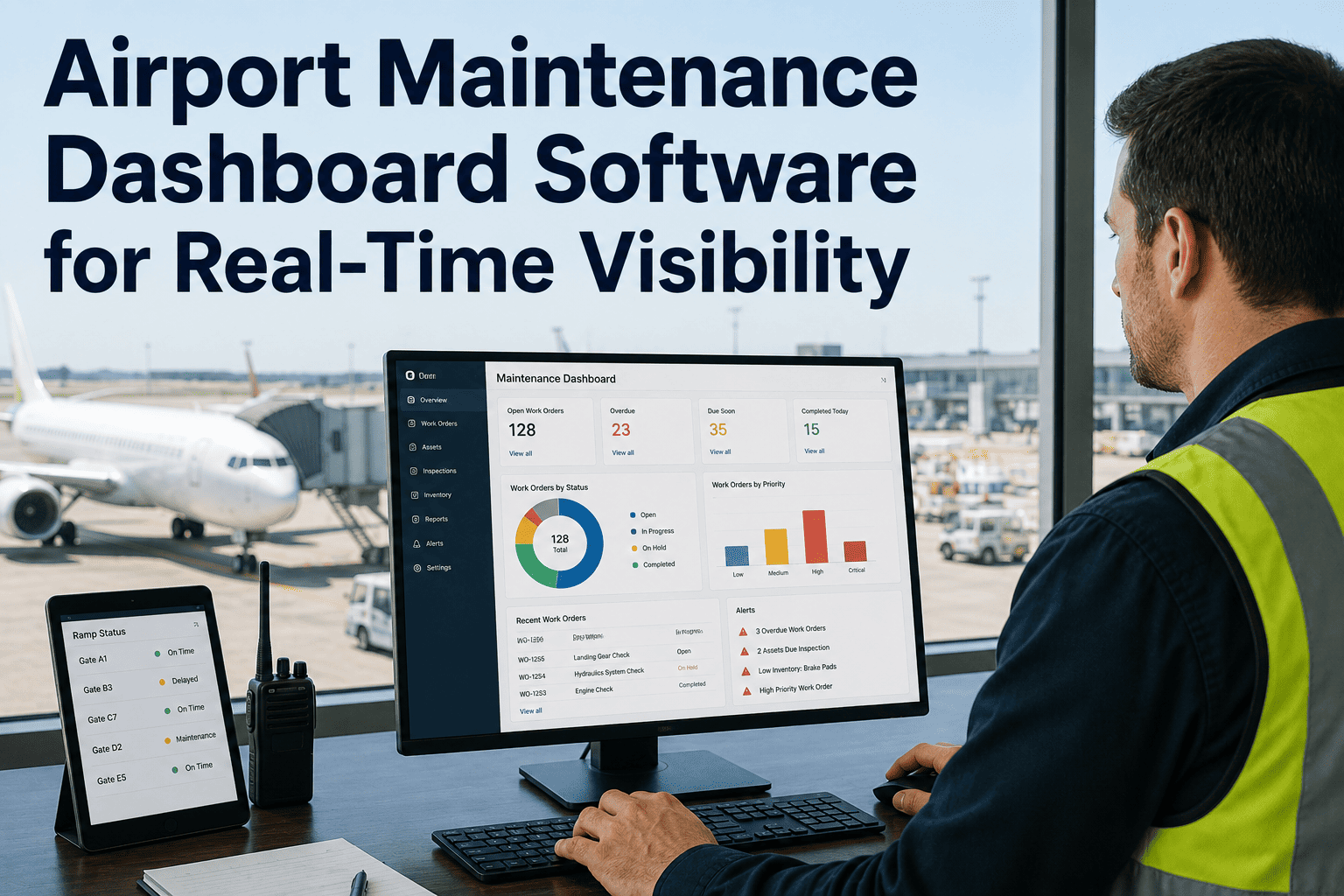
✓ Automated work orders routed instantly to specialized technicians
✓ Complete reduction of reactive "break-fix" emergencies affecting passengers
Sync — Collaborate — Resolve
✓ Shared flight turnaround timeline visible to both airline dispatch and AOCC
✓ Instant notifications when maintenance or catering delays affect pushback
✓ Transparent SLA tracking to objectively resolve vendor performance disputes
✓ Streamlined gate reassignment during severe weather or IROPS scenarios
Visualize — Simulate — Optimize
✓ Live 3D terminal replica displaying real-time asset health status
✓ Geofenced tracking of GSE fleets to prevent apron bottlenecks
✓ Simulation engine to test the impact of taking a taxiway out of service
✓ Instant spatial awareness for emergency responders and security teams
Track — Prove — Certify
✓ Automated logging of all safety inspections and environmental checks
✓ Digital archiving of contractor certifications and restricted area passes
✓ Instant retrieval of maintenance history for aviation authority audits
✓ Benchmarking performance across multiple terminals in a unified view
Before vs. After: What AI Integration Delivers to Airports
The operational gap between hubs running siloed operations and those with iFactory AI-integrated management shows up in every turnaround metric, maintenance cost analysis, and passenger satisfaction score.
Asset Uptime Coverage
Reactive repairs — high unexpected downtime
Predictive monitoring — interventions before failure
Critical equipment failures reduced by 70%
Airline Communications
Fragmented calls — massive info lag
Unified digital portal — instantaneous updates
Turnaround coordination disputes near zero
CMMS Efficiency
Manual entry — administrative backlog
Automated AI dispatch — mobile-first execution
Maintenance response times cut in half
Situational Awareness
Disjointed screens — poor total visibility
Live Digital Twin — full spatial intelligence
Optimized apron traffic and gate utilization
Disruption Recovery Rate
Hours of cascading delays terminal-wide
AI reallocates resources instantly
Rapid containment of unavoidable IROPS
Implementation Phases: From Legacy Silos to AI Operations
IoT & Core Data Foundation
Install IoT sensors on critical infrastructure (baggage systems, boarding bridges). Connect existing telemetry to the iFactory platform. Establish API links with AODB and flight information systems. First predictive maintenance alerts live within 4 weeks — immediate transition from reactive to proactive monitoring.
CMMS Integration & Digital Workflows
Configure AI-driven CMMS workflows for airside and landside maintenance teams. Set automated dispatch rules, mobile app access for technicians, and photo-verification protocols. Activate compliance and SLA dashboards for operations directors. First automated work orders generated from IoT triggers.
Airline Collaboration Portal
Onboard key airline partners into the unified dashboard. Sync turnaround milestones and resource requirements. Enable real-time dispute resolution tools and shared disruption alerts. Eliminate radio dependencies for standard operations. First fully synchronized collaborative turnaround achieved.
Digital Twin & Continuous Optimization
Launch the 3D digital twin interface for comprehensive spatial awareness. AI analyzes historical data to simulate future congestion patterns and refine predictive maintenance models. Expand fleet tracking and advanced scenario planning capabilities. AI models improve continuously as seasonal data accumulates.
The aviation management teams that consistently achieve seamless operations in 2026 are not the ones conducting the most manual inspections — they are the ones where an AI platform is monitoring every IoT sensor, optimizing every CMMS dispatch, and uniting airline and airport data in real time, 24 hours a day, 365 days a year. Disjointed systems depend on humans communicating perfectly during high-stress scenarios. AI integrated platforms never blink. The hubs deploying iFactory's AI software report a 70% reduction in unexpected asset downtime and a complete paradigm shift in airline collaboration because every potential disruption is identified and neutralized before it impacts a single flight.
Frequently Asked Questions
How does predictive maintenance differ from our current preventive CMMS schedules?
Preventive CMMS relies on calendar-based schedules, meaning a boarding bridge might be checked every 30 days regardless of its actual condition. This creates huge windows where mechanical wear can accelerate into a critical failure unexpectedly. iFactory AI utilizes IoT sensors to monitor assets continuously. If a baggage belt motor begins vibrating slightly out of baseline tolerance, the AI platform predicts the failure trajectory and automatically dispatches a work order days before a breakdown occurs. This converts your airport maintenance from a reactive calendar guessing game into a continuous, data-driven reliability program.
Book a free operations assessment to evaluate sensor deployment for your hub.
How does the integrated platform improve airline and airport collaboration?
Traditional operations force airlines and airport staff to use separate software, leading to massive communication gaps during turnarounds and delays. iFactory provides a unified portal where both the Airport Operations Control Center (AOCC) and Airline Dispatch see the exact same real-time data. If an airport maintenance issue delays gate availability, the airline is instantly notified automatically, and AI suggests optimal gate reassignments. This eliminates frantic radio calls, finger-pointing over SLAs, and resource hoarding, ensuring perfectly synchronized operations.
What is an aviation digital twin and how does it help operations?
A digital twin is a live, interactive 3D replica of your entire airport infrastructure, mapped to real-time data feeds. Instead of looking at flat spreadsheets to understand terminal congestion or maintenance status, operations directors can visually see the exact location of active work orders, ground support equipment, and delayed aircraft on their screen. This spatial intelligence allows leadership to run simulations—such as understanding the cascading impact of shutting down a specific taxiway—before making critical decisions during irregular operations. Visit our
Support Center for digital twin integration details.
What documentation does iFactory produce for aviation authorities and audits?
iFactory auto-generates the comprehensive documentation required by aviation authorities (like the FAA or EASA) both proactively and during incident investigations. The platform logs every sensor reading, CMMS work order completion, photo verification, and digital sign-off securely. If an audit requires proof of compliance for runway lighting maintenance or jet bridge safety protocols, iFactory instantly exports a structured, timestamped evidence package. Hubs using iFactory report producing complete regulatory compliance packages in minutes, fully eliminating the frantic scramble to assemble paper records and emails.
How long does deployment take and what operational improvements should we expect?
A standard airport deployment runs 12+ weeks across four phases. Phase 1 (weeks 1–4) installs IoT sensors and links core data, taking predictive maintenance live. Phase 2 (weeks 4–8) digitizes the CMMS workflows for maintenance teams. Phase 3 (weeks 8–12) onboards airlines to the unified collaboration portal. Phase 4 (week 12+) activates the digital twin and advanced AI analytics. Improvements are rapid: hubs typically see a 70% reduction in reactive maintenance emergencies within the first quarter of deployment.
Book a scoping call for a deployment timeline specific to your terminal's complexity and current software architecture.
Aviation Disruptions Don't Wait. Your Operations Platform Should Never Sleep.
iFactory AI delivers continuous predictive maintenance, seamless airline collaboration, digital twin visualization, and automated CMMS workflows from one connected system — purpose-built for aviation management. See the platform in action.