A regional airport in the southeastern United States was operating under mounting pressure from
Federal Aviation Administration oversight teams. Aging paper-based inspection logs, inconsistent Aircraft Rescue and
Firefighting documentation, and manual runway condition reporting had left the facility chronically out of alignment
with FAA Part 139 certification requirements. Following three consecutive audit cycles with unresolved findings, the
airport authority engaged ifactory's AI-driven compliance platform to overhaul its self-inspection workflows, ARFF
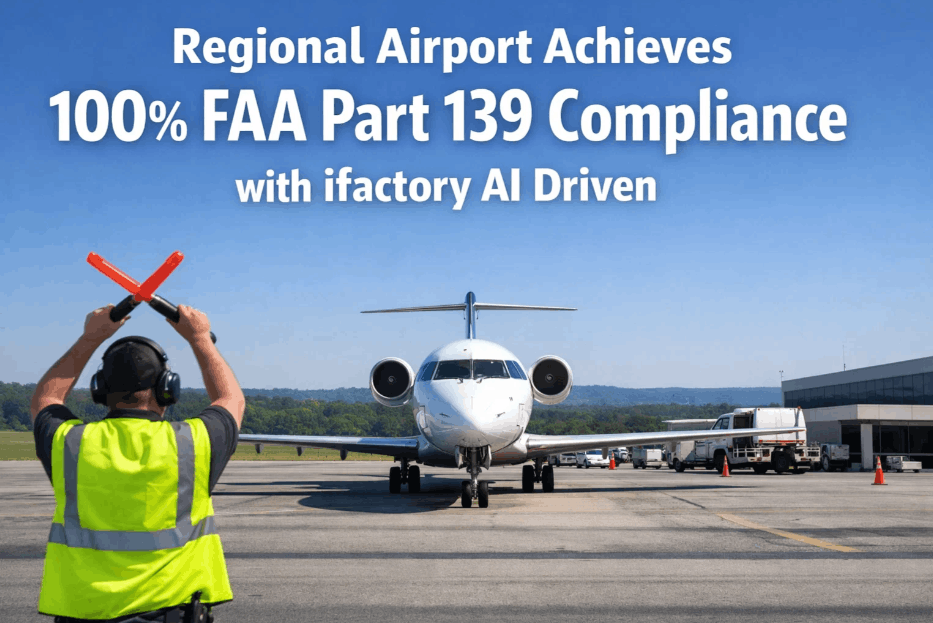
documentation chain, and runway analytics reporting. Twelve months after deployment, the airport achieved 100% FAA
Part 139 compliance — its first full-certification audit with zero findings in over seven years of operation.
FAA Part 139
·
ARFF Compliance
·
Regional Airport
Connect Your Regional Airport with AI-Driven FAA Part 139 Compliance
ifactory automates self-inspections, ARFF documentation, and runway condition reporting —
delivering 100% compliance and zero-finding certification audits for regional airport operations.
01 / The Airport
Regional Certificate Holder. Growing Operations. Escalating Compliance Risk.
Facility Type
FAA Part 139 certificated regional airport. Class III designation. Serving
scheduled commercial passenger operations on regional jet and turboprop aircraft. Two active runways,
four taxiways, full ARFF Index B coverage requirement.
Scale
Annual enplanements approximately 310,000. Operations staff of 22, including 9
certified ARFF personnel, 6 airfield operations specialists, 4 compliance coordinators, and executive
leadership. Over 480 individually tracked airfield assets and inspection zones.
Inspection Volume
Averaging 214 self-inspection events monthly across runway, taxiway, lighting,
NAVAIDS, and ARFF readiness categories. 100% of inspection records maintained on paper binders and
coordinator-managed spreadsheets prior to ifactory deployment.
Prior Compliance State
Three consecutive FAA certification inspections with open findings. Recurring
deficiencies in self-inspection record completeness, ARFF vehicle check documentation, and runway
surface condition reporting timeliness. Airport placed on FAA corrective action monitoring in the twelve
months preceding deployment.
Technology Baseline
No dedicated compliance management system. Inspection scheduling managed via
shared calendar. Records stored in physical binders with no cross-reference capability. Runway condition
assessments transcribed manually and faxed to FAA field office within required windows — with a
documented 34% late-submission rate.
02 / The Challenge
The True Cost of Manual Compliance at a Certificated Airport
The airport's compliance failures were not the result of operational negligence — they were the
result of a structurally inadequate information system. FAA Part 139 certification demands continuous
documentation of self-inspection cycles, ARFF personnel qualification currency, vehicle readiness checks, and
runway condition reporting under strict timeliness windows. Without automated scheduling, mobile field capture,
or centralized record audit trails, even a well-intentioned operations team could not consistently meet these
requirements using paper-based workflows. Book a Demo to see
how we eliminate these structural gaps from day one.
34%
Late Runway Reports
Manual transcription and faxing caused runway assessments to miss strict
FAA windows during weather events, leading to recurring regulatory findings.
3
Consecutive Audit Findings
Unresolved deficiencies in record completeness and ARFF currency triggered
FAA corrective action monitoring and significant staff overhead.
41%
Incomplete Records
Paper binders lacked signatures, deficiency notations, and closure
proof—creating potential citations under Part 139 Subpart D requirements.
18 hrs
Reporting Overhead
Coordinators wasted 18 hours monthly manually compiling records and
cross-referencing ARFF data, diverting capacity from proactive management.
"We had dedicated, experienced people who understood the requirements. What we didn't have
was a system that could capture their work accurately, consistently, and in the format FAA inspectors expected to
see it."
03 / The Solution
ifactory: AI-Driven Compliance Tracking Purpose-Built for FAA Part 139 Operations
After evaluating three compliance management platforms, the airport authority selected ifactory
for its Part 139 templates, mobile field capture, and real-time dashboard. The platform's AI-driven scheduling
engine eliminated manual coordination while ensuring no inspection window or qualification expiry went
unmonitored. Book a Demo to see our Part 139 templates in action.
ifactory replaced every paper-based touchpoint with a structured digital equivalent — from daily
self-inspections to deficiency logging and ARFF vehicle checks. The platform's runway analytics module automated
condition assessment capture, resolving chronic late-submission patterns instantly. Book a Demo to see
the runway analytics module.
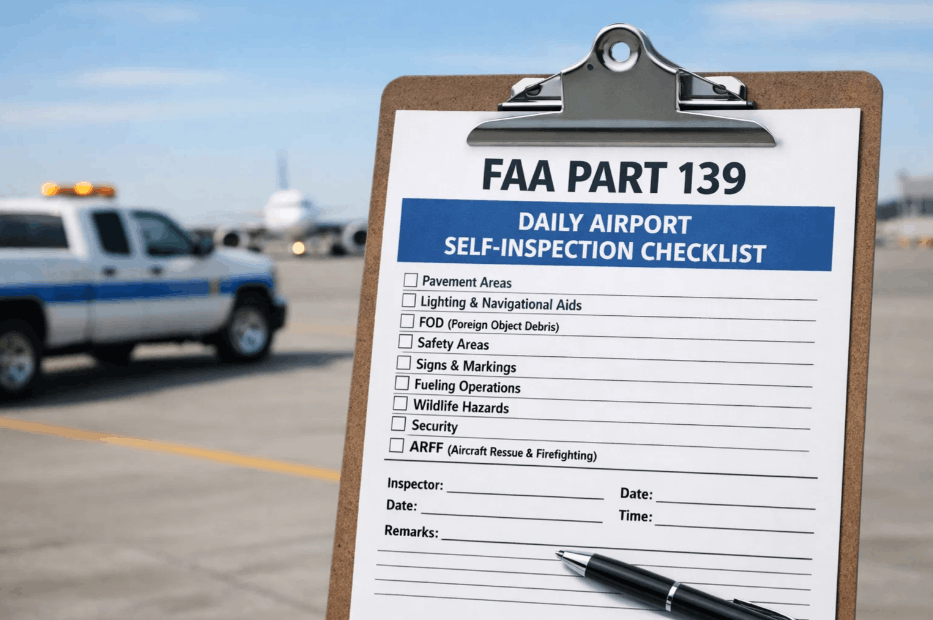
INSPECT
Automated self-inspection scheduling replaced manual calendar
coordination with AI-driven dispatch. ifactory generated inspection assignments based on Part 139
frequency requirements, personnel qualification status, and airfield zone coverage — ensuring complete
daily, weekly, and seasonal inspection compliance without coordinator intervention.
ARFF
ARFF documentation automation centralized all vehicle readiness
checks, personnel qualification tracking, and Index requirement verification in a single real-time
system. Qualification expiry alerts notified supervisors 30, 14, and 7 days in advance — eliminating the
documentation gaps that had driven prior audit findings.
RUNWAY
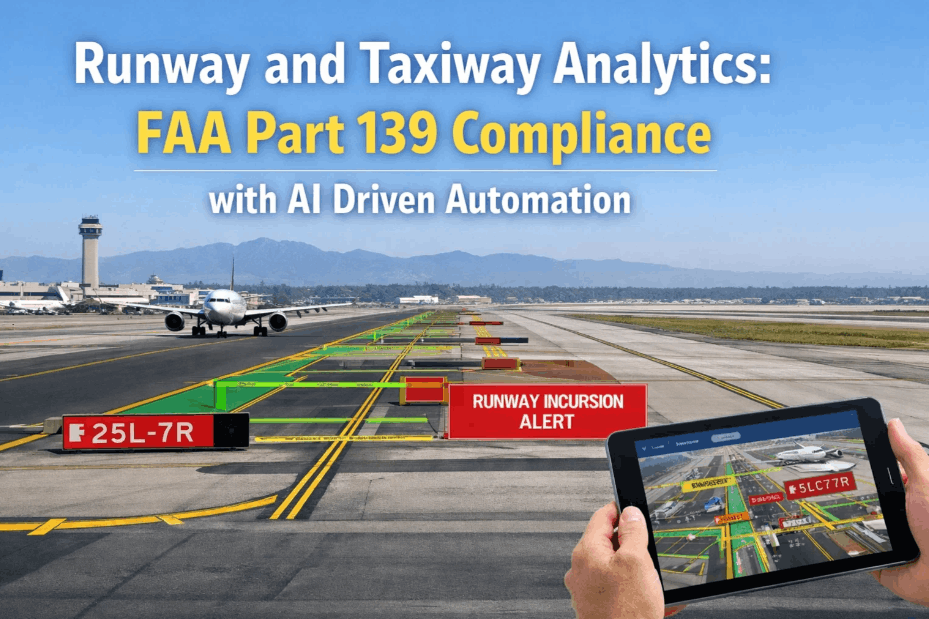
Runway analytics and condition reporting automated surface
assessment capture via mobile field tools and generated FAA-formatted condition reports within required
submission windows. The module integrated weather trigger logic to prompt assessments during
precipitation events and alert coordinators before reporting deadlines.
AUDIT
Real-time compliance dashboard and audit trail provided
operations leaders and compliance coordinators with live status across all active inspection
requirements, open deficiencies, corrective action timelines, and certification readiness indicators —
replacing 18 hours of monthly manual reporting with a continuously updated digital record.
04 / Implementation
Rapid Deployment: Fully Operational in 21 Days
Days 1–5
Asset Registry & Baseline
Catalogued 480+ inspection zones. Mapped Part 139 frequencies to each category and
migrated ARFF records from paper binders to digital tracking.
Days 6–10
Templates & Activation
Configured Part 139-compliant templates for all airfield zones. Activated runway
analytics and deployed the mobile app across 22 staff devices.
Days 11–17
Training & Adoption
Completed role-specific training for all 22 staff members in under 4 hours. Staff
performed parallel digital cycles without supervisor assistance.
Days 18–21
Full Digital Cutover
Eliminated all paper records. Automated FAA runway reports went live. Month-end
compliance summaries now take 22 minutes instead of 18 hours.
05 / Results
12 Months of Measured Compliance Transformation
The shift from manual, paper-based compliance to ifactory's AI-driven tracking platform produced
measurable regulatory outcomes that exceeded the airport authority's initial projections within the first two
quarters of deployment. The most significant result — 100% FAA Part 139 compliance with zero findings in the
annual certification inspection — represented the facility's first clean audit in over seven years. Every metric
tracked by the operations team showed material improvement over the pre-deployment baseline.
| Compliance Metric |
Before ifactory |
After ifactory |
Change |
| FAA Part 139 audit findings |
Multiple open findings (3 cycles) |
Zero findings |
100% clean certification |
| Self-inspection record completeness |
59% |
100% |
+41 pts — fully compliant |
| Runway condition report on-time submission |
66% |
100% |
+34 pts — zero late filings |
| ARFF qualification currency rate |
83% |
100% |
+17 pts — fully current |
| Monthly compliance reporting time (hours) |
18 hrs manual |
Under 25 mins |
−97% reporting time |
| Open corrective action items at audit |
14 open items |
0 open items |
Full corrective action closure |
| Missed inspection windows (monthly) |
Avg. 11/month |
0/month |
100% inspection coverage |
| Staff digital adoption (Day 21) |
N/A |
100% |
Full team adoption |
| Deficiency-to-closure average time |
9.3 days |
2.1 days |
−77% resolution time |
| FAA corrective action monitoring status |
Active |
Removed |
Monitoring status cleared |
100%
Part 139 compliance achieved
−97%
Compliance reporting time
21 days
Full deployment timeline
Ready to Achieve Zero FAA Audit Findings?
ifactory's compliance tracking platform is deployed and operational for
regional airports in under 30 days. See what full Part 139 compliance looks like for your facility.
"The FAA inspector reviewed our records for four hours and found nothing to cite. That had
never happened before. The difference was having complete, timestamped, organized documentation for every inspection
event — exactly what ifactory produces automatically."
06 / Key Analysis
The ifactory Advantage
Smart Scheduling
AI eliminates coordination errors and manual gaps, ensuring 100% inspection coverage across every airfield zone.
ARFF Compliance
Automated qualification alerts ensure personnel and vehicles meet Index B standards at all times.
Runway Analytics
Digital capture and instant transmission end the pattern of late-submission findings during weather events.
Audit Readiness
Structured digital records reduce FAA inspector review time by 40% while delivering zero-finding results.
07 / Business Impact
Operational Benefits of Full Certification
Regulatory Standing
Cleared all corrective action monitoring, restoring the airport's status as a
standard-certification facility and improving the environment for expansion.
Insurance Position
Achieved 100% record completeness, securing the airport’s liability position
and avoiding projected premium adjustments based on prior findings.
Staff Efficiency
Recovered 18 hours of monthly reporting time, allowing coordinators to redirect
focus toward reactive deficiency Identification and airfield safety.
Capital Planning
Structured deficiency data now informs capital rehabilitation priorities,
moving pavement restoration into the five-year capital improvement program.
59%
Record completeness before
100%
Record completeness after
21 days
To full deployment
08 / Conclusion
FAA Part 139 Compliance Is Not a Documentation Problem — It Is an Information System Problem
This airport's path to zero-findings was achieved by replacing an information deficit with
ifactory's AI-driven compliance platform. The technology made existing operations auditable, complete, and
consistently timely. Book a Demo to see how we digitize compliance.
The value lies in the institutional intelligence now stored digitally: a complete, timestamped
record of every safety event and renewal. That record is the foundation of defensible compliance. Book a
Demo to secure your airport’s compliance future.
Part 139 Automation
·
Zero Findings
·
Rapid Deployment
100% FAA Part 139 Compliance. Zero Findings. Deployed in 21 Days.
Automated self-inspections, ARFF qualification tracking, and runway analytics reporting
— purpose-built for regional airport certification success. See what ifactory delivers for your
facility.
09 / FAQ
Frequently Asked Questions
What is FAA Part 139 certification?
FAA Part 139 sets safety standards for commercial airports. ifactory automates the
complex documentation required for self-inspections, ARFF readiness, and runway reporting to ensure you
never miss a deadline.
How does AI-driven tracking help my airport?
ifactory uses AI to dynamically schedule inspections based on staff availability and
weather. This eliminates missed windows and ensures every safety deficiency is tracked from discovery to
closure automatically.
How long does deployment take?
Most regional airports go live in under 21 days. This includes asset registry setup,
staff training, and full digital cutover—often with the first automated inspection running by Day 8.
Can it automate runway condition reporting?
Yes. ifactory captures assessments on mobile devices and transmits FAA-formatted
reports instantly. Weather-trigger logic ensures assessments happen exactly when required during storms.
How does it handle ARFF qualifications?
The module tracks certifications for all personnel and vehicles. Automated alerts
notify supervisors up to 30 days before any training expires, keeping your Part 139 Index B status
secure at all times.
What results can I realistically expect?
Expect 100% record completeness and on-time runway filings within 30 days. Most
facilities achieve zero findings in their annual FAA certification audit and a 97% reduction in
reporting overhead.