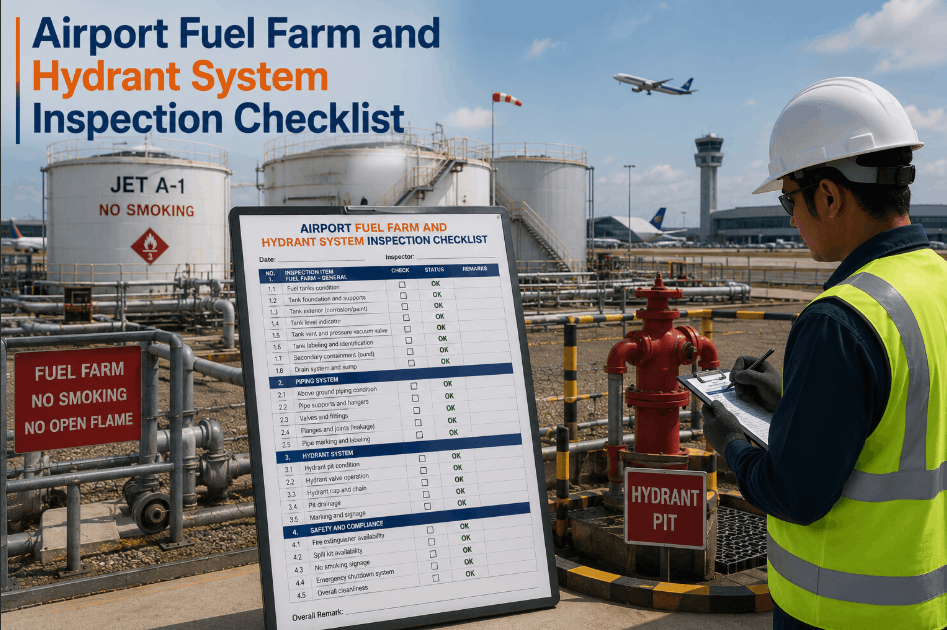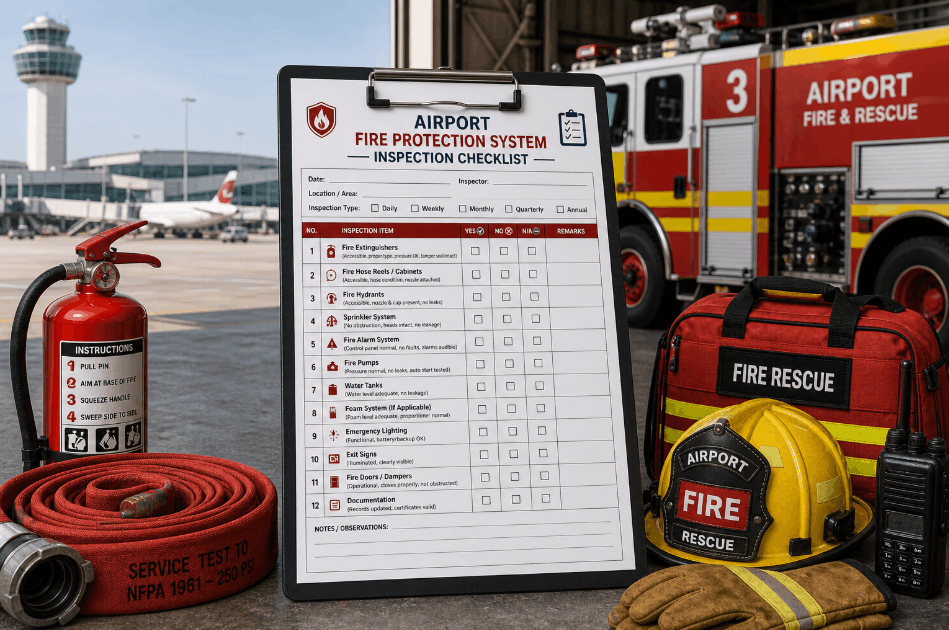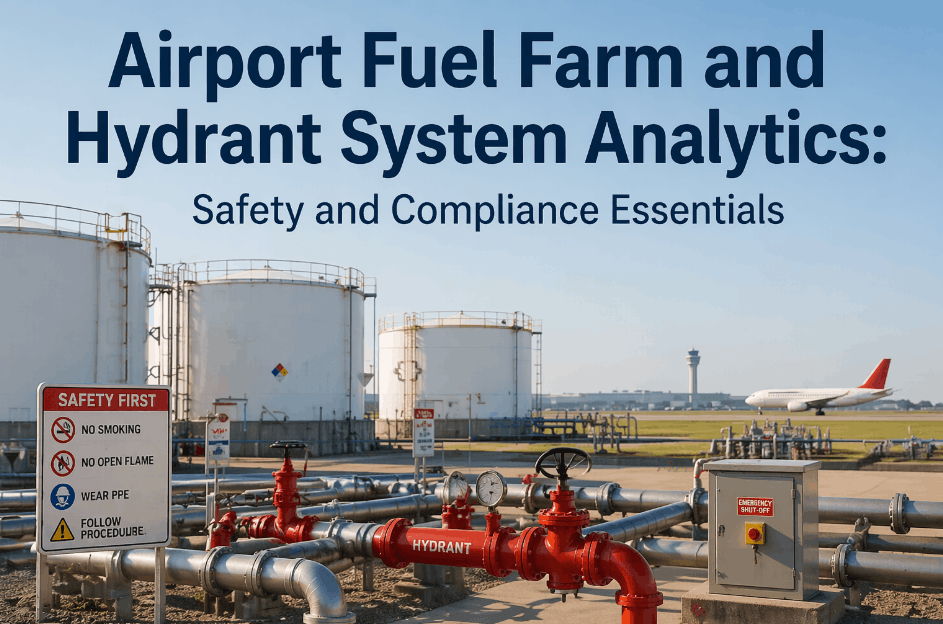
Airport fuel farm and hydrant fueling system failures don't just delay flights — they trigger NFPA 407 compliance violations, environmental contamination events, fuel quality deviations, and regulatory documentation gaps that ground entire operations for hours or days. In 2026, AI-driven airport fuel farm analytics software is fundamentally transforming how aviation fuel system managers predict equipment degradation, prevent unplanned fuel delivery failures, and maintain consistent aviation fuel quality across complex hydrant fueling networks. With tightening environmental compliance mandates and increasing pressure on aviation fuel storage safety standards, the airports achieving best-in-class fuel system reliability are the ones that stopped reacting to fuel farm failures — and started booking a demo to see how predictive analytics keeps hydrant fueling systems running at peak safety and compliance performance.
Keep Your Airport Fuel System Compliant — Before It Fails
iFactory's AI-powered airport fuel farm analytics platform delivers real-time equipment health scoring, predictive failure alerts, automated NFPA 407 compliance records, and fuel quality monitoring built for aviation fuel storage and hydrant fueling operations.
Why Airport Fuel Farm Analytics Is the Central Safety Challenge in Aviation Operations
Modern airport fuel farms and hydrant fueling systems operate under extraordinary regulatory and mechanical pressure — storage tanks, transfer pumps, filtration units, hydrant pit valves, and pressure control systems cycling continuously across high-volume fueling operations where contamination, leakage, or mechanical failure can trigger aircraft groundings, NFPA 407 non-conformances, and environmental liability events simultaneously. The combination of fuel chemistry exposure, underground hydrant infrastructure aging, thermal cycling across seasonal extremes, and the absolute zero-tolerance threshold for aviation fuel quality deviations creates risk conditions that calendar-based inspection programs simply cannot adequately address.
The business and safety consequences compound rapidly. A hydrant pump failure during peak departure windows doesn't just delay a single aircraft — it disrupts gate sequencing across the terminal, generates fuel quality documentation gaps, and in systems with integrated water separator malfunctions, can push contaminated fuel to aircraft before inline quality monitoring detects the deviation. The airports absorbing these risks repeatedly are the ones still operating on reactive inspection models. Aviation fuel system managers ready to close this safety gap should book a demo to understand the full operational impact of condition-based monitoring on fuel farm reliability and NFPA 407 compliance posture.
How AI-Driven Fuel Farm Analytics Software Works in Aviation Fuel Storage Systems
Aviation fuel system analytics software built on machine learning continuously monitors the acoustic, thermal, electrical, and process signatures of fuel farm equipment — not merely to confirm that systems are running, but to evaluate how they are performing relative to established safety and quality baselines. When a hydrant transfer pump begins developing bearing wear, or a filtration separator shows differential pressure trending toward bypass threshold, or a pit valve actuator draws abnormal current load, the AI analytics engine detects the deviation days or weeks before it produces a fuel delivery failure or quality excursion.
The critical distinction from conventional SCADA threshold monitoring is that AI models are trained specifically on equipment failure precursors — the subtle signature changes that precede breakdown and contamination events — rather than simply alarming when an operational limit is crossed. By the time a conventional threshold alarm triggers on a fuel filter differential pressure gauge, the system is already in bypass risk. AI analytics identifies the developing failure state while planned intervention is still possible. Fuel system engineers exploring this operational gap should book a demo to see live predictive models running on hydrant fueling infrastructure comparable to their own airport fuel system configuration.
Real-Time Fuel Leak and Pipeline Integrity Monitoring
AI pressure and flow signature models detect pipeline integrity deviations, pit valve leakage, and underground hydrant line pressure loss that indicate developing leak events — triggering immediate environmental containment response and regulatory notification workflows before fuel release reaches reportable thresholds under EPA and airport authority requirements.
Fuel Filtration System Health and Bypass Risk Detection
Differential pressure trending algorithms detect filter element loading rates, coalescer degradation, and water separator efficiency loss before bypass conditions develop — ensuring aviation fuel quality standards are maintained at every fueling point and preventing contaminated fuel delivery events that create aircraft airworthiness exposure and regulatory investigation.
Hydrant Pump Cavitation and Bearing Fault Detection
Vibration frequency analysis identifies cavitation onset, impeller wear, and bearing race defects in hydrant transfer and booster pump systems weeks before mechanical failure disrupts fuel delivery during peak departure operations — giving maintenance teams precise intervention windows aligned with low-traffic fueling windows.
Storage Tank Integrity and Inventory Variance Monitoring
AI models correlate tank level data, temperature compensation readings, and transfer flow rates to detect inventory variance anomalies that indicate developing tank integrity issues, unauthorized withdrawal events, or meter calibration drift — maintaining fuel accounting accuracy and supporting environmental compliance documentation in real time.
Critical Airport Fuel System Equipment That Demands Continuous Analytics Monitoring
Not every asset in an airport fuel farm carries equal safety or compliance consequence. An effective aviation fuel system analytics strategy prioritizes monitoring deployment on the equipment categories where failure triggers aircraft safety exposure, environmental liability, or NFPA 407 documentation events. Understanding asset criticality — and deploying monitoring resources accordingly — is the foundation of a high-ROI airport fuel farm analytics program. Fuel system managers beginning this assessment should book a demo to walk through a structured criticality ranking for their specific hydrant fueling configuration.
Transfer Pump Bearing, Seal, and Pressure Control Monitoring
Hydrant pumping station failures are the highest-consequence mechanical events in airport fuel delivery operations — shutting down fueling to multiple gates simultaneously and triggering departure delays that cascade across the entire hub operation. AI vibration and pressure analytics detect pump bearing wear, mechanical seal degradation, and pressure regulation valve drift before they produce hydrant system outages during peak departure banks.
Filter/Separator Efficiency and Bypass Threshold Analytics
Filtration system performance degradation creates dual risk — aviation fuel quality exposure from inadequate particulate and water removal, and potential aircraft airworthiness events if contaminated fuel reaches into-wing fueling operations. AI monitoring of differential pressure, flow rates, and separator vessel performance detects filter element saturation and coalescer degradation before quality control point violations occur.
Pit Valve Actuation, Seal Integrity, and Leakage Detection
Hydrant pit valve failures and seal degradation produce fuel spillage events at aircraft gate positions — generating immediate environmental remediation obligations, ramp closure exposure, and NFPA 407 corrective action documentation requirements. AI seal integrity and actuator current monitoring detects pit valve wear progression in real time, enabling pre-scheduled replacement before leakage events create environmental and operational consequences.
Tank Integrity, Overfill Protection, and Environmental Containment Monitoring
Aviation fuel storage tank integrity failures cascade instantly into environmental containment activation, EPA reportable release obligations, and potential operational suspension pending regulatory inspection. AI level monitoring, temperature compensation analysis, and containment sensor integration detects developing tank integrity issues and overfill risk conditions before they produce reportable environmental events or fuel loss incidents exceeding regulatory thresholds.
NFPA 407 Compliance and Aviation Fuel Quality Assurance Through AI Analytics
Airport fuel farm operations governed by NFPA 407, API 1542, DEF STAN 91-091, and local airport authority fuel quality assurance programs face growing documentation requirements tied directly to equipment performance status. Filtration system performance records, hydrant system pressure certification documentation, and corrective action logs all intersect with equipment health data — and when a mechanical failure occurs during fueling operations, the compliance exposure extends far beyond the immediate operational disruption.
AI analytics platforms that integrate with quality management and compliance documentation systems create automatic linkages between equipment health events and the regulatory records they require. A hydrant filter differential pressure alert that triggers a maintenance intervention automatically generates a maintenance record that feeds directly into fuel quality assurance documentation — eliminating the manual record-keeping exposure that creates audit vulnerability during NFPA 407 certification reviews and fuel quality audit programs. Airport fuel system managers operating under active aviation fuel quality assurance programs should book a demo to review how iFactory's integrated compliance documentation architecture addresses both fuel system reliability and aviation fuel quality regulatory requirements simultaneously.
Fuel Farm Analytics vs. Traditional Inspection: A Direct Performance Comparison
The operational and safety case for AI analytics in airport fuel systems becomes clearest when compared directly against the reactive and schedule-based inspection approaches most fuel farms currently operate. The table below outlines key performance differences across the dimensions that define fuel system reliability, quality compliance, and maintenance cost efficiency.
| Dimension | Reactive / Scheduled Inspection | AI Fuel Farm Analytics | Operational Impact |
|---|---|---|---|
| Failure Detection | After breakdown or at fixed inspection intervals | Days to weeks before failure event | Eliminates unplanned hydrant system outages |
| Leak Detection | Manual pit inspection and scheduled line testing | Continuous pressure and flow deviation monitoring | Prevents reportable environmental release events |
| Fuel Quality Risk | Deviation discovered at point-of-use quality check | Filtration degradation flagged before quality impact | Aviation fuel contamination events prevented proactively |
| NFPA 407 Compliance | Manual maintenance logs and paper inspection records | Automated digital compliance and quality records | Audit readiness maintained continuously |
| Parts Procurement | Emergency sourcing at premium cost during fuel farm outage | Planned procurement with full lead time | Eliminates emergency parts premium and gate delays |
| Environmental Risk | Spill events discovered after containment breach | Developing containment degradation detected early | EPA reportable events and remediation costs avoided |
| Multi-Site Visibility | Site-by-site manual inspection reporting | Unified fuel system dashboard across all facilities | Enterprise-wide aviation fuel asset performance management |
Implementing Airport Fuel Farm Analytics Software: The Deployment Roadmap
The practical adoption barrier for AI analytics in aviation fuel systems has historically been the complexity of integrating monitoring infrastructure with existing fuel farm control systems and the concern about disruption to continuous fueling operations during sensor deployment. Modern airport fuel farm analytics platforms have significantly reduced both barriers through non-invasive sensor architectures and phased rollout models that prioritize the highest-consequence equipment first — delivering measurable safety and compliance ROI before facility-wide deployment is completed.
Critical Asset Sensor Installation
Non-invasive vibration, pressure, temperature, and current sensors installed on highest-consequence fuel farm assets — hydrant pumping stations, primary filtration units, and storage tank monitoring systems — during scheduled maintenance windows. No fueling operation interruption required and no SCADA integration dependency at this deployment stage.
Baseline Modeling and Alert Calibration
AI models establish equipment-specific performance baselines across the full fueling operational cycle, including peak departure bank loading, seasonal temperature variation, and scheduled maintenance downtime windows. Alert thresholds calibrated to each asset's actual operating profile eliminate false positives that erode technician and fuel system operator trust in the monitoring system.
Continuous Learning and System-Wide Expansion
AI models refine failure prediction accuracy continuously as equipment history accumulates across seasonal cycles and fueling demand variation. Monitoring coverage expands to secondary fuel system assets — pit valves, hydrant line sections, and into-plane dispensers — as initial ROI is validated, building toward full fuel farm coverage within 6–12 months of initial deployment.
Building a Predictive Safety Culture in Airport Fuel Farm Operations
Technology deployment is the starting point — not the destination. The full ROI of AI airport fuel farm analytics compounds over time as fuel system teams migrate from reactive inspection models to predictive intervention operating rhythms. When technicians trust the alert system because false-positive rates are low and the alert-to-action workflow is clear, equipment health dashboards become proactive safety tools rather than passive notification panels. That operational shift — from discovering fuel system failures to preventing them — is where the largest long-term safety, compliance, and cost efficiency gains accumulate.
Aviation fuel system managers investing in analytics software now are building the operational infrastructure that separates safety-leading airport fuel operations from those perpetually absorbing unplanned hydrant outages, environmental remediation costs, and the NFPA 407 compliance exposure that follows every unexpected equipment failure. The airports winning on fuel system reliability in 2026 aren't the ones that respond fastest to fuel farm failures — they are the ones where the failure never reaches the aircraft fueling point because their analytics platform identified it first.
Stop Reacting to Fuel Farm Failures — Start Preventing Them
iFactory's airport fuel farm analytics platform gives aviation fuel system managers real-time equipment health scoring, predictive failure alerts, fuel quality monitoring, and automated NFPA 407 compliance documentation — so your next fuel system failure becomes a maintenance event you scheduled, not a fueling crisis you're managing at the gate.
Frequently Asked Questions: Analytics Software for Airport Fuel Farms and Hydrant Systems
What airport fuel farm equipment can AI analytics software monitor?
AI aviation fuel system analytics platforms can monitor any asset with measurable operating signatures — hydrant transfer pumps, filter/separator units, storage tanks, pit valves, pressure control stations, into-plane dispenser systems, and CIP pump systems. Non-invasive sensor architectures make deployment practical in fuel-zone environments where traditional wired sensor mounting creates ignition risk or operational access limitations.
How does AI analytics support NFPA 407 compliance in airport fuel operations?
AI analytics platforms automatically generate equipment maintenance records, filtration performance logs, and corrective action documentation that integrate with NFPA 407 and airport fuel quality assurance program requirements — continuously maintaining the audit-ready documentation that manual inspection programs struggle to sustain across high-volume fueling operations.
How does predictive monitoring reduce aviation fuel contamination risk?
Equipment degradation in fuel filtration and hydrant systems directly affects aviation fuel quality — filter bypass risk from differential pressure exceedance, water separator efficiency loss, and pit valve seal failure can deliver contaminated fuel to aircraft before point-of-use quality checks detect the deviation. Predictive analytics prevents these failure modes by triggering maintenance before mechanical degradation reaches quality-consequence thresholds.
How quickly can fuel farm analytics go live without disrupting fueling operations?
Priority fuel farm equipment — hydrant pumping stations, primary filtration units, and storage tank monitoring systems — typically goes live within 4–6 weeks using non-invasive sensor installation during scheduled maintenance windows. No fueling operation interruption is required, and predictive alerts begin generating from initial baseline calibration completion.
What is the typical ROI of AI analytics for an airport fuel farm operation?
ROI is driven by unplanned hydrant system outage elimination, emergency maintenance cost reduction, environmental remediation event avoidance, and NFPA 407 compliance audit efficiency. For high-volume fueling operations, preventing a single unplanned fuel farm outage per month and one environmental contamination event per year typically covers platform costs within the first year — with fuel quality improvements and compliance efficiency gains compounding return in subsequent operational cycles.