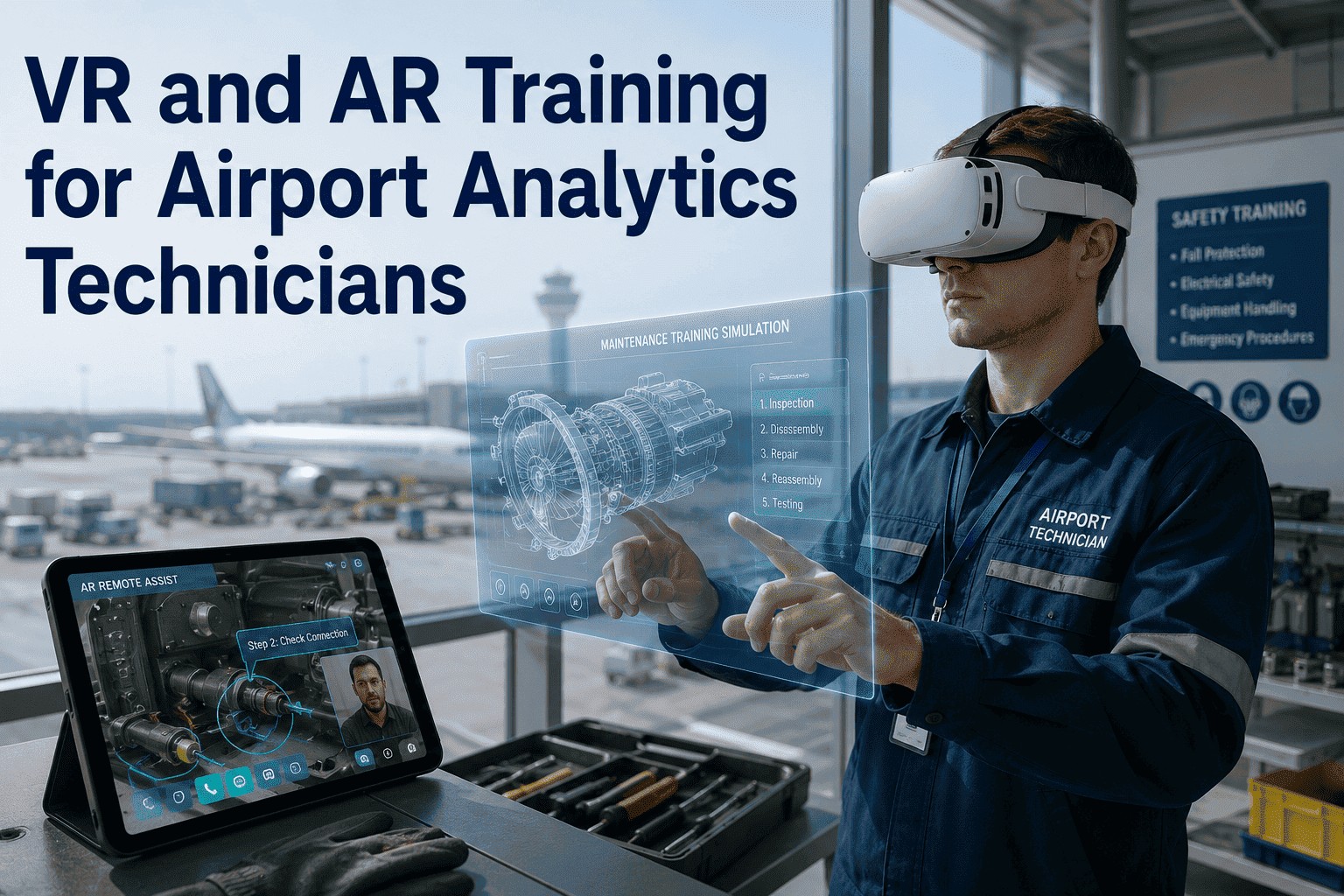
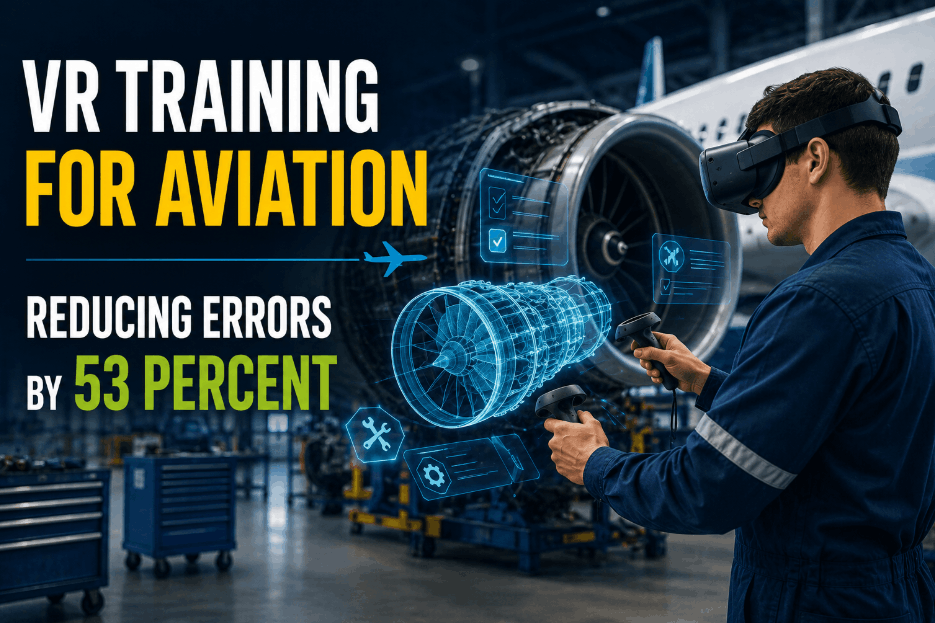
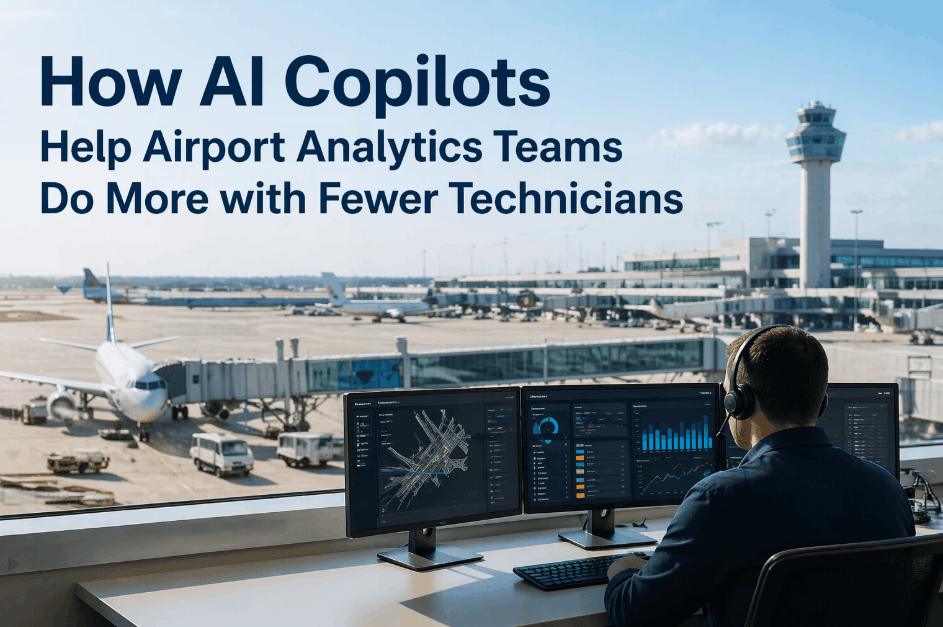
Airport analytics technicians work in environments where a single misstep on a live baggage handling system, a live CT scanner, or energised switchgear can end careers — or worse. Traditional classroom training prepares them for the theory. What it cannot replicate is the feel of executing a multi-step repair sequence under time pressure, in a confined space, with real consequences attached to every decision. Virtual Reality and Augmented Reality are closing that gap — giving technicians a place to make mistakes safely, build genuine muscle memory, and arrive at live equipment already confident in the procedure. The airports investing in VR and AR training today are building a maintenance workforce that makes fewer errors, qualifies faster, and causes significantly less unplanned downtime than the workforce trained on manuals and walk-arounds alone.
VR Training · AR Guidance · Mobile AI App · Airport Analytics Workforce
Train Once in Virtual Reality. Execute Perfectly on Real Equipment. iFactory's Mobile AI App Connects Both.
Simulated equipment repair, AR remote expert guidance, and AI-driven mobile workflows — the training and operations platform built for airport analytics technicians where every procedure matters.
76%
Improvement in knowledge retention when airport technicians train in immersive VR environments versus traditional classroom-only instruction
40%
Faster skill acquisition reported when technicians practice procedures in simulated VR environments before performing them on live airport equipment
32%
Reduction in safety incidents during maintenance activities at airports that deployed structured VR and AR training programmes
25%
Cut in overall training time achieved by Airbus using VR modules for complex procedures — with task accuracy improving by 40% simultaneously
Why Traditional Training Fails Airport Analytics Technicians
Airport analytics equipment — baggage handling systems, CT security scanners, travelator drive units, boarding bridge hydraulics — cannot be taken offline for training exercises during operational hours. That constraint has historically pushed technician education into classrooms and static labs that share almost nothing with the real maintenance environment. The gap between knowing a procedure and executing it confidently on live, pressurised, moving equipment is where errors happen and where unplanned downtime originates.
The Traditional Training Problem
No access to live equipment
BHS conveyors, CT scanners, and boarding bridges cannot be stopped mid-operation for training runs. Technicians learn on diagrams and plastic models that bear no physical resemblance to the systems they will maintain.
Knowledge fades within weeks
Classroom training delivers an average 20% knowledge retention after 30 days. A technician who completed a course three months ago and is now dispatched to a fault they have not physically practised carries that retention deficit directly into the repair.
High cost, high disruption
Traditional instructor-led courses average $2,400 per technician per course and require 3 to 5 days away from operations — a significant operational gap in lean maintenance teams already stretched across large terminal footprints.
What VR and AR Change
Unlimited practice on live-replica systems
VR environments replicate airport equipment at full physical fidelity. Technicians can strip, reassemble, fault-inject, and repair a virtual BHS conveyor or CT scanner as many times as needed — without touching operational infrastructure or creating passenger disruption.
Retention that survives the gap to deployment
Immersive, procedural VR training raises knowledge retention to 76% after 30 days — more than three times the classroom baseline. A technician dispatched to a fault six weeks after VR training arrives with a working mental model, not a blank page.
Scalable, shift-compatible delivery
VR modules run on-site, on any shift, without pulling teams from operations for multi-day courses. A technician can complete a 45-minute CT scanner calibration scenario during a quiet period and return to duty the same day, qualified and assessed.
VR vs AR: Two Technologies, Two Roles in Airport Analytics Training
VR and AR are not interchangeable. Each serves a distinct purpose within an airport analytics training programme, and the most effective deployments use both in sequence — VR to build competency before the job, AR to support execution during it.
Virtual Reality — Pre-Job Training
Build the skill before touching the asset
VR creates a fully immersive simulated environment where technicians physically rehearse procedures — moving through the repair sequence with realistic spatial orientation, tool interaction, and system response. The headset removes the training environment entirely and replaces it with the virtual asset.
Best for airport analytics use cases
BHS belt alignment and motor replacement · CT scanner calibration sequences · Escalator drive unit overhaul · Confined space entry procedures · High-voltage switchgear isolation · Boarding bridge hydraulic fault diagnosis
Key capability
Scored, timed scenario assessment — technicians are evaluated in the simulation before being cleared for live execution, with results logged to the competency record in iFactory's mobile AI app
Augmented Reality — Live Job Support
Guide the technician through real execution
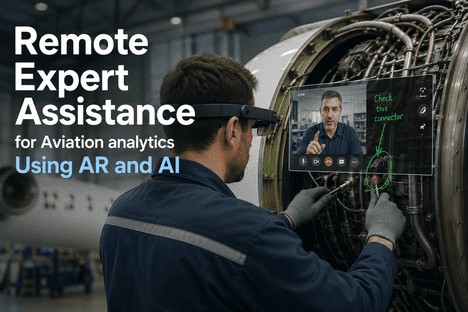
AR overlays digital information onto the physical world. A technician wearing AR smart glasses sees the actual asset in front of them — and sees step-by-step instructions, torque values, wiring diagrams, and remote expert annotations superimposed directly onto the relevant components. The real world stays visible; the digital layer sits on top of it.
Best for airport analytics use cases
First-time execution of complex procedures · Remote expert guidance from off-site specialists · Live work order instructions pulled from iFactory · Verification checkpoints during safety-critical steps · Unfamiliar equipment variants at multi-terminal airports
Key capability
A specialist 1,000 miles away annotates the technician's live view with visual markers — pointing to the exact component, overlaying the correct sequence, and confirming each step before the technician proceeds to the next
Mobile AI App · Work Orders · Training Records · Competency Tracking
VR Builds the Skill. AR Guides the Job. iFactory's Mobile AI App Connects Training Data to Every Work Order That Follows.
When a technician completes a VR scenario, the result logs directly to their competency profile in iFactory — so every work order dispatched to that technician reflects what they have actually been trained and assessed to do.
Six High-Risk Airport Analytics Scenarios Where VR Training Changes the Outcome
Not all maintenance tasks carry equal risk. The following six scenarios represent the highest-consequence procedures in airport analytics maintenance — where a missed step, incorrect torque, or wrong isolation sequence creates safety exposure, passenger disruption, or both. VR simulation changes the preparation profile for each one.
Scenario 01
BHS Belt Replacement Under Time Pressure
Baggage handling belt replacement requires a sequence of isolation, tensioning, and alignment steps that must be completed within a specific maintenance window before the system is required back in service. Errors in tension calibration cause conveyor slippage or misalignment that replicates the fault within days.
VR training outcome
Technicians rehearse tension calibration sequences in timed simulations — building the speed and accuracy to complete the job within the maintenance window without shortcuts
Scenario 02
CT Scanner Calibration at Checkpoint
CT scanner calibration is a multi-step procedure with zero tolerance for sequence deviation. An out-of-calibration scanner must be taken offline immediately — removing 150 to 300 passengers per hour of throughput capacity until the fault is resolved. Technicians who have only read the calibration procedure take significantly longer on their first live execution.
VR training outcome
Repeated virtual calibration runs build the sequence into procedural memory — reducing first-execution time and eliminating the hesitation that extends checkpoint downtime
Scenario 03
Escalator Drive Unit Overhaul
Escalator drive unit access requires working in an elevated, confined machine room above the step mechanism. The combination of height, confined space, and rotating drive components creates a risk profile that classroom training cannot adequately prepare technicians for. Spatial disorientation in a real machine room during a first-time job is a documented safety risk.
VR training outcome
Technicians experience the spatial environment of the machine room virtually before entering physically — eliminating the disorientation factor and allowing full concentration on the technical procedure
Scenario 04
High-Voltage Switchgear Isolation
Switchgear isolation procedures for terminal electrical infrastructure involve a mandatory lock-out/tag-out sequence before any maintenance work begins. A missed isolation step on live high-voltage equipment carries life-safety consequences. This is a procedure where the correct sequence must be automatic — not recalled under stress from a training manual read six months earlier.
VR training outcome
Scored VR isolation simulations with deliberate fault injection — including scenarios where the VR environment penalises incorrect sequence — drive the correct procedure into deep procedural memory before live exposure
Scenario 05
Boarding Bridge Hydraulic Fault
Passenger boarding bridge hydraulic faults occur at the intersection of ground operations and aircraft turnaround. A failed bridge forces bus-gate operations — adding 15 to 30 minutes per turnaround per stand. The hydraulic fault diagnosis sequence involves pressure testing, valve inspection, and actuator assessment steps that are difficult to teach without a physical bridge in a fault state.
VR training outcome
VR bridge simulations replicate multiple fault states — allowing technicians to diagnose different hydraulic scenarios to build the pattern recognition that reduces diagnostic time on real bridges from hours to minutes
Scenario 06
Confined Space Entry — Active HVAC
Terminal HVAC maintenance involves confined space entry with atmospheric monitoring, buddy system protocols, and emergency extraction procedures. The confined space environment is disorienting under stress. Technicians who have only read the entry procedure are at significantly higher risk on their first real entry than those who have experienced the spatial environment in VR.
VR training outcome
VR confined space simulations including emergency exit scenarios reduce first-entry stress response and allow technicians to execute monitoring and communication protocols correctly from the very first live entry
How AR Remote Expert Guidance Works in Airport Analytics Maintenance
One of the most operationally significant AR capabilities for airport maintenance teams is remote expert guidance. Large airports operate across multiple terminals, multiple piers, and in some cases multiple sites — while specialist technical knowledge is typically concentrated in a small number of senior technicians. AR changes the distribution of that expertise.
Technician on site
Wearing AR smart glasses at the fault location — sees the real equipment with digital overlays active. Opens the work order in iFactory's mobile AI app which displays procedural steps on the glasses.
iFactory mobile AI app
Delivers the work order, pulls the asset's maintenance history, streams the live view to the remote expert, and logs every step completed — with timestamps and technician ID against the job record.
Remote specialist
Sees the technician's exact field of view on their screen. Places visual annotations directly onto components in the live feed — those annotations appear overlaid on the equipment in the technician's glasses in real time.
The operational result for airport analytics teams
A single specialist at the engineering centre can guide technicians across three terminals simultaneously — without travelling between sites. Specialist knowledge is no longer gated by physical location. Junior technicians can execute advanced procedures safely with expert oversight streamed directly into their field of view, and every interaction is logged to the work order automatically.
The iFactory Mobile AI App: Where Training Data Meets Live Operations
VR and AR training deliver their full value only when the competency data they generate is connected to the work order system that dispatches technicians to jobs. iFactory's mobile AI app is the operational layer that makes this connection — linking what a technician has been trained and assessed to do, to the work orders they receive and the equipment records that inform every maintenance decision.
01
Competency-matched dispatch
When a fault is raised, the AI app surfaces which technicians in the shift have completed the relevant VR training scenario and received a passing assessment score. Dispatch goes to a qualified technician — not simply the nearest available one.
02
AR work instructions on the job
Once the technician accepts the work order on the mobile app, the step-by-step AR procedure is available immediately. For glasses-equipped technicians, the procedure streams directly to the eyewear. For phone-based AR, the camera view overlays the asset-specific instructions onto the physical equipment.
03
Real-time asset history at the fault
The mobile app displays the full maintenance history of the asset at the fault location — previous fault codes, parts replaced, calibration records, and MTBF data. The technician arrives at the asset with complete context, not a blank work order and a manual.
04
Automatic competency log update
When the job is completed and signed off in the app, the technician's live execution record is updated alongside their VR assessment history. Over time this builds a precise competency profile — used for training gap identification, certification scheduling, and workforce planning.
"
We had a situation where a junior technician was dispatched to a boarding bridge hydraulic fault during a turnaround. In the past that would have meant waiting for a senior engineer to travel from the other terminal. With AR remote guidance streamed through his phone, our specialist walked him through the diagnosis and repair in 22 minutes from the engineering office. The bridge was operational for the next departure. That single event justified the entire training platform investment for our operations director.
— Head of Airside Equipment, International Hub Airport — 14 Years Ground Operations Experience
What the Data Shows When VR and AR Training Are Deployed
Knowledge Retention at 30 Days
76% vs 20%
VR-trained airport technicians retain 76% of procedural knowledge at 30 days against 20% for classroom-only training. At 60 days, the gap widens further — meaning technicians dispatched weeks after training still arrive at faults with a working mental model of the procedure.
Safety Incident Reduction
32% fewer
Airports deploying structured VR and AR maintenance training report a 32% reduction in safety incidents during live maintenance activities. The reduction is attributed to better procedure adherence, reduced hesitation at critical decision points, and more effective use of personal protective equipment protocols practised in VR.
AR/VR Aviation Market Growth
$2B to $12B
The global AR and VR aviation market is projected to grow from $2 billion in 2025 to $12 billion by 2033 — a 25% compound annual growth rate driven by MRO adoption, airport maintenance programmes, and airline training mandates. Early adopters are building competitive advantage now.
Frequently Asked Questions
Conclusion
The airport analytics technician of 2025 is expected to maintain equipment of increasing complexity — CT scanners, AI-integrated BHS sortation systems, boarding bridge automation — with a training programme that in most airports has not fundamentally changed in 20 years. VR removes the access barrier to realistic procedural training. AR removes the knowledge isolation barrier during live execution. Together they produce technicians who make fewer errors, respond faster to faults, and require less supervision on their first execution of a complex procedure.
iFactory's mobile AI app connects those training outcomes directly to the operational layer — ensuring that every work order dispatched reflects what the technician has actually been trained to do, and that every completed job updates the competency record that informs the next training and scheduling decision. Book a Demo to see how iFactory integrates VR and AR training data with airport analytics operations, or Talk to an Expert to begin building the competency and maintenance records that make smarter technician dispatch possible.
Train Safer. Deploy Smarter. iFactory Connects Every VR Scenario to Every Work Order That Follows.
Competency-matched dispatch, AR remote expert guidance, real-time asset history, and automatic job records — the mobile AI app that turns training investment into operational performance for airport analytics teams.