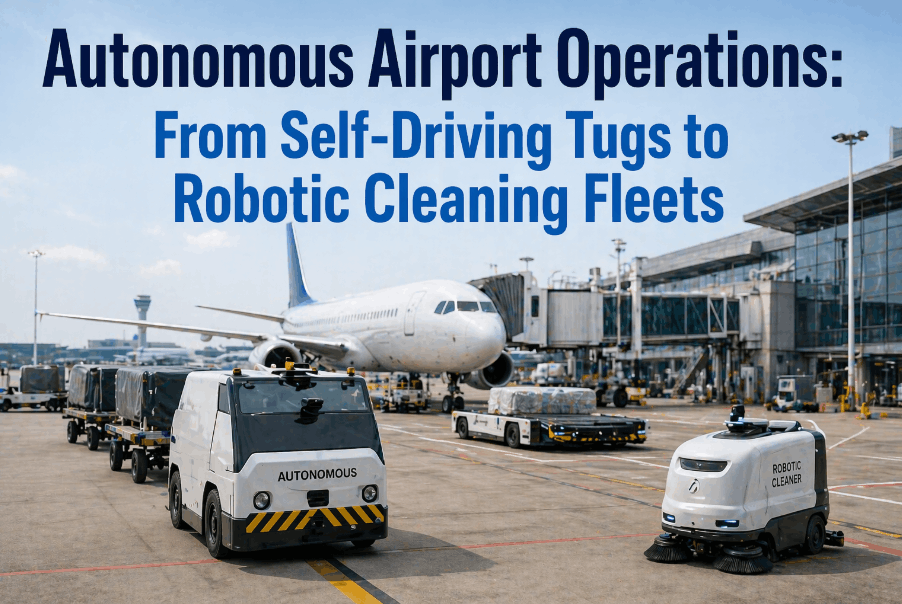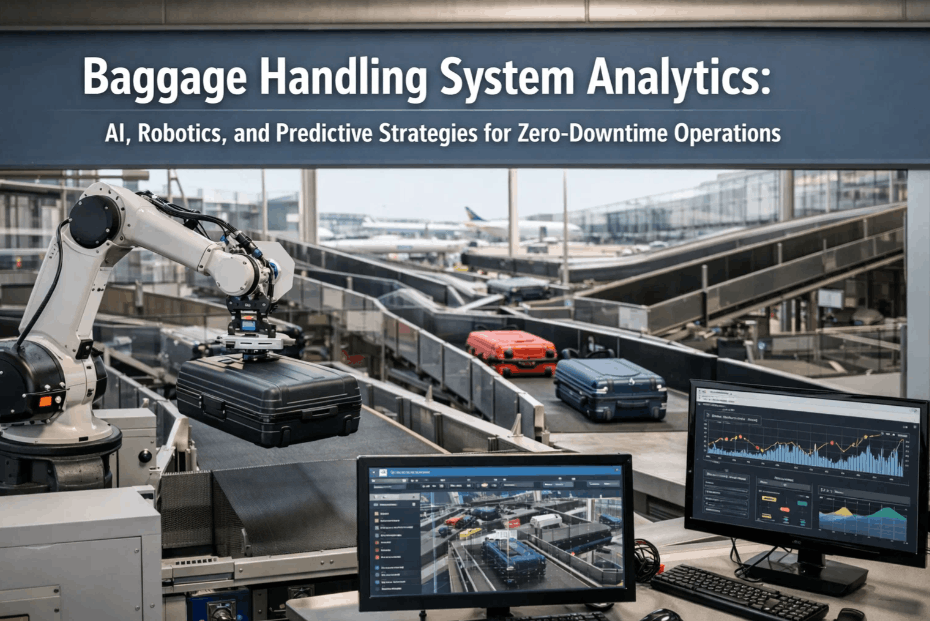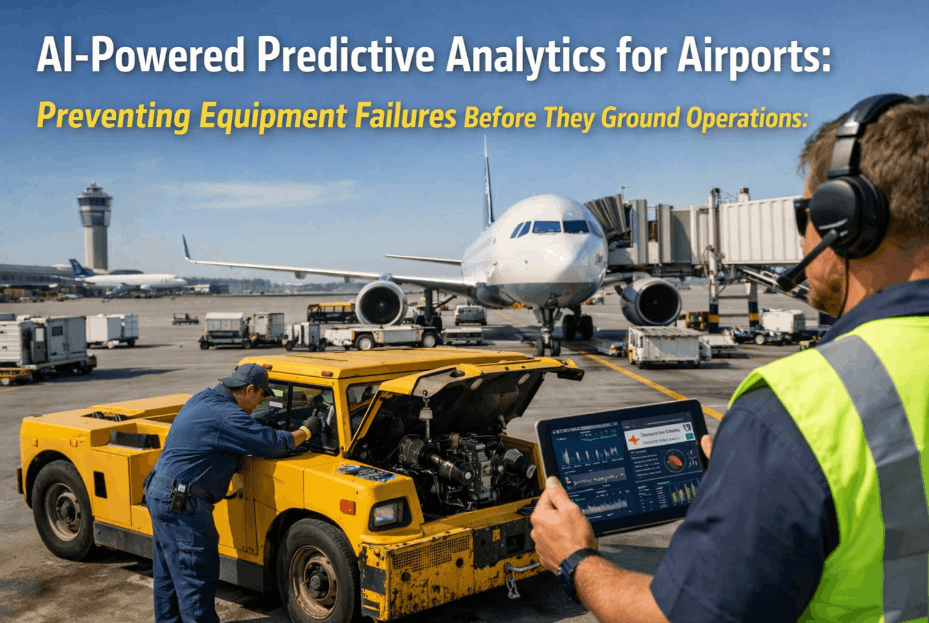
Airport facility analytics is undergoing the most significant operational transformation in aviation history. Autonomous robots — cleaning machines, inspection drones, and self-driving ground support equipment — are no longer pilot programs. In 2026, they are mission-critical infrastructure reducing labor costs by up to 30%, eliminating inspection blind spots, and delivering real-time asset intelligence across every square meter of airside and landside operations. The airports that deploy AI-powered robotics today are building a structural cost and safety advantage that reactive, labor-dependent facilities cannot close. This guide breaks down every category of airport robotics, how AI Copilot systems orchestrate them, and the analytics stack powering the next generation of autonomous airport operations. Book a demo to see how iFactory AI is transforming airport facility analytics in 2026.
Ready to Automate Your Airport Operations?
Connect your robot fleet to a live analytics dashboard. Real-time alerts, predictive maintenance, and full compliance reporting — all in one platform.
What Is Airport Facility Analytics — And Why Robots Change Everything
Airport facility analytics is the discipline of collecting, integrating, and acting on operational data from every physical system in a terminal — HVAC, baggage handling, lighting, structural assets, and ground support equipment. Traditionally, this data was gathered manually: technicians walking inspection routes, supervisors reviewing spreadsheets, and maintenance teams responding to failures after they occurred. Autonomous robots fundamentally break this model. When a cleaning robot traverses 40,000 square meters of terminal flooring every night, it is not just cleaning — it is generating a continuous stream of sensor data that feeds directly into the airport's AI Copilot, flagging anomalies and triggering CMMS work orders without human intervention. Airports that understand this dual function — task execution as primary, data generation as parallel — extract maximum value from their robotics investment. Book a demo to see how iFactory's AI Copilot connects your autonomous fleet to a live analytics dashboard.
The 5 Categories of Autonomous Robots Transforming Airport Operations
Modern airport robotics is a coordinated ecosystem of specialized autonomous systems — each solving a distinct operational problem while feeding data into a shared intelligence layer.
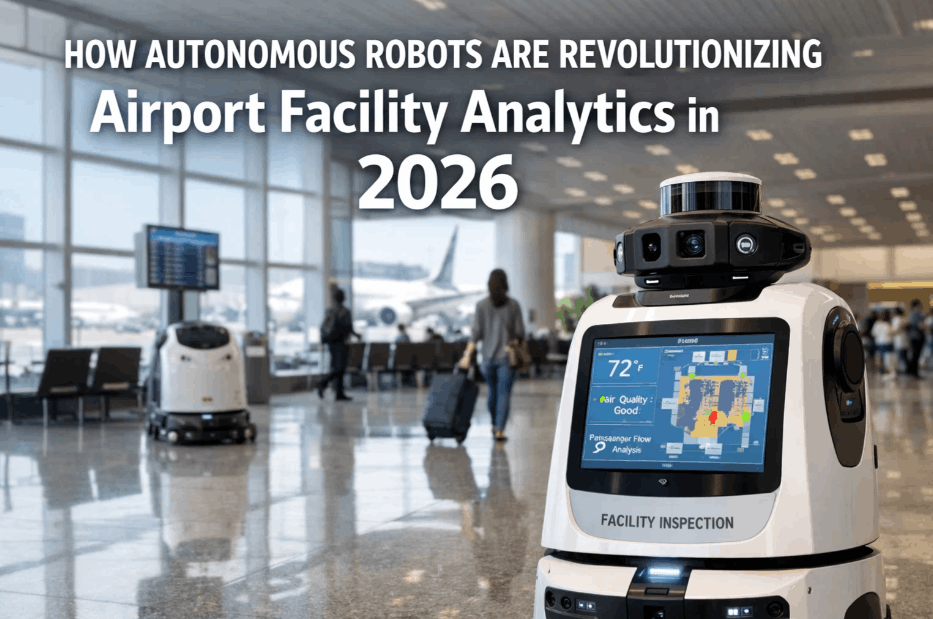
Autonomous floor scrubbers navigate terminal concourses using LiDAR and pre-mapped routes — operating off-peak without staff supervision.
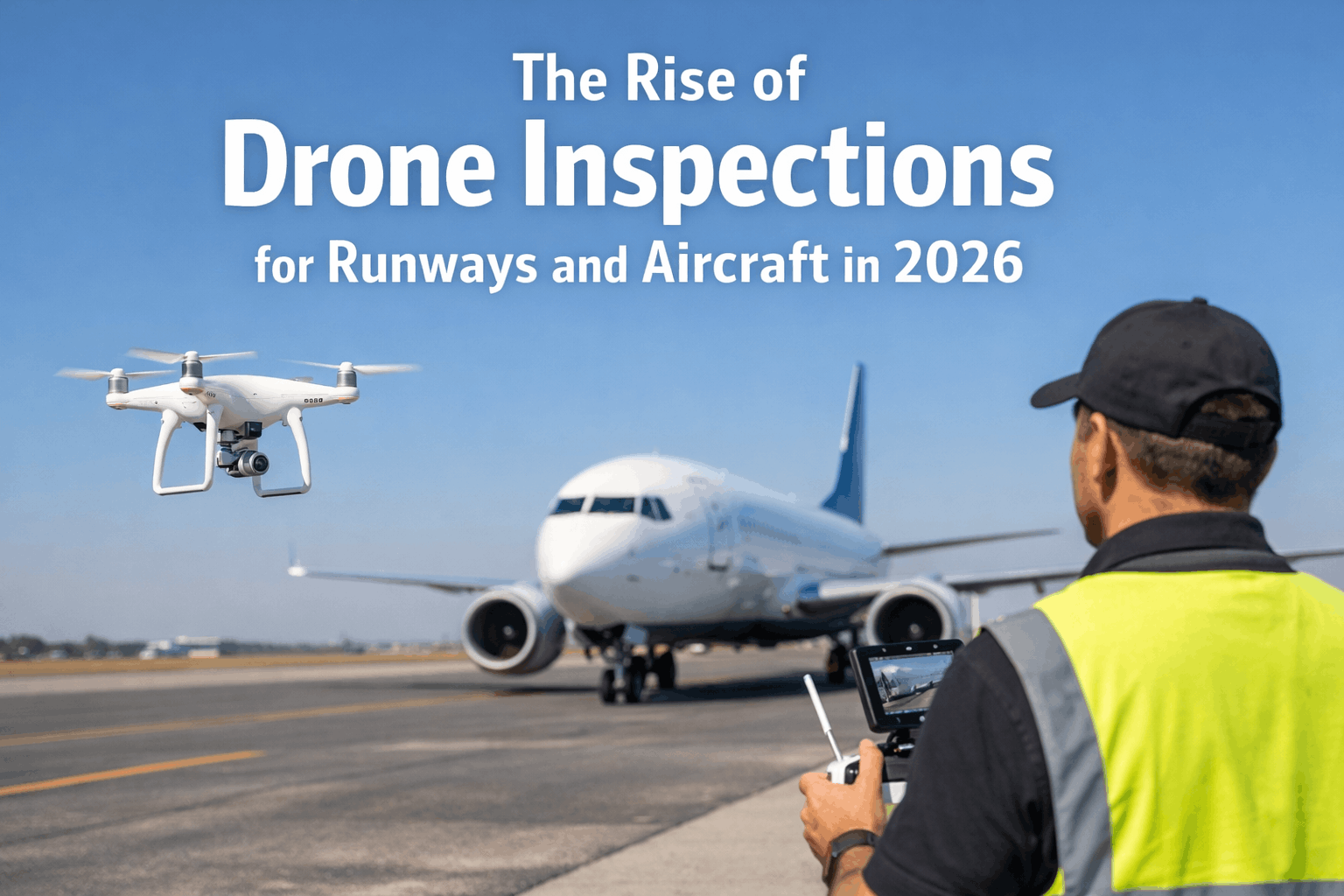
Inspection drones sweep a 3,000m runway in under 20 minutes — detecting FOD, surface cracks, and lighting faults with AI vision models.
Self-driving GSE units follow precision GPS routes, auto-receive loading assignments, and eliminate driver fatigue errors on the apron.
Crawling robots inspect facades, jetbridges, and utility tunnels using ultrasonic sensors and thermal imaging — no scaffolding required.
Wayfinding and check-in robots collect real-time occupancy heat maps that automatically adjust terminal HVAC zones by passenger density.
How AI Copilot Orchestrates the Entire Autonomous Robot Fleet
Individual robots are powerful. An AI Copilot that coordinates all of them simultaneously is transformational. iFactory's AI Copilot ingests all robot telemetry streams, cross-references them with existing CMMS asset records, and surfaces prioritized maintenance alerts automatically. A cleaning robot detecting an unusual water pattern near Gate 42 automatically checks if a plumbing work order is already open in that zone — if not, it creates one. Book a demo to see AI Copilot fleet orchestration live.
Drone Runway Inspection: The New Standard for Airfield Safety Analytics
FOD on runways costs the aviation industry an estimated $4 billion annually. Traditional human-led inspection can take 60 minutes or more per sweep. Airport inspection drones compress this to under 20 minutes, with AI vision models exceeding 95% detection accuracy for objects smaller than 5 centimeters. Beyond FOD, drone programs now capture pavement condition index data, runway edge lighting verification, and drainage blockage detection — all in one automated pass. Airports deploying drone inspection report 55 to 70% lower inspection labor costs while increasing inspection frequency from twice daily to every two hours. Book a demo to see how iFactory integrates drone inspection data into your airfield analytics stack.
Autonomous GSE: Apron Safety, Efficiency, and Real-Time Analytics
The airport apron is one of the most dangerous operational environments in the world. Autonomous ground support equipment eliminates the primary cause of apron accidents — human error under time pressure. Self-driving baggage tugs with 360-degree sensor suites maintain millimeter-precision separation from aircraft. Beyond safety, autonomous GSE generates continuous apron utilization data that AI platforms use to optimize ground movement and reduce turn-around times. Major hub airports integrating autonomous baggage vehicles report a 15 to 20% improvement in on-time departure performance.
| Operational Factor | Manual GSE Operations | Autonomous GSE with AI Copilot | Performance Gain |
|---|---|---|---|
| Ground Incident Rate | 7.2 per 10,000 movements | 1.1 per 10,000 movements | 85% reduction |
| Baggage Transfer Time | Manual routing, driver-dependent | AI-optimized, auto-dispatched | 18% faster avg. |
| Labor Cost per Turn | 3–4 tug drivers per wide-body | 1 supervisor per 8 autonomous units | 30% cost reduction |
| Equipment Utilization | Reactive scheduling, high idle time | AI dispatch minimizes idle time | 40% utilization gain |
| Data Generated per Turn | Paper records, manual logs | Structured telemetry to CMMS | 100% digital capture |
| Maintenance Visibility | Breakdown-triggered repair | Predictive alerts, onboard diagnostics | 45% fewer breakdowns |
Terminal Cleaning Robots: Beyond Hygiene Into Facility Intelligence
Robotic cleaning systems are routinely evaluated on cleaning performance alone. The more strategic value lies in what they detect while cleaning. Modern terminal cleaning robots carry LiDAR mapping, humidity sensors, and optical systems that identify surface degradation — logging anomalies as structured CMMS alerts on every single pass. The result: 100% terminal floor coverage, every night, with no missed sections or inspection fatigue. Book a demo to see how iFactory structures cleaning robot data into actionable facility analytics.
Implementing Autonomous Robots: The 4-Phase Deployment Roadmap
Deploying a coordinated autonomous robot fleet across a major airport must be sequenced carefully to avoid disrupting live flight operations.
- Wireless network density mapping for full sensor coverage
- CMMS API configuration for robot alert ingestion
- AI Copilot onboarding with existing asset registries
- Data governance framework setup
- Deploy cleaning robots in a controlled terminal zone first
- Validate sensor outputs vs. manual inspection records
- Calibrate AI alert thresholds and CMMS workflows
- Obtain aviation authority approval for drone operations
- Expand to full terminal and apron coverage
- Phase in autonomous GSE on lower-traffic stands first
- AI Copilot begins cross-robot data correlation
- Train predictive models on 6+ months of robot telemetry
- AI Copilot identifies seasonal anomaly patterns
- Auto-generate regulatory compliance documentation
- Expand programs to new terminals based on ROI data
- ESG reporting includes robot-verified energy data
Overcoming the Top 4 Barriers to Airport Robotics Adoption
Despite clear ROI, many airports stall on autonomous robot deployment due to predictable organizational and technical barriers. Understanding these blockers is essential for building a successful business case.
Deploy AI-Orchestrated Autonomous Robotics Across Your Airport
Connect your entire autonomous robot fleet into a single real-time analytics platform. Predictive maintenance, ESG compliance, and fleet orchestration — from day one.
Frequently Asked Questions
Airport cleaning robots carry LiDAR sensors, environmental monitors, and optical systems that identify surface degradation and water accumulation. As they traverse terminal zones, this sensor data transmits in real time to the AI Copilot, which structures it into maintenance alerts and facility condition records — transforming the robot into a continuously operating facility sensor network.
Most mid-sized international airports achieve full capital payback within 26 to 36 months. Primary ROI drivers include 30% labor cost reduction, 45% fewer equipment breakdowns through predictive maintenance, and 15–20% improvement in aircraft turn-around performance. AI Copilot tracks these metrics in real time for continuous internal ROI demonstration.
Approval requires a detailed operational safety case, geofencing compliance documentation, human override capability, and ATC coordination. Airports using AI Copilot platforms find the process significantly faster — the immutable operational logs serve as the evidence base regulators require before granting approval.
Yes. Autonomous GSE integrates with airport operational databases and flight management systems via standard APIs. When a flight schedule changes, the AI Copilot automatically re-dispatches GSE units to reflect the updated sequence — keeping ground operations synchronized with live flight data without manual supervisor input.
The AI Copilot immediately escalates the alert through a pre-configured priority chain — routing it to the correct technician's mobile device with geolocated asset position, sensor readings, photographic evidence, and a suggested corrective action. Airfield anomalies simultaneously notify ATC and are logged with a time-stamp for compliance records.
Start Your Airport Robotics Analytics Journey
iFactory AI Copilot is built for aviation teams ready to move from reactive maintenance to fully autonomous, data-driven airport operations. Book a session with our specialists and see a live walkthrough tailored to your facility.