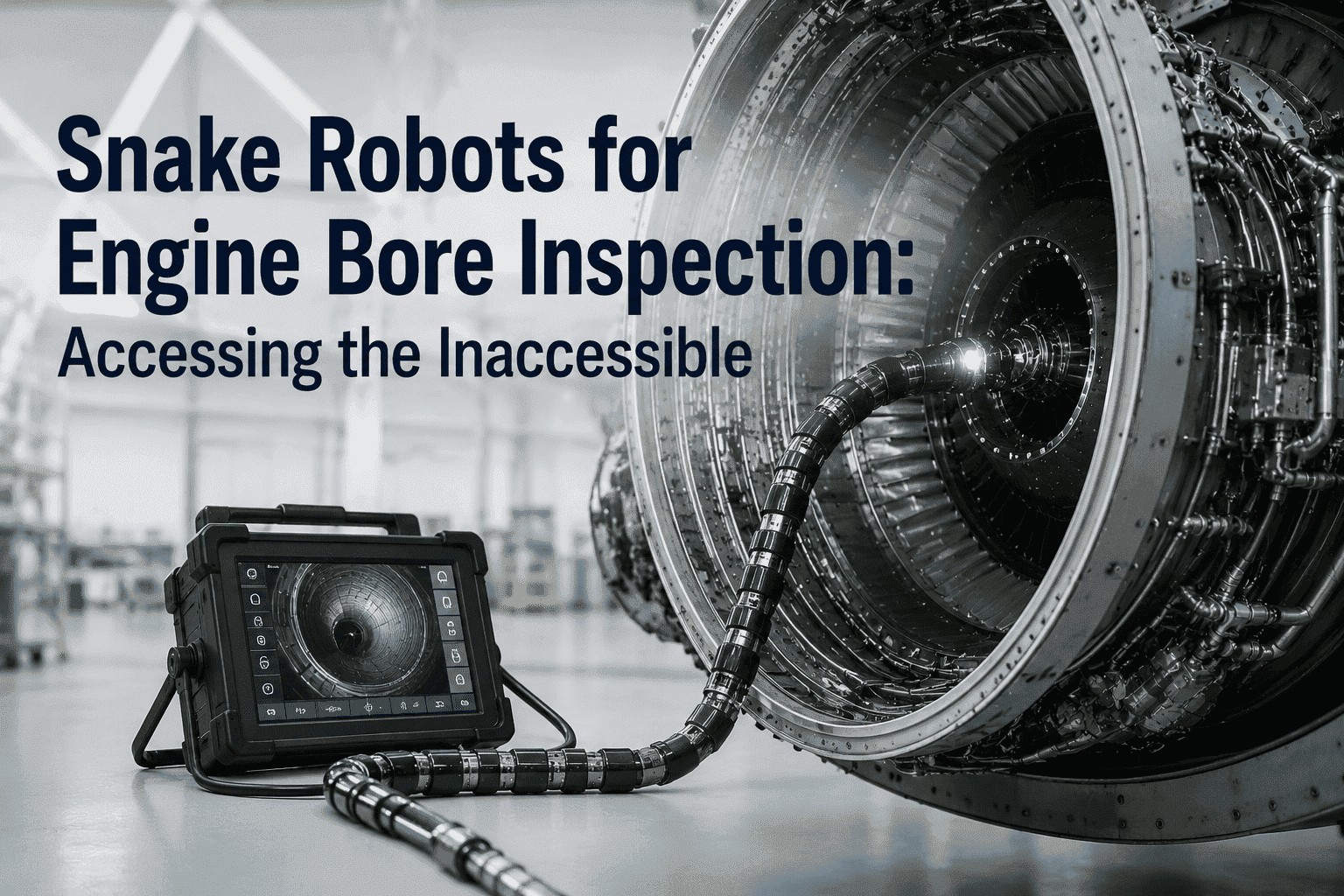
Inspecting the inside of a jet engine has always meant one of two things: disassembling the engine at a cost of $250,000 to $500,000 and weeks of downtime, or threading a manual borescope through access ports and hoping the operator can see enough. Both approaches leave critical gaps — literally. Manual borescopes lack the dexterity to navigate the complex internal geometry of a modern turbine engine. They cannot reach every blade, every combustion chamber surface, every cooling passage. Snake robots change that. A flexible, articulated robotic arm with up to 32 degrees of freedom can snake through a 10mm access port, navigate 180-degree bends, and deliver a high-resolution camera, NDT sensor, or even a repair tool to any internal surface — without removing the engine from the aircraft. GE Aerospace acquired OC Robotics in 2017 to do exactly this. Rolls-Royce is leading research programs on snake-arm inspection and repair. Chinese researchers at Xi'an Jiaotong University have demonstrated biomimetic snake robots performing "industrial minimally invasive surgery" inside engines. This technology is not coming — it is already inside your engines.
INSPECT ENGINES WITHOUT DISASSEMBLY
Snake Robots Reach What Borescopes Cannot
iFactory's Engine Inspection Management platform coordinates snake-arm robotic inspections, AI defect analysis, and automated work order generation — all without removing the engine from the wing.
10mmminimum access port diameter for snake-arm robot entry
32degrees of freedom — articulating through complex internal geometry
180+degrees cumulative bend to navigate every engine cavity
$0engine disassembly required for full internal bore inspection
The Problem: Manual Borescopes See Only Half the Story
Why Traditional Engine Inspection Leaves Critical Defects Undetected
A modern turbine engine contains thousands of internal surfaces — compressor blades, combustion chamber liners, turbine vanes, cooling passages, and seal surfaces — that must be inspected at regular intervals. The standard tool is a manual borescope: a semi-rigid or articulated camera cable threaded through igniter ports, borescope bosses, and drain holes. But this approach has fundamental physical limitations that no amount of operator skill can overcome.
Limited Articulation
Manual borescopes typically offer 2-way or 4-way tip articulation. Once inserted past the first bend, the operator loses steering control. Internal engine geometry with multiple compound curves — common in modern high-bypass turbofans — is simply unreachable with conventional borescope tools.
60-70% of internal surfaces reachable
Inconsistent Repeatability
Even when a defect is found, reproducing the exact camera position and angle in a subsequent inspection is nearly impossible. This makes progressive damage tracking unreliable. A crack that grew 2mm between inspections cannot be confirmed when the second image is taken from a different angle.
No positional repeatability
No Intervention Capability
A manual borescope can find a defect but cannot do anything about it. If a combustor deflector shows coating erosion or a compressor blade has a burr, the engine must come off wing for repair. Snake robots change this — the same arm that carried the camera can carry a laser, grinder, or coating spray tool.
Inspection only — no repair
What Is a Snake Robot — and How Does It Navigate an Engine?
32 Joints of Dexterity, One Continuous Path
A snake-arm robot is not a single-jointed arm with an elbow. It is a series of interlocking segments — typically 12 to 16 links, each with 2 degrees of freedom — that together form a continuous, hyper-redundant manipulator. Each segment can bend independently, allowing the arm to assume complex curves that follow the internal contours of the engine. Here is how a typical snake-arm engine inspection unfolds.
01
Mount & Insert
The snake arm mounts to a fixture on the engine nacelle or an access port. The operator selects the insertion point — igniter port, borescope boss, or drain hole. The arm's 10-12mm diameter tip enters the engine without any modification to the engine structure.
02
Navigate the Labyrinth
As the arm advances, each segment independently articulates to follow the internal geometry. The operator guides the arm using a real-time camera feed. The arm can bend 180+ degrees cumulatively, navigating around compressor stages, through combustion chambers, and past turbine vanes.
03
Inspect & Document
Upon reaching each target surface, the arm stabilizes its position while the camera captures high-resolution images and video. The arm records its exact position and orientation for each inspection point — enabling perfect positional repeatability on every subsequent inspection cycle.
04
Intervene or Withdraw
For repair-capable systems, the arm retracts the camera module and advances a tool — laser cutter, grinding burr, coating spray nozzle, or cleaning jet — back to the same coordinates. For inspection-only missions, the arm withdraws and the captured data is sent to the AI analysis engine.
SEE A SNAKE ARM IN ACTION
Watch a Full Internal Engine Inspection — No Disassembly
Our Engine Inspection Management team will show you a recorded snake-arm inspection of a high-bypass turbofan, from insertion through AI defect analysis. 30-minute demo, no commitment.
Snake Robot vs. Manual Borescope — Side by Side
The Capability Gap That Costs Airlines Millions in Unnecessary Teardowns
| Capability |
Manual Borescope |
Snake-Arm Robot |
Gain |
| Internal surface access |
60-70% reachable |
95%+ reachable |
+35% coverage |
| Degrees of articulation |
2-4 way tip only |
32 (16 links x 2 DoF) |
16x more dexterity |
| Positional repeatability |
Not possible |
Sub-millimeter recorded |
Track damage growth |
| Max cumulative bend |
90-120 degrees |
180+ degrees |
Double the range |
| Minimum access diameter |
4-6mm (camera only) |
10-12mm (with tools) |
Carries tools inside |
| In-situ repair capability |
None |
Laser, grind, coat, clean |
Eliminates teardowns |
| Inspection time per engine |
4-8 hours |
1-2 hours |
75% faster |
Who Is Deploying Snake Robots for Engine Inspection
Production Deployments by the World's Largest Engine OEMs
GE Aerospace
OC Robotics Acquisition — Snake Arm for On-Wing MRO
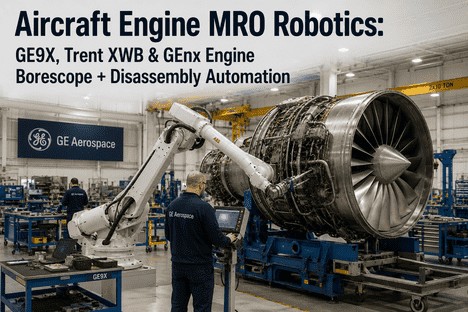
GE Aviation acquired OC Robotics in 2017, the world's leading designer of commercial snake-arm robots. Since then, GE has deployed snake-arm technology for on-wing cleaning, inspection, and repair of engines including the GEnx and CFM56 families. The robots reapply thermal barrier coatings inside combustors through igniter ports — a task that previously required full engine removal. GE is also developing AI-based inspection analytics in partnership with Waygate Technologies.
Rolls-Royce
Leading UK Research Program on Snake-Arm Inspection & Repair
Rolls-Royce leads a major UK research program developing miniature inspection tools, snake-arm robots, and self-repairing components for aircraft engines. The program targets Rolls-Royce's Trent family including the Trent XWB. Technologies include remote boreblending robots, periscope-like INSPECT bots for continuous monitoring, and flexible snake arms for internal access without disassembly.
Xi'an Jiaotong Univ.
Biomimetic Snake Robot — "Industrial Minimally Invasive Surgery"
Led by Professor Chen Xuefeng, a Chinese research team developed a biomimetic snake robot specifically designed for aviation engine inspection. The robot mimics biological snake locomotion to navigate engine interiors without dismantling. Chen describes the technology as "industrial minimally invasive surgery" — bringing medical robotics principles to aircraft engine maintenance. Demonstrations show successful navigation through complex internal engine geometry.
Armatrix
Snake-Like Robotic Arms — AI-Powered Navigation
India-based Armatrix has developed snake-like robotic arms with 3-5 meter reach and 50-150mm cross-section diameter, featuring AI-powered real-time navigation for confined space inspection. The arms support modular end effectors for visual inspection, welding, and painting. Armatrix has secured funding from gradCapital, pi Ventures, and Shell E4, and is targeting aerospace and defense applications.
YOUR ENGINES. OUR ROBOTICS PLATFORM.
Deploy Snake-Arm Inspection Across Your Fleet
iFactory's Engine Inspection Management platform integrates snake-arm robotics, AI defect analysis, and CMMS workflow automation — supporting GE, Rolls-Royce, Pratt & Whitney, and CFM engine families.
What Snake Robots Can Do Inside an Engine
Beyond Inspection — The Full Spectrum of Internal Engine Robotics
VIS
Visual & NDT Inspection
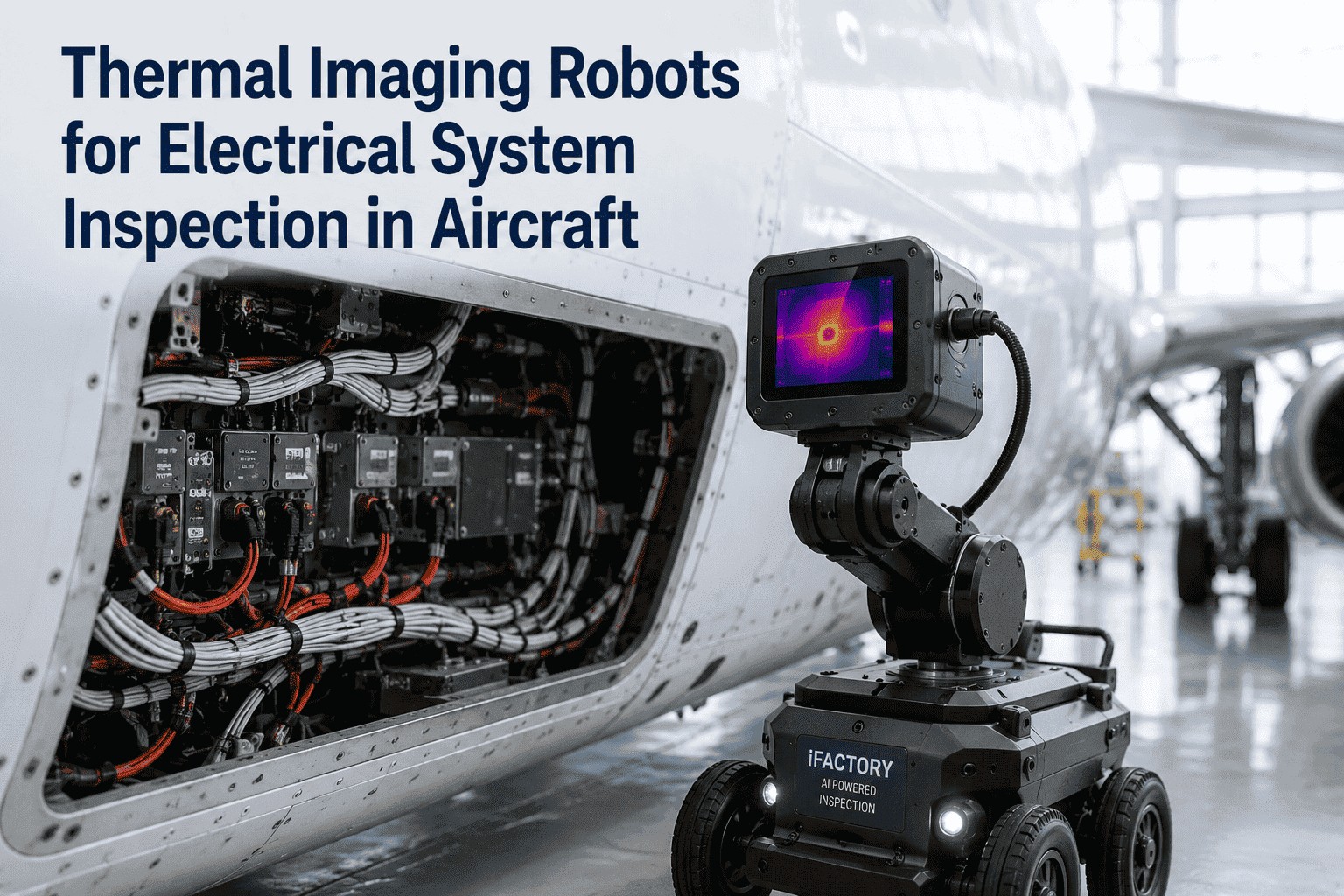
High-resolution visual imaging of compressor blades, combustion chambers, turbine vanes, cooling passages, and seal surfaces. Thermal imaging for subsurface delamination detection. Eddy current and ultrasonic NDT probes for crack depth measurement and material integrity assessment.
Directed cleaning of compressor and turbine stages using precision fluid jets or dry media. Removal of dust buildup, combustion residue, and oil deposits from internal surfaces. GE has deployed snake arms for combustor deflector cleaning on GEnx engines affected by harsh environment dust ingestion.
Laser ablation for burr removal and surface preparation. Precision grinding for blend repairs on compressor blade tips. Thermal barrier coating reapplication inside combustors. Laser welding for crack sealing. All performed through existing access ports with the engine remaining on the wing.
MON
Continuous Monitoring
Permanently embedded periscope-like inspection bots — as demonstrated in Rolls-Royce's INSPECT program — provide continuous internal engine monitoring between scheduled maintenance events. Real-time data on coating condition, blade health, and debris accumulation feeds into predictive maintenance models.
The Cost Impact — What Eliminating Unnecessary Teardowns Saves
Per-Event and Annual Savings for a 40-Engine Fleet
Snake-arm on-wing inspection eliminates engine removal for up to 80% of internal inspection requirements
On-wing snake inspection vs. remove-and-teardown: 95% reduction in aircraft downtime
No transport to MRO facility, no replacement engine logistics, no AOG spares required
AI analysis of snake-arm imagery detects defects in unreachable areas that manual borescopes miss entirely
For a 40-engine fleet, eliminating unnecessary engine removals through snake-arm inspection saves $4 million to $10 million annually in teardown, logistics, and downtime costs — while actually improving inspection coverage compared to traditional borescope methods. Against iFactory's Engine Inspection Management platform — including snake-arm robotics, AI defect analysis, and MRO system integration — documented payback periods range from 6 to 14 months, with higher-utilization fleets seeing payback within the first quarter.
CALCULATE YOUR SAVINGS
Run Your Engine Maintenance Data Through Our Model
Share your fleet engine types, inspection frequency, and current teardown rate. We will project exactly how many removals snake-arm inspection would eliminate — and what that saves in dollars and downtime.
How iFactory's Engine Inspection Management Platform Works
From Snake-Arm Insertion to Closed Work Order — One Integrated Workflow
01
Connect Engine Data & Inspection History
iFactory ingests your engine maintenance records, borescope history, and fleet utilization data from AMOS, TRAX, or SAP PM. The platform identifies which engines are due for internal inspection and prioritizes based on flight cycles, operating environment, and historical defect patterns.
02
Deploy Snake-Arm Robot & Capture Data
iFactory's platform guides the snake-arm operator through the inspection plan — specifying access ports, target surfaces, and required sensors for each engine type. The robot records its exact position at every inspection point, building a spatial map of the internal engine geometry that enables perfect repeatability on subsequent inspections.
03
AI Analyzes Every Internal Surface
Captured images and sensor data are processed through iFactory's aviation-specific AI models trained on 100,000+ labeled engine defect images. The system detects cracks, erosion, coating loss, foreign object damage, and thermal distress — classifying each finding by type, severity, and location within the engine.
04
Work Orders Generated in Your CMMS
Flagged defects become work orders in your existing maintenance system with annotated images, engine coordinates, severity scores, and recommended repair procedures. The system distinguishes between findings that require engine removal vs. those addressable through the snake arm's on-wing repair tools — maximizing the value of every inspection.
05
Progressive Damage Tracking Over Cycles
Because the snake arm records its exact position for every inspection point, subsequent inspections capture images from the identical angle and distance. The AI compares current vs. previous images to measure damage progression down to fractions of a millimeter — enabling true condition-based maintenance instead of fixed-interval engine removals.
Frequently Asked Questions
How does a snake robot differ from a standard borescope?
A standard borescope has a semi-rigid cable with 2-way or 4-way tip articulation — once inserted past the first bend, the operator loses steering control. A snake-arm robot has 12 to 16 independently articulating segments, each with 2 degrees of freedom, for a total of 24 to 32 degrees of articulation. This allows the arm to navigate complex compound curves, reach surfaces behind obstructions, and maintain its position with sub-millimeter repeatability. Additionally, snake arms can carry repair tools — lasers, grinders, coating sprayers — not just cameras.
What engine types are compatible with snake-arm inspection?
Snake-arm robots have been deployed for inspection and repair on GE's GEnx, CFM56, and GE90 families, Rolls-Royce's Trent series including the Trent XWB, Pratt & Whitney's PW1000G geared turbofan, and CFM International's LEAP engine. The technology is adaptable to any large turbofan, turboprop, or turboshaft engine with standard borescope access ports. iFactory's platform includes pre-configured inspection profiles for 50+ engine types, with custom profiles created for new engines within weeks.
Can snake robots repair damage they find during inspection?
Yes — and this is the defining advantage over manual borescopes. GE's OC Robotics snake arms have been deployed for on-wing reapplication of thermal barrier coatings inside combustors, laser ablation of burrs on compressor blades, precision grinding for blend repairs, and directed cleaning of internal deposits. Rolls-Royce has demonstrated remote boreblending robots. The same arm that carries the inspection camera can be retracted and equipped with a repair tool that navigates back to the exact coordinates of the detected defect.
How does iFactory's AI analyze snake-arm inspection data?
iFactory's AI models are trained on over 100,000 labeled aviation engine defect images spanning crack types, erosion patterns, coating degradation, thermal distress, and foreign object damage. The system processes each inspection image through computer vision pipelines that classify findings by type, severity, and location. Because snake arms record precise positional data, the AI can compare images from the same location across multiple inspection cycles — automatically flagging damage growth trends that would be invisible to manual review.
What is the typical ROI for deploying snake-arm engine inspection?
The primary savings driver is eliminating unnecessary engine removals. A single engine removal for inspection costs $250,000 to $500,000 including teardown, transport, and reinstallation — plus 5 to 10 days of aircraft downtime. Snake-arm on-wing inspection eliminates 70-80% of these teardowns while providing superior inspection coverage. For a 40-engine fleet, this translates to $4 million to $10 million in annual savings. Against iFactory's complete platform deployment — including snake-arm robotics, AI analytics, and CMMS integration — payback is typically achieved within 6 to 14 months.
Are snake-arm inspections approved by aviation regulators?
GE Aerospace has deployed snake-arm robots for on-wing maintenance under its approved maintenance organization procedures, with specific applications approved for GEnx and CFM56 engine families. Rolls-Royce is pursuing regulatory approval as part of its UK research program. Regulatory acceptance follows the same pathway as other new inspection technologies: the operator updates its maintenance manual with the snake-arm procedure and demonstrates equivalence to traditional methods. iFactory's platform documents every inspection step with full traceability — capturing positional data, images, AI analysis output, and technician sign-off — providing the audit trail that regulators require for approval.
INDUSTRIAL MINIMALLY INVASIVE SURGERY FOR YOUR ENGINES
See Snake-Arm Engine Inspection Live
Our Engine Inspection Management team will walk you through a complete snake-arm inspection workflow — from insertion through AI defect detection to CMMS work order — using your engine types and maintenance profile. No generic demos, no commitment.