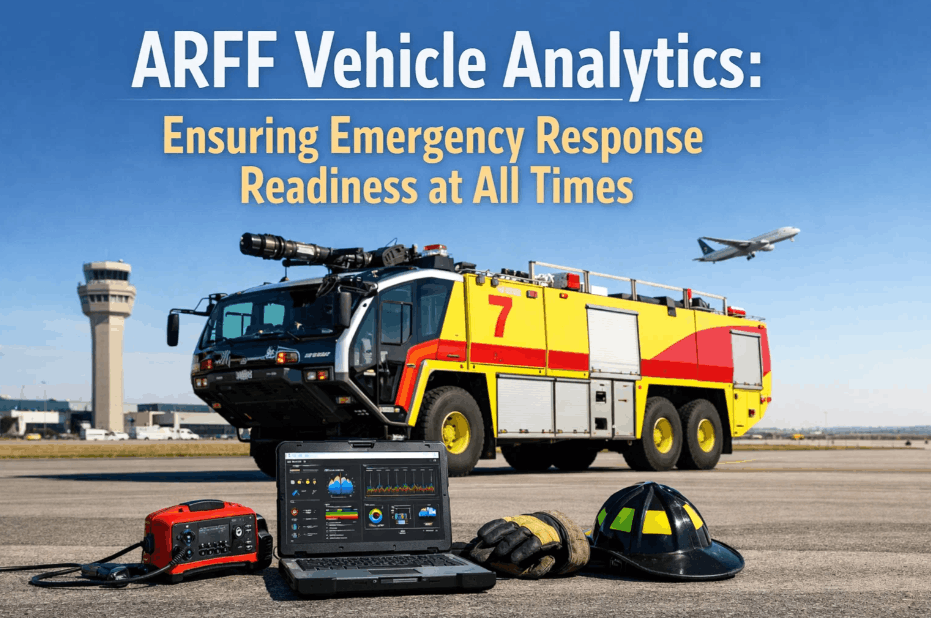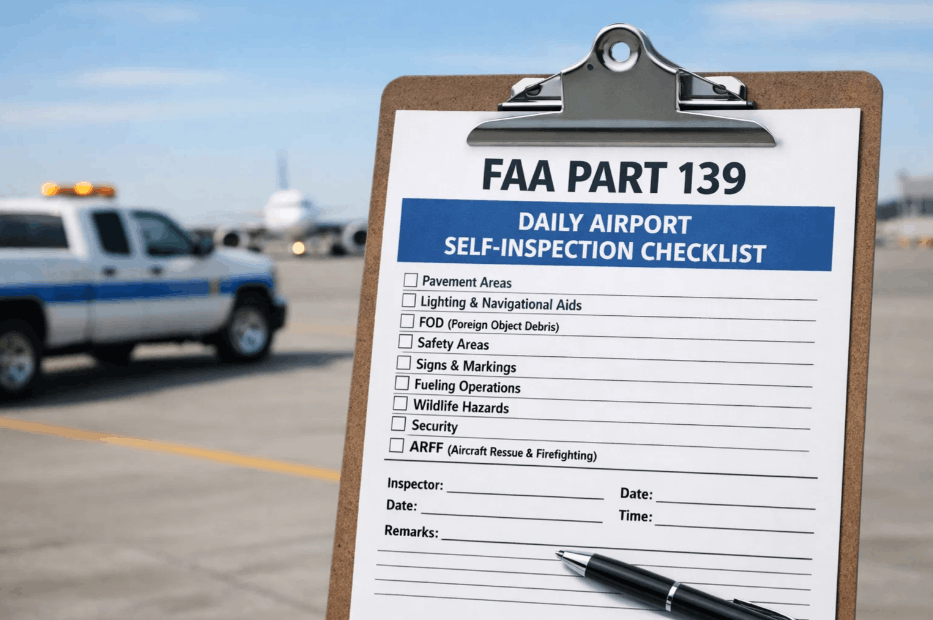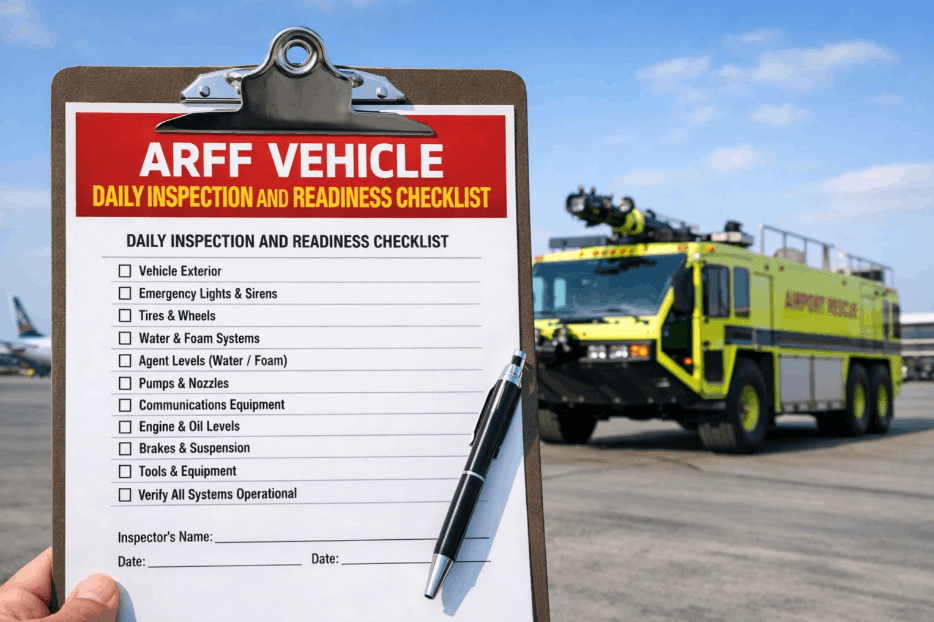
Airport Rescue and Firefighting (ARFF) vehicles are mission-critical assets that must be operationally ready within seconds of an alert. A structured daily inspection routine ensures every pump system, foam agent reserve, onboard communication device, and mechanical component is verified fit-for-service before each operational period. Whether your airport operates a single Category I station or a multi-unit Category X facility, a disciplined book a demo keeps your fleet ICAO Annex 14 and FAA AC 150/5210-6 compliant, reduces unplanned out-of-service events, and ensures your crews can meet mandatory response time benchmarks at every declared emergency.
1. Pre-Shift Vehicle Exterior & Structural Condition
Before any ARFF vehicle enters operational readiness status, a complete walk-around exterior inspection must confirm structural integrity, lighting systems, and access points are undamaged and serviceable. Damage missed at shift start can compromise crew safety during an actual response.
2. Engine, Drivetrain & Fluid Level Verification
The powertrain of an ARFF vehicle must sustain high-load acceleration from a standing start to full response speed within seconds. Daily fluid and engine checks prevent the mechanical failures that would leave a vehicle unable to complete an emergency response. If you need support configuring engine inspection workflows, book a demo with our ARFF maintenance specialists.
3. Pump System Operational Test & Prime Verification
The water pump is the primary suppression delivery system on any ARFF vehicle. A pump that fails to build pressure at scene is a catastrophic operational failure. Daily pump testing ensures the system is primed, pressure-ready, and capable of delivering rated gallons-per-minute output at the first activation. Start tracking pump test data automatically — book a demo and never miss a pump test record.
4. Foam Agent Level, Proportioning System & Agent Quality
ARFF foam suppression is the primary weapon against fuel-fed aircraft fires. Foam tank levels, proportioner calibration, and agent quality must be verified daily — a depleted or degraded foam supply discovered at an active aircraft rescue incident has life-safety consequences that cannot be reversed. To streamline your foam documentation workflow, schedule a demo with our ARFF compliance specialists.
5. Dry Chemical & Complementary Agent System Inspection
Many ARFF vehicles carry complementary suppression agents including dry chemical (PKP or Purple-K) and Halotron-equivalent clean agents for three-dimensional and in-depth fire control. These systems require dedicated daily checks separate from water-foam verification.
6. Communication Equipment & Alerting System Readiness
Communication failures during an aircraft rescue incident can delay crew coordination, compromise ATC integration, and prevent resource requests to mutual-aid units. Every radio, intercom, and alerting device must be tested to confirmed operational status before each shift. For multi-station communication audit trails, book a demo to see how iFactory captures shift radio test logs digitally.
7. Crew Personal Protective Equipment & Onboard Tool Inventory
ARFF vehicle equipment inventories must match the station's established equipment matrix at every shift change. Missing PPE or tools discovered at an aircraft rescue scene cannot be substituted or improvised — crew safety and operational effectiveness depend on a complete, verified equipment load at all times.
8. Response Time Verification & Compliance Documentation
ICAO Annex 14 and FAA regulations require ARFF vehicles to demonstrate the ability to reach any point on the operational movement area within mandated response time limits. Daily documentation of readiness status, position checks, and any operational restrictions is a regulatory requirement — not optional recordkeeping. Automate your compliance documentation — book a demo and generate audit-ready ARFF readiness reports instantly.