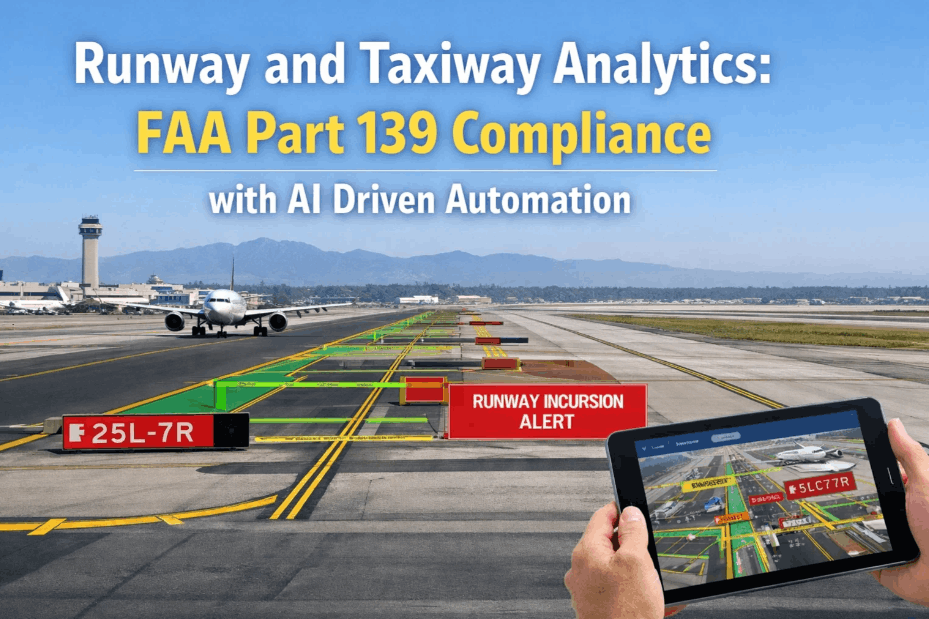
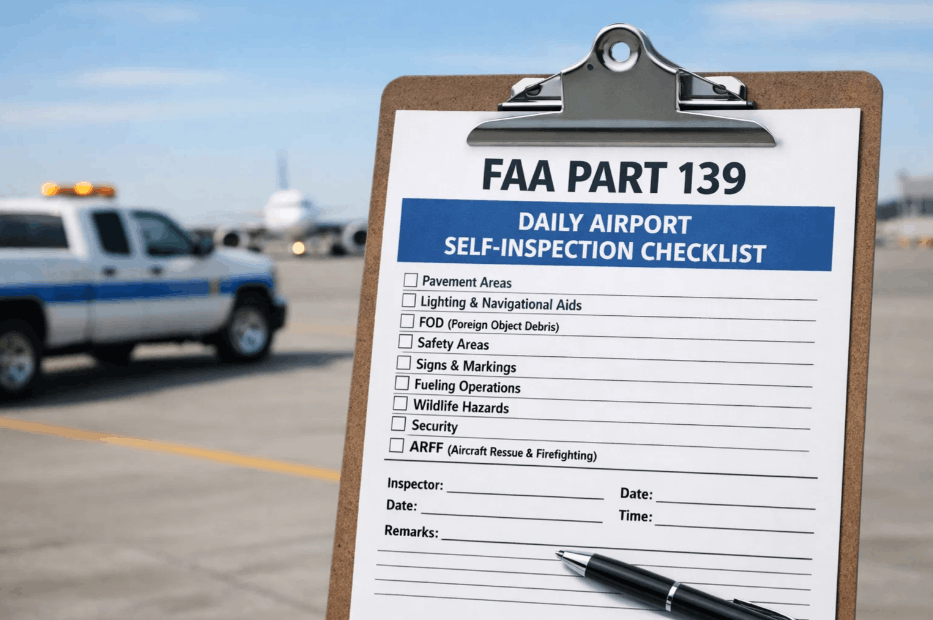
Airport certification is not just a regulatory checkbox — it is the operational backbone of every commercial airport in the United States. FAA Part 139 analytics requirements govern how airports demonstrate ongoing airworthiness across safety areas, ARFF readiness, pavement conditions, and self-inspection programs. Yet most airports still manage this through spreadsheets, paper logs, and manual audits — creating dangerous compliance gaps that iFactory is now eliminating. Book a demo to see how iFactory automates every Part 139 workflow from a single dashboard.
850+
FAA Part 139 Certificated Airports in the U.S.
14 CFR
Federal Code Governing Airport Certification Standards
$1.1M+
Maximum Civil Penalty Per Violation Under Part 139
72%
Of Compliance Gaps Preventable with AI-Driven Tracking
See iFactory's Part 139 Compliance Platform in Action
From self-inspections to ARFF readiness — every requirement tracked, documented, and audit-ready automatically.
What Is FAA Part 139 — and Who Must Comply?
FAA Part 139 (14 CFR Part 139) governs the certification of airports serving scheduled or unscheduled air carrier operations with aircraft seating more than 9 passengers. Certificate holders must demonstrate continuous adherence across safety, operational, and documentation requirements — or face penalties, certificate suspension, and shutdowns. Book a demo to see how iFactory maps every Part 139 obligation to automated tracking. Airports in the UK, Canada, Germany, and UAE operate under equivalent frameworks (CAA, Transport Canada, LBA, GCAA), making AI-driven compliance platforms a globally applicable solution.
The 8 Core Analytics Requirement Areas Under FAA Part 139
Part 139 compliance spans eight operational domains. Each carries its own documentation standard, inspection frequency, and enforcement risk.
01
Self-Inspection Programs
§139.327
Daily airfield inspections with timestamped records, inspector identity, and findings — auto-captured via mobile AI forms.
02
ARFF Readiness & Response
§139.315–§139.319
Vehicle readiness, agent quantities, drill completions, and certifications tracked in real time with automatic threshold alerts.
03
Pavement Management
§139.305
Distress index trends, load-bearing data, and seasonal degradation models powering predictive repair sequencing.
04
Safety Area Compliance
RSA / OFZ Standards
Geospatial monitoring flags unauthorized objects in runway safety areas in real time — not at the next annual inspection.
05
Airport Marking & Signage
§139.311
Retroreflectivity and sign illumination tracked automatically — replacement scheduled before FAA minimums are breached.
06
Wildlife Hazard Management
§139.337
Strike reporting, habitat assessments, and mitigation effectiveness — structured data ready for FAA wildlife assessment reviews.
07
Fueling Operations
§139.321
Fuel storage inspections, equipment condition, and operator training expiry monitored continuously for certificate holder compliance.
08
Training & Certification Records
§139.303
Expiry tracking, recurrency scheduling, and audit-ready certification archives — eliminating the gaps that cause most Part 139 failures.
Self-Inspection Programs: The Compliance Heartbeat of Part 139
Under §139.327, airports must inspect the airfield at least once daily during air carrier operations and make records immediately available to the FAA on demand. Missing timestamps, undocumented corrective actions, or coverage gaps are among the most common reasons airports fail certification audits.
Common Self-Inspection Documentation Failures
1
Missing Identity or Timestamp
Records without inspector name or exact timestamp are rejected as non-compliant by FAA auditors.
2
Deficiency Without Corrective Action
Finding a deficiency is only half the requirement. Closure must be documented with a completion timestamp.
3
Off-Hours Inspection Gaps
Overnight and multi-runway operations frequently have coverage gaps that appear as missed inspection days in FAA records.
4
Records Not Retrievable On-Demand
Paper binders and local spreadsheets cannot satisfy the FAA's immediate-access requirement during unannounced visits.
5
Certificate Action or Civil Penalty
Accumulated failures result in formal enforcement — fines up to $1.1M, operational restrictions, or certificate suspension.
iFactory's mobile inspection module replaces paper-based systems with GPS-stamped digital workflows. Supervisors receive automatic alerts for overdue inspections, and every deficiency is routed to a corrective action work order — archived in FAA-retrievable format from day one. Book a demo to see the self-inspection workflow live.
ARFF Readiness: Analytics Requirements and AI-Driven Monitoring
ARFF compliance is the most safety-critical dimension of Part 139. Regulators require airports to maintain index levels based on the largest aircraft serving the airport at least five times per week — and the data requirements to demonstrate continuous readiness are extensive. Book a demo to see how iFactory tracks every ARFF readiness obligation in real time.
Vehicle Readiness
Availability, serviceability, and positioning must be documented during all air carrier operations. AI platforms monitor check completion and deployment readiness continuously — no shift-handover gaps.
Agent Quantities
Minimum water, AFFF, and dry chemical levels are prescribed by ARFF index. IoT inventory tracking generates automatic alerts before any agent minimum is breached.
Response Time Compliance
§139.319 requires vehicles to reach the mid-point of the furthest runway within set time limits. AI tracks every drill and response — surfacing trend risks before an FAA inspection does.
Training & Certification
Initial training, recurrent drills, and live fire certifications are tracked per individual. The platform schedules upcoming requirements and maintains audit-ready records automatically.
Part 139 Compliance: Manual vs. AI-Driven Platform
Understanding the difference between legacy manual approaches and AI-driven platforms is essential for airports evaluating their certification risk exposure.
| Compliance Area |
Manual / Legacy |
iFactory AI Platform |
| Self-Inspection Records | Paper logs, binders, manual filing | GPS-stamped digital records, cloud-archived, FAA-retrievable instantly |
| ARFF Readiness Tracking | Shift checklists with handover gaps | Continuous IoT monitoring with automated threshold alerts |
| Pavement Condition Data | Periodic PCI surveys, no predictive data | AI distress indexing with predictive degradation curves |
| Training Records | HR spreadsheets, missed recurrency likely | Automated expiry alerts and proactive scheduling |
| Wildlife Strike Reporting | BASH reports filed inconsistently | Structured logging with habitat trend analytics |
| Audit Preparation | Weeks of scramble before FAA inspection | Audit-ready reports generated automatically, always |
| Deficiency Management | Verbal reporting, no corrective tracking | Auto work orders with closure verification |
| Compliance Dashboard | No visibility until audit | Real-time scorecard across all Part 139 domains |
Pavement Management Analytics: Beyond the PCI Score
The FAA expects airports to maintain pavement in a condition that does not endanger aircraft operations — and enforcement increasingly cites inadequate trend documentation, not just visible surface failures. AI-driven platforms integrate distress survey data, drainage metrics, and load cycle history to generate predictive degradation curves per pavement section. Airports in Toronto, Dubai, and Frankfurt use this approach to make defensible, data-backed repair decisions. Book a demo to see how iFactory's predictive pavement analytics eliminate compliance risk before your next FAA inspection.
How AI Vision Enhances FAA Part 139 Compliance
AI Vision (computer vision applied to airport operations) enables continuous automated surveillance of airfield conditions — replacing periodic human walkarounds with always-on intelligent monitoring across six critical compliance areas.
Pavement Distress Detection
Cameras on inspection vehicles auto-identify cracks, spalling, and FOD — logging distress to specific sections with PCI impact scores. Survey time cut by 60%.
Safety Area Monitoring
Cameras along RSA boundaries detect unauthorized vehicles or objects instantly — alerting ops staff with visual evidence and a timestamped compliance log entry.
ARFF Position Verification
Vision confirms ARFF vehicles are at required standby positions during air carrier ops. Any gap triggers an immediate alert and a compliance record entry.
Wildlife Hazard Monitoring
AI models detect and classify fauna on airfield surfaces — logging species, location, and time automatically. Turns reactive strike reporting into proactive habitat trend analysis.
Marking & Signage Assessment
Vehicle-mounted sensors measure retroreflectivity continuously — auto-scheduling repainting before FAA minimums are breached, between manual inspection cycles.
FOD Detection
Continuous runway surface scanning classifies debris type and provides GPS-referenced alerts — supporting self-inspection obligations and demonstrating proactive safety to auditors.
Implementing AI-Driven Part 139 Compliance: A Practical Framework
Airports transitioning to AI-driven analytics typically follow a five-phase deployment that minimizes operational disruption while rapidly closing compliance documentation gaps.
Phase 01 — Compliance Gap Assessment
Part 139 Documentation Audit
Review existing self-inspection records, ARFF logs, training documentation, and pavement data against FAA requirements. Output: prioritized compliance risk register.
Duration: 1–2 weeks
Phase 02 — Digital Foundation
Mobile Inspection & CMMS Integration
Deploy mobile inspection apps, configure Part 139-aligned checklists, and integrate with existing CMMS. FAA-retrievable digital records production starts from day one.
Duration: 2–4 weeks
Phase 03 — IoT & AI Vision
Sensor Network & Camera Deployment
Install IoT sensors on ARFF vehicles and agent storage. Deploy AI Vision cameras at safety area boundaries, pavement inspection routes, and ARFF standby positions.
Duration: 3–6 weeks
Phase 04 — AI Model Training
Compliance Analytics Calibration
Train predictive models on airport-specific inspection history, pavement data, ARFF records, and wildlife logs. Calibrate thresholds to your certification class requirements.
Duration: 2–4 weeks
Phase 05 — Autonomous Compliance
Full Part 139 Compliance Intelligence
Platform monitors all Part 139 domains, generates corrective action work orders, tracks training expiry, and produces audit-ready reports on demand with real-time scorecard visibility.
Duration: Ongoing
The Business Case for AI-Driven Part 139 Compliance Analytics
The case for investing in AI-driven Part 139 compliance platforms delivers ROI beyond avoiding enforcement actions — through reduced inspection labor, optimized maintenance scheduling, and improved regulatory relationships.
Without AI-Driven Platform
FAA inspection requires weeks of documentation assembly
Compliance gaps discovered during inspection, not before
ARFF readiness tracked through handover checklists with gaps
Training certifications in HR spreadsheets — missed recurrency likely
Pavement decisions from episodic PCI surveys with no predictive data
With iFactory AI Platform
Audit-ready reports generated automatically — zero preparation effort
Predictive alerts surface risks 30–60 days before they become violations
Continuous IoT monitoring ensures ARFF readiness is never interrupted
Automated expiry tracking and proactive training scheduling
AI degradation models enable data-backed capital planning decisions
82%
Reduction in audit preparation time for certificated airports using AI compliance platforms
91%
Of Part 139 compliance gaps identified and resolved before FAA inspection
40%
Reduction in pavement maintenance costs through AI-optimized repair sequencing
Turn Your Next FAA Inspection Into a Confidence Moment
iFactory gives your team real-time Part 139 status visibility, automated documentation, and predictive risk intelligence — so every audit is something you walk into prepared.
Common Part 139 Compliance Challenges — and How AI Resolves Them
Airport compliance officers across the U.S., Canada, and international markets consistently report the same pain points. Understanding these challenges is the starting point for any compliance modernization initiative.
Documentation Fragmentation
Inspection records in paper binders, ARFF logs in shift books, training records in HR systems — no single source of compliance truth.
iFactory unifies all Part 139 data into one FAA-formatted, retrievable record from a single dashboard.
Staffing Gaps During Inspections
Limited operations staffing makes consistent inspection cadence difficult across all runways, especially during shift changes.
Mobile apps with mandatory photo documentation and GPS stamping ensure consistent quality regardless of inspector experience level.
ARFF Certification Tracking at Scale
Tracking initial and recurrent training across a rotating ARFF workforce is a manual burden that routinely results in missed recurrency violations.
Automated expiry monitoring generates training scheduling requests 60 days before expiry — eliminating missed recurrency entirely.
Reactive Pavement Management
Periodic PCI surveys leave airports operating with stale data — discovering significant distress between survey cycles.
Continuous analytics provide quarterly distress trend updates between full PCI cycles — no more blind spots between surveys.
Best Practices for Part 139 Compliance Analytics Programs
Airports with consistently strong FAA inspection outcomes share a set of operational practices that go beyond minimum compliance. AI-driven platforms make these practices sustainable at scale.
01
Treat Every Self-Inspection as an Audit Sample
FAA inspectors review records from the entire certification period — not just the days before their visit. Build inspection disciplines that hold up on any randomly selected day.
02
Document Corrective Actions with the Same Rigor as Findings
Every deficiency needs a documented corrective action with a completion timestamp and verifying inspector. AI platforms enforce this closure loop automatically.
03
Elevate Compliance Metrics to Executive Reporting
Airport directors in London, Toronto, Hamburg, and Dubai now review real-time compliance dashboards in regular operational reporting — driving accountability at every level.
04
Integrate NOTAM and ATC Data into Compliance Workflows
Compliance events — runway closures, lighting outages, safety area work — must trigger NOTAM issuance. AI platforms that integrate with NOTAM management automate this obligation.
05
Run Internal Pre-Inspection Audits Quarterly
The strongest-performing airports generate the same documentation package an FAA inspector would request — every quarter. This surfaces gaps 9 months before they become enforcement actions.
Part 139 Compliance Software and Platform Comparison
Selecting the right compliance management platform is a critical decision. Here is how the leading approaches compare across core Part 139 analytics requirements.
| Capability |
Basic Inspection Apps |
General CMMS Platforms |
iFactory AI Platform |
| Part 139 Checklist Templates | Generic forms only | Configurable but manual | Pre-built §139.327 aligned workflows |
| ARFF Readiness Monitoring | Not included | Work orders only | Continuous IoT + alert automation |
| AI Predictive Analytics | None | Limited reporting | Full predictive compliance modeling |
| AI Vision Integration | None | None | Pavement, FOD, wildlife, safety area |
| FAA Audit-Ready Reporting | Manual PDF export | Custom report builder | Auto-generated, FAA-formatted, real-time |
| Training Certification Tracking | Not included | Basic HR module add-on | Automated expiry + scheduling engine |
| Multi-Regulatory Support | FAA only | Generic compliance | FAA, CAA, Transport Canada, GCAA, LBA |
Your Next FAA Inspection Starts Today — Not the Week Before
iFactory gives certificated airports self-inspection automation, ARFF readiness monitoring, pavement analytics, and training record management — trusted across the U.S., UK, Canada, Germany, and UAE.
Frequently Asked Questions
What are the primary analytics requirements under FAA Part 139?
FAA Part 139 requires certificated airports to maintain documented, retrievable records across eight compliance domains: self-inspections, ARFF readiness, pavement condition, safety areas, marking and signage, wildlife hazard management, fueling operations, and personnel training certification. iFactory automates data capture, analysis, and reporting across all eight simultaneously.
How often must Part 139 self-inspections be conducted?
Under §139.327, certificated airports must conduct airfield self-inspections at least once daily during air carrier operations — and also following any event affecting airfield safety conditions, including construction, wildlife strikes, precipitation, and lighting outages. AI inspection platforms ensure no inspection is missed by sending automatic triggers to operations supervisors.
What ARFF documentation is required for Part 139 compliance?
Requirements include vehicle serviceability logs, agent quantity verification records, response time drill documentation, individual training and certification records, and live fire drill completion evidence. iFactory automates all five streams through IoT monitoring and structured digital records with zero manual data entry.
How does AI-driven compliance tracking reduce FAA inspection risk?
AI platforms surface compliance gaps predictively — 30 to 90 days before they become violations. Rather than discovering a documentation deficiency during the FAA's annual review, predictive analytics identify gaps early and automatically generate corrective actions. When the inspector arrives, every record is complete, timestamped, and retrievable in seconds.
Does iFactory support international airport certification frameworks?
Yes. iFactory supports UK CAA, Transport Canada, Germany's LBA, and UAE GCAA frameworks in addition to FAA Part 139. Compliance reporting templates are configurable per regulatory body, making iFactory suitable for multi-national airport operators.
Book a demo to discuss your specific regulatory framework requirements.
How long does iFactory deployment take for a certificated airport?
A standard deployment for a Class II or Class III airport runs 8–14 weeks from compliance gap assessment to full autonomous operations. Class I hub airports with complex multi-runway systems and higher ARFF index requirements typically require 14–20 weeks. Contact our team for a timeline scoped to your airport class and existing infrastructure baseline.