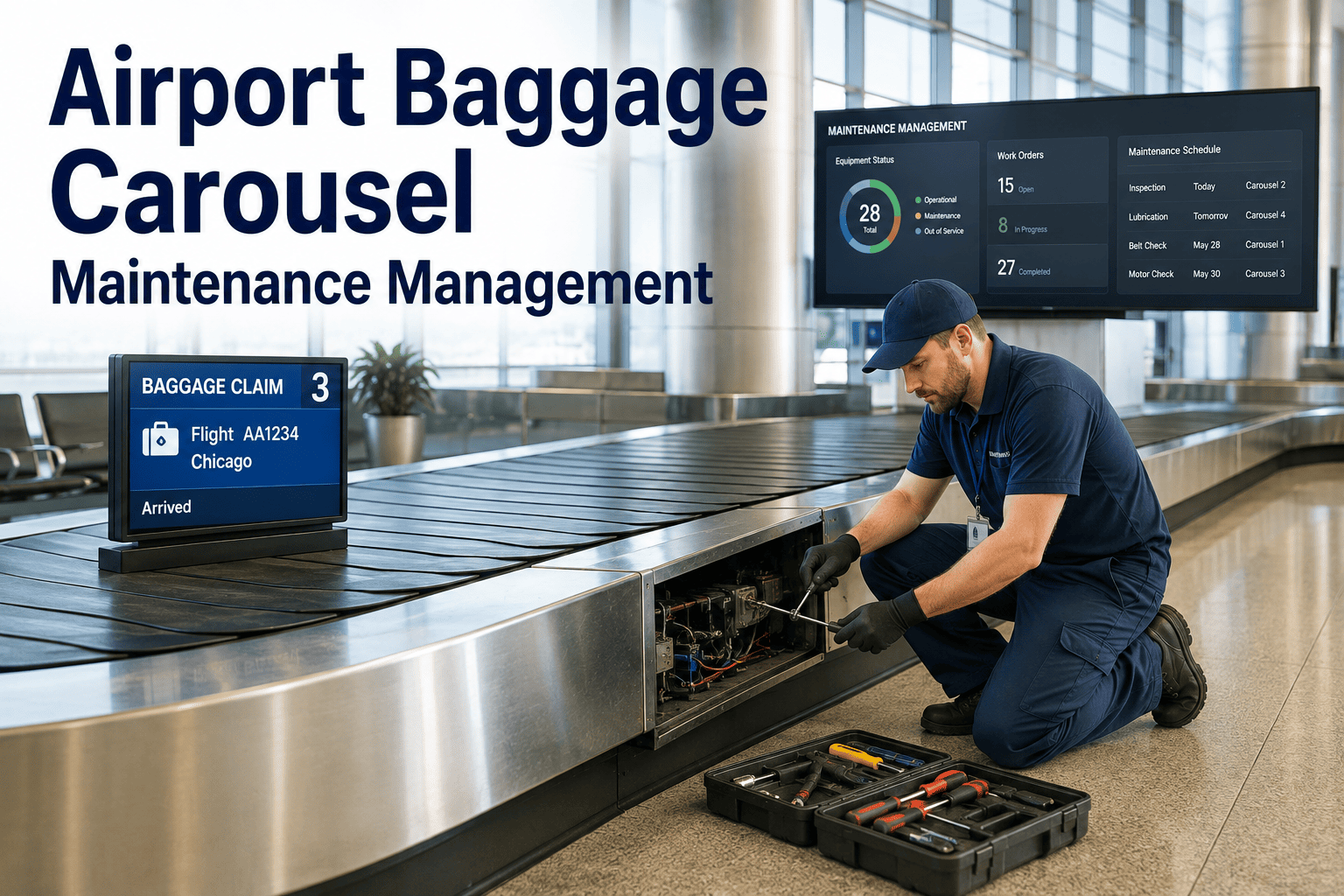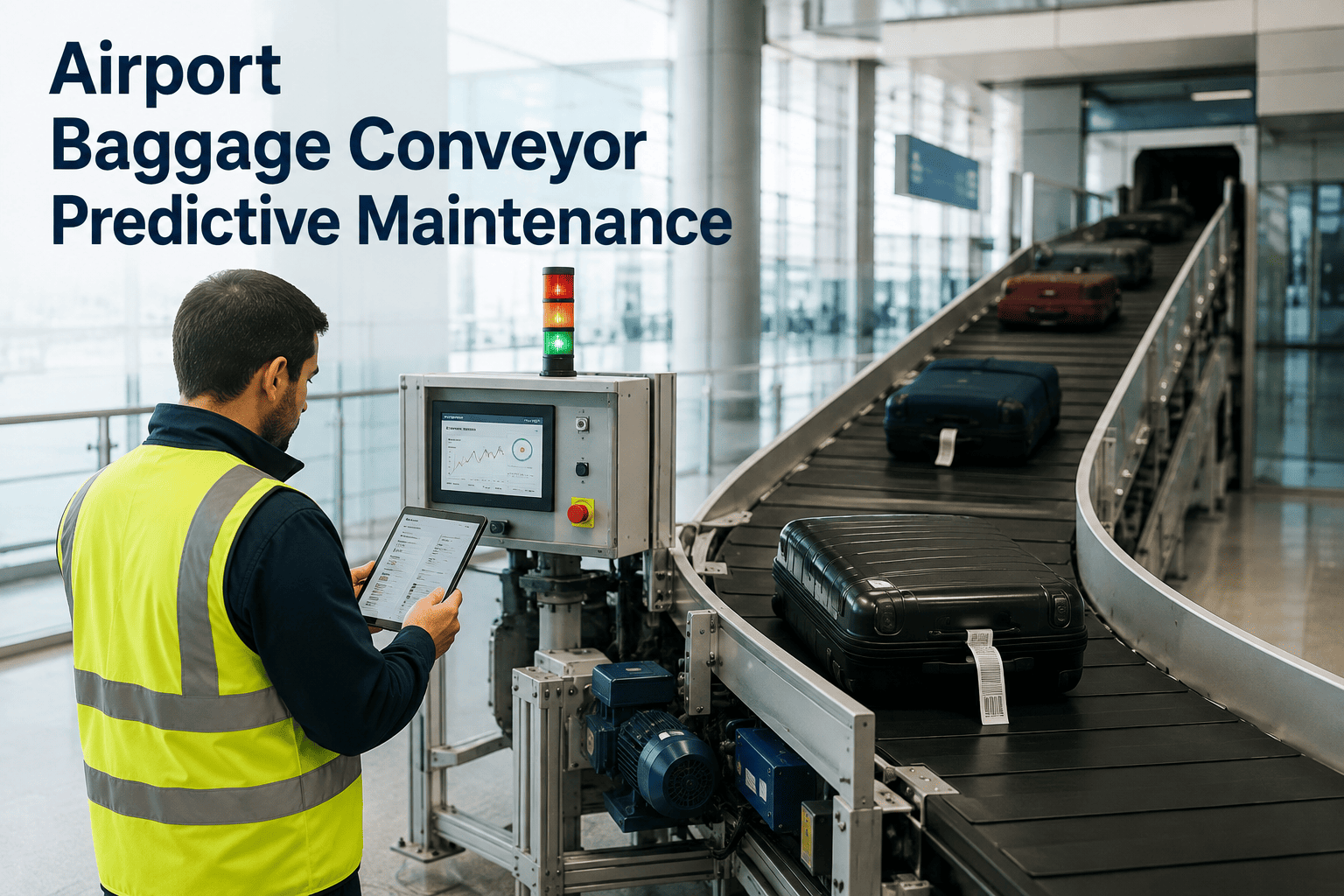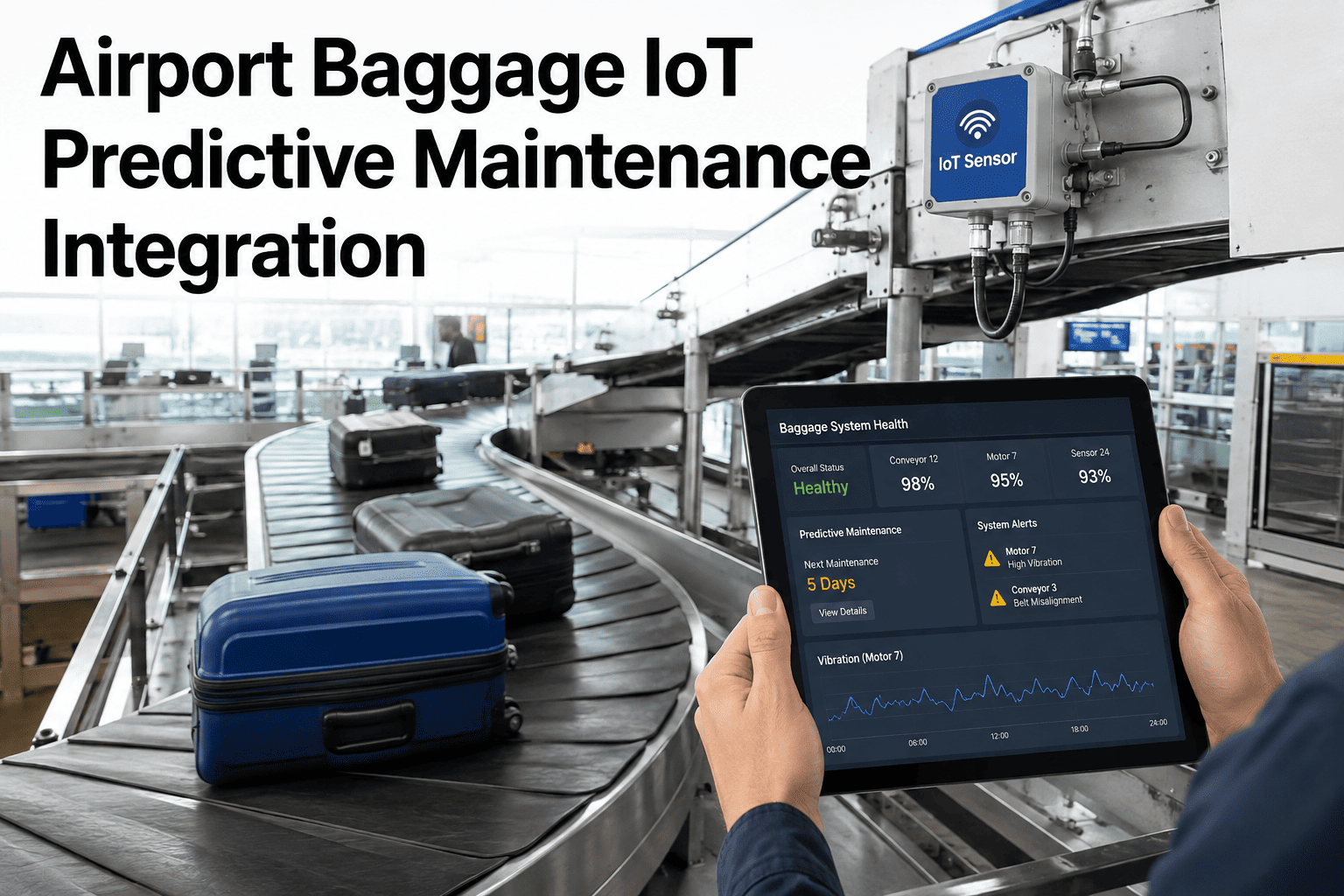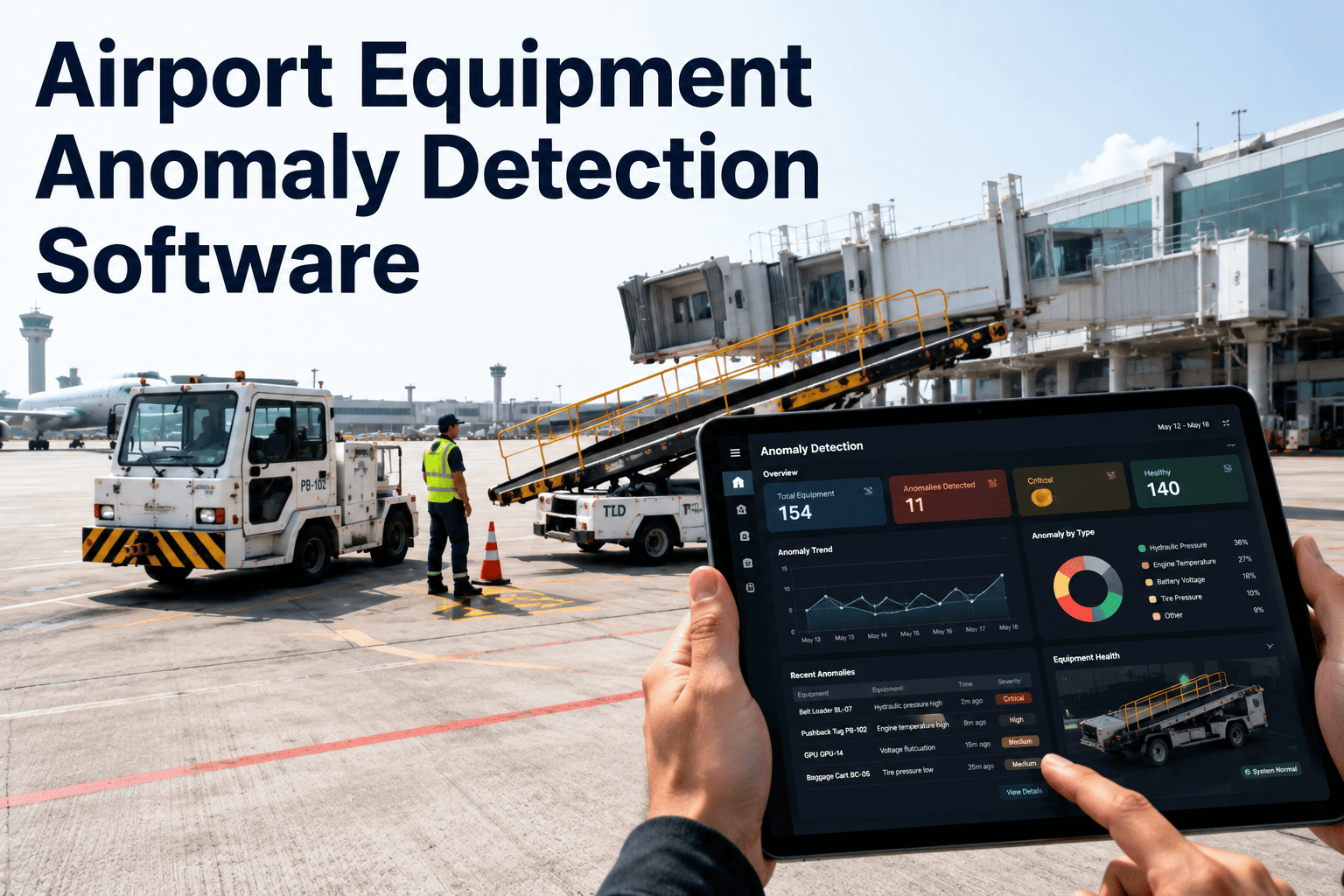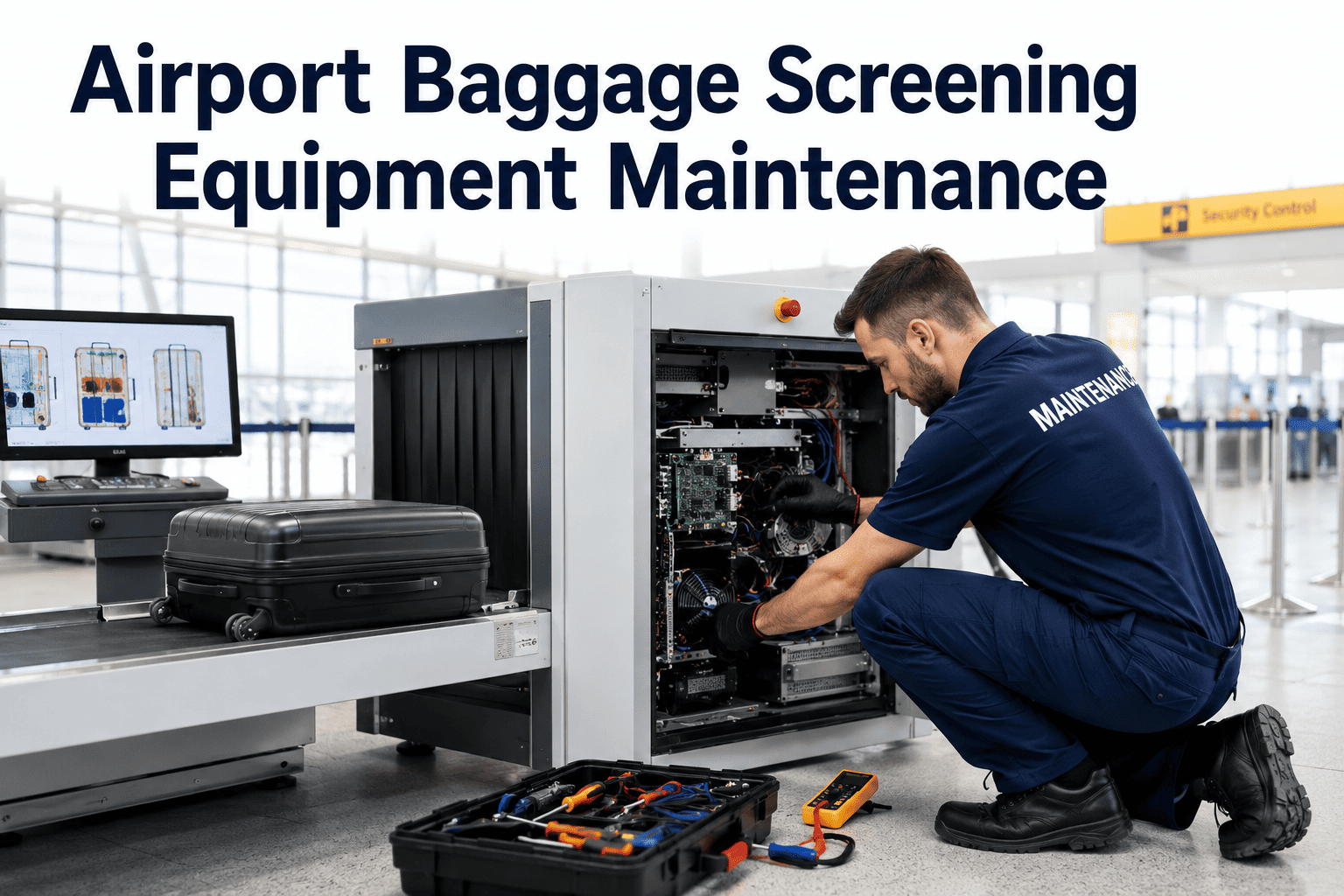
TSA screens 100 percent of checked baggage through Explosive Detection Systems, which means every one of those CT scanners is a single point of failure sitting directly between a bag and a departing aircraft. When a screening unit or its feed conveyor goes down, the average recovery window runs 47 minutes, and that's 47 minutes of bags backing up behind a checkpoint that can't legally be bypassed. Bearing failure in conveyor drive motors alone accounts for roughly 31 percent of all unplanned baggage system stops, most of them discovered only when the belt actually seizes. See what continuous condition monitoring looks like against your own screening line.
Your Screening Line Can't Legally Skip A Bag. It Can't Afford To Go Down Either
Digital inspections, structured maintenance schedules, failure analytics, and connected work order management keep EDS, CT, and checkpoint screening equipment running, documented, and audit-ready, so one worn bearing never becomes a missed departure bank.
Screening Equipment Doesn't Fail In Isolation — It Fails In A Chain
A worn roller or a stretched belt doesn't announce itself in advance most of the time. Teams discover the problem when the equipment actually stops, and at a screening checkpoint that can't be routed around, that stop doesn't stay contained to one machine. Bags queue behind the failed unit, TSA officers can't clear the backlog manually at anywhere near the same throughput, and the delay compounds outward into missed connections and departure bank pressure within the same hour. A single conveyor jam or sorter failure can cascade into hundreds of missed connections and delayed flights within hours, and large airports running 10,000 to 30,000 conveyors across the full baggage system have far too many failure points for manual inspection alone to catch in time.
The compounding factor unique to screening equipment, versus a general baggage conveyor, is that the checkpoint or hold-baggage scanner sits at a mandatory chokepoint. A jam on a make-up conveyor deep in the system can often be routed around or worked past manually. A stopped EDS unit cannot, because every bag legally has to pass through it, which means the same class of mechanical failure that would be a minor inconvenience elsewhere in the baggage system becomes an operational emergency the moment it happens at the screening line itself.
Wear Begins Unseen
Bearing contamination, belt tracking drift, or motor overheating develops gradually with no visible symptom yet.
Component Fails
The first sign of the problem is the failure itself, often at the start of a peak departure bank.
Bags Back Up
Screening can't be bypassed, so every bag behind the failed unit queues while the average 47-minute recovery plays out.
Delays Cascade
Missed connections, mishandled bags, and airline penalties spread outward well beyond the original mechanical failure.
The Damage Rarely Shows Up On The Maintenance Budget Line
A failed bearing or a jammed diverter is a cheap part in isolation. What it triggers downstream is where the real cost lives, and most of that cost gets absorbed by departments that never see the maintenance ticket that caused it: airline penalties, passenger compensation, recovery labor, and reputational damage that doesn't show up on any single budget line the way the replacement part does.
Delayed bags carry most of the mishandling volume, and roughly 70 percent of a delayed bag's cost comes from operations, recovery, rerouting, and delivery, rather than direct compensation. That operational share is exactly the portion a maintenance team can influence directly by keeping the screening line itself from being the point of failure that starts the delay in the first place. A conveyor or scanner outage doesn't have to become a compensation event if it never reaches the point of actually delaying a bag past its connection window.
Screening Equipment Maintenance Isn't Just Uptime — It's A Documentation Mandate
TSA and airport authority regulations require strict calibration and performance verification schedules for explosive detection equipment, and those schedules have to be documented and audit-ready at all times, not reconstructed after the fact. EDS calibration logs are required for every operational shift, and screening integration tests and safety system certifications sit alongside them as standing documentation obligations, not annual paperwork. When that work history is scattered across paper logs, email chains, and multiple contractor spreadsheets, nobody has the full picture, and that gap becomes a liability the moment an auditor asks for a specific unit's calibration record from six months ago.
This regulatory load compounds because screening equipment sits at the intersection of two separate compliance worlds. It has to satisfy TSA's electronic baggage screening program requirements around detection performance and calibration, and it also has to satisfy standard mechanical maintenance documentation for the conveyors, motors, and sorters feeding it. A digital inspection and work order system that captures both in the same structured record removes the need to build two parallel documentation processes for equipment that's really one connected line.
The stakes around getting this wrong extend beyond a failed audit finding. TSA's Electronic Baggage Screening Program manages the full lifecycle of screening equipment, and calibration drift that goes uncaught between formal inspections doesn't just risk a documentation gap, it risks the detection performance the equipment exists to provide. A screening line that's technically operational but running on a calibration record nobody can verify is current isn't meeting the actual intent of the maintenance schedule, even if every individual log entry technically exists somewhere in a filing cabinet or an inbox.
Five Data Layers Feed One Uptime Picture Per Screening Line
Reliable screening uptime depends on seeing several categories of data together, correlated against the specific asset and shift, rather than as separate logs that only get cross-referenced after something has already gone wrong.
Digital Inspection Records
Structured inspections replacing clipboard checklists, tied directly to the specific unit, conveyor segment, or sorter zone inspected.
Preventive Maintenance Schedules
Lubrication, belt tensioning, and calibration intervals tracked per asset and enforced automatically rather than left to manual tracking.
Failure And Downtime Analytics
Every stop logged against its root cause, building the failure-pattern history that shows which components are actually driving downtime.
Calibration And Compliance Logs
TSA-required calibration and performance verification records captured per shift, always current and producible on demand.
Connected Work Order Management
Technicians arrive at a failure with full asset history, the right parts identified, and a documented repair procedure already in hand.
These five layers only deliver their full value connected to each other, not as five separate logs a manager checks individually. A drive motor's rising temperature trend means little on its own, but correlated against that same motor's calibration history and its position in the failure-hotspot pattern for feed conveyors specifically, it becomes a clear, actionable signal well before the bearing actually seizes.
Turn Scattered Screening Logs Into One Audit-Ready Record
iFactory replaces clipboard inspections and contractor spreadsheets with one connected system covering calibration compliance, preventive maintenance, and failure analytics for your entire screening line.
Same Equipment, Two Very Different Ways Of Knowing Its Condition
The screening units and conveyors themselves don't change between these two approaches. What changes is whether their condition is visible before a failure happens, or only after the line has already stopped.
The comparison below reflects the same physical equipment evaluated two different ways, not a hardware upgrade. Nothing about moving from reactive to digitally managed maintenance requires replacing the EDS units, the conveyors, or the sortation hardware already installed. The difference lives entirely in whether the condition of that equipment is tracked continuously and correlated against its own history, or whether the first real signal anyone gets is the equipment stopping.
| What's Being Managed | Reactive / Manual Tracking | Digitally Managed Screening Maintenance |
|---|---|---|
| Inspection Records | Paper clipboard checklists, inconsistently filed and hard to search | Structured digital inspections tied to the specific asset and timestamp |
| Failure Detection | First symptom is the failure itself, often at peak departure hours | Condition trends flagged weeks ahead of the actual failure point |
| Calibration Compliance | Logs scattered across shifts and contractors, reassembled under deadline | Per-shift calibration records always current and instantly producible |
| Repair Response | Technician arrives without full history, parts, or documented procedure | Full asset history, parts list, and repair procedure available on arrival |
| Emergency Repair Cost | Higher cost of emergency repairs versus planned, plus cascading delay costs | Planned component replacement, often with 18+ months of advance warning |
Screening Line Failures Aren't Random — They Cluster In Predictable Places
Baggage and screening system failures concentrate in a small number of component types that endure the highest mechanical stress and the most frequent cycling. Knowing where those failure hotspots sit is what makes a maintenance program targeted instead of evenly, and inefficiently, spread across every component regardless of actual risk.
This concentration is precisely why a blanket maintenance schedule, one that treats every conveyor segment and every motor with identical inspection frequency, tends to underperform a risk-weighted approach even when the total labor hours spent are similar. A feed conveyor directly ahead of an EDS unit, handling continuous cycling and screening-reject debris, warrants a fundamentally different inspection cadence than a lightly used carousel section, and treating them the same wastes inspection capacity on the low-risk asset while under-covering the one actually driving most of the downtime.
EDS/CT Feed Conveyors
Roller bearing contamination from belt debris and uneven loading from screening rejects are the dominant failure hotspot feeding the scanner itself.
Sortation Systems
Tilt tray, cross-belt, and push-bar sorters fail through divert actuator fatigue, tray bearing wear, and encoder drift that causes mis-sorts before it causes stops.
Checkpoint And Carousel Drives
Drive motor overheating and turntable bearing wear under uneven load are the recurring pattern behind checkpoint and reclaim carousel downtime.
Make-Up And Bulk Loading Conveyors
Belt tracking issues from continuous directional changes and outdoor exposure at remote stands drive a disproportionate share of failures here.
A Rollout That Starts Where Downtime Actually Hurts Most
Screening equipment can't go offline for a system migration during operating hours, so the realistic path here starts narrow and expands once the first result is proven, rather than attempting a full-line changeover on day one.
This staged approach also matters for staff adoption, not just technical safety. Technicians who've worked a screening line for years develop their own instinct for which conveyor tends to act up before a shift starts, and a phased rollout gives that instinct a chance to validate the new digital records against lived experience before those records become the primary reference. That trust-building step tends to matter as much as the technology itself in how quickly a new system actually gets used consistently, rather than treated as an extra task layered on top of the existing paper process.
Begin by connecting condition and inspection data on the highest-failure-risk component category first, typically the EDS/CT feed conveyors and their drive motors, since that's where the majority of unplanned stops concentrate. Layer in structured digital inspections and calibration logging alongside the existing process for a defined period, so technicians and TSA-facing staff can validate the new records against what they already know to be true before it becomes the system of record. Once that baseline is proven on the highest-risk segment, extend the same approach across sortation, carousels, and make-up conveyors, and connected work order management becomes the standing way repairs get dispatched, documented, and closed across the entire screening line.
Common Questions From Airport Baggage And Screening Operations Managers
Stop Discovering Screening Failures At 06:00 On A Peak Departure Day
iFactory connects digital inspections, preventive maintenance, failure analytics, and work order management into one system built for airport baggage screening operations. Book a demo and see your own screening line's failure risk mapped before it becomes a delay.