Airfield pavement management is one of the highest-stakes asset lifecycle disciplines in airport operations — and one of the most underinvested. For Airport Operations Directors, Facilities Engineers, and Safety Managers responsible for runway integrity, the consequences of inadequate pavement maintenance extend from FOD-related aircraft damage and rejected takeoffs to catastrophic runway excursions and billion-dollar regulatory enforcement actions. A comprehensive airfield pavement management program integrates FOD detection and prevention, friction testing, Pavement Condition Index assessment, and AI-driven rehabilitation planning into a unified asset lifecycle strategy. This guide examines every dimension of that program — from daily FOD walkdown management to long-cycle runway surface rehabilitation planning — with the analytical frameworks and benchmarks that turn pavement management from reactive emergency repair into proactive asset optimization. To see how iFactory's asset lifecycle management platform supports your airfield pavement program, book a demo today.
Modernize Your Airfield Pavement Management Program
iFactory's asset lifecycle management platform gives Airport Operations Directors and Facilities Engineers AI-driven PCI tracking, FOD management workflows, friction test scheduling, and rehabilitation planning tools — purpose-built for airfield pavement environments.
Why Airfield Pavement Management Demands an Asset Lifecycle Approach
Runway and taxiway pavement represent among the highest-value physical assets on any airport campus — yet most airports manage pavement reactively, responding to visible distress rather than tracking condition systematically and planning interventions proactively. The financial consequences are severe: a runway requiring full-depth reclamation at PCI 30 costs 6–8 times more per square meter than the preventive surface treatment that would have extended its life at PCI 65. Airport engineering teams building this capability often begin by choosing to book a demo to see how iFactory's PCI tracking and rehabilitation planning tools integrate with existing airport CMMS and capital planning systems.
Pavement Condition Index Assessment: The Foundation of Runway Maintenance Planning
The Pavement Condition Index is the universally accepted metric for quantifying airfield surface condition — a 0-to-100 scale where 100 represents new pavement and values below 25 indicate pavement near the end of its serviceable life. FAA Advisory Circular AC 150/5380-6 establishes PCI assessment methodology for airport pavements, requiring formal evaluation at minimum every three years and ideally annually for high-traffic operational areas.
Preventive maintenance only. Crack sealing, surface sealing, and minor joint repair. Pavement life extension of 8–12 years achievable with timely intervention.
Corrective maintenance required. Mill-and-overlay, partial-depth patching, and surface rehabilitation. Intervention cost 3–4x higher than preventive treatment applied at PCI 70+.
Reconstruction required. Full-depth reclamation or complete pavement removal and replacement. Cost 6–8x higher than preventive treatment. Potential operational closure required.
FOD Detection and Prevention: Managing Aviation's Most Pervasive Safety Threat
Foreign Object Debris causes an estimated $13 billion in damage to the global aviation industry annually — from engine ingestion events and tire blowouts to ground equipment damage and rejected takeoffs. Airport FOD prevention programs must address both the detection of existing debris and the management practices that prevent FOD generation and migration onto operational areas. Airport safety teams seeking to build a structured FOD management analytics program frequently book a demo to see how iFactory's FOD walkdown management tools connect inspection records to pavement condition data — identifying the surface locations most likely to generate FOD before they become a safety event.
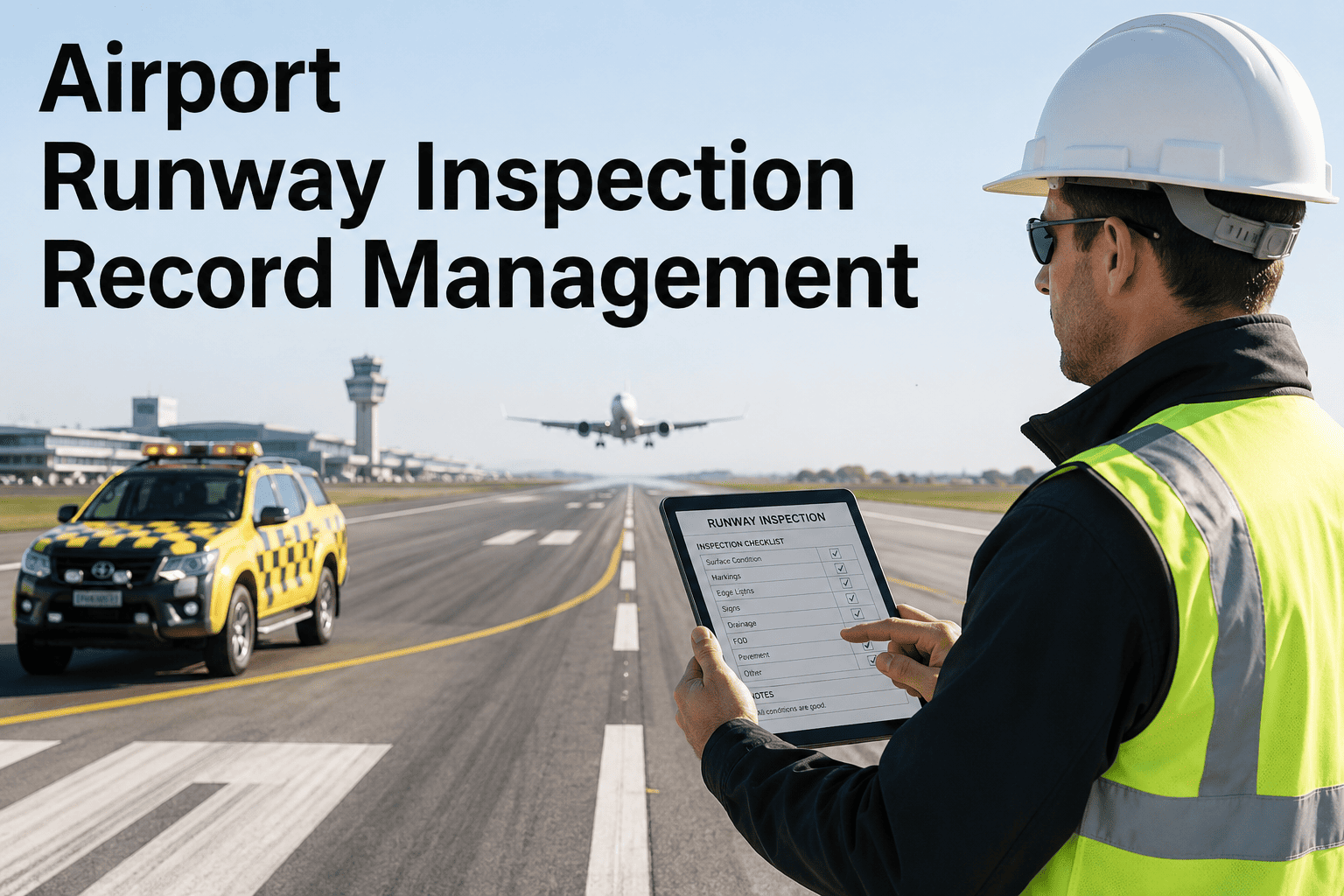
Structured FOD Walkdowns
Scheduled human inspections of operational areas at defined intervals — typically before first daily operations, after heavy aircraft movements, and following weather events. Digital FOD walkdown management tools record inspection completion, findings, and corrective actions with GPS-tagged precision. FAA requirement for Part 139 certificated airports.
Automated FOD Detection Systems
Radar-based and optical detection systems providing continuous monitoring of runway surfaces. Systems such as Xsight FOD·BOSS and Trex detect objects as small as 5mm in diameter. Detection accuracy exceeds 95% for objects above minimum detectable size in certified installations at major commercial airports.
Surface Condition FOD Prevention
Proactive pavement maintenance to eliminate surface distress conditions that generate FOD — joint spalling repair, aggregate loss treatment, and edge crack sealing. AI-driven pavement analytics identify surface sections at highest FOD generation risk based on distress type and progression rate. Reduces FOD generation by 30–45% on treated pavement sections.
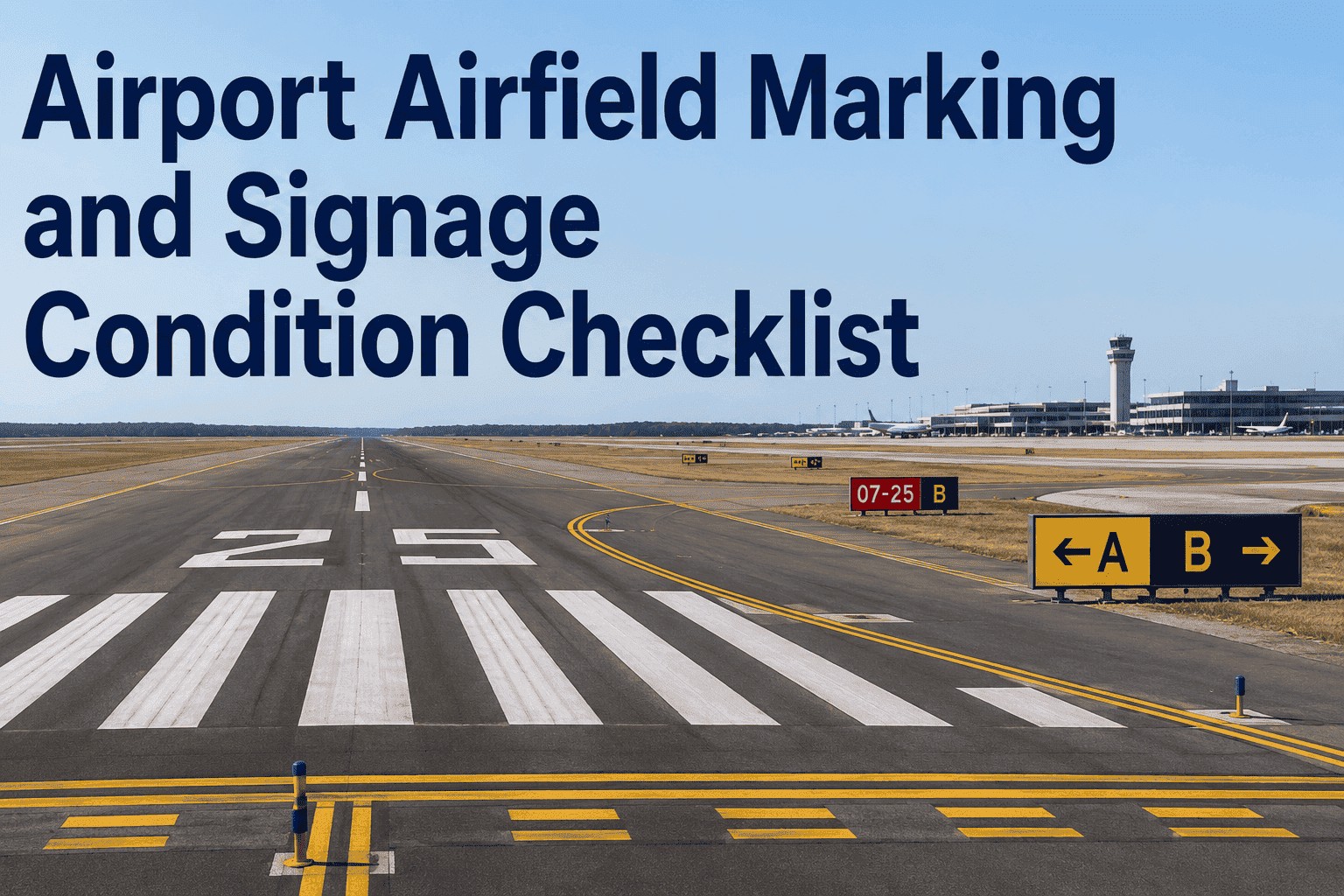
Pavement Marking Maintenance
Deteriorating runway and taxiway markings contribute to FOD through paint chip generation and pilot confusion events. Retroreflectivity testing at defined intervals — with AI-driven scheduling based on traffic volume and surface wear patterns — ensures marking integrity while preventing the chip generation that accompanies complete marking failure.
Runway Friction Testing: Maintaining Stopping Performance Certification
Runway friction is the most operationally critical pavement performance parameter — directly determining aircraft stopping distances, rejected takeoff performance, and wet-weather operational minimums. FAA and ICAO both mandate runway friction testing at defined intervals and following surface maintenance or contamination events, with specific minimum friction values required for continued operational certification.
Continuous Friction Measurement Equipment
CFME devices — including the Mu-Meter, GripTester, and CFME-type devices — measure dynamic friction coefficients across the full runway length at defined test speeds. FAA Advisory Circular AC 150/5370-10 specifies measurement protocols and minimum friction values. Results must be analyzed against maintenance planning action levels and reported to airport operations and airline stakeholders.
Friction Testing Frequency Requirements
FAA requires friction testing at minimum annually for Part 139 certificated airports, with additional testing required after runway overlay or rehabilitation, following rubber contamination events, and when pilot friction complaints are received. High-traffic commercial runways typically require quarterly friction surveys to detect localized friction degradation before it reaches maintenance action levels.
Rubber Contamination Management
Rubber deposits from aircraft tire contact in the touchdown zone progressively reduce friction values — typically by 0.05–0.15 coefficient — as rubber accumulates. AI-driven friction trend analytics identify landing zones approaching maintenance action level before formal testing would detect the degradation, enabling proactive rubber removal scheduling that prevents friction certification failures.
Surface Texture Restoration
When friction values cannot be restored through rubber removal, surface texture restoration — groove cleaning, grinding, or microtexture enhancement treatments — may be required before full pavement rehabilitation becomes necessary. AI-driven pavement maintenance analytics optimize the selection and timing of texture restoration treatments to maximize friction performance while deferring more costly rehabilitation interventions.
AI-Driven Runway Rehabilitation Planning: From Reactive Repair to Capital Optimization
Traditional runway rehabilitation planning is a budget-driven exercise — available capital determines which pavement sections receive treatment, rather than pavement condition data driving capital allocation. The result is systematically suboptimal: sections treated too late require more expensive interventions, sections treated too early consume budget that could extend life elsewhere, and the overall pavement portfolio deteriorates faster than necessary. Engineering leaders who want to quantify the capital optimization opportunity in their specific pavement portfolio can book a demo to walk through a live rehabilitation planning model with iFactory's airfield pavement specialists.
| Rehabilitation Decision | Reactive Planning Approach | AI-Driven Analytics Approach | Capital Impact |
|---|---|---|---|
| Intervention Timing | When distress becomes visually obvious or operationally disruptive | Optimized intervention at cost-effective PCI threshold based on distress curve modeling | 35–45% reduction in lifecycle rehabilitation cost |
| Treatment Selection | Based on available budget and contractor preference | Data-driven treatment matching to distress type and progression rate | Extend pavement life 3–6 additional years per treatment cycle |
| Budget Forecasting | Annual estimates based on prior year spend | 5–10 year capital forecasting based on condition progression models | Reduce capital budget variance by 40–60% |
| FOD Risk Prioritization | Sections identified after FOD events occur | Predictive identification of high-FOD-risk sections before debris generation | Reduce FOD-related damage incidents by 30–40% |
| FAA Grant Documentation | Manual PCI documentation compiled for grant applications | Automated PCI records and condition trend reports supporting AIP grant submissions | Maximize AIP grant eligibility and application success rate |
Airfield Pavement Inspection Program: Building a Systematic Assessment Architecture
A defensible, FAA-compliant airfield pavement inspection program requires more than periodic PCI assessments — it demands a structured, documented inspection architecture that captures condition data across all inspection types, frequencies, and methodologies in a unified analytical record.
Daily Operational Inspections
FAA Part 139 requires daily inspection of all movement areas — runways, taxiways, and aprons — with documented findings and corrective actions. AI-driven inspection management platforms automate inspection scheduling, route optimization for inspection vehicle efficiency, and real-time reporting of findings to maintenance dispatch. Daily inspection records create the continuous pavement condition timeline that supports long-range rehabilitation planning.
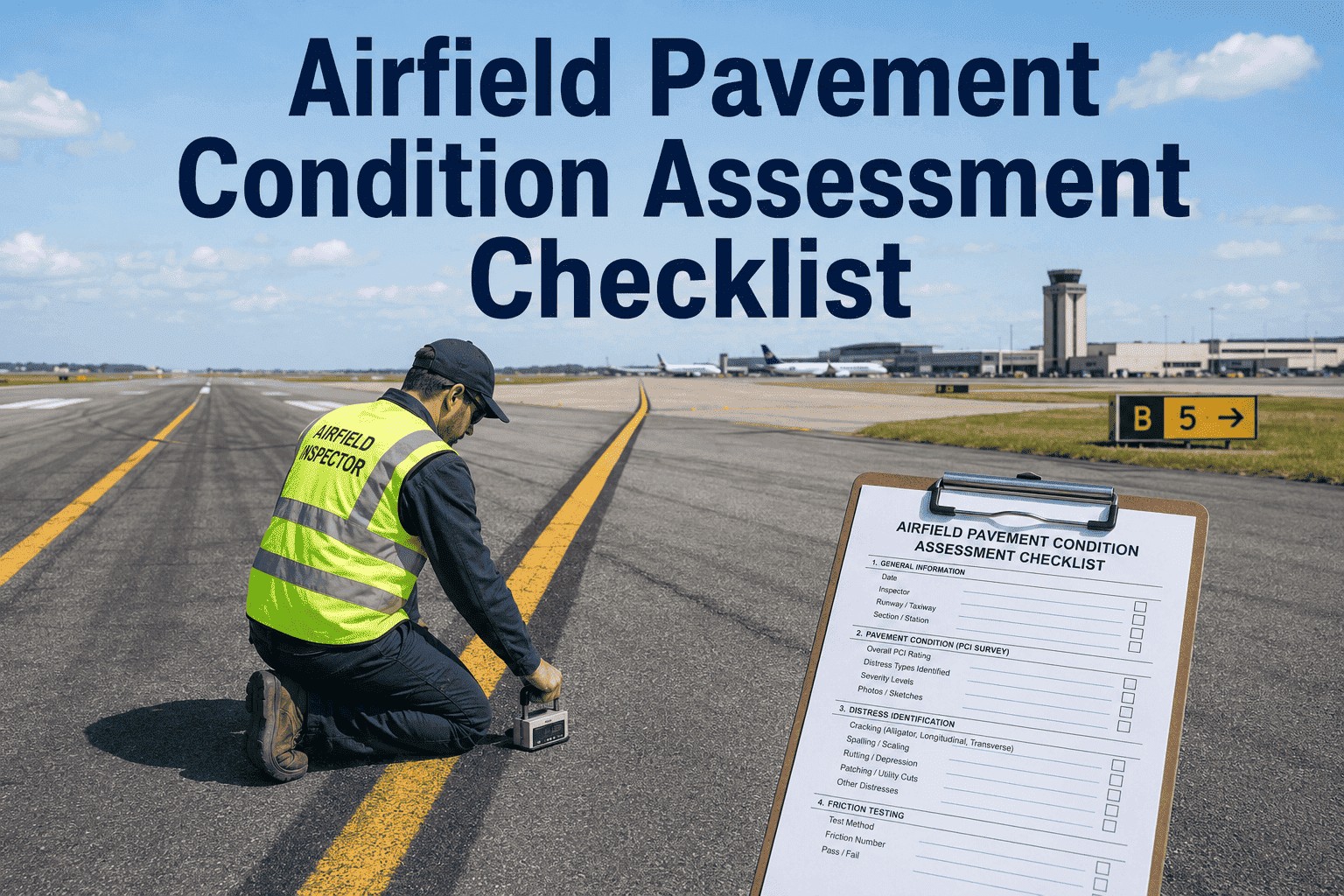
Formal PCI Assessment Surveys
Formal pavement condition index surveys require trained inspectors systematically evaluating and quantifying all surface distress types — cracking, rutting, raveling, joint failures, and drainage deficiencies — across defined inspection units. AI-assisted assessment tools that combine inspector observations with automated image analysis from drone or vehicle-mounted cameras reduce assessment time by 60% while improving distress detection consistency.
Structural Adequacy Testing
Falling Weight Deflectometer testing measures pavement structural capacity — determining whether the pavement foundation can support current and projected aircraft loading without structural failure. FWD data, combined with PCI condition ratings and traffic loading history, enables AI-driven remaining life analysis that identifies structurally deficient sections requiring reconstruction before surface condition alone would trigger intervention.
Drainage Performance Assessment
Inadequate pavement drainage accelerates surface distress progression and creates friction performance variability that compromises wet-weather operational safety. Systematic drainage performance assessment — evaluating cross-slope, edge drain functionality, and inlet capacity — should be integrated into the airfield analytics program to identify drainage improvements that extend pavement life and maintain friction certification standards.
FOD Walkdown Management: Building a Compliant and Effective Safety Program
A structured FOD walkdown management program is both a regulatory requirement and a front-line safety control. For Airport Safety Managers building or improving their FOD programs, the key transition from adequate compliance to genuine safety effectiveness lies in connecting walkdown findings data to pavement condition records — enabling root cause analysis that prevents FOD generation rather than simply managing its consequences.
Digital Walkdown Documentation
Replace paper-based FOD walkdown logs with GPS-enabled mobile inspection tools that capture finding location, debris type, source identification, and corrective action with precise coordinates. Digital records enable spatial analysis of FOD patterns — identifying recurring generation locations that indicate underlying pavement distress requiring treatment rather than continued debris removal.
FOD Pattern Analysis
AI-driven analysis of accumulated FOD walkdown data identifies patterns invisible in individual inspection records — locations with disproportionately high FOD frequency, debris types correlated with specific pavement distress conditions, and seasonal trends that predict elevated FOD risk periods. These insights drive proactive maintenance interventions that reduce FOD generation at its source.
Compliance Documentation & Audit Readiness
FAA Part 139 compliance audits specifically review FOD inspection records for completeness, timing, and corrective action documentation. Digital walkdown management platforms with automated compliance calendars and exception alerting ensure that no required inspection is missed and that every finding has documented resolution — creating the audit-ready FOD compliance record that protects airport operating certificates.
"We were managing our runway pavement program from spreadsheets and paper inspection logs — reactive by nature, never quite knowing which sections were deteriorating fastest or where our next rehabilitation budget should go. After deploying an integrated pavement management platform with AI-driven PCI tracking and FOD analytics, we identified three taxiway sections generating 40% of our annual FOD events because of undiagnosed joint spalling — conditions our annual inspection had noted but never connected to the FOD pattern. We treated those sections for $280K and eliminated the recurrent FOD damage that had cost us over $600K in the prior two years."
Frequently Asked Questions: Airfield Pavement Management and FOD Prevention
How often must airports conduct formal pavement condition index assessments under FAA requirements?
FAA Advisory Circular AC 150/5380-6 recommends formal PCI assessments at minimum every three years for all airport pavement areas, with annual assessments for high-priority areas receiving heavy aircraft traffic. Airports seeking AIP grant funding for pavement rehabilitation must typically provide current PCI data — collected within the prior 12 months — to support grant applications. AI-driven continuous PCI monitoring programs effectively satisfy both requirements with a single integrated data stream.
What is the minimum acceptable runway friction value for FAA operational certification?
FAA Advisory Circular AC 150/5370-10 specifies minimum friction values by test equipment type. For the Mu-Meter at 40 mph test speed, the minimum friction value for continued operations is 0.42, with a maintenance planning level of 0.52. For the GripTester at 40 mph, the minimum is 0.26 with a maintenance planning level of 0.36. Runways that fall below minimum friction values must be reported to pilots and may require operational restrictions or closure until friction is restored.
How frequently must FOD walkdowns be conducted at Part 139 certificated airports?
FAA regulations require Part 139 airports to inspect all movement areas at least once daily, with additional inspections after each period of significant aircraft activity. Many commercial airports conduct three to five FOD walkdowns daily during operational hours, with additional inspections following weather events, ground vehicle incidents, or pilot FOD reports. The frequency and documentation of these inspections are reviewed during FAA certification audits.
What is the cost difference between preventive and reactive runway rehabilitation?
Industry data consistently shows that preventive surface treatments applied to pavement at PCI 65–75 cost 15–25% of the reconstruction cost required when the same pavement is allowed to deteriorate to PCI 25–35. In concrete terms, a crack seal and slurry seal applied at the right time for $2–4 per square meter can defer a $20–35 per square meter mill-and-overlay by 8–12 years. The ROI case for AI-driven pavement management programs is anchored almost entirely in this intervention timing optimization.
How does drone technology improve airfield pavement inspection efficiency?
Drone-based pavement inspection — using high-resolution cameras and AI-driven image analysis — reduces the time required for runway closures during formal PCI assessments by 60–75% compared to traditional walking surveys, while improving distress detection accuracy through consistent image capture and automated distress classification. Drone inspection data integrates directly with pavement management platforms to update PCI records in real time, eliminating the weeks-long delay between field assessment and actionable condition data that characterizes traditional inspection programs.
Ready to Transform Your Airfield Pavement Program into a Data-Driven Asset Strategy?
iFactory's asset lifecycle management platform gives airport engineering and operations teams AI-driven PCI tracking, FOD walkdown management, friction test scheduling, and rehabilitation planning tools — delivering the capital optimization and safety performance that modern airfield pavement management demands.