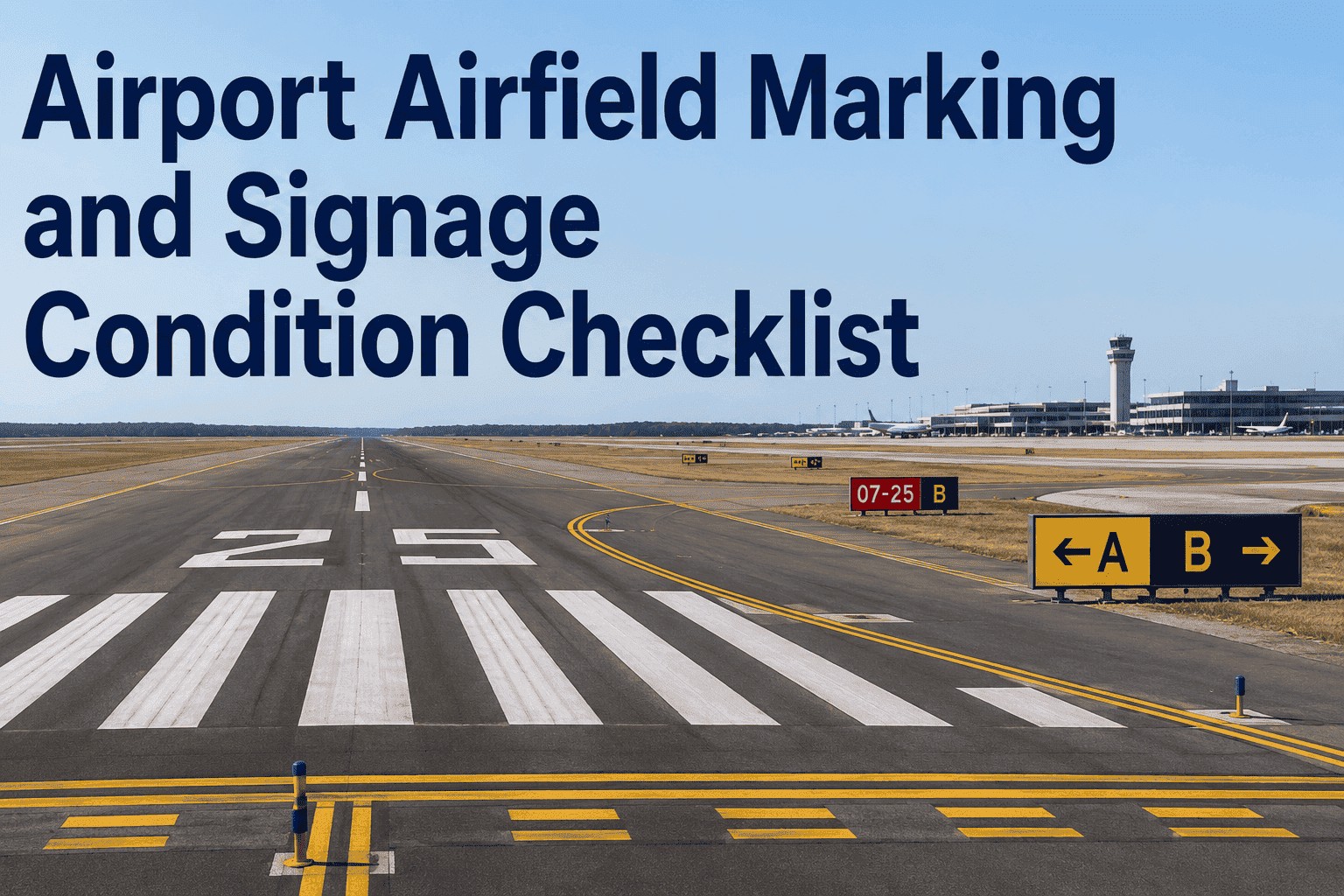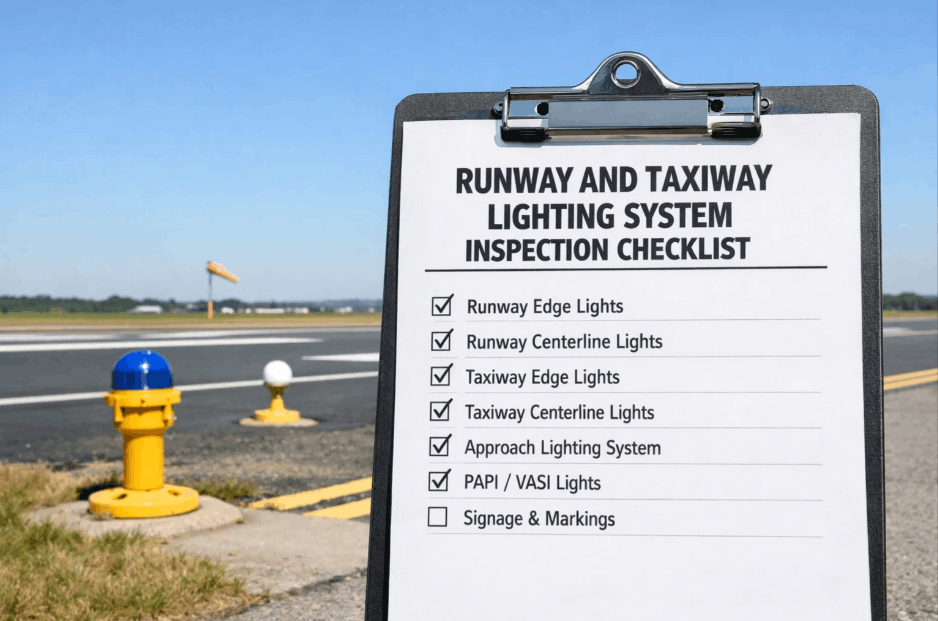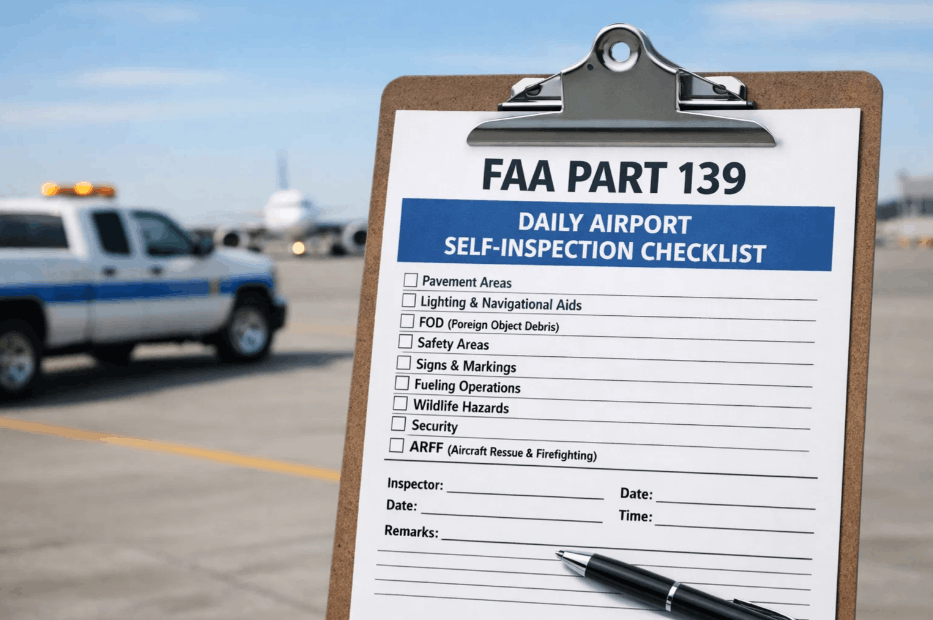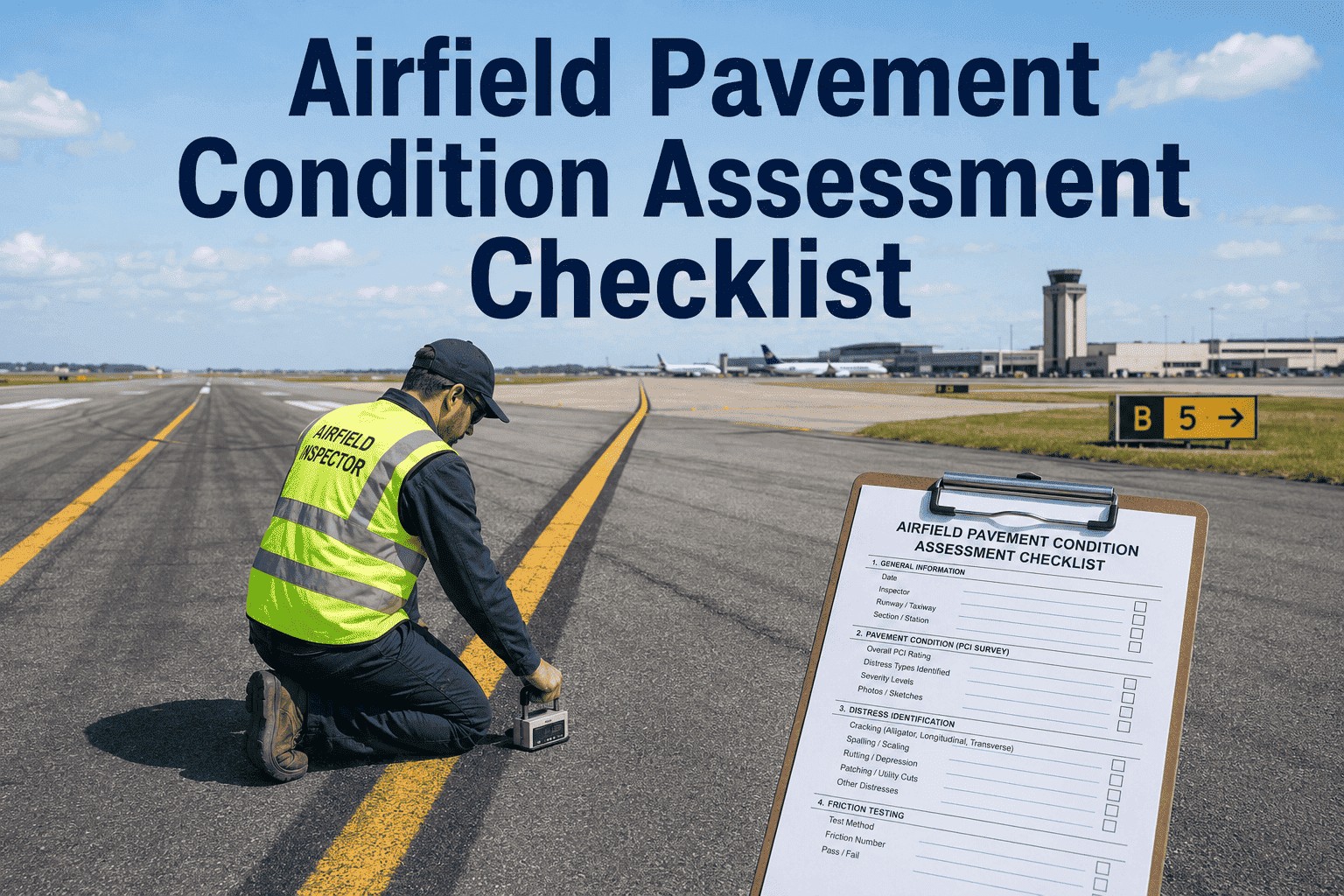
Runway excursions, rejected takeoffs, and FOD-related engine damage share one silent root cause: pavement nobody measured until it failed. Every metre of runway and taxiway surface degrades continuously under aircraft loads, UV exposure, freeze-thaw cycles, and rubber accumulation — yet most airfields still rely on annual walk-and-look inspections instead of structured, data-driven condition programmes. This checklist gives airfield operations and engineering teams a comprehensive, analytics-ready framework for PCI surveys, friction testing, distress identification, marking integrity, joint seal condition, and FOD hazard control — the six disciplines that determine whether your pavement passes its next regulatory audit or grounds your fleet. Book a Demo to see how iFactory's Asset Lifecycle Management platform tracks every pavement section from survey to rehabilitation.
0–100
PCI scale where below 40 triggers mandatory rehabilitation under FAA AC 150/5380-7B
6 zones
of assessment — PCI, friction, distress mapping, markings, joint seals, and FOD control
30–45%
reduction in FOD generation on treated pavement sections with AI-driven scheduling
Daily
FAA Part 139 inspections required for all movement areas with documented corrective actions
The Airfield Pavement Assessment Framework
Six disciplines. Miss one and your runway data is incomplete — and your risk exposure is invisible.
ZONE 01
PCI Survey
Condition Index
ZONE 02
Distress ID
Surface Mapping
ZONE 03
Friction Testing
Braking Safety
ZONE 04
Marking Condition
Retroreflectivity
ZONE 05
Joint Seals
Slab Integrity
ZONE 06
FOD Control
Debris Hazard
What Deferred Pavement Assessment Actually Costs
Skipping a zone doesn't save time. It just moves the cost to a worse moment.
PCI Survey Gap
Invisible Deterioration
No survey data means no deterioration curve — rehabilitation is triggered by visible failure, not condition trend, costing 3–5x more than preventive treatment
Friction Testing Gap
Silent Braking Hazard
Rubber accumulation degrades friction below ICAO action levels with no visible surface change — discovered during a wet-weather overrun investigation, not before it
Distress Mapping Gap
Wrong Repair, Wrong Location
Without distress maps, maintenance crews patch high-visibility cracks and miss the alligator cracking indicating base failure two sections away
Marking Inspection Gap
Regulatory & Safety Failure
Failed markings fail CAA audit and generate paint chip FOD in their final degradation stage — both consequences arrive simultaneously during peak operations
Joint Seal Gap
Base Undermining
Unsealed joints allow water infiltration that erodes base material over 2–3 wet seasons — the slab faulting and spalling that follow require slab replacement, not crack sealing
FOD Programme Gap
Engine Ingestion Risk
Pavement spall in an active spalling zone is removed by the next aircraft's jet blast and deposited in the path of the one following — no detection system catches what shouldn't be there in the first place
Frequently Asked Questions
FAA Part 139 requires daily inspections of all movement areas for immediate hazards including FOD and surface damage. Full PCI surveys under ASTM D5340 are typically conducted on a rolling 3-year cycle for each pavement section, with high-traffic runways surveyed annually. Friction testing frequency depends on traffic volume — FAA guidance in AC 150/5320-12D provides minimum intervals based on annual aircraft movements, with additional tests required after major maintenance, contamination events, or any wet-runway incident. Marking retroreflectivity should be measured annually on runways and every 2 years on taxiways. Condition-based platforms like iFactory can automate inspection scheduling based on asset age, traffic volume, and deterioration rate rather than fixed calendar intervals.
The Pavement Condition Index (PCI) is a numerical score from 0 to 100 derived from a structured visual distress survey per ASTM D5340. A score of 100 represents perfect new pavement; 0 represents complete failure. For airfield operations, PCI drives maintenance decisions: scores above 70 typically require only preventive treatment such as crack sealing; scores between 40 and 69 indicate the need for corrective maintenance such as mill-and-overlay; scores below 40 generally trigger urgent reconstruction evaluation. PCI data fed into a pavement management system like PAVER enables multi-year CapEx forecasting, allowing airport management to plan rehabilitation budgets 5–10 years ahead based on projected deterioration curves rather than reacting to visible failure.
The FOD Index is a derived metric calculated from distress data collected during a PCI survey — it predicts the potential for a pavement section to generate loose material based on the type, severity, and extent of surface distresses present. A high FOD Index score doesn't mean there is debris on the pavement today; it means the pavement condition is likely to produce debris under aircraft loads. A FOD walkdown is an operational activity — a physical inspection of movement areas at the start of each inspection period to find and remove debris that is already present. Both are required: the FOD Index informs maintenance prioritisation and rehabilitation planning, while the FOD walkdown addresses immediate operational safety. iFactory integrates both into a unified asset record, linking FOD incidents back to the pavement sections with the highest predictive risk scores.
Airfield pavement management must align with several overlapping regulatory frameworks. ICAO Annex 14 (Aerodromes) sets global standards for aerodrome maintenance including pavement and friction requirements. FAA Advisory Circulars AC 150/5380-7B (Airport Pavement Management), AC 150/5320-12D (Friction), and AC 150/5340-1 (Markings) provide detailed technical guidance for US airports. ASTM D5340 defines the PCI survey methodology used across military, civil, and international airfields. The ACR-PCR method, which replaced the ACN-PCN method under ICAO in 2024, governs structural pavement rating for aircraft load compatibility. National civil aviation authorities apply these standards with local adaptations. Maintaining complete, timestamped, technician-attributed inspection records is essential for CAA audit compliance — iFactory's platform produces audit-ready documentation automatically for every work order and inspection event.
iFactory's Asset Lifecycle Management platform connects condition data from PCI surveys, friction tests, distress inspections, and FOD programmes into a unified pavement asset record. Each runway section and taxiway becomes a tracked asset with condition history, maintenance records, and a predicted deterioration trajectory. When condition data indicates a section is approaching a trigger threshold — whether a PCI below 70, a friction value nearing the maintenance planning level, or a joint seal failure that creates base infiltration risk — iFactory generates prioritised maintenance work orders automatically and schedules them during low-traffic windows. The platform integrates with existing CMMS and APMS tools via REST API, typically reaching pilot go-live within 4–8 weeks without displacing existing systems.
iFactory Asset Lifecycle Management
Turn Pavement Condition Data Into Maintenance Decisions — Before the Runway Tells You Itself.
iFactory connects PCI surveys, friction results, and FOD records to a single asset lifecycle view — giving airfield teams the condition intelligence to plan rehabilitation years ahead, not days after a failure. Trusted by infrastructure operators across the UK, EU, Middle East, and Asia-Pacific.
Pilot in 30 days. Full integration in one quarter.