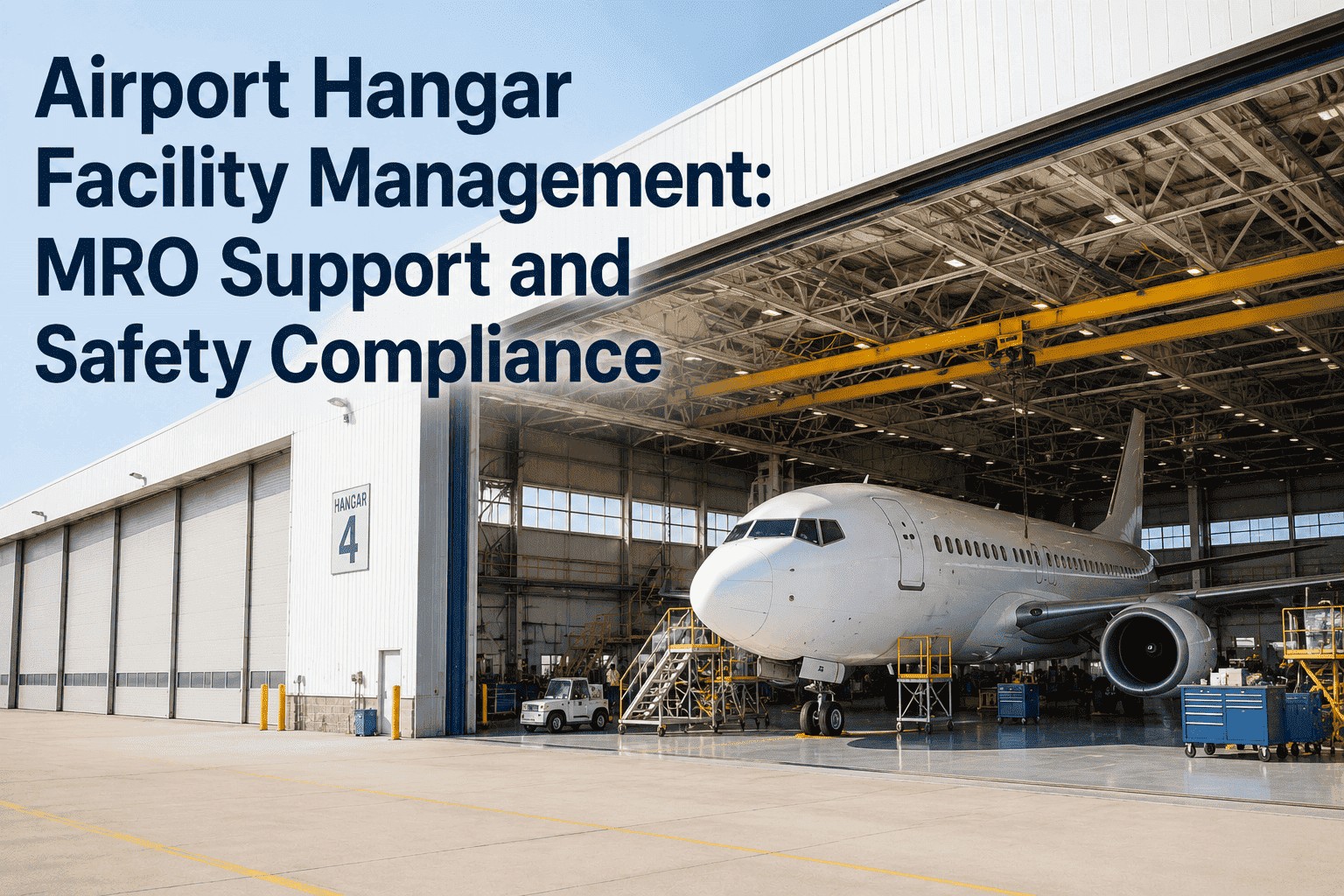
Airport hangar and MRO facility operations run at the intersection of aviation safety, industrial hazard management, and multi-agency regulatory compliance. A failed overhead crane limit switch grounds a widebody during a base check. A floor coating compromised by hydraulic fluid accumulation triggers an OSHA citation and a slip injury in the same shift. A fire suppression system that missed its last foam test date is neither compliant nor reliable when a fuel vapour ignition actually happens. This checklist gives hangar managers, MRO directors, and facilities compliance teams a structured framework covering every asset class that stands between a productive hangar bay and a safety or regulatory failure. Book a Demo to see how iFactory's Compliance Tracking platform manages MRO facility assets, inspection records, and audit documentation — all in one place.
6–18mo
typical gap between a hangar door failure and the last documented inspection when no CMMS is in use
NFPA 409
the primary standard governing aircraft hangar fire suppression — quarterly foam system testing is mandatory, not optional
Daily
OSHA 1910.179 requires pre-shift overhead crane inspection — every shift, every crane, documented every time
4 Codes
FAA, OSHA, NFPA, and local fire authority requirements apply simultaneously in every MRO hangar bay
Six Inspection Disciplines — Every MRO Hangar
Each system creates risk for the others. A floor drain blocked by coating debris floods the bund. A ventilation failure during refuelling creates the ignition condition the suppression system was designed for.
What Gets Missed When Inspections Are Deferred
Every skipped check creates a compounding risk across connected systems. Here is what the failure data consistently shows.
Skipped Door Inspection
Mid-Cycle Mechanical Failure
Drive mechanism or suspension cable failure grounds the aircraft inside, closes the bay to incoming work, and triggers a maintenance investigation that could have been a lubrication visit six months earlier
Skipped Foam Test
NFPA 409 Non-Compliance
Expired foam concentrate or failed proportioner discovered during FAA Part 139 audit — the facility receives a compliance notice and the next base maintenance slot is at risk until the system is certified again
Skipped Floor Assessment
OSHA Recordable Injury
Degraded anti-slip coating in a hydraulic fluid accumulation zone produces a slip injury — an OSHA 300 log entry, a workers' comp claim, and a recoating programme that costs 5x what quarterly inspection would have triggered
Skipped Crane Pre-Shift
Dropped Load Incident
Wire rope failure or brake drift under load during an engine lift — a requirement OSHA classifies as mandatory pre-shift, not optional. The investigation that follows is measured in months, not days
Skipped Ventilation Check
Fuel Vapour Accumulation
Failed low-level extract fan allows fuel vapour to accumulate at floor level during overnight refuelling — LEL alarm triggers at shift start, entire hangar bay is evacuated, and two aircraft are delayed for a sensor failure that started with a blocked intake
Skipped Electrical Zone Check
Non-Classified Fitting Creates Ignition Risk
Standard commercial fitting installed during a lighting upgrade in a classified zone creates an ongoing ignition source — discovered only when the electrical inspection confirms the fitting's classification certificate doesn't exist
Frequently Asked Questions
OSHA 1910.179 establishes two separate inspection requirements for overhead and gantry cranes. Frequent inspections are required at intervals defined by service conditions — for cranes in normal MRO hangar use, this means before each shift. Periodic inspections are required monthly to annually depending on service intensity. Frequent inspection items include hoist brake function, limit switch operation, hook condition, wire rope integrity, and control function. Periodic inspections additionally cover runway rail alignment, structural integrity, motor and gearbox condition, and all safety device function. ASME B30.2 supplements OSHA requirements with specific guidance on rejection criteria for wire rope and hooks. All inspections must be documented with date, inspector identity, and findings — undocumented inspections are treated as uninspected by OSHA enforcement. iFactory generates automated pre-shift checklists for each crane, time-stamps completion, and escalates overdue inspections to the maintenance supervisor before the crane is used.
NFPA 409 (Standard on Aircraft Hangars) is the primary standard governing fire suppression requirements in aviation maintenance facilities. It requires that high-expansion foam or AFFF suppression systems be designed, installed, and maintained to provide full coverage of the hangar floor area, including under aircraft with limited clearance. Inspection requirements include quarterly testing of foam proportioners and concentrate quality, annual full-flow testing of deluge valve operation, and regular inspection of nozzle heads for obstruction or damage. Foam concentrate has a defined service life and must be replaced when quality degradation is detected. FAA 14 CFR Part 139 Subpart D references NFPA 409 compliance for certificated airports. Non-compliance discovered during a FAA inspection can result in certificate suspension for the MRO facility. Maintaining dated, technician-attributed records for every system test is the primary audit defence — iFactory tracks every foam system test result against the asset record and alerts the team when the next test is due.
MRO hangar floors carry aircraft axle loads, ground support equipment movements, heavy tooling, and maintenance stands — simultaneously and continuously. Standard industrial floor coatings deteriorate under this load profile significantly faster than under general warehouse use. The specific hazard in an MRO environment is the combination of coating degradation and fluid contamination: Jet A fuel, Skydrol hydraulic fluid, engine oil, and coolant all have different chemical attack profiles on different coating formulations. A floor that passes visual inspection may still have compromised slip resistance in a hydraulic fluid spill zone, particularly if the anti-slip aggregate has worn smooth. Quarterly inspection is generally considered the minimum acceptable frequency, with annual full coating assessment to identify areas requiring recoating before delamination creates a trip or slip hazard. Floor drain condition is assessed as part of the same programme — a blocked drain allows fluid to accumulate, extending both the contamination and the slip hazard area.
MRO hangars operate under concurrent regulatory oversight from several agencies. FAA 14 CFR Part 139 applies to certificated airport hangars and references multiple NFPA standards. NFPA 409 covers aircraft hangar fire suppression and construction requirements. NFPA 70 (National Electrical Code) Article 513 specifically addresses aircraft hangars and defines electrical classification zones based on proximity to aircraft fuel systems. OSHA 29 CFR 1910 applies across the facility: 1910.179 for overhead cranes, 1910.157 for portable fire extinguishers, 1910.303 for electrical safety, 1910.1200 for hazardous chemical communication, and 1910.132–138 for personal protective equipment. ASME B30.2 governs overhead crane design and inspection standards. Local fire authorities apply additional requirements based on jurisdiction. The practical compliance challenge is that these standards reference each other and sometimes create overlapping or conflicting requirements — the safest approach is to document compliance against each standard separately and maintain a gap register that is reviewed annually against the current edition of each standard.
iFactory's Compliance Tracking platform creates a unified asset record for every piece of inspectable infrastructure in an MRO hangar — each overhead crane, fire suppression zone, door system, floor section, ventilation unit, and electrical panel becomes a tracked asset with a complete inspection history, compliance status, and next-due date. Inspection requirements from NFPA, OSHA, and FAA frameworks are mapped directly to asset records, so the platform knows that crane 3 requires a pre-shift check every operational day, a monthly periodic inspection, and an annual third-party certification. When an inspection is completed, results are recorded against the asset with technician identity and timestamp. When a due date approaches, the platform generates a work order and assigns it to the appropriate team member. When an asset fails an inspection, it triggers an escalation workflow and removes the asset from service until clearance is issued. For compliance audit purposes, iFactory produces a complete, timestamped inspection history for any asset, any date range, in a format designed for FAA and OSHA review. Pilot programmes typically reach go-live within 4 to 6 weeks.
iFactory Compliance Tracking Platform
Your Next FAA Audit Shouldn't Be the First Time You Find a Gap.
iFactory connects crane inspection records, foam system test results, floor condition assessments, ventilation checks, and electrical compliance documentation into a single hangar asset health view — giving MRO facilities the audit trail they need and the advance warning that prevents unplanned groundings.
Pilot in 30 days. Full integration in one quarter.