Every airline operator knows the feeling. A line-replaceable unit fails at an outstation, the part is not in stock, and the aircraft sits grounded while costs accumulate at hundreds of dollars per minute. The instinct is to buy more spares, expand warehouse capacity, and increase inventory budgets. That instinct costs the industry billions. The global aircraft spare parts market reached $50.52 billion in 2025, yet studies show that 25 to 30 percent of that inventory sits idle at any given time, tying up capital that could fund fleet expansion or digital transformation. Component pooling, powered by AI-driven rotable management, offers an alternative that reduces holding costs by 45 to 60 percent while improving dispatch reliability beyond 99 percent. This is not theoretical. It is already working for carriers that have shifted from ownership to access.
COMPONENT POOLING & ROTABLE MANAGEMENT
Stop Buying Spares You Rarely Use
How AI-Driven Component Pooling Cuts Inventory Cost by 50% While Keeping Every Aircraft Ready
$50.5BGlobal aircraft spare parts market in 2025
45-60%Reduction in holding costs via pooling
2,800+LRUs tracked on a single Boeing 787
THE BASICS
What Is Aircraft Component Pooling and Why Does It Matter?
Component pooling is a shared inventory model where multiple operators access a common pool of high-value rotable parts instead of each maintaining individual spares at every base. When a component fails, the operator draws a serviceable unit from the pool, sends the removed unit for repair, and returns it to circulation. The model transforms fixed capital into variable cost, converting millions of dollars in idle inventory into a predictable monthly fee tied to actual usage. For expensive line-replaceable units with long mean-time-between-removal cycles, outright ownership creates capital inefficiency that pooling eliminates.
ROTABLE
Rotable Component
A high-value aircraft part designed for repair and reuse rather than disposal. Landing gear, APUs, avionics boxes, actuators, and hydraulic pumps. Typically $50,000 to $2 million per unit with 10-20 year lifecycles and multiple overhaul cycles before retirement.
POOLING
Component Pooling
A shared inventory strategy where operators contribute to or draw from a centrally managed stock of serviceable components. Pool administrators handle logistics, airworthiness documentation, repair management, and billing across the entire network.
EXCHANGE
Exchange Cycle
The time window from component removal to shop repair and return to serviceable inventory. Managed pools maintain sufficient float stock to cover turnaround time without AOG delays, typically 30-90 days depending on component complexity.
TRACKING
LRU Tracking
Serialized monitoring of each component's installation history, flight hours, cycles since overhaul, airworthiness directive status, and next due maintenance. AI-driven systems track these parameters across the entire pool network in real time.
THE COST OF OWNERSHIP
Self-Owned Inventory vs. AI-Managed Component Pool
The financial case for pooling becomes clear when the full cost of self-owned inventory is laid side by side against a managed pool model. The comparison below uses a mid-size fleet of 30 narrow-body aircraft operating across six bases.
SELF-OWNED INVENTORY
Annual Cost: 100% baseline
$18-24M tied in rotable stock across all bases
25-30% of inventory unused at any time
Full-time logistics and quality team at each location
Repair management handled in-house per component
Stock-out risk at outstations with limited coverage
Annual carrying cost of 18-22% of inventory value
Capital unavailable for fleet or technology investment
VS
AI-MANAGED COMPONENT POOL
Annual Cost: 40-55% below baseline
Pay-per-use pricing with no capital tied in spares
Pool inventory optimized by AI demand forecasting
Centralized logistics managed by pool provider
OEM and third-party repair coordination included
Guaranteed availability at all network locations
No carrying cost, no depreciation, no insurance overhead
Freed capital redirected to digital transformation
THE AI ADVANTAGE
Three Ways AI Transforms Rotable Pool Management
Traditional pool management relies on historical averages and manual coordination. AI-driven systems bring real-time optimization that changes the economics of component pooling at every level.
01
Predictive Demand Forecasting
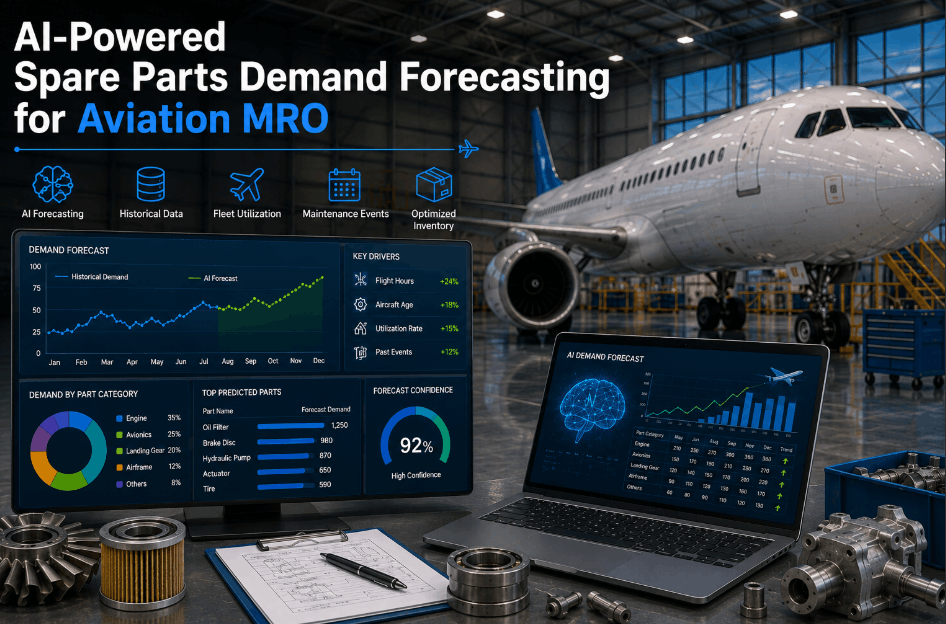
Machine learning models analyze fleet-wide removal patterns, flight hours, environmental conditions, and historical failure data to predict when each LRU will need replacement. Forecasts are generated at the individual serial-number level with 85-92% accuracy rolling 90 days forward. This allows pool managers to position inventory at the right base before the failure occurs, reducing emergency logistics costs by up to 60 percent.
02
Dynamic Float Optimization
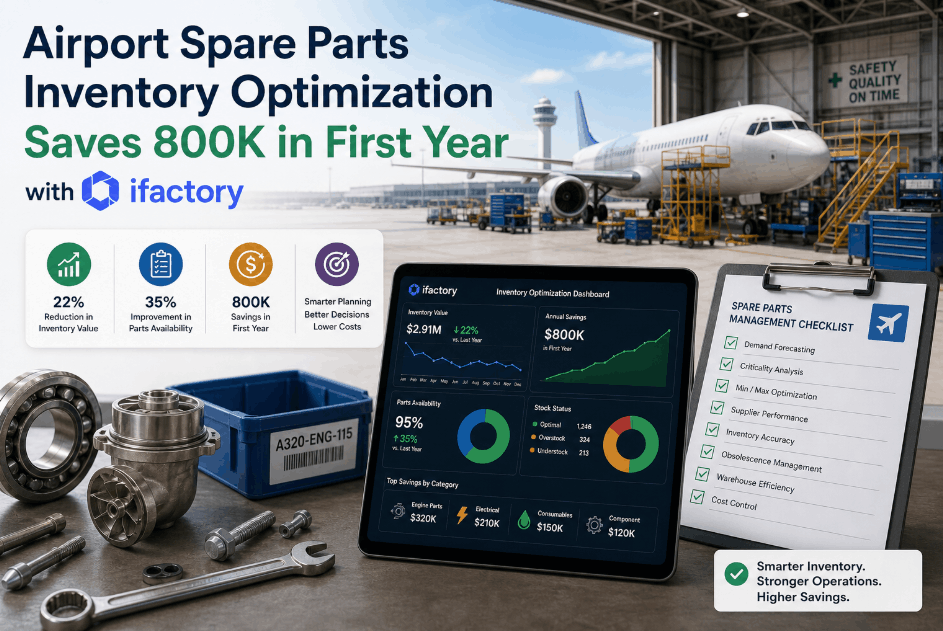
AI determines the optimal float quantity for each component type across the pool network by balancing repair turnaround time, failure probability, transit times between bases, and service level targets. The system adjusts float recommendations in real time as fleet utilization changes, seasonal patterns emerge, or supply chain delays affect repair throughput. Operators using dynamic float optimization report 20-35% reductions in total pool inventory without sacrificing availability.
03
Automated Compliance and Traceability
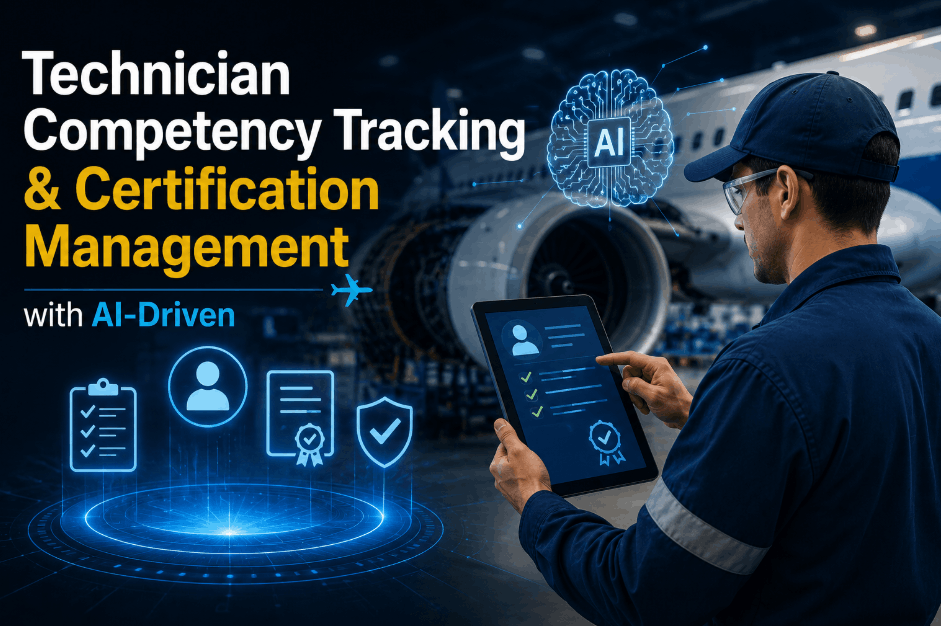
Every rotable in an AI-managed pool carries a digital thread that tracks installation history, flight cycles, airworthiness directive status, overhaul certification, and next due maintenance. When a component moves between operators in the pool, its compliance record transfers instantly. Automated alerts notify managers when any component approaches a compliance threshold. This eliminates manual audit preparation and reduces compliance finding remediation costs by an average of 40 percent.
THE FINANCIAL IMPACT
What Numbers Tell the Real Story?
The business case for AI-driven component pooling rests on measurable outcomes that affect both the maintenance budget and the income statement. The numbers below reflect results from operators that have implemented managed pooling with AI optimization.
45-60%
Reduction in spare parts holding costs
Pooling eliminates the need for duplicate inventory at multiple bases. Shared pool inventory achieves 2-3x higher utilization rates compared to siloed individual stock holdings.
35%
Fewer AOG events with predictive pooling
AI forecasting positions parts at the right base before failures occur. Operators using predictive pooling report AOG events dropping from an industry average of 4-6 per aircraft per year to 1-2.
99.2%
Fleet dispatch reliability achieved
Managed pools with AI optimization consistently deliver dispatch reliability above 99%, compared to 97-98% for self-owned inventory models, representing millions in avoided revenue loss.
40%
Lower compliance remediation costs
Automated digital traceability eliminates manual audit preparation and reduces findings. Each avoided enforcement action saves an average of $2.4 million in penalties and corrective actions.
THE EXCHANGE LIFECYCLE
How an AI-Managed Component Pool Works in Practice
The lifecycle of a rotable component in an AI-managed pool follows a continuous loop. Each stage is optimized by machine learning models that learn from every preceding cycle, making each iteration more efficient than the last.
1
Failure Predicted
AI detects impending component degradation from flight data and historical patterns. Pool system reserves a serviceable replacement automatically.
2
Swap Executed
Technician installs pooled component. Removed unit is tagged with digital ID, routed to nearest repair center. Aircraft returns to service within scheduled maintenance window.
3
Repair Managed
Pool provider coordinates OEM or third-party repair. AI tracks turnaround time and routes component to fastest available shop. Compliance documents updated automatically.
4
Back to Pool
Serviceable unit returned to pool inventory. AI updates float model, repositions stock based on current failure probability across the network. Cycle repeats.
IFACTORY ROTABLE MANAGEMENT MODULE
Transform Your Component Pooling with AI-Driven Rotable Management
iFactory's Rotable Management Module gives you real-time visibility into every component in your pool, AI-powered demand forecasting that reduces stock-outs by 60%, and automated compliance tracking that eliminates manual audit preparation. Built for operators who want pooling economics without the administrative burden.
DECISION FRAMEWORK
Is Component Pooling Right for Your Operation?
The answer depends on fleet size, route network, regulatory footprint, and current inventory efficiency. Use the framework below to assess whether AI-managed pooling makes financial sense for your organization.
STRONG CANDIDATE
Fleet of 10+ same-type aircraft
Operating across 4+ bases or outstations
Rotable inventory above $8M in book value
Stock-out rate above 2% per month
Current inventory turnover below 1.5x per year
Manual tracking of component compliance status
Expected savings: 40-55% of current inventory costs
MODERATE CANDIDATE
Fleet of 5-9 same-type aircraft
Operating across 2-3 bases
Rotable inventory between $3-8M
Stock-out rate around 1-2% per month
Inventory turnover between 1.5-2.5x per year
Partial digital tracking of components
Expected savings: 25-40% of current inventory costs
REVIEW FIRST
Fleet of fewer than 5 same-type aircraft
Single base operation
Rotable inventory below $3M
Stock-out rate below 1% per month
Inventory turnover above 2.5x per year
Automated tracking already in place
Savings potential: 10-25% depending on scale
IMPLEMENTATION
Five Steps to Deploy AI-Driven Component Pooling
Transitioning from self-owned inventory to an AI-managed pooling model follows a structured path that minimizes operational risk while capturing savings at each stage.
1
Audit Current Inventory
Catalog every rotable by part number, serial number, location, condition, usage rate, and current book value. Identify high-cost, low-utilization components as primary candidates for pooling.
2
Define Service Levels
Set availability targets per component category, maximum response time, and acceptable exchange window for each base. These targets drive the pool sizing and float optimization model.
3
Deploy AI Tracking Platform
Implement serialized tracking for every pool component with real-time visibility into location, condition, remaining life, and compliance status. Connect to existing MRO and ERP systems.
4
Migrate High-Value LRUs
Begin with the 20% of components that represent 80% of inventory value. Transfer ownership to pool or enter pay-per-use agreement. Maintain buffer stock during transition.
5
Monitor and Optimize
AI continuously analyzes pool performance, adjusts float levels, and identifies new components suitable for pooling. Quarterly reviews track savings against baseline inventory costs.
IFACTORY ROTABLE MANAGEMENT MODULE
Ready to Cut Your Rotable Inventory Cost in Half?
iFactory's AI-driven Rotable Management Module gives you complete control over your component pool with predictive demand forecasting, automated compliance tracking, and real-time visibility across your entire network. Schedule a demo to see how much your operation could save.
FAQ
Common Questions About Component Pooling and Rotable Management
How does AI improve component pooling compared to traditional pool management?
Traditional pool management relies on fixed inventory levels based on historical averages and manual coordination between operators. AI transforms this by predicting component failures 30-90 days in advance with 85-92 percent accuracy, dynamically adjusting float quantities across the network as fleet utilization changes, and automating compliance tracking so that every component's airworthiness status is always current. Operators using AI-driven pooling report 20-35 percent lower total pool inventory requirements and 60 percent fewer emergency logistics events compared to traditional pooling approaches.
What types of components are best suited for pooling programs?
High-value, low-usage rotable components with predictable failure patterns are the strongest candidates for pooling. These include landing gear assemblies, auxiliary power units, thrust reversers, flight control computers, hydraulic pumps, avionics boxes, and electrical power generation units. Components with a unit value above $50,000, mean time between removal of 6-24 months, and multi-cycle overhaul capability deliver the highest return when moved to a pooled model. Lower-value consumables and expendables are generally not good pooling candidates because the administrative cost exceeds the savings potential.
How long does it take to transition from self-owned inventory to a managed pool?
A phased transition typically takes 3 to 6 months for a mid-size fleet. The first phase involves auditing current inventory, defining service level targets, and deploying the AI tracking platform, which takes 4-6 weeks. The second phase migrates the highest-value LRUs representing roughly 80 percent of inventory value into the pool structure over 6-8 weeks. The final phase extends pooling coverage to remaining component categories while the AI model optimizes float levels based on actual usage data. Operators typically see measurable cost savings within 60 days of the first component migration, with full optimization achieved by month six.
Does component pooling work for fleets operating across multiple regulatory jurisdictions?
Yes, but the pool structure must account for jurisdiction-specific certification requirements. FAA, EASA, and GCAA each have distinct rules about component traceability, repair station certifications, and airworthiness release documentation. AI-driven pooling systems handle this by maintaining separate digital compliance threads for each jurisdiction and automatically routing components to appropriately certified repair stations based on where the part will be installed next. Operators with multi-jurisdiction fleets report that AI-managed pools actually reduce compliance risk compared to self-managed inventory because the system prevents a component certified under one regulatory framework from being installed on an aircraft operating under a different framework.
What happens to my existing inventory when I join a pooling program?
Existing inventory can be transitioned through several models. Under a buy-in model, the pool provider purchases qualifying components from the operator at a negotiated valuation, and the operator receives pooled access credits. Under a consignment model, the operator retains ownership but contributes components to the pool and receives a usage fee each time another pool member draws that part. Under a hybrid model, the operator retains high-usage components and pools the rest. The AI platform models each option against the operator's usage patterns to recommend the most cost-effective transition strategy. Most operators choose the hybrid model initially and expand pooling coverage as they gain confidence in the system.
START OPTIMIZING YOUR COMPONENT POOL
Don't Let Idle Inventory Ground Your Capital
Every dollar tied in rotable stock is a dollar that cannot fund fleet growth, technology upgrades, or operational improvements. iFactory's Rotable Management Module gives you AI-powered pooling optimization, real-time component tracking, and automated compliance management. See exactly how much your operation can save.