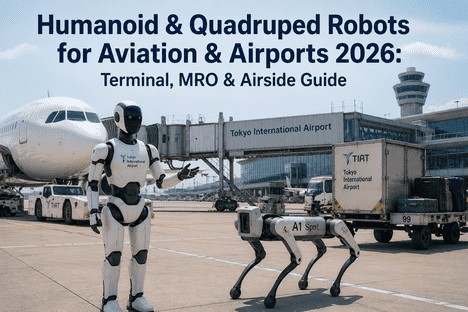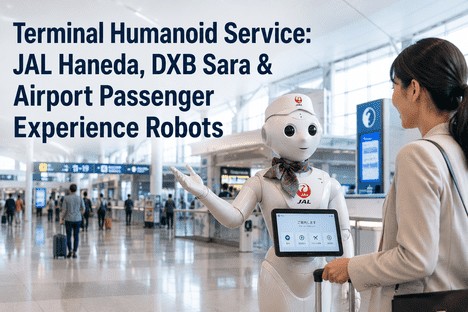
The most visible point of contact between a passenger and an airport is not a check-in counter or a security scanner. It is the space between them — the concourse, the gate area, the transit corridor where a traveller with a connecting flight in 45 minutes needs directional information, language support, or mobility assistance. That space has historically been staffed by humans who rotate on shift schedules, speak a limited number of languages, and cannot be in every zone of a terminal simultaneously. In 2026, it is increasingly staffed by humanoid robots that do not rotate, do not fatigue, and are deployed in the zones where passenger density is highest and the information demand is most acute. The terminal humanoid is not a replacement for airport staff. It is a capacity multiplier deployed at the exact point in the passenger journey where the gap between demand and availability has been widest for the longest.
The Passenger Journey Map: Where Humanoids Touch the Terminal Experience
A passenger moving through a terminal intersects with at least five distinct service touchpoints where humanoid robots are actively deployed today — each with a different interaction model, language requirement, and facility management dependency.
Why Passenger-Facing Humanoids Create a Different Facility Management Challenge Than Industrial Robots
A humanoid robot assisting passengers in a terminal operates under different constraints than a quadruped inspecting an MRO hangar. Terminal robots are customer-facing. Their uptime is visible to the travelling public. A robot that is offline at Gate 24 during a peak departure bank is not just a maintenance issue — it is a passenger experience gap that travellers notice and comment on. The facility management standard for terminal humanoids must therefore match the standard applied to escalators, boarding bridges, and passenger information displays — not the standard applied to back-of-house equipment where downtime is invisible to passengers.
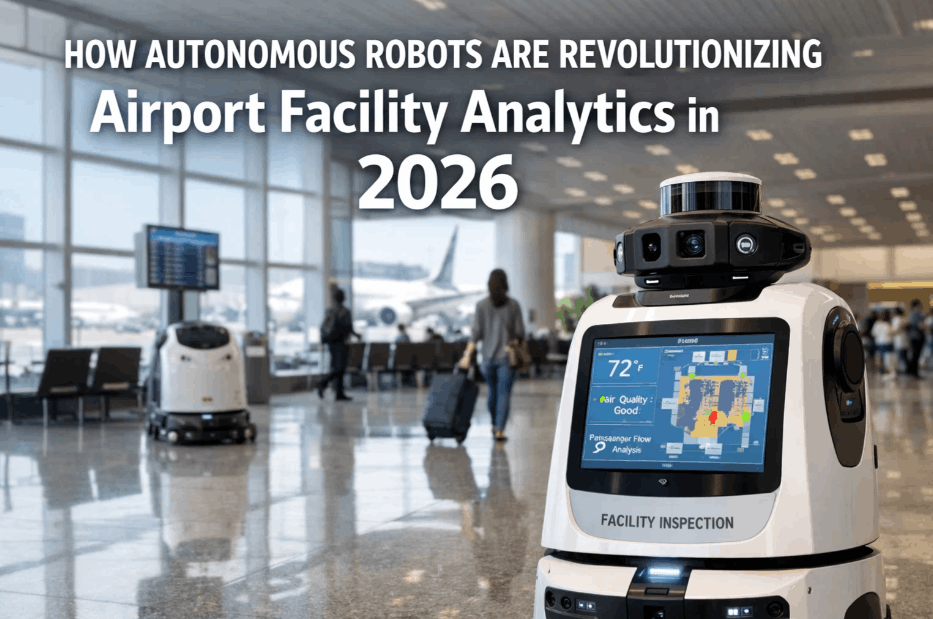
When an MRO inspection robot goes offline, the hangar team works around it. When a terminal humanoid goes offline during a peak departure wave, passengers notice. The facility management infrastructure for terminal robots must support rapid fault response, hot-swappable battery systems, and redundant coverage planning — the same operational discipline applied to passenger boarding bridges and terminal information displays.
Terminal humanoids depend on AI models for natural language processing, computer vision, and path planning that update on weekly or monthly cycles — not annual maintenance schedules. Each update must be logged, tested, and deployed without disrupting scheduled patrols or passenger-facing operations. iFactory's asset registry tracks software versions and update history alongside hardware PM records, giving facility managers a single view of both dimensions of robot fleet health.
A terminal that deploys two humanoid robots for wayfinding during standard operations may need four during peak travel seasons. iFactory's asset scheduling and zone assignment tools support dynamic fleet allocation — enabling facility managers to scale robot coverage in line with passenger volume forecasts and log every deployment shift against the operational record.
Passenger-facing robots operate in security-classified terminal zones where maintenance records must satisfy airport authority compliance requirements. iFactory maintains structured audit trails for every robot asset — covering PM completion, fault records, software deployment history, and operational hours — so terminal robot fleets meet the same documentation standard applied to every other system in the passenger zone.
The Accessibility Dimension: Why Multilingual and Inclusive Capabilities Make Terminal Humanoids a Compliance Asset
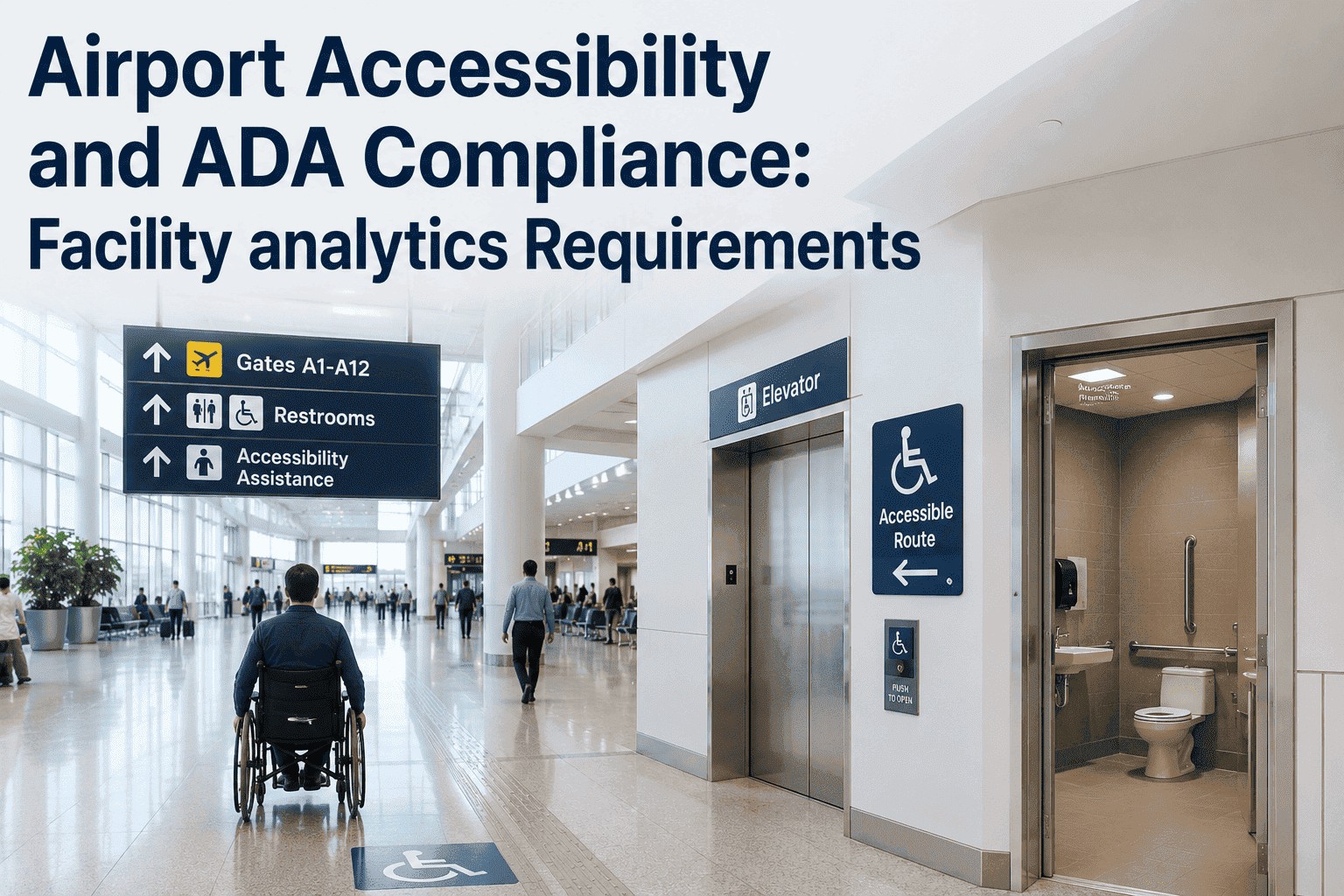
Airport accessibility requirements are expanding. Regulatory frameworks in North America, Europe, and Asia Pacific increasingly require airports to demonstrate that information services are available to passengers regardless of language, hearing ability, or mobility status. Humanoid robots with multilingual AI and sign language capability address this requirement directly — and the documentation proving that capability is available, maintained, and operational is increasingly part of the accessibility compliance record that airport authorities must produce on demand. iFactory tracks every robot's capability configuration against your terminal's accessibility service obligations — logging language pack versions, sign language module availability, and passenger interaction volume by language category as part of the structured asset record.
We expect thousands of visitors from around the world for the FIFA World Cup, and thanks to IntBot, they will receive clear directions, real-time terminal information, and answers in more than 50 languages. This is not just a technology deployment — it is a passenger service investment that directly supports our city's role as a global gateway.
— San Jose Mayor Matt Mahan on the IntBot Jose deployment at SJC, March 2026Frequently Asked Questions
Conclusion
The terminal humanoid deployment at Haneda, the robotic check-in assistant at DXB, and the multilingual concierge at San Jose share a common characteristic that distinguishes them from earlier airport technology pilots. They are not funded by innovation budgets. They are funded by operational budgets — because each deployment solves a measurable operational problem that terminal managers are already resourced to address. JAL needs to move cargo containers with fewer ground staff. Emirates needs to process check-in volume during peak periods without expanding counter footprint. San Jose needs to serve international visitors in 50 languages without hiring 50 translators. The robots are the solution to the problem, not the problem looking for a solution.
The facility management infrastructure that supports those robots is not optional. A terminal with three humanoid robots providing passenger service across five touchpoints needs the same maintenance discipline applied to those robots as it applies to its boarding bridges and baggage systems. iFactory provides that infrastructure: asset registration, PM scheduling, software version tracking, uptime analytics, and compliance documentation — built for the terminals and airlines that are deploying passenger-facing robots today and planning the fleet expansions of tomorrow. Book a Demo to see how iFactory manages terminal robot assets alongside your existing airport facility portfolio, or Get In Touch to begin registering your humanoid fleet.