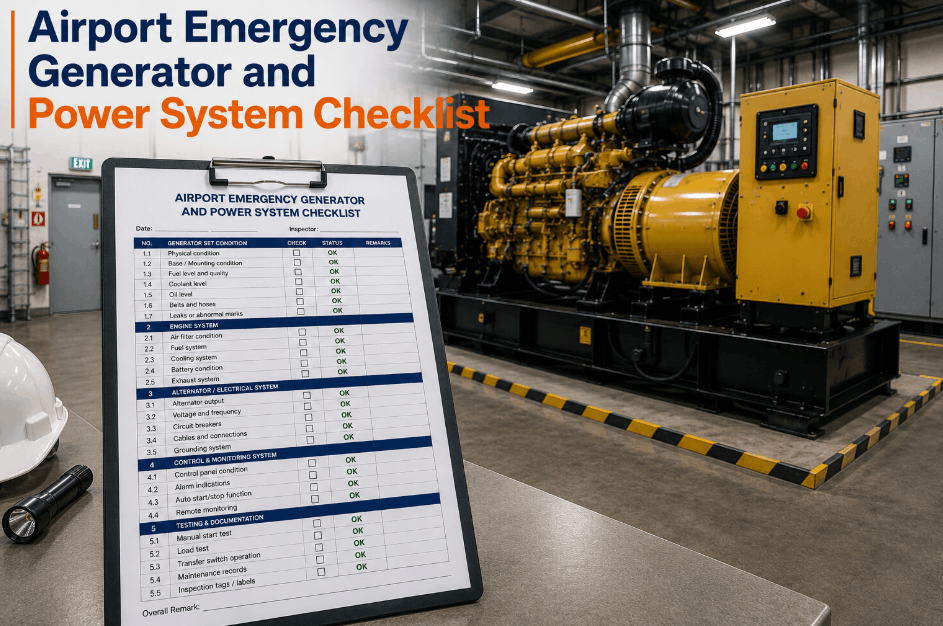
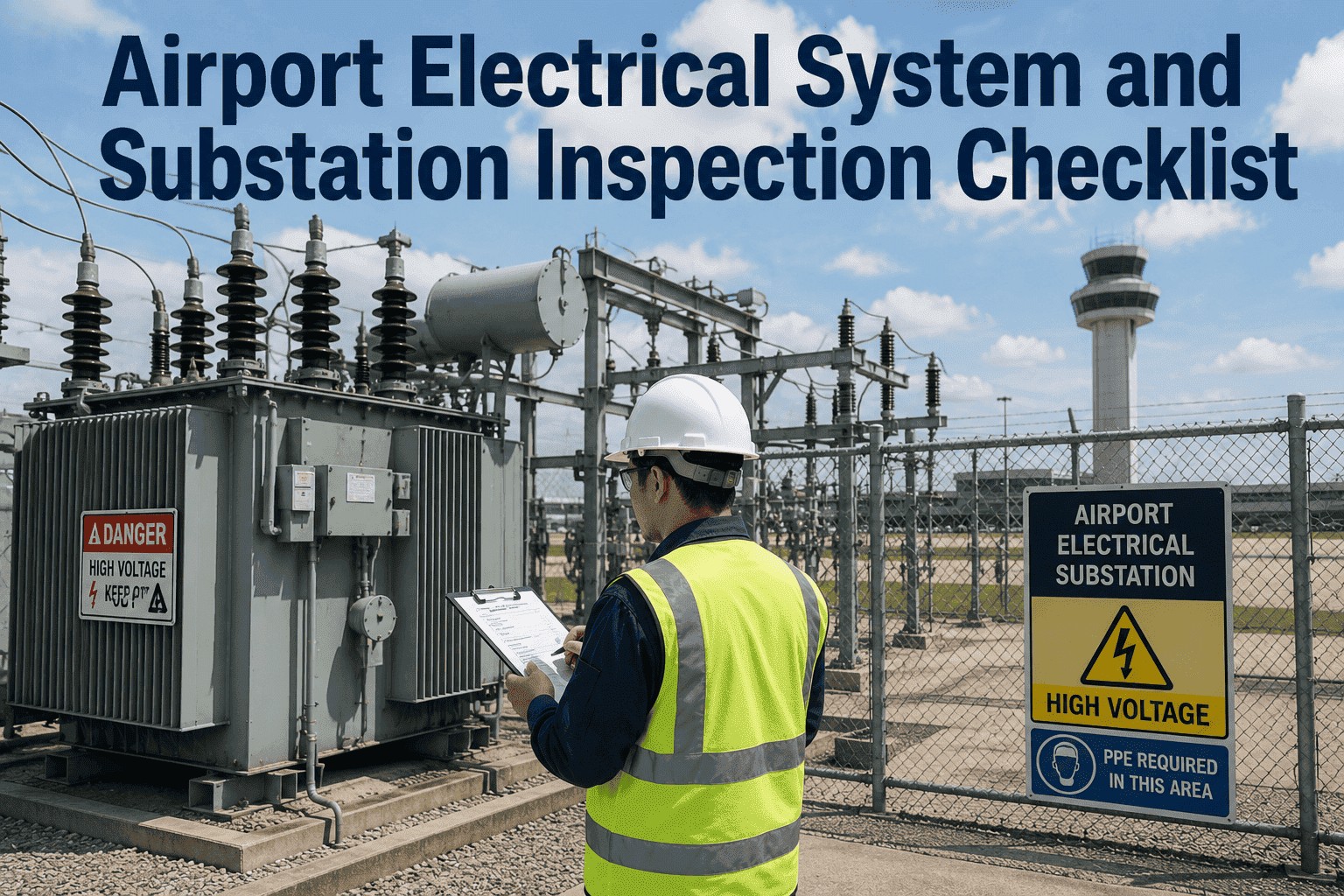
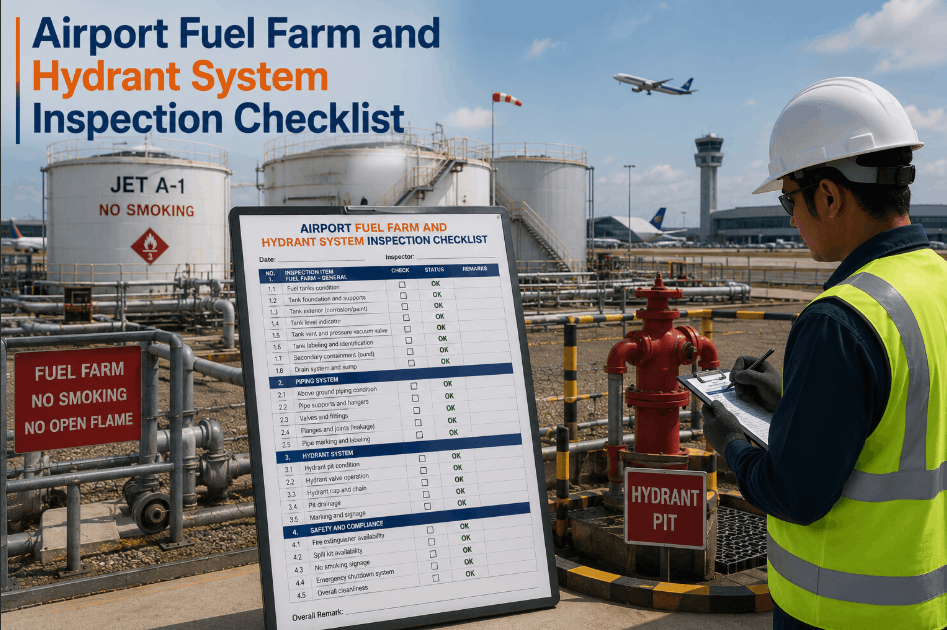
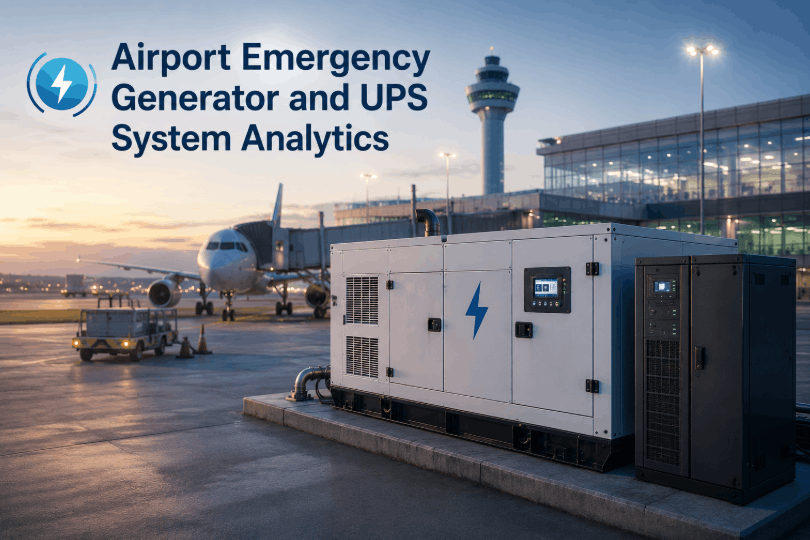
Airport emergency power systems are the last line of defense when utility power fails — protecting runway lighting, fire alarm panels, security surveillance, ATC communication backups, and passenger evacuation systems from simultaneous collapse during critical operations. A comprehensive airport emergency generator and power system checklist covering diesel engine readiness, automatic transfer switch testing, UPS battery capacity, and critical load distribution verification ensures your facility meets FAA Advisory Circular and NFPA 110 requirements at every mandated inspection interval. Book a Demo to see how digital preventive maintenance platforms replace paper-based generator inspection logs with automated testing schedules, real-time power system status monitoring, and audit-ready FAA compliance documentation across all emergency power zones.
EMERGENCY POWER INSPECTION
FAA COMPLIANCE
GENERATOR MAINTENANCE
Digitize Airport Emergency Power Inspections — Automate Generator Compliance Records
Track diesel generator tests, ATS switching times, UPS battery runtime, and critical power distribution checks with audit-ready documentation for every emergency power system in your airport facility.
Why Structured Emergency Power Inspections Are Critical at Airports
Power Failures During Flight Operations Create Cascading Safety Emergencies
Airport utility power failures that find emergency generators unable to start — due to discharged batteries, low fuel, or untested transfer switches — simultaneously disable runway edge lighting, approach aid navigation systems, fire detection panels, security access control, and emergency evacuation communications. A single untested generator represents a systemic failure point that structured inspection programs are designed to eliminate before a real power loss event exposes the gap.
FAA, NFPA 110, and NEC Requirements Mandate Documented Testing Intervals
FAA Advisory Circulars 150/5340-26 and 150/5300-13, combined with NFPA 110 for emergency power systems and NEC Article 700 for legally-required standby systems, specify generator testing frequencies, transfer time requirements, and load bank testing documentation that must be available during FAA Airport Certification Safety Inspections. Facilities without timestamped test records face mandatory corrective action findings and operating restrictions.
COMPLIANCE TRACKING
DIGITAL INSPECTION
Ready to Digitize Airport Emergency Power Inspections and Automate Generator Compliance Records?
Automate diesel engine checks, ATS transfer tests, UPS battery runtime verification, and load bank test documentation — with real-time power system status dashboards and instant corrective action workflows across all critical power zones.
Airport Emergency Power System Inspection FAQs
1. Which standards govern airport emergency generator inspection requirements?
Airport emergency power systems are governed by NFPA 110 (Emergency and Standby Power Systems), NEC Articles 700 and 701, FAA Advisory Circulars 150/5340-26 and 150/5300-13, and local Authority Having Jurisdiction (AHJ) amendments. Facilities must satisfy all applicable standards simultaneously, as each covers different aspects of generator system readiness, testing frequency, and documentation requirements.
2. How frequently must airport emergency generators be tested under NFPA 110?
NFPA 110 Level 1 systems require weekly automatic start tests with a minimum 30-minute run, monthly tests at not less than 30% of the nameplate rating to prevent wet stacking, and annual full-load tests at 100% rated capacity for a minimum two-hour duration. Transfer switch testing must be documented at each test interval with timestamped records of all measured parameters.
3. What is the required generator start-to-full-load time for airport critical systems?
NFPA 110 Level 1 requires the generator to reach operating speed and accept full load transfer within 10 seconds of utility power loss. For runway lighting systems specifically, FAA requirements mandate that airfield lighting remain uninterrupted or restore within acceptable time windows — making ATS transfer time verification a critical inspection parameter at commercial service airports.
4. How long should airport emergency generators be able to operate without refueling?
NFPA 110 requires Level 1 systems to have onsite fuel sufficient for a minimum of 96 hours of operation at full load. Most airport operators maintain larger reserves — particularly for remote general aviation facilities where fuel delivery may be delayed. Fuel quality management including biocide treatment and annual fuel polishing is required for extended-storage systems.
GET STARTED
DIGITIZE TODAY
Digitize Your Airport Emergency Power Inspection Program Today
Join airport facilities that have automated NFPA 110 and FAA-compliant emergency generator documentation, eliminated inspection gaps, and improved power system reliability with structured digital maintenance workflows across every critical power zone.