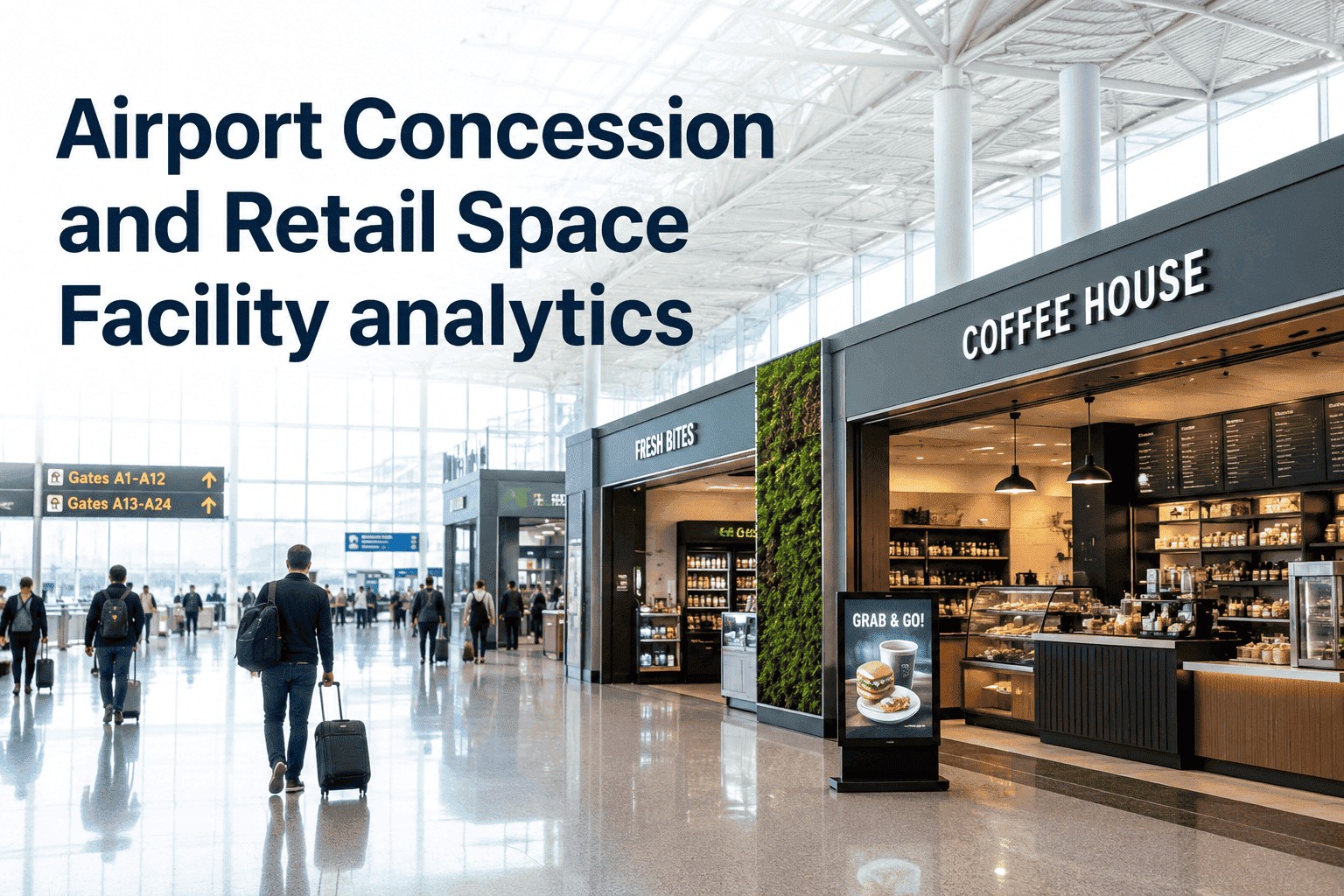
Airport Concession and Retail Space Facility analytics
By Grace on May 30, 2026
Airport concession and retail spaces generate more revenue per square foot than almost any commercial real estate on the planet — and they operate under maintenance conditions that would challenge the most experienced facility team. A food court serving 40,000 passengers daily runs HVAC, plumbing, electrical, and commercial kitchen equipment around the clock, with zero tolerance for downtime during peak boarding windows. A duty-free retail zone with twelve tenant brands, each with their own lease terms and service expectations, requires the airport to respond to maintenance requests, document SLA compliance, and prove response times on demand. When facility operations are managed reactively — responding to complaints rather than preventing them — the cost is not just the repair. It is the revenue the tenant loses during downtime, the relationship damage that follows lease renewal, and the audit exposure when SLA records cannot be produced.
Concession Analytics · Tenant SLAs · HVAC · Work Orders · Retail Space Management
Every Untracked Maintenance Request Is a Lease Renewal Risk. iFactory Tracks All of Them.
iFactory's facility analytics platform connects every concession space, retail unit, and food court tenant to a tracked work order system — with AI-driven SLA monitoring, HVAC and equipment PM schedules, and tenant service portals built in from day one.
Projected global airport retailing market by 2030 — up from $43.2B in 2023, growing at 6.9% CAGR
46%
Share of total U.S. airport revenue from non-aeronautical sources in FY2023 — concessions are the primary driver
22–28%
HVAC cost reduction achievable through structured PM compliance at 90%+ completion rates across terminal zones
$22K
Average cost of an unplanned HVAC shutdown event — including emergency contractor, tenant disruption, and lost revenue
Why Airport Concession Spaces Are the Hardest Facility Type to Manage Without Analytics
Managing a single retail store is complex. Managing a terminal with sixty concession tenants — each with different lease structures, different equipment obligations, different trading hours, and different SLA expectations — is a different category of operation entirely. The airport facility team sits at the center of every maintenance event, yet the tenant experiences the disruption and records the downtime. Without a centralized system that tracks every work order, every response time, and every completion against the SLA commitment, the data that protects the airport's position in lease negotiations and compliance audits simply does not exist.
The Four Facility Failures That Damage Concession Revenue and Tenant Relationships
H
HVAC Failure During Peak Trading
A food court with failed cooling during a peak departure window loses transaction revenue, generates passenger complaints, and creates immediate pressure on the tenant-airport relationship. Emergency HVAC repair costs 50–100% more than planned maintenance once overtime labor and emergency parts sourcing are factored in. Without a PM schedule enforced at the equipment level, failures cluster during peak load — the worst possible timing.
Revenue Loss + Emergency Repair Premium
S
Missed SLA Response Times
When a retail tenant submits a maintenance request and the response time exceeds the SLA commitment, the breach is often invisible to the airport — because no system tracked it. At lease renewal, tenants who experienced repeated SLA failures have documented grievances that shift negotiating power. Without a timestamped work order trail tied to the SLA matrix, the airport cannot demonstrate compliance or dispute the tenant's account of events.
Lease Renewal Risk + Tenant Dispute Exposure
E
Electrical and Plumbing Downtime
A tripped circuit serving a duty-free display zone or a blocked drain in a restaurant concession can shut operations in minutes. When work orders are submitted by phone or email and managed outside a tracked system, response coordination is slow, resolution times are undocumented, and the same fault recurs because root cause is never formally recorded. In a high-density terminal, unresolved repeat faults drive tenant dissatisfaction faster than any single large event.
Repeat Faults + Untracked Downtime
A
Audit Gaps in Compliance Records
Airport commercial spaces operate under regulatory compliance frameworks spanning food safety, fire safety, electrical certification, and HVAC performance standards. A compliance audit — triggered by a health authority visit, a fire marshal inspection, or a tenant dispute — requires the facility team to produce maintenance records for specific assets within specific periods. Without a system generating and storing those records at the asset level, the response is reconstruction under pressure rather than retrieval on demand.
Compliance Gaps + Audit Exposure
What Facility Analytics Actually Means for a Terminal Concession Portfolio
Facility analytics in an airport retail context is not a reporting dashboard bolted onto a maintenance system — it is the continuous measurement of how every physical asset, every maintenance task, and every tenant interaction performs against the standard the lease agreement defines. iFactory builds this measurement layer into the work order and PM platform itself, so analytics are a byproduct of normal operations rather than a separate reporting effort.
Analytics Dimension
What Is Being Measured
Why It Matters for Concessions
SLA Response Analytics
Time from tenant request submission to technician acknowledgement, dispatch, and resolution — per work order category and per tenant unit
Lease compliance documentation, tenant dispute resolution, and performance benchmarking across the concession portfolio
PM Completion Rate
Percentage of scheduled HVAC, electrical, plumbing, and equipment PM tasks completed on time vs. deferred or missed, per asset and per zone
Predicts equipment failure risk, HVAC energy efficiency, and regulatory compliance exposure across food court and retail zones
Fault Recurrence Tracking
Frequency of repeat work orders against the same asset or location — identifying chronic faults that signal underlying infrastructure issues
Eliminates the cycle of fixing symptoms rather than root causes — the primary driver of tenant dissatisfaction in active terminal environments
Tenant Request Volume
Work order submission rate by tenant, category, and building zone — revealing which tenants experience disproportionate facility disruption
Surfaces tenants at highest churn risk before they reach lease renewal, enabling proactive relationship management and targeted infrastructure investment
Contractor Performance
Response time, fix rate on first visit, and cost per work order category by service contractor — across HVAC, plumbing, electrical, and specialist trades
Data-driven contractor performance reviews, renegotiation leverage, and evidence base for replacing underperforming vendors before SLA failures compound
Tenant Portal · AI-Driven SLAs · Work Order Tracking · Concession Analytics
If You Cannot Measure SLA Compliance, You Cannot Defend It. iFactory Measures Everything.
Every tenant request, every response time, every work order closure — tracked, timestamped, and analytics-ready. The data that protects your lease relationships and proves your operational standard.
How iFactory Manages Every System That Keeps Concession Spaces Operational
iFactory registers every physical asset in your concession and retail portfolio as a tracked, schedulable unit — from terminal HVAC units and commercial kitchen extraction systems to electrical distribution boards and plumbing risers. Each asset carries its maintenance schedule, inspection history, tenant association, and SLA obligation in a single record. Here is how that works across the systems that matter most.
System 01
Terminal HVAC — Zone-Level PM Scheduling and Failure Prevention for Food Courts and Retail Units
Highest Emergency Cost Risk
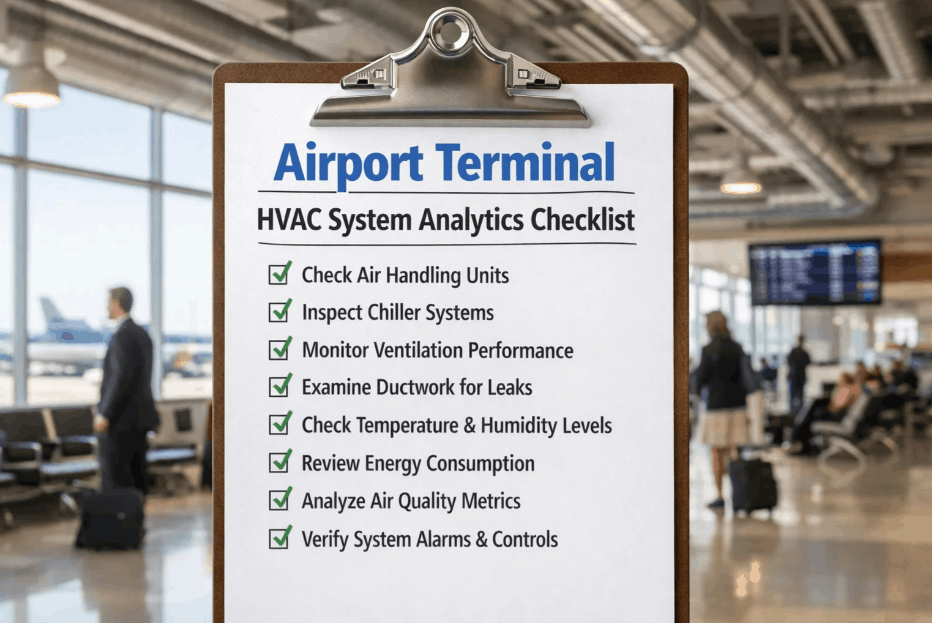
Concession HVAC systems in airport food courts carry a maintenance burden unlike standard commercial buildings — kitchen exhaust heat loads, grease filtration requirements, and continuous operating hours create accelerated wear cycles that demand tighter PM intervals than most generic HVAC contracts specify. An unplanned HVAC shutdown in a food service zone can cost between $8,400 and $22,000 in emergency repair, contractor premium, and lost concession revenue — yet 71% of HVAC failures show measurable precursor conditions days before the event. iFactory registers each AHU, FCU, chiller, and rooftop unit at the asset level with its manufacturer-specified PM schedule, assigns quarterly maintenance work orders automatically, logs filter change dates, coil cleaning records, and belt condition checks — and flags assets with deferred PM tasks before they progress to failure.
Zone-level HVAC asset registry
Auto-generated PM work orders
Deferred PM escalation alerts
System 02
Tenant Service Portal — AI-Driven SLA Tracking Across Every Concession and Retail Lease
Lease Relationship Protection
The iFactory Tenant Service Portal gives every concession operator a direct channel to submit maintenance requests, track work order status in real time, and receive resolution confirmation — without phone calls, email threads, or manual follow-up. On the airport side, each incoming request is automatically assigned a priority classification and SLA timer based on the tenant's lease category and the work order type. AI-driven SLA monitoring tracks every open ticket against its response and resolution deadline — escalating to supervisors when timelines approach breach. The result is a complete, timestamped record of every interaction with every tenant across the entire concession portfolio, exportable by tenant, date range, or SLA category for lease compliance reviews and dispute resolution.
Tenant-facing request portal
AI SLA breach escalation
Full interaction audit trail
System 03
Plumbing and Electrical Infrastructure — Reactive Work Order Management and Fault Pattern Detection
Repeat Fault Elimination
Plumbing and electrical faults in active concession zones generate the highest volume of reactive maintenance requests — and the highest rate of recurrence when root cause is not formally recorded. A blocked drain in a restaurant concession that is cleared three times in six months is not three separate events: it is one infrastructure problem with three incomplete resolutions. iFactory links every reactive work order to its asset record, captures the technician's fault diagnosis and resolution method, and surfaces repeat fault patterns in the analytics dashboard — so the facilities team can see which assets have generated three plumbing call-outs in a quarter and schedule the root cause investigation before the fourth.
Asset-linked fault records
Repeat fault pattern analytics
Root cause work order escalation
System 04
Commercial Equipment Compliance — Food Safety and Fire Safety Certification Tracking per Concession Unit
Compliance and Audit Readiness
Airport food and beverage concessions operate under health authority inspection regimes, fire suppression certification requirements, and commercial kitchen equipment compliance schedules that touch dozens of assets per unit. A suppression system that misses its annual inspection, a ventilation hood with an overdue grease filter replacement, or a commercial refrigeration unit without current temperature log records creates compliance exposure that surfaces at the worst time — during an unannounced inspection or when a health authority visit follows a tenant complaint. iFactory registers every compliance asset for each concession unit with its certification schedule, generates inspection work orders automatically, and stores the completed inspection record at the asset level — so the compliance portfolio for any concession unit is retrievable in seconds, not assembled under pressure when an inspector arrives.
Per-unit compliance asset registry
Auto-scheduled certification inspections
Instant compliance record retrieval
The Concession Facility Calendar — What Has to Happen Every Week, Month, and Quarter
Airport concession facility management is not a series of annual events — it is a continuous cycle of tasks distributed across daily operations, weekly checks, monthly inspections, and quarterly reviews. iFactory pre-configures and enforces this calendar automatically, so no task falls through the gap between one team member's departure and the next one's onboarding.
Weekly
Check open tenant requests against SLA timers — escalate any approaching breach threshold
Verify retail zone HVAC setpoints and confirm no units flagged for deferred maintenance
Monthly
Full HVAC filter inspection and replacement across food court and retail zones per equipment schedule
Tenant satisfaction review — flag units with above-average request volume for proactive outreach
Fire suppression and emergency lighting test log update for all concession units
Quarterly
Full HVAC system inspection — coil cleaning, belt condition, drain pan, refrigerant levels across all units
Contractor performance review — response times, first-fix rates, cost per work order by trade category
Compliance asset audit — verify all concession units have current inspection records for regulated equipment
Annual
Full SLA performance report per tenant for lease review — all response and resolution times against committed standards
Asset condition rating update and CapEx replacement forecast for mechanical, electrical, and plumbing infrastructure
Full tenant service portal review and SLA matrix update to reflect renewed or renegotiated lease terms
"
We had twelve food and beverage tenants across two terminals and we were managing work orders through a shared inbox. When one of our larger tenants raised a formal grievance at lease renewal, citing repeated HVAC response delays, we had no way to prove or disprove the timeline they presented. We had responses in emails spread across three staff members and none of it was in a format we could present as evidence. After we moved to a platform with SLA tracking, the same tenant submitted seven requests in the following six months — every one closed within the committed response time and documented. The dynamic in the renewal conversation was completely different.
— Facilities Operations Manager, Regional International Airport — 9 Years Aviation Facility Management
Frequently Asked Questions
iFactory allows you to define SLA matrices at the lease category level — so food and beverage concessions, retail tenants, and service providers can each carry different response and resolution time commitments by work order type. When a tenant submits a request through the Tenant Service Portal, the SLA timer is triggered automatically based on the lease classification and request category. AI monitoring tracks every open ticket against its specific deadline, escalates to supervisors as thresholds approach, and records the full timeline on closure. The result is a per-tenant SLA performance record that is accurate, complete, and exportable for lease compliance reviews without manual reconstruction. Talk to an Expert to configure your SLA matrix and activate tenant portal access across your concession portfolio.
Yes. iFactory registers each HVAC unit — AHUs, FCUs, rooftop units, exhaust systems, kitchen ventilation — as an individual asset with its manufacturer PM schedule, installation date, location, and zone assignment. PM work orders are auto-generated at the correct interval for each unit type, not applied as a blanket schedule across the whole food court. When a unit has a completed PM, the record is stored at the asset level with the technician ID, date, and findings. Deferred PM tasks appear in the analytics dashboard with their overdue status and the risk tier associated with the asset, so prioritization decisions are data-driven rather than based on whoever called most recently. Book a Demo to see how the asset registry maps to your terminal HVAC layout.
Every reactive work order in iFactory is linked to the specific asset it addresses. When a technician closes a work order, the fault type, diagnosis, and resolution method are recorded against that asset's history. The analytics layer surfaces assets that have generated multiple work orders in a defined period — flagging them as repeat fault candidates. The facilities manager can then see, for example, that a specific drainage run in a food court corridor has had three blockage call-outs in four months — each apparently resolved, but with no recorded investigation of the underlying pipe condition. iFactory generates a root cause investigation work order directly from the repeat fault flag, escalating from symptomatic resolution to structural repair planning. Talk to an Expert to start tracking fault patterns across your concession portfolio.
iFactory tracks each asset's installation year, condition rating from the most recent inspection, and fault history. As condition ratings are updated through annual assessments, the platform projects end-of-life timelines based on observed deterioration against expected service life — combining installation age with actual condition rather than relying on age alone. Finance teams see a forward-looking CapEx replacement forecast across all concession zones, broken down by system type and terminal, allowing planned capital investment decisions to be made at budget cycle rather than in response to emergency failure. This is particularly valuable for large airport portfolios where aging HVAC and electrical infrastructure reaches replacement threshold at different points across different terminal buildings. Book a Demo to see how asset lifecycle forecasting maps to your infrastructure profile.
Conclusion
Airport concession and retail spaces are not passive income streams — they are active operational environments where the quality of facility management directly determines tenant retention, revenue performance, and compliance standing. A food court HVAC failure costs more than the repair bill. A missed SLA costs more than the work order. A compliance gap discovered during an audit costs more than the inspection would have. The facilities teams that avoid these costs do not do so by working faster — they do so by managing every asset, tracking every obligation, and producing documentation before the question is asked rather than after.
iFactory's preventive maintenance and facility analytics platform registers every concession and retail asset across your airport — with AI-driven SLA monitoring, tenant service portals, HVAC PM scheduling, fault pattern analytics, and compliance tracking that keeps your commercial portfolio managed, your tenants supported, and your audit record ready. Book a Demo to see how the platform maps to your concession portfolio, or Talk to an Expert to build your concession asset registry and activate tenant SLA tracking from day one.
A Concession Tenant Who Cannot Get a Maintenance Response Will Not Renew. One Who Can Will.
iFactory tracks every request, enforces every SLA, and produces the documentation that turns facility operations into a competitive advantage at lease renewal.