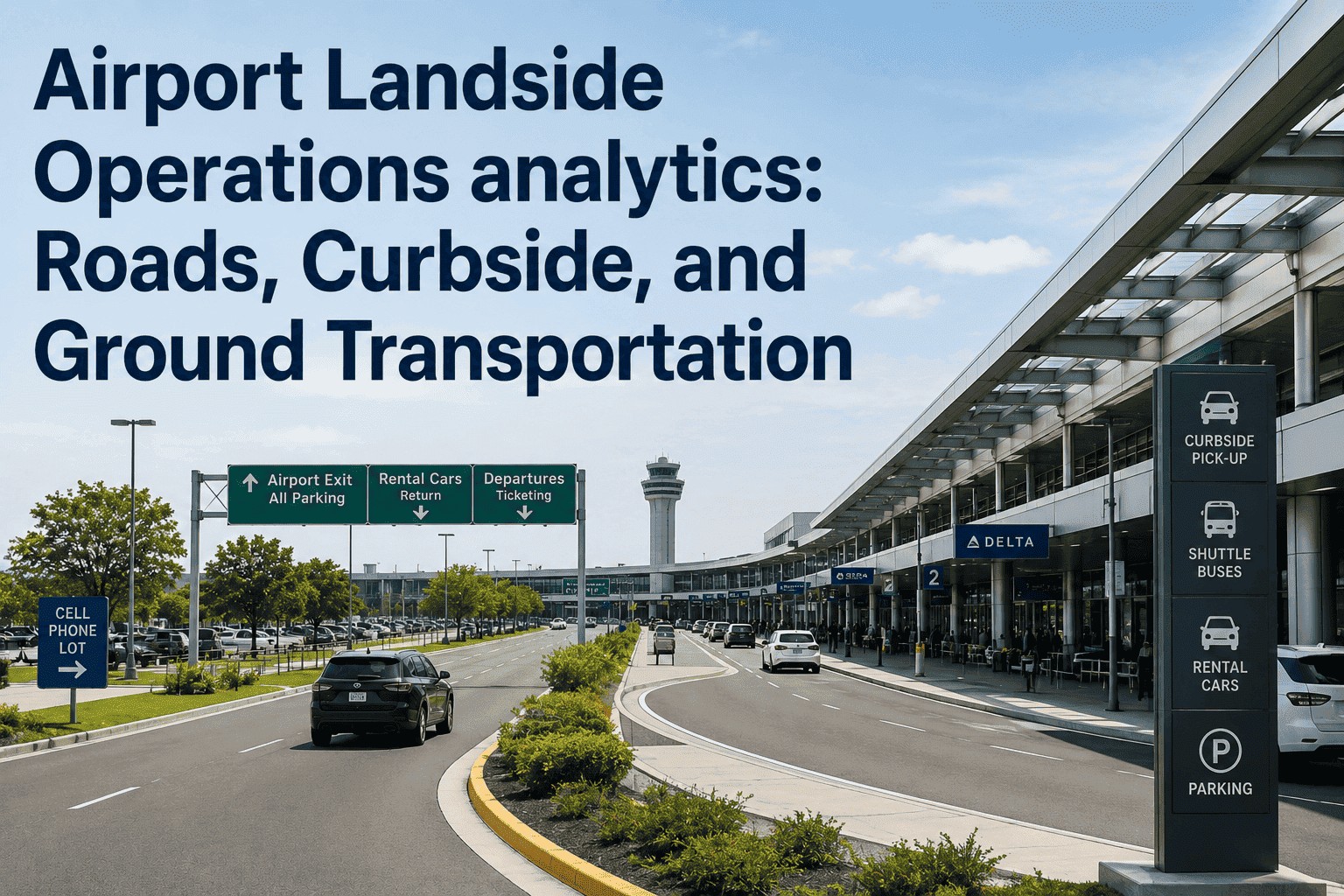
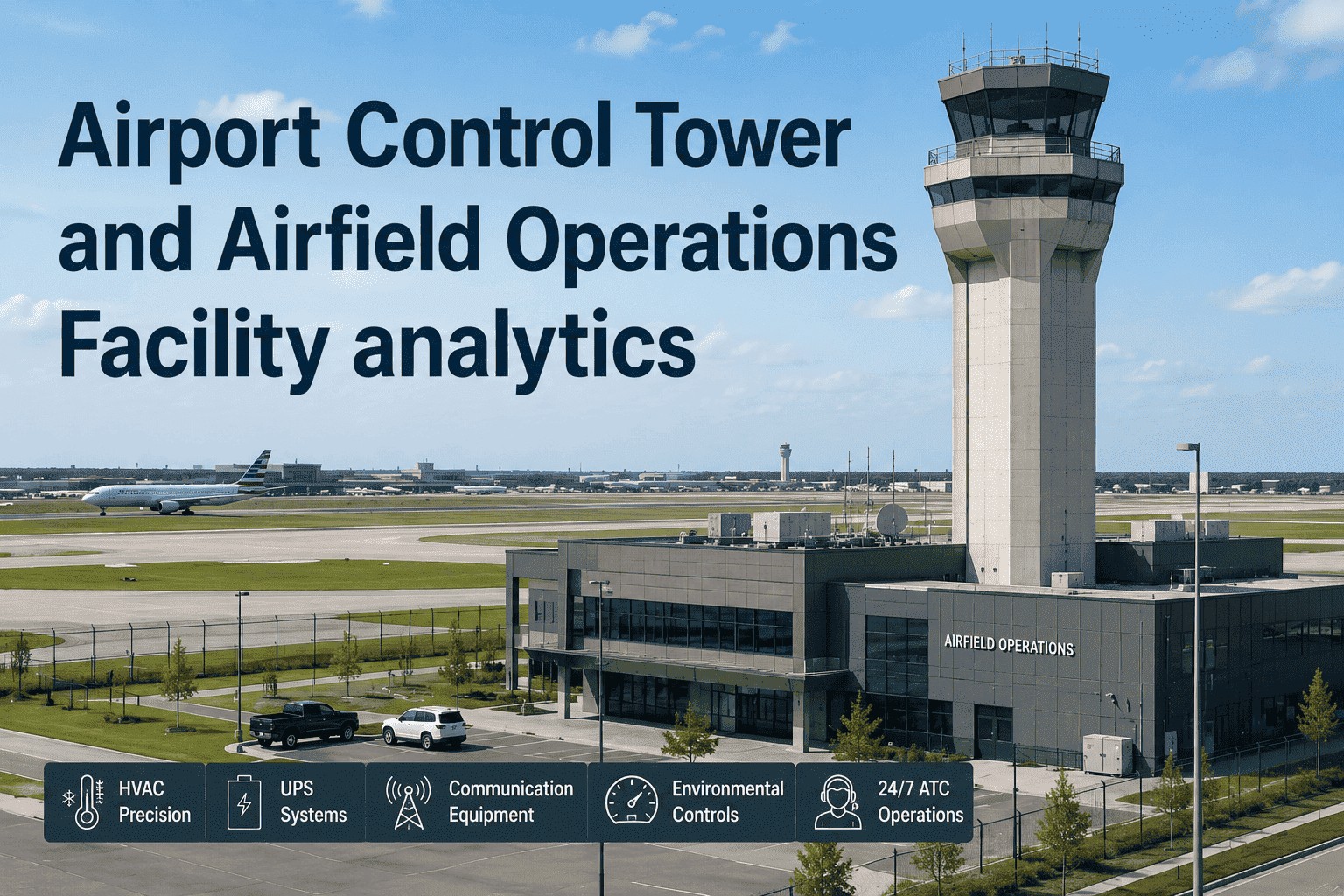
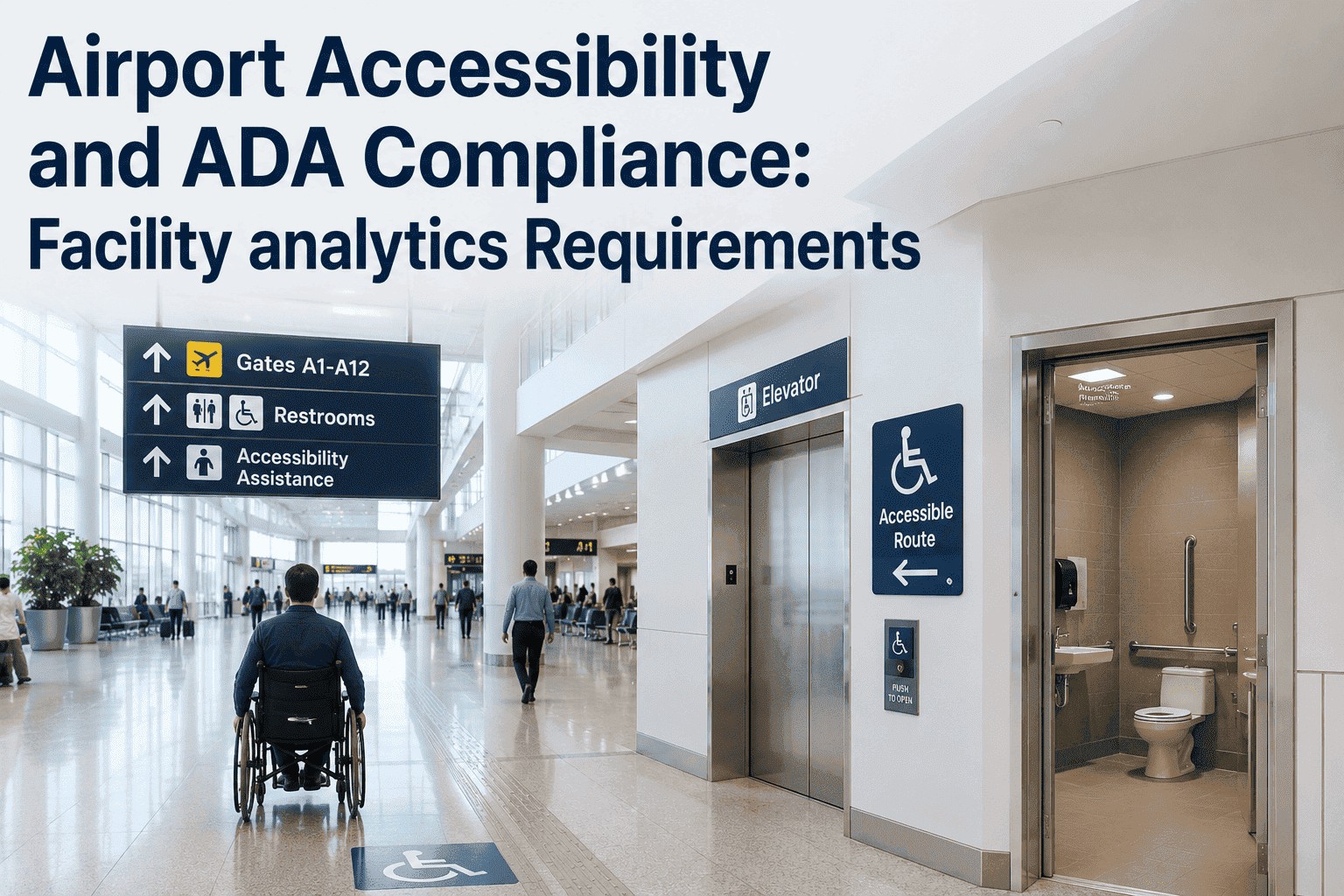
The landside of an airport is the side most passengers actually experience — access roads, curbside drop-off lanes, rental car facilities, ground transportation centers, and cell phone lots. It is also the side that facility teams tend to manage reactively, because the assets sit outside the terminal, carry no FAA airfield classification, and lack the regulatory visibility of airside infrastructure. But landside failures are not invisible. A curbside bollard system that fails during peak arrival traffic creates vehicle conflict zones. A ground transportation center exhaust system that drifts out of compliance creates an EPA air quality exposure. A rental car facility fuel dispenser with an overdue inspection creates both a fire risk and a regulatory citation. The assets look ordinary. The compliance and operational consequences when they fail are not.
Landside Asset Analytics · Curbside Infrastructure · Ground Transportation · Rental Car Facility Management
Airport Landside Operations Are Not Low-Risk. iFactory Gives You the Analytics to Prove You Are Managing Them Right.
iFactory registers every landside asset — curbside infrastructure, access road systems, rental car facilities, ground transportation centers, and cell phone lots — into a structured maintenance and compliance platform built around the inspection cadence airports actually require.
$5.5B
LAX Landside Access Modernization Program — a signal of the capital scale now flowing into airport landside infrastructure across the country
75–80%
Of total passenger curbside demand concentrated at 2 terminal frontages at major hub airports — making curbside infrastructure failure disproportionately disruptive
3×
Roadway speed improvement achievable through predictive landside traffic management — the gap between reactive and analytics-driven operations
$12.9M
Single-airport annual landside capital budget — pavement, equipment replacement, and facility renewal — requiring structured asset lifecycle tracking to spend right
What Airport Landside Operations Actually Covers
Landside is everything between the public road network and the terminal entrance. It sounds simple until you list what that actually includes — and then count the regulatory standards, maintenance intervals, and inspection records each asset class carries. The facility teams managing these assets are not managing a parking lot. They are managing a multi-system infrastructure environment under FAA, OSHA, EPA, and local fire authority jurisdiction simultaneously.
Zone 1
Access Roads and Entrance Infrastructure
Entry signage systems, roadway lighting, pavement surface condition, traffic signal equipment, and lane delineation markings. Each carries a maintenance cadence and a safety record requirement under the airport operating certificate.
Zone 2
Curbside Infrastructure
Bollard systems, canopy structures, curbside lighting, surface drainage, and departure/arrival lane markings. Curbside bollard and canopy failures carry direct passenger safety exposure and insurance liability implications.
Zone 3
Ground Transportation Centers
Bus bays, taxi staging areas, rideshare pickup zones, intermodal platform structures, and GTC HVAC and exhaust systems. Ventilation compliance in enclosed GTC environments is governed by EPA and OSHA confined space standards.
Zone 4
Rental Car Facilities
Quick turn-around (QTA) fuel dispensers, wash equipment, canopy lighting, fire suppression in fueling areas, and consolidated RAC facility structural and mechanical systems. Fire code and EPA fuel handling compliance requirements apply at the asset level.
Zone 5
Cell Phone and Staging Lots
Surface lighting, pavement condition, drainage systems, access control equipment, and any digital display or communication infrastructure. Low operational visibility does not mean low maintenance obligation.
Zone 6
Landside Roadway Systems
Internal circulation roads, loop roads, service vehicle routes, and departure/arrival level grade separations. Pavement condition directly affects the airport operating certificate's facility condition reporting obligation.
The Four Landside Asset Systems That Carry the Most Untracked Risk
Not every landside asset fails visibly. The ones that cause the most operational disruption and compliance exposure tend to be the ones that facility teams assumed someone else was tracking — or that appeared stable until the moment they were not. These four systems account for the majority of unplanned landside capital events and compliance citations at airport facilities managing without structured asset lifecycle programs.
01
Curbside Bollard and Canopy Systems — Safety, Structural, and Inspection Compliance
Passenger Safety Critical
Airport curbside bollard systems — including fixed, retractable, and crash-rated barrier types — require documented periodic inspection covering foundation condition, surface corrosion, mechanical drive integrity on retractable units, and reflective visibility compliance. Canopy structures require structural condition assessments on a schedule aligned with local building code and the airport's facility condition reporting obligations. A bollard system that fails in a vehicle conflict scenario, or a canopy connection that corrodes to structural deficiency, creates both a direct passenger safety liability and a gap in the airport's operating record. Without asset-level tracking, these inspections are managed informally — and the gap between informal and documented is exactly where liability exposure lives.
Bollard condition tracking
Canopy structural records
Retractable drive inspection logs
Compliance retrieval on demand
02
Rental Car QTA Fuel Dispensers and Fire Suppression — EPA and Fire Code Compliance
Regulatory Closure Risk
Quick turn-around (QTA) facilities at consolidated rental car centers handle fuel storage, dispensing, and vehicle washing operations that carry EPA underground storage tank (UST) compliance requirements, local fire code inspection obligations, and OSHA flammable liquid handling standards. Fuel dispensers require annual calibration and compliance inspection. Fire suppression systems in fueling canopy areas require NFPA-compliant inspection and certification. Spill containment systems require periodic condition verification. These requirements exist at the component level — not the facility level — which means a QTA with six dispensers has six individual compliance records to maintain, not one. Facilities managing this in binders or shared drives consistently find gaps during regulatory visits that do not exist in the maintenance work but do exist in the documentation.
Dispenser-level compliance records
NFPA suppression tracking
UST inspection scheduling
Spill containment condition logs
03
Ground Transportation Center HVAC and Exhaust Systems — Ventilation and Air Quality Standards
Air Quality and Work Permit Exposure
Ground transportation centers that enclose bus staging areas, taxi lanes, and rideshare pickup zones operate in environments where vehicle exhaust accumulation creates measurable carbon monoxide and particulate exposure for passengers and transport workers. OSHA and EPA both apply standards requiring measurable ventilation outcomes, not just documented equipment operation. A GTC exhaust system that is running but not achieving the required air change rate for the enclosed vehicle volume creates a compliance gap that is invisible to facility teams working without air quality monitoring logs tied to maintenance records. When an air quality incident or a worker health complaint triggers a regulatory review, the gap between "we run the exhaust system" and "we have documented ventilation performance records" becomes the difference between a corrective action and a citation.
Unit-level HVAC PM schedules
Ventilation performance logs
Air quality record linkage
Exhaust system fault tracking
04
Access Road and Landside Pavement Systems — Condition Rating, Lifecycle Tracking, and Capital Planning
Capital Spend and Operating Certificate Risk
Airport access roads, internal circulation routes, and landside pavement systems deteriorate progressively and are funded through capital programs that require multi-year advance planning. Airports with structured pavement condition rating systems — surveying surface cracking, drainage performance, and marking visibility on a documented schedule — can project resurfacing needs 18 to 36 months in advance and budget accordingly. Airports managing pavement condition informally respond to failures reactively, spending emergency capital at contractor premium rates on repairs that could have been forecast and competitively tendered. Landside pavement condition also feeds into the facility condition reporting obligations tied to the airport operating certificate — making untracked deterioration a compliance exposure as well as a capital one.
Zone-level condition ratings
Resurfacing threshold alerts
CapEx lifecycle forecasting
Condition survey record storage
Landside Assets Managed Without Records Are Liabilities Waiting for an Auditor to Find Them.
iFactory makes every landside asset trackable, every inspection documentable, and every compliance record retrievable — before the regulator asks, not after.
The Landside Compliance Calendar: What Gets Inspected, When, and Who Is Checking
Landside compliance does not operate on a single inspection cycle. Different asset classes carry different regulatory owners, different inspection frequencies, and different documentation standards — and most of them run in parallel without a shared calendar. The facility teams that consistently pass audits are the ones who manage all of these schedules in one system, not four separate spreadsheets.
Curbside and Road Infrastructure
Monthly
Surface lighting function check — verify all curbside, canopy, and lane delineation lighting is operational and record any failed units with asset ID and location
Quarterly
Bollard structural and surface condition inspection — document foundation integrity, visible corrosion, reflective marking condition, and any impact damage per unit
Annual
Full pavement condition survey across all access roads, loop roads, and cell phone lot surfaces — rate zones by condition index and update CapEx replacement forecast
Rental Car Facilities (QTA)
Monthly
Fire extinguisher visual inspection in fueling and wash areas — confirm charge status, seal integrity, and placement per facility fire plan; log per unit
Quarterly
Spill containment system condition check — inspect containment berm integrity, drain valve function, and surface condition around each dispenser island per EPA UST standards
Annual
Full fuel dispenser calibration and compliance certification — document per dispenser, store certificate at the asset record level for EPA and fire authority audit retrieval
Ground Transportation Center
Monthly
HVAC and exhaust system operational check — confirm supply and exhaust units are functioning, record any abnormal noise, vibration, or airflow reduction per unit
Quarterly
Ventilation performance measurement — verify actual air change rates in enclosed bus and vehicle staging areas against the rate required for the occupancy classification and work permit standards
Annual
Full HVAC system service and filter replacement across all GTC units — document technician credentials, service findings, and next scheduled service date per unit at the asset record level
Cell Phone and Staging Lots
Weekly
Access control and gate equipment function check — verify entry/exit gate operation, sensor function, and any digital display or communication equipment condition; log results
Quarterly
Surface drainage inspection — check inlet condition, confirm no standing water zones forming, and document any cracking or settlement that indicates subsurface drainage failure
Annual
Full lot pavement and lighting condition assessment — rate surface condition, measure illumination levels against OSHA and FAA lighting standards, and update capital replacement schedule
What the Cost of Untracked Landside Asset Failures Actually Looks Like
Landside asset failures rarely announce themselves in advance. They surface as passenger incidents, regulatory citations, or emergency capital requests — each carrying a cost far higher than the structured maintenance program that would have prevented them. The two scenarios below represent the most common unplanned landside cost events at airports operating without asset-level tracking.
QTA Fuel Dispenser Compliance Failure
EPA/fire authority citation (per dispenser)
$10,000–25,000
QTA operational suspension period
3–10 days typical
Emergency certification contractor
$4,000–9,000
Rental car operator penalty exposure
$8,000–30,000
Total Event Cost Range
$22K–$64K
Access Road Emergency Pavement Failure
Emergency repair vs. planned resurfacing premium
40–65% higher
Lane closure duration — peak traffic impact
4–18 hours
Passenger complaint and delay management
$3,000–12,000
Airport operating certificate condition flag
Possible
Avoidable With Structured PM
In most cases
"
We had twelve fuel dispensers across two QTA facilities and were tracking calibration records in a shared spreadsheet that nobody owned after our compliance coordinator left. When an EPA spot inspection came through, we produced records for nine of the twelve dispensers — and the other three were cited. The fine was manageable. What was not manageable was the three-week suspension on those dispensers while we got emergency certification contractors in. We lost a rental car operator relationship over the delay. Six months later everything is tracked at the dispenser level with automatic work orders generating ahead of each certification due date. We have not missed one since.
— Landside Facilities Manager, Major Hub Airport — 11 Years Airport Operations Experience
How iFactory Supports Airport Landside Operations Analytics
iFactory's asset lifecycle management platform is not built for one asset type or one compliance framework. It is built for facility environments where dozens of asset classes, multiple regulatory authorities, and continuous maintenance cycles have to be managed in a single system — which is exactly what airport landside operations require.
01
Asset Registry at the Component Level
Every landside asset — from a single QTA dispenser to an access road pavement zone — is registered individually with its own inspection schedule, condition rating, and compliance record. No asset shares a record with another.
02
AI-Driven PM Scheduling
Preventive maintenance work orders generate automatically at the correct interval for each asset — calibrated to the regulatory standard that applies, not a generic maintenance default. No manual calendar management required.
03
Compliance Record Retrieval
Every completed inspection, certification, and work order is stored at the asset record level and retrievable on demand. When a regulator arrives, you pull the record in seconds — not hours of document reconstruction.
04
Fault Pattern Analytics
Reactive work orders are linked to asset records so repeat fault patterns surface in the analytics layer. A curbside lighting circuit that generates three reactive call-outs in 90 days appears as a root cause candidate — not three separate incidents.
05
CapEx Lifecycle Forecasting
Condition ratings from each inspection feed a CapEx replacement forecast that projects end-of-life timelines based on actual deterioration rate, not installation date alone. Finance teams see the capital picture 18 to 36 months ahead.
06
Multi-Facility Dashboard
Airport operations teams managing landside assets across multiple terminal zones, facilities, or campuses see a single compliance dashboard — open work orders, overdue inspections, and upcoming certification due dates across the entire landside portfolio.
Frequently Asked Questions
Conclusion
Airport landside operations carry a compliance and maintenance burden that does not match their operational visibility. The assets are spread across large footprints, managed under multiple regulatory frameworks, and funded through capital programs that require years of advance planning to execute properly. When those assets are managed without structured tracking — when inspection records live in shared drives, when pavement condition is assessed informally, when QTA dispenser certifications are managed in spreadsheets that nobody owns — the exposure accumulates quietly until a citation, a failure, or a capital emergency makes it visible all at once.
The airport landside teams that avoid those outcomes do so by managing every asset against a documented schedule, recording every inspection before it is needed in an audit, and planning capital replacement on condition data rather than calendar age. iFactory's asset lifecycle management and work order platform gives landside facility teams the structure to do exactly that — across access roads, curbside infrastructure, rental car facilities, ground transportation centers, and cell phone lots — with AI-driven scheduling, fault pattern analytics, and compliance record retrieval built in from day one. Book a Demo to see how the platform maps to your landside asset portfolio, or Talk to an Expert to begin registering your landside assets and building a compliance calendar that holds up when it is tested.
Every Landside Asset Tracked. Every Inspection Documented. Every Compliance Record Ready Before the Auditor Arrives.
iFactory registers, schedules, and stores everything — access roads, curbside, rental car facilities, ground transportation centers, and cell phone lots — in one compliance-ready platform.