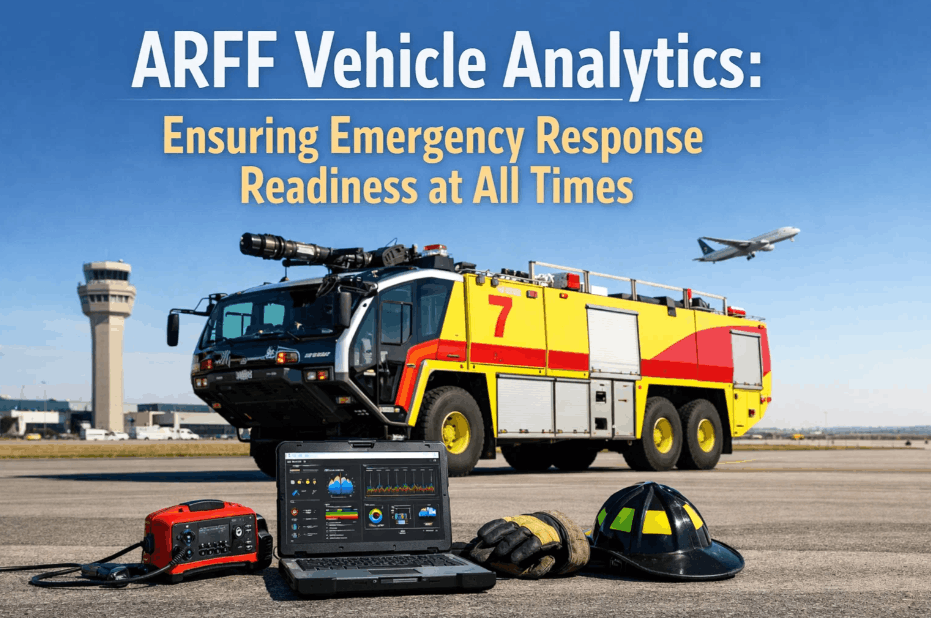
Airport emergency management has transcended traditional manual protocols, evolving into a data-driven discipline where seconds determine the outcome of a crisis. From natural disasters and aircraft incidents to security threats and critical infrastructure failures, the modern airport requires a response system that is faster than a radio call and more reliable than a paper binder. Digital emergency management for airports replaces static plans with AI-driven readiness protocols, real-time equipment tracking, and automated compliance logs that Federal Aviation Administration (FAA) and international regulators demand. Book a Demo to see how iFactory ensures 100% emergency asset readiness across your facility.
Automate Every Emergency Protocol in Your Airport — From Alert to Restoration
iFactory's emergency analytics platform connects your response teams, life-safety assets, and regulatory checklists in one AI-powered system — ensuring 99.9% equipment availability and cutting mobilization time by 40% when every second counts.
Why Hub Airports Are Replacing Paper Emergency Plans with AI-Driven Digital Systems
The aviation industry operates under intense pressure where traditional, paper-based emergency management is genuinely dangerous — not merely inefficient. A missing signature on an ARFF vehicle inspection or a depleted medical kit at a remote terminal isn't just an administrative error. It means response delays during an aircraft incident. A response delay means life-safety hazards, batch losses of incident data, and potential FAA non-compliance. The chain reaction from one administrative gap can cost millions in a single event.
Digital emergency analytics software for airports breaks this chain at its origin. By digitizing the entire lifecycle of a crisis request — from equipment health detection through responder dispatch, resource procurement, protocol execution, and compliance sign-off — airports gain the operational visibility and documented evidence that modern safety standards require. The transition from reactive to predictive readiness is no longer a technology upgrade. It is an aviation safety imperative. Book a Demo to understand how your current readiness gaps translate to crisis risk.
The Hidden Cost of Manual Emergency Readiness in Terminal Operations
Manual emergency systems in high-velocity airports aren't just slow — they create compounding operational debt that becomes visible only during audits, incidents, or security breaches. Understanding these friction points is critical for infrastructure resilience.
Responder Dispatch Latency
In a sprawling hub airport, coordinating crisis dispatch via radio calls and physical charts introduces an average 30–45 minute delay between event detection and team arrival. In an aircraft incident, every second of that window is critical for life safety. Digital dispatch closes this gap.
Incomplete Maintenance Proof
Paper logs for fire mains or ARFF vehicles are often incomplete. When an FAA auditor requests evidence of scheduled testing on terminal suppression systems, a binder of paper cards is a liability. Digital readiness logs provide instant, immutable proof of state.
Invisibility of Equipment Health
Emergency managers using manual systems have no real-time view of which life-safety assets are out-of-service, which AEDs have low batteries, or which hydrants are failing flow-tests. This leads to emergency crews arriving at jobs with non-functioning hardware.
Reactive Rather Than Proactive Testing
Without automated triggers, airport crews spend 80% of their time fixing failures rather than testing for readiness. This reactive posture drives up emergency labor costs and increases the probability of equipment failure when it is needed most.
Life-Safety Supply Chain Chaos
Manual checks are not linked to med-kit or PPE inventory, meaning responders frequently discover depleted supplies during a checkout. iFactory links every check to inventory, triggering automated reorders on consumption.
Data Invisibility During Incidents
Paper systems produce no data. Airport managers using manual logs have no response-time benchmarks, no equipment reliability trends, and no post-incident analytics. Without this data, every budget decision is a guess.
How Digital Emergency Management Platforms Work in an Airport
A purpose-built digital emergency analytics platform for airports is an end-to-end mission-critical system designed around the high-density assets, strict compliance, and security zones of aviation facilities. The lifecycle moves through five integrated stages.
Automated Risk Detection & Work Order Activation
IoT sensors on airport equipment — fire mains, exit doors, fuel pumps, and structural sensors — stream data continuously. When a threshold is breached, the AI engine automatically activates the correct Emergency Protocol, creates a priority ticket, and alerts the AOC in seconds. Book a Demo to see automated protocol activation from live sensor data.
Intelligent Responder Dispatch & Mobile Tactical Guides
The dispatch engine evaluates responder location, security clearance, and specialty (ARFF vs Security) before routing the job. Responders receive "Context-Aware" guides on their mobile devices — including live GIS maps, valve shut-off locations, and safety hazard alerts — ensuring perfect execution.
Continuous Readiness Scheduling & Automation
Daily readiness work orders are automatically issued to crews for fire hydrant testing, backup generator runs, and medical kit audits. Compliance rates climb to 100% as the system escalates any missed task to management within hours, ensuring zero readiness drift.
Safety Supply Integration & Auto-Replenishment
Every emergency asset check is linked to a supply register. If a medical kit is opened or an extinguisher discharged, the system automatically decrements stock and raises an urgent requisition in the connected ERP to restore readiness state immediately.
Compliance Logging & Post-Incident Report Generation
Every action is time-stamped, linked to a specific asset, and stored in an immutable log. For FAA Part 139 and TSA security compliance, audit packages are generated in minutes, providing a complete 12-month maintenance history on demand. Book a Demo to see a live audit log export.
Emergency Readiness Across Airport Infrastructure: What Gets Tracked
Effective emergency readiness in airports requires real-time health-checks across every specialized life-safety system — from landside parking to the movement area.
| Infrastructure Category | Work Order Types Generated | Key Readiness Parameters | Compliance Outcome | Audit Frequency |
|---|---|---|---|---|
| ARFF Vehicles & Tools | Readiness, PM, Statutory | Pump pressure, fluid levels, PPE stock | FAA Part 139 readiness record | Daily/Shift-wise |
| Fire Suppression Mains | Flow-Test, PM, Leak Detection | Static pressure, flow-rate, valve state | NFPA compliance documentation | Quarterly |
| Medical & First Aid (AED) | Validation, Supply Reorder | Battery health, pad expiration, kit seal | Public health safety compliance | Monthly |
| Exit Door & Egress | Safety Check, Corrective | Mag-lock state, alarm trigger, signage | Fire marshal & TSA 1542 audit proof | Weekly |
| Backup Power & Generators | Load-Test, PM, Fuel Log | Fuel level, coolant temp, cycle count | Business continuity assurance | Weekly/Monthly |
| Emergency Comms (Radio) | Readiness, PM, Signal Test | Signal strength, encryption state | Responder connectivity guarantee | Weekly |
Empower Your First Responders with Data-Driven Crisis Intelligence
iFactory's AI platform dispatches the right responder to the right crisis location in under 60 seconds — with live hydrant maps, hazmat data, and evacuation protocols built in at every step.
AI-Driven Emergency Prioritization: How Analytics Optimizes Crisis Resource Dispatch
During large-scale events, emergency managers are often overwhelmed by data. An AI-driven emergency analytics system for airports replaces "chaos response" with high-speed prioritization based on life-safety impact, asset value, and business continuity thresholds.
Safety-First Resource Allocation
The system distinguishes between "Routine Facility Faults" and "Life-Safety Failures." During an active crisis, all non-essential facility work orders are automatically paused, routing 100% of available crews to high-criticality zones.
Dynamic Evacuation Modeling
Based on real-time crowd-tracking and door sensor data, the AI engine identifies bottlenecks in terminal evacuation routes and directs security teams to clear paths before the crowd arrives, minimizing stampede risk.
Predictive Infrastructure Failure
During severe weather events, the system monitors terminal structural sensors and drainage pumps to predict where "Infrastructure Breaches" are likely, allowing for pre-emptive flood-barrier deployment near IT hubs.
Compliance Deadline Integration
The platform tracks every federal reporting deadline. If an incident requires a 24-hour report to the FAA or TSA, the system automatically drafts the report based on field data, ensuring compliance during operational recovery.
Emergency Readiness Metrics: Measuring What Manual Binders Cannot
Digital emergency dispatch software for airports produces high-resolution operational intelligence. Every readiness check and incident closure creates a data point for a comprehensive resilience dashboard.
Aviation resilience managers using digital analytics report that performance visibility alone drives a 30% improvement in equipment reliability — turning maintenance into a life-safety superpower. Book a Demo to explore the full resilience analytics dashboard.
FAA Part 139 & TSA Compliance Through Digital Emergency Documentation
Aviation compliance is increasingly data-driven. FAA and TSA inspectors expect airports to produce documented, time-stamped evidence of readiness and corrective actions — not just folders of degraded paper logs after a crisis.
Airfield Emergency Records
FAA Part 139 requires airports to maintain verified records of airfield inspections, ARFF training, and emergency equipment testing. Digital systems generate these records automatically with date-time stamps and photo evidence of state.
Security Infrastructure Proof
Documentation of CCTV, perimeter gates, and access control hardware health. Digital systems record every corrective action at a security point as an immutable audit trail for TSA inspectors during annual reviews.
Fire Suppression Compliance
Docuemented evidence of flow-tests, valve inspections, and hydrant maintenance. Digital platforms generate code-compliant completion reports automatically, with calibration records and technician signatures embedded.
Implementation Roadmap: Deploying Emergency Analytics in a Hub Airport
Transitioning an airport from binder-based to digital emergency management is a phased journey that ensures high-stakes assets are digitized first for immediate risk reduction.
Critical Life-Safety Asset Register Configuration
All emergency assets (ARFF, Med-Kits, Hydrants, Gates) are catalogued with criticality scores and history. Electronic readiness templates are configured for each asset category — aligned to FAA and NFPA requirements.
Responder Mobile Onboarding & Dispatch Activation
Emergency responders are onboarded to the mobile app. Crisis protocols (SOPs) are digitized into interactive step-by-step guides. The first automated mobilization alerts are issued, creating the first immutable compliance logs.
IoT Integration & Predictive Readiness Active
Sensor data from fire suppression and generators feeds into the engine. Predictive alerts begin identifying equipment failures before they occur. The AOC resilience dashboard goes live, giving managers full visibility into facility risk levels.
Full Resilience ROI & Audit Readiness
With 3+ months of digital readiness history, airports are fully audit-ready for FAA and TSA reviews. Emergency mobilization is 40% faster. Resilience Managers move from reactive "firefighting" to evidence-based capital planning for life-safety.
7 Features to Demand from Any Airport Emergency Management Software
Not every ticketing platform is designed for the high-stakes reality of aviation crisis response. Generic tools lack the security protocol depth and asset awareness required in hub airports. Use these criteria for evaluation.
GIS-Integrated Asset Mapping
The platform must map every hydrant, valve, and AED in the terminal with precise indoor-GPS coordinates, allowing responders to find the correct asset in smoke or low-visibility conditions.
FAA Part 139 Audit Log Export
The platform must generate maintenance readiness reports in formats directly accepted by FAA inspectors — with date-time stamps and photo evidence — without manual reformatting.
AOC Visual Board Integration
Emergency status data must natively feed into your Airport Operations Center (AOC) wall-boards, providing a real-time common operating picture (COP) for all facility stakeholders.
Offline Mobile Mission Capability
Responders frequently enter tunnels or remote airfield zones with zero connectivity. The mobile app must function offline — capturing logs and signatures locally — and sync when connectivity returns.
Multi-Agency Incident Handover
The system must allow for secure tactical dashboard sharing with incoming municipal fire/police services during a joint response without requiring complex account setups.
Life-Safety Supply Chain Tracking
Work order data must flow to procurement systems to ensure that expired med-kits or discharged extinguishers are replenished automatically and never stay out-of-service.
Immutable Digital Audit Trails
Data must be stored in a tamper-evident audit trail that meets federal standards for legal and insurance validity after a critical airport incident. Book a Demo to see iFactory's audit vault.
Frequently Asked Questions: Digital Emergency Readiness in Hub Airports
How does the platform ensure ARFF readiness for FAA inspections?
iFactory issues daily "Readiness Work Orders" to every crew. Responders must verify vehicle health, pump pressure, and supply presence with photo sign-offs. These results are aggregated into a live dashboard, providing the fire chief with 100% verified proof of state for annual FAA Part 139 reviews.
Can this system lead us through terminal evacuations?
Yes. The platform includes digital evacuation SOPs that are served to security and facility crews based on the incident type. It tracks crowd density via terminal sensors to ensure teams are routed to the highest-risk zones first, optimizing the evacuation flow.
What happens to the network during a local power or data failure?
The iFactory mobile app is designed with a "Field-First" architecture. It stores all crisis logs and protocol signatures locally on the responder's device. Even if the airport network goes down, your responders have their maps and SOPs, which will sync once back on the grid.
Can the system track the certification status of emergency responders?
Yes. Every responder's digital profile includes their certifications (Hazmat, BLS, ARFF-spec). The dispatch engine only routes work orders or alerts to responders who are currently certified for that specific task level.
What happens during a total cyber-threat or local network failure?
iFactory supports distributed sync. If the central server is disconnected, P2P (Peer-to-Peer) sync features allow nearby responder devices to share incident updates locally until a gateway connection is re-established, maintaining a common tactical picture.
How does the AI prioritize multiple simultaneous incidents?
The engine uses a "Criticality weighting" matrix. If a storm surge and a security breach occur simultaneously, the AI calculates which incident poses a higher immediate risk to life-safety and critical infrastructure (like the AOC or Data Center) and routes resources accordingly.
Does this platform integrate with the Airport Operations Center (AOC) wall-boards?
Yes. The platform provides native API and Webhook support for all major airport visualization boards, ensuring your AOC has real-time visualization of responder locations, asset health-states, and incident resolution progress.
Stop Managing Crisis response in Binders. Start Running an Airport That is Always Ready.
Join airport operators worldwide who have achieved 40% faster mobilization, 100% equipment readiness, and 4.2× ROI with iFactory's digital emergency management platform — purpose-built for the high-stakes reality of aviation life-safety.