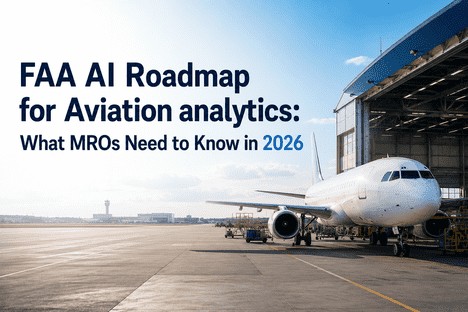
Artificial intelligence is rapidly reshaping aviation maintenance, air traffic management, flight operations, and passenger services, but the regulatory frameworks governing its deployment remain fragmented across jurisdictions. An AI system approved for predictive maintenance under EASA's AI roadmap faces different validation requirements under FAA guidance, and neither framework is directly interoperable with CAAC's evolving AI standards or GCAA's emerging requirements. For aircraft that cross multiple regulatory borders in a single day, this fragmentation creates compliance uncertainty that slows AI adoption and increases operational risk. ICAO, as the United Nations specialized agency for international civil aviation, has begun the most ambitious standards harmonization effort since the Chicago Convention itself — working to align 193 member states around a common framework for AI governance in aviation. This article examines the current state of ICAO's AI harmonization work, the key working papers shaping the agenda, and what global operators need to prepare for compliance across multiple jurisdictions simultaneously.
iFactory Global Compliance Dashboard
AI Standards Cant Stop at Borders. Your Compliance Platform Shouldnt Either.
iFactory Global Compliance Dashboard tracks your AI governance posture across FAA, EASA, CAAC, GCAA, and ICAO frameworks simultaneously with audit-ready exports for each jurisdiction from a single interface.
193
ICAO member states whose AI governance frameworks must align to enable cross-border AI interoperability in aviation
2030
Target year for ICAOs first binding AI standards in Annex 6 maintenance and Annex 8 airworthiness provisions
68%
of multinational MRO operators report conflicting AI compliance requirements across their operating jurisdictions
13
Working papers submitted to the 42nd ICAO Assembly proposing AI governance frameworks, study groups, and harmonization roadmaps
Why AI Harmonization Matters Now
The urgency behind ICAOs AI harmonization work is not theoretical. An aircraft maintained in Singapore flies into Frankfurt, is inspected in Dubai, and has its engines overhauled in Johannesburg. When AI systems make or influence maintenance decisions — fault detection, component life prediction, inspection routing, work order prioritization — those decisions travel with the aircraft across multiple regulatory borders. Without global interoperability in AI governance frameworks, MROs face a fragmented compliance landscape that adds cost, slows deployment, and creates accountability gaps that no single civil aviation authority can close on its own.
01
Operational Interoperability
An AI model trained on EASA-approved data pipelines cannot be deployed on an FAA-regulated aircraft without revalidation. A CAAC-certified predictive maintenance algorithm requires separate qualification for GCAA oversight. This duplication multiplies deployment cost and time for every cross-border operation. Harmonized standards eliminate redundant validation by establishing mutual recognition of AI system qualification across ICAO member states.
02
Safety Accountability
When an AI-assisted maintenance decision contributes to an incident across international borders, determining accountability depends on which regulatory framework applies. Divergent standards for AI transparency, explainability, and human oversight create uncertainty in accident investigation and liability assignment. Common classification frameworks and documentation requirements ensure that AI decision trails are interpretable regardless of where the investigation occurs.
03
Data Trust Across Borders
AI systems depend on data quality, but data governance standards vary significantly across jurisdictions. What constitutes an acceptable training dataset under one regulatory framework may fail under another. Harmonized data quality and provenance requirements ensure that AI systems trained on data from one jurisdiction can be trusted when deployed in another, without requiring duplicate data collection or model retraining for each operating region.
04
Innovation Velocity
Operators currently limit AI deployment to single-jurisdiction applications because cross-border compliance is too uncertain and expensive to justify the investment. Harmonized standards unlock the scale economics that make AI development viable for smaller operators, not just major carriers with dedicated regulatory affairs teams. This directly supports ICAOs No Country Left Behind objective.
Current Regulatory Landscape: Four Frameworks, One Goal
While ICAO works toward harmonized global standards, four major regulatory frameworks are already in active development. Understanding their current positions and convergence trajectories is essential for any operator deploying AI across multiple jurisdictions.
3 levels
AI autonomy tiers defined: Level 1 assistance, Level 2 human-AI teaming, Level 3 advanced automation
NPA 2025-07
First regulatory proposal published for consultation covering AI assurance, human factors, and ethics
EU AI Act aligned
Framework designed to integrate with broader EU AI regulation for high-risk systems certification
Roadmap published
FAA AI Safety Assurance Roadmap outlines risk-based approach to AI certification and continued airworthiness
ASTM standards
Active development of AI assurance standards through ASTM committee F47 on AI in aviation
Existing guidance
AC 20-170B and related policy for software and complex hardware with AI extensions under development
Policy directive
CAAC Smart Civil Aviation development plan includes AI certification pathway for MRO applications
Pilot programmes
AI-assisted inspection and predictive maintenance pilots underway at major Chinese MRO facilities
Cross-border gap
Current framework does not include mutual recognition provisions for AI systems qualified under non-CAAC jurisdictions
Emerging framework
UAE AI strategy 2031 includes aviation-specific AI governance requirements currently in consultation phase
ICAO alignment
GCAA actively participating in ICAO working groups to ensure early alignment with global standards
Sandbox approach
Regulatory sandbox for AI in MRO and flight operations launched 2025 for controlled deployment testing
ICAO AI Standards Timeline: Key Milestones
The route to harmonized AI standards follows a structured timeline defined by ICAOs Strategic Plan 2026-2050 and reinforced by working papers submitted to the 42nd Assembly. Understanding this timeline helps operators plan their AI compliance investments in alignment with regulatory deadlines.
2025
42nd Assembly Working Papers
13 working papers submitted proposing AI governance frameworks, study group establishment, and harmonization roadmaps. ICAO Innovation Fair convenes global AI stakeholders.
2026
Strategic Plan 2026-2050 Active
AI governance embedded in ICAO strategic objectives. Air Navigation Commission study group on AI begins formal work. EUROCAE WG-114 issues first AI aviation standard.
2027-2028
SARPs Development Phase
ICAO develops Standards and Recommended Practices for AI in airworthiness, maintenance, operations, and personnel licensing. Draft SARPs circulated for member state consultation.
2029
Final SARPs Approval
ICAO Council approves first binding AI SARPs for incorporation into Annex 6 and Annex 8. Member states begin national regulation alignment process.
2030+
Global Implementation
First binding AI standards effective. USOAP audits include AI governance compliance. Mutual recognition framework operational across member states.
Key Themes from the 42nd Assembly AI Working Papers
The 13 working papers on AI submitted to the 42nd ICAO Assembly reveal a strong global consensus on the transformative potential of AI in aviation and the urgent need for coordinated governance. Six major themes emerge consistently across all submissions.
01
Safety and Security
Every paper emphasises AIs role in enhancing aviation safety through predictive maintenance, risk assessment, and automated safety monitoring systems that complement existing SMS frameworks.
02
Regulatory Frameworks
Strong consensus on the need for harmonized global standards, certification processes, and governance frameworks that prevent fragmentation while accommodating regional differences.
03
International Cooperation
Emphasis on collaborative approaches, knowledge sharing between developed and developing aviation nations, and ensuring no country is left behind in AI adoption capacity.
04
Innovation and Implementation
Focus on practical AI applications in air traffic management, operations optimization, digital transformation, and the need for regulatory sandboxes to test AI safety.
05
Capacity Building
Recognition that workforce training, education, and skills development are prerequisites for safe AI integration, with emphasis on competency frameworks for AI-literate aviation professionals.
06
Research and Development
Calls for continued research investment, pilot programmes, and experimental approaches including regulatory sandboxes that allow controlled AI deployment testing under regulatory supervision.
iFactory Global Compliance Dashboard
One Platform. Every Jurisdiction. Full Visibility.
iFactory Global Compliance Dashboard gives multinational MRO operators and aviation engineering teams a single interface to track AI governance posture across FAA, EASA, CAAC, GCAA, and CASA frameworks simultaneously. Configure compliance requirements per jurisdiction, map your AI systems to applicable standards, track qualification status, generate audit-ready export packages, and receive automated alerts when regulatory requirements change in any jurisdiction where you operate. Built for operators whose aircraft and AI systems cross borders every day.
Multi-jurisdiction compliance tracking with automated regulatory update alerts
AI system inventory mapped to applicable SARPs, CAAs, and industry standards
Qualification status tracking with expiry alerts and renewal scheduling
Audit-ready export packages tailored to each jurisdiction's documentation requirements
Cross-jurisdiction gap analysis identifying conflicting requirements and mitigation pathways
Frequently Asked Questions
What is the difference between ICAO SARPs and individual CAA regulations for AI governance?
ICAO Standards and Recommended Practices (SARPs) establish the global baseline — the minimum requirements that all 193 member states agree to implement in their national regulations. Individual CAA regulations (such as EASA's AI roadmap or FAA's AI safety assurance framework) can be more stringent than the ICAO baseline but must not conflict with it. The harmonization challenge arises because multiple CAAs developed AI guidance before ICAO SARPs were finalised, creating a patchwork of requirements that do not always align. Once ICAO AI SARPs are adopted, member states have a defined period to align their national regulations, which will progressively reduce fragmentation. Currently, operators must comply with each CAA's requirements in the jurisdictions where they operate, which is where a multi-jurisdiction compliance tracking tool becomes essential.
How will ICAOs AI standards affect existing AI systems already deployed in MRO operations?
ICAO SARPs typically include transitional provisions for systems that were certified or approved before the new standards take effect. However, operators should expect that AI systems deployed before the SARPs effective date will need to demonstrate compliance within a defined transition period, typically 2 to 5 years depending on the system's safety criticality. The most prudent approach is to design and document AI systems now in alignment with the emerging ICAO framework, even before the standards are formally adopted. This includes maintaining detailed training data provenance records, model validation documentation, and human oversight protocols that anticipate the likely requirements of future SARPs. iFactory Global Compliance Dashboard includes a prospective compliance assessment feature that evaluates current AI systems against draft and proposed standards.
What happens when AI standards conflict between the jurisdictions where an operator works?
This is the central problem that ICAO harmonization is designed to solve, but until harmonized SARPs are in effect, operators face genuine compliance conflicts. The accepted approach is to comply with the most stringent applicable requirement for each AI system characteristic. For example, if EASA requires a higher level of AI explainability than FAA for the same system class, the operator documents to the EASA standard and that documentation satisfies the FAA requirement as an equivalent level of safety. This approach is accepted by most CAAs during the pre-harmonization period, but it must be documented explicitly in the AI system compliance dossier. The iFactory platform includes a conflict resolution module that identifies specific requirement conflicts and generates the compliance rationale for the more stringent approach.
What is the timeline for AI to be included in ICAO USOAP audits?
The 42nd Assembly working papers specifically propose including AI governance in the Universal Safety Oversight Audit Programme (USOAP) as part of the 2025-2030 USOAP strategy. Based on current ICAO planning cycles, AI governance is expected to appear in USOAP audit protocols starting in 2029-2030, aligned with the adoption of AI SARPs. This means multinational operators should expect their AI governance frameworks to be subject to regulatory audit within the next 3 to 5 years. Preparing for AI-specific audit requirements now, while the standards are still being developed, positions operators to transition smoothly when USOAP AI protocols become effective rather than scrambling to achieve compliance retrospectively.
How does iFactory Global Compliance Dashboard handle regulatory updates across jurisdictions?
The platform maintains a continuously updated regulatory intelligence database that tracks AI-related rulemaking across ICAO, EASA, FAA, CAAC, GCAA, CASA, and 14 additional civil aviation authorities. When a regulatory change is published, the system automatically cross-references your AI system inventory and flags any systems whose compliance status is affected. The update is accompanied by a gap analysis showing exactly which requirements changed and what action is needed. Regulatory intelligence is curated by a team of aviation compliance specialists and updated within 48 hours of any official publication. This replaces the manual process of monitoring multiple regulatory websites, interpreting cross-jurisdiction impacts, and determining which systems are affected.
iFactory Global Compliance Dashboard
AI Standards Are Being Written Now. Dont Wait Until They Apply to You.
iFactory Global Compliance Dashboard gives you real-time visibility of your AI governance posture across every jurisdiction where you operate, with automated regulatory intelligence, multi-framework gap analysis, and audit-ready exports built in from day one.
Used by airline engineering teams, MRO compliance departments, and fleet operations across the UK, EU, Middle East, Asia-Pacific, and the Americas.