Airport Turnkey AI Robotics: 12-Week Deployment with Pre-Configured NVIDIA AI Server
By Grace on June 5, 2026
An airport deploying AI-powered robotics today faces a choice between two paths. The first path requires assembling an integration stack from scratch: procuring the GPU server, negotiating with an AI platform vendor, hiring a systems integrator to cable and configure the rack, writing custom middleware to connect to the building management system, and running a pilot that stretches six to nine months before a single robot patrols a terminal corridor. The second path requires a single decision: approve a turnkey, pre-configured NVIDIA AI appliance that arrives on site ready to connect to your existing BMS and network infrastructure, with robot assets pre-registered, software pre-loaded, and support coverage active from day one. The difference between these two paths is not technical. It is structural. And it determines whether your airport deploys AI robotics this quarter or next year.
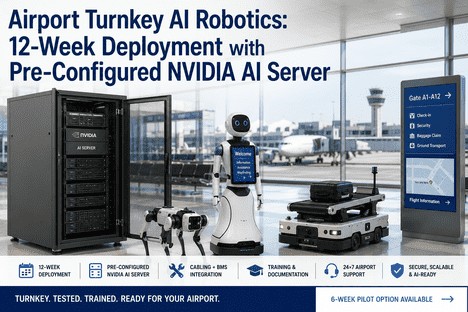
Airport Turnkey AI Robotics
12-Week Deployment with Pre-Configured NVIDIA AI Server
A rack-ready, fully managed AI appliance for terminal and airside robotics — from cabling and BMS integration to robot registration, training, and 24x7 support.
12
Weeks from order to operational deployment. Pre-configured NVIDIA AI server, pre-loaded software stack, and pre-integrated BMS connectivity eliminate the 6-month integration phase.
6
Week pilot option available for evaluation. Deploy a single robot and server stack in a terminal zone or airside corridor before committing to full rollout.
24x7
Airport-grade support from deployment day one. Remote monitoring, automated fault alerting, software update management, and escalation paths aligned with airport operational hours.
The 12-Week Deployment Clock: From Rack to Runway
Traditional airport AI deployments follow a fragmented timeline: server procurement (4-8 weeks), AI platform configuration (4-6 weeks), systems integration and BMS connectivity (4-8 weeks), robot deployment and testing (4-6 weeks), and staff training (2-4 weeks). The total from decision to operational robot is rarely under 24 weeks and frequently exceeds 36. The turnkey model compresses every phase into a single coordinated 12-week programme because the hardware, software, integration, and training are pre-configured as a single deliverable — not assembled from separate vendor contracts.
Turnkey Deployment Timeline
Week 1-2
Site Survey & Rack Prep
Rack location assessment, network handoff point identification, BMS interface verification, power and cooling validation
Week 3-4
Rack Delivery & Cabling
Pre-configured NVIDIA AI server rack arrives, network cabling terminated, BMS integration cables run, power connected, initial boot verification
Week 5-7
Integration & Testing
BMS data feed integration, robot communication test, sensor validation, software stack verification, failover and redundancy testing
Week 8-10
Robot Deploy & Train
Robot deployment in operational zone, zone mapping completed, facility team training conducted, operational procedures documented
Rack-Ready. Pre-Configured. Deployment in 12 Weeks, Not 12 Months.
iFactory's turnkey AI server arrives on site with the NVIDIA AI Enterprise stack pre-loaded, robot assets pre-registered, BMS integration pre-configured, and 24x7 support active from day one. No multi-vendor integration. No 6-month pilot phase.
What Is in the Rack: The Pre-Configured NVIDIA AI Server Stack
The turnkey AI appliance is a single 4U or 6U rack-mounted server running the NVIDIA AI Enterprise software stack, pre-configured at the factory with iFactory's robot management platform, BMS integration middleware, and the connectivity framework for terminal and airside robot fleets. Every component is selected, tested, and documented before delivery — eliminating the compatibility uncertainties that extend traditional AI infrastructure projects.
NVIDIA AI Enterprise
Pre-installed NVIDIA AI Enterprise software stack including NIM microservices, accelerated libraries, and support for the full suite of AI models used in airport robotics — computer vision for patrol and inspection, natural language processing for passenger interaction, and sensor fusion for autonomous navigation.
iFactory Robot Management
iFactory's asset management and robot operations platform pre-loaded with your terminal configuration. Robot assets pre-registered with PM schedules, software update policies, inspection templates, and operational zone assignments.
BMS Integration Middleware
Pre-configured middleware connecting the AI server to your building management system via BACnet, Modbus, or API gateway. Robot sensor data flows into BMS dashboards. BMS events trigger robot response workflows. All integration cables and connectors included.
24x7 Remote Monitoring
Built-in remote monitoring and management agent with automated fault detection, real-time performance dashboards, software update deployment, and escalation to iFactory's airport support team. Active from the moment the rack is powered on.
Terminal Ready and Airside Ready: Two Deployment Profiles, One AI Infrastructure
The same turnkey AI server supports both terminal and airside robotics deployments. The hardware stack is identical. The software configuration and robot asset profiles differ based on the operational environment. One rack. Two deployment profiles. One integrated facility management view.
Deployment Profile
Terminal Ready
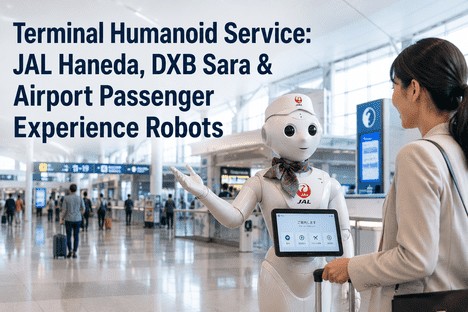
Pre-configured for passenger-facing robots in terminal environments. Includes natural language processing models for multilingual passenger interaction, computer vision models for terminal zone monitoring, and integration with passenger information display systems and terminal BMS zones.
Humanoid and service robot asset registration
Multilingual NLP AI models pre-loaded
PIDS and BMS data feed integration
Passenger zone mapping and waypoint configuration
Deployment Profile
Airside Ready
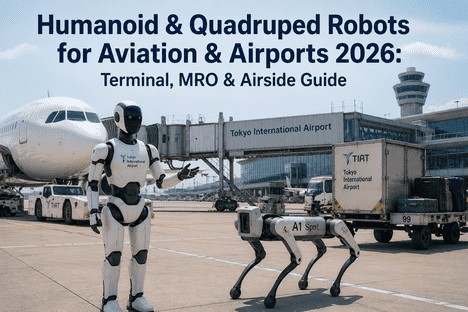
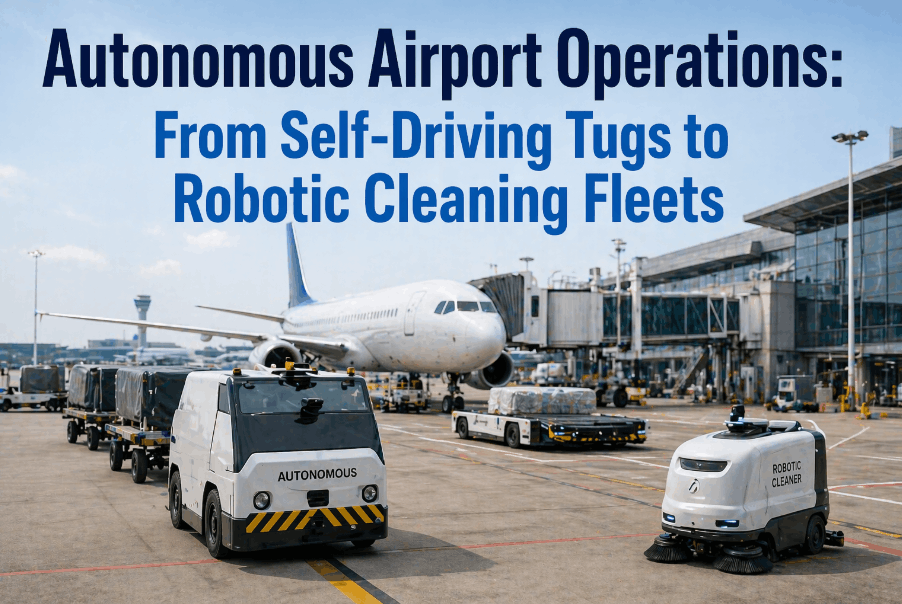
Pre-configured for airside and apron robotics including quadruped patrol robots, autonomous FOD detection vehicles, and cargo handling AGVs. Includes thermal and acoustic analysis AI models, airside zone navigation maps, and integration with airfield lighting and NOTAM systems.
Quadruped and AGV asset registration
Thermal and acoustic AI models pre-loaded
Airfield lighting and surface sensor integration
Airside zone mapping and restricted area configuration
Traditional vs Turnkey: The Airport AI Infrastructure Comparison
The decision between traditional integration and turnkey deployment is not about technical capability. Both approaches can deliver AI-powered robotics to an airport terminal. The difference is in timeline, risk allocation, and operational readiness from day one.
Traditional Integration
Turnkey AI Appliance
Timeline to operational
24-36 weeks
12 weeks
Number of vendor contracts
3-6
1
On-site integration work
4-6 weeks
2 days
BMS integration scope
Custom per project
Pre-configured
Software stack readiness
Assembled on site
Pre-loaded at factory
Robot asset registration
Post-deployment manual
Pre-registered
Staff training
Separate engagement
Included in deployment
Support model
Multi-vendor escalation
Single-provider 24x7
One Appliance. One Deployment. One Support Contract. 12 Weeks from Sign-Off to Go-Live.
iFactory eliminates multi-vendor complexity with a pre-configured NVIDIA AI server, pre-loaded software stack, pre-registered robot assets, pre-integrated BMS connectivity, and 24x7 support included from day one.
Phased Rollout: From 6-Week Pilot to Full Terminal Deployment
Every airport deployment begins at a different point on the automation curve. The turnkey AI appliance supports three rollout phases that allow airports to start at their appropriate entry point and expand at their own pace — without reconfiguring infrastructure or renegotiating vendor contracts at each phase transition.
Phase 1
6-Week Pilot
Single robot and AI server deployed in one terminal zone or airside corridor. Full BMS integration, staff training, and operational support included. Pilot provides operational data, stakeholder confidence, and ROI validation before scale commitment.
Low commitment, full capability
Phase 2
Zone Expansion
Expand to multiple robots across additional terminal zones or airside sectors. Additional AI models activated for new use cases. Expanded BMS integration points. Scale within the same AI server infrastructure without hardware changes.
Same rack, expanded fleet
Phase 3
Full Deployment
Multi-zone terminal and airside coverage with mixed robot fleets — humanoids, quadrupeds, AGVs, and service robots operating under unified AI management. Multi-rack configuration for redundancy and capacity. Full 24x7 support and proactive maintenance.
Full coverage, unified platform
Frequently Asked Questions
The 12-week timeline covers the complete lifecycle from site survey to operational handover. Weeks 1-2: iFactory conducts a site survey to assess rack location, network handoff points, BMS interface requirements, and power/cooling capacity. Weeks 3-4: the pre-configured NVIDIA AI server rack is delivered, cabled into your network infrastructure, and connected to your BMS. Weeks 5-7: integration and testing phase where BMS data feeds are validated, robot communication is verified, and the full software stack is tested. Weeks 8-10: robot deployment in the operational zone, zone mapping, and facility team training. Weeks 11-12: operational handover with 24x7 support activation and performance baseline establishment. The entire programme is managed by a single iFactory project lead who coordinates site access, vendor logistics, and stakeholder communication. Book a Demo to see a detailed deployment plan for your terminal configuration.
A standard GPU server arrives as raw hardware. The airport or its integrator must install the operating system, configure the NVIDIA AI Enterprise stack, install and configure iFactory's robot management platform, establish BMS connectivity, register robot assets, configure user access and security policies, and validate the full integration — a process that typically takes 8 to 12 weeks of skilled engineering time. The turnkey AI appliance arrives with all of these steps completed at the factory. The NVIDIA AI Enterprise stack is pre-installed with NIM microservices and accelerated libraries. iFactory's platform is pre-loaded with your terminal configuration and robot asset profiles. BMS integration middleware is pre-configured for your building management system type. The rack is tested end-to-end before delivery, and on-site installation requires only network connection, power, and BMS cable termination. Get In Touch to discuss your airport's AI infrastructure requirements with our deployment engineering team.
Yes. The NVIDIA AI server provides the compute capacity to run multiple AI model types simultaneously — natural language processing for humanoid passenger interaction, computer vision for quadruped patrol and inspection, and sensor fusion for autonomous navigation across both environments. The iFactory platform manages all robot asset types from a single interface regardless of whether they operate in the terminal or on the airside. The deployment profile configuration determines which AI models are active, which BMS integration points are connected, and which operational zone maps are loaded. A single rack typically supports mixed fleets of 4 to 12 robots depending on AI workload intensity, and additional racks can be clustered for larger deployments. Get In Touch for a capacity assessment based on your planned robot fleet composition.
Staff training is included as a standard component of the 12-week deployment programme. iFactory delivers role-based training sessions for three groups: facility managers who will use the iFactory platform for robot fleet management and monitoring, operations staff who will interact with the robots during patrols and service tasks, and maintenance technicians who will perform scheduled PM and basic troubleshooting. Training is conducted on site during the deployment phase using your actual robots and AI server configuration. Post-deployment support includes 24x7 remote monitoring with automated fault detection and escalation, software update management covering both the NVIDIA AI Enterprise stack and iFactory platform, and a dedicated support channel with defined SLAs aligned to airport operational hours. Book a Demo to review the training curriculum and support package details for your deployment.
Conclusion
The gap between an airport that deploys AI robotics in 12 weeks and an airport that takes 36 weeks is not determined by technology availability. The NVIDIA AI Enterprise stack is available to every airport. The robot platforms are available to every airport. The difference is in the integration architecture: whether the airport assembles these components through separate procurement and integration contracts, or whether it deploys a single pre-configured appliance that arrives ready to connect, ready to register, and ready to run.
iFactory's turnkey AI server delivers the full stack — NVIDIA hardware and AI software, robot asset management, BMS integration middleware, staff training, and 24x7 support — as a single managed deployment with a 12-week timeline from order to operational robot. The appliance supports terminal humanoids, airside quadrupeds, cargo AGVs, and service robots from the same rack, with the same platform, under the same support contract. Book a Demo to see the turnkey AI server configured for your airport, or Get In Touch to begin your 6-week pilot programme.
Your Airport's AI Infrastructure Should Not Take Longer to Integrate Than It Takes to Fly Across the Atlantic.
iFactory's turnkey NVIDIA AI server arrives pre-configured, pre-loaded, and pre-integrated — deployed in 12 weeks with 24x7 support from day one. No multi-vendor integration. No 6-month pilot phase.