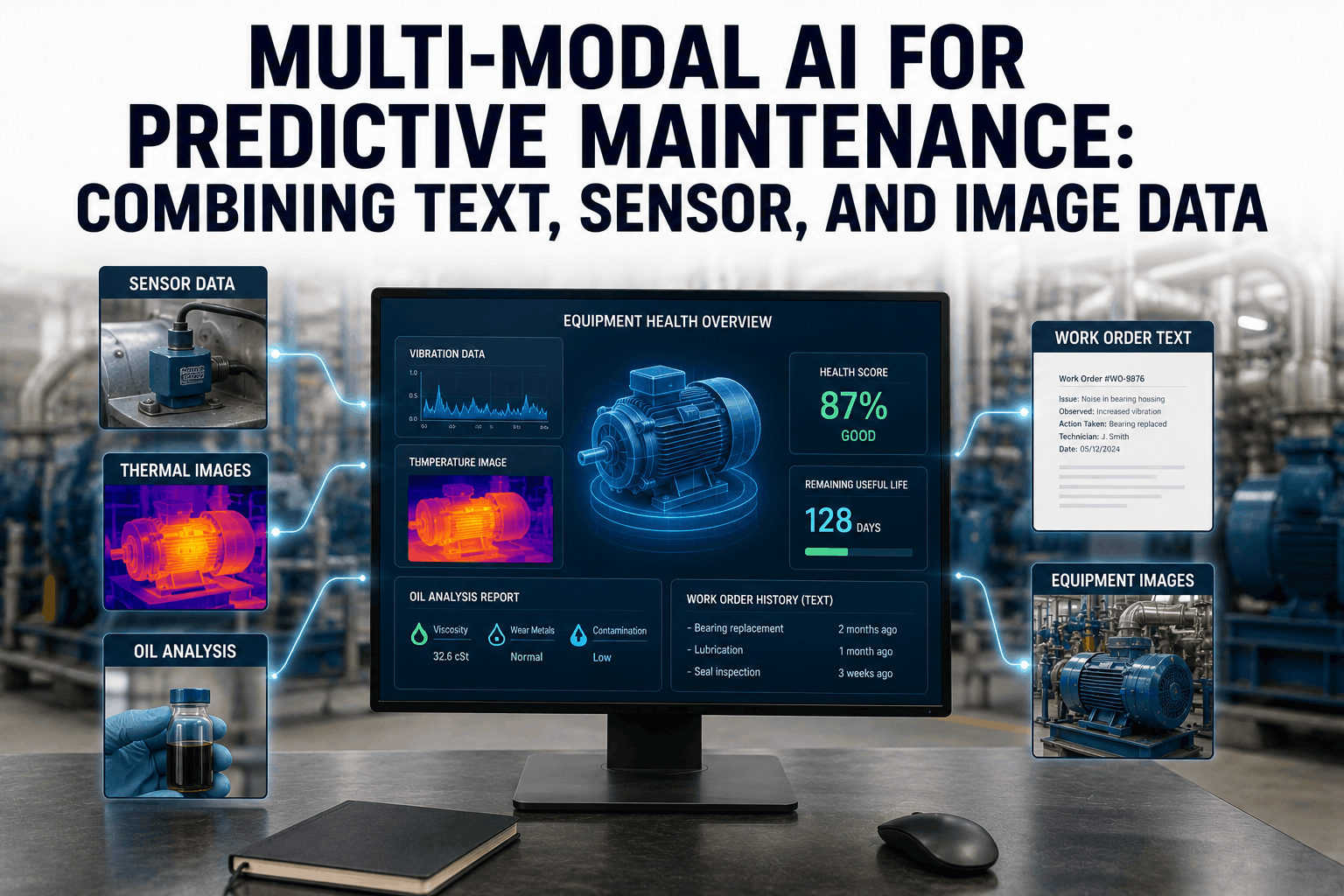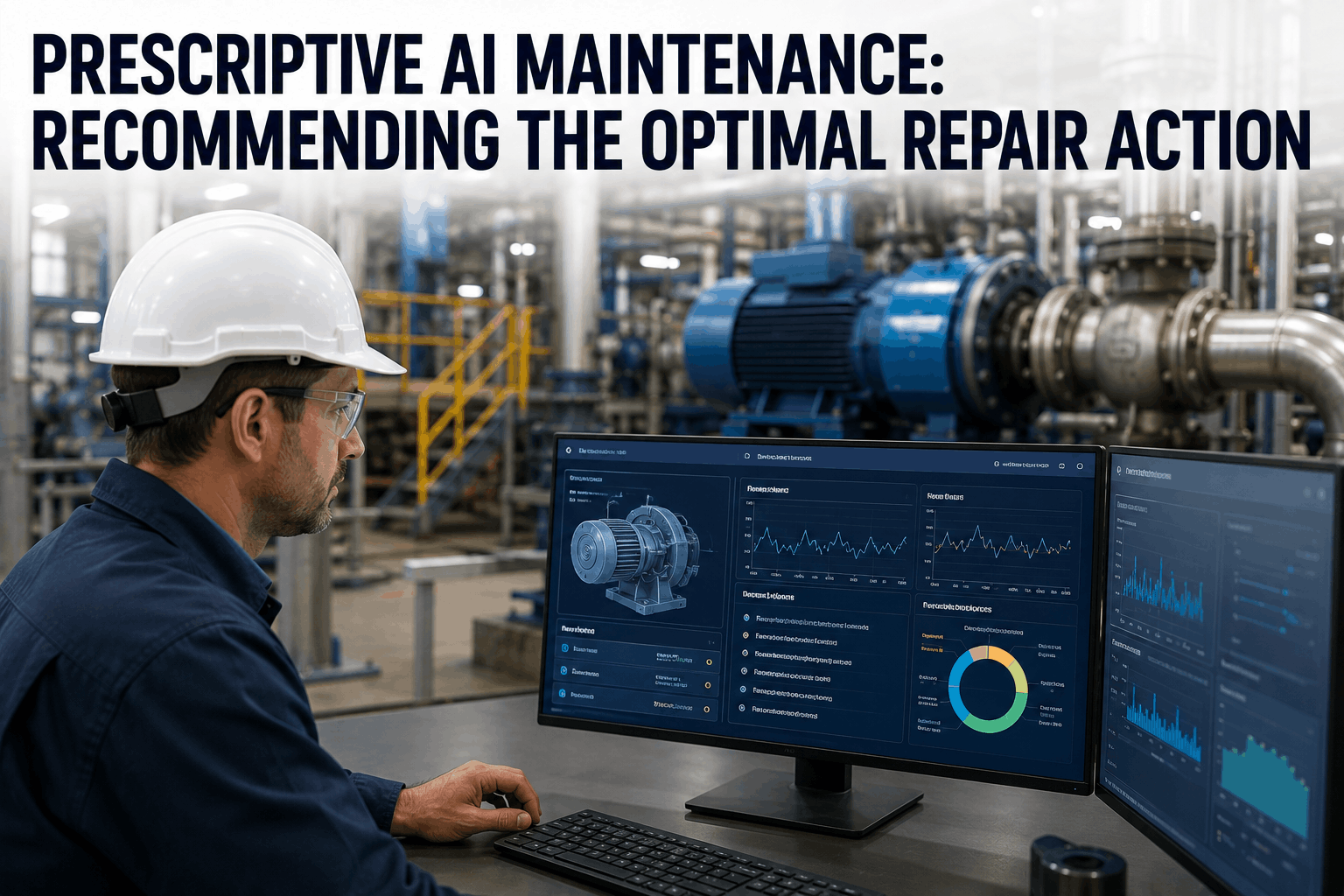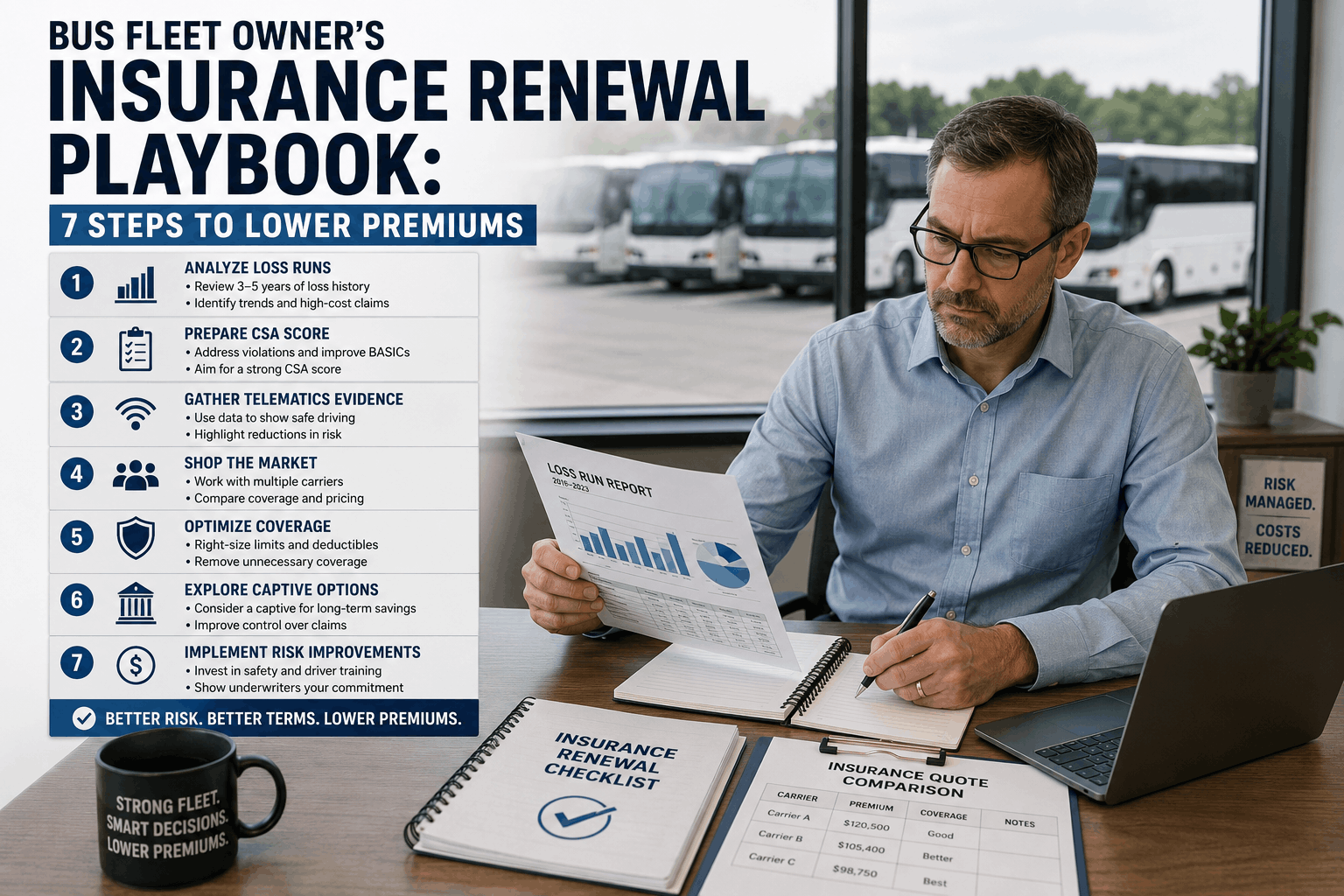
A large language model that does not know your equipment does not know your maintenance problem. Retrieval-Augmented Generation solves this by connecting an LLM to your actual maintenance manuals, work order history, P&ID drawings, and inspection records — so when a technician asks how to troubleshoot a recurring fault on a specific compressor, the AI retrieves the relevant procedure pages and generates guidance grounded in that machine's documented history rather than generic training data. Start Trial to see how BusCMMS powers RAG-based maintenance knowledge retrieval across your fleet.
Connect Your AI to the Maintenance Knowledge That Actually Matters
BusCMMS provides the structured document corpus — work orders, manuals, inspection records, and fault histories — that RAG systems need to generate maintenance guidance that is specific, accurate, and grounded in your actual operational context.
Why LLMs Alone Cannot Solve Industrial Maintenance Knowledge Problems
A general-purpose LLM trained on public data knows what a centrifugal pump is, but it does not know that the pump on line 3 in your facility has a history of seal failures after 1,800 operating hours, that the OEM updated the seal specification in 2022, or that the P&ID for that line was revised when the secondary loop was added. RAG closes this gap by retrieving relevant documents from your maintenance knowledge base before generating a response, grounding every AI output in information the LLM cannot have known from training alone. Teams that Book Demo with BusCMMS see how RAG retrieval connected to maintenance records, procedure libraries, and historical work orders transforms a generic LLM into an asset-specific knowledge engine. IEEE research on extended-reality maintenance interfaces in 2025 confirmed RAG-enhanced AI assistance as the highest-accuracy approach for contextual industrial guidance.
Maintenance Manual and Procedure Indexing
OEM manuals, internal procedures, and updated specifications are indexed in a vector database for retrieval in response to technician queries.
Work Order History Retrieval
Prior repair records for each asset are retrieved as context when a technician queries a fault, grounding AI guidance in that specific machine's documented failure history.
P&ID and Drawing Retrieval
Piping and instrumentation diagrams are indexed and surfaced automatically when queries involve system-level troubleshooting or isolation procedures.
Inspection Record Integration
Prior inspection findings are retrieved alongside procedure guidance, giving AI responses awareness of known deficiencies and recent condition assessments.
Multi-Document Synthesis
RAG retrieves and synthesizes context from multiple relevant documents in a single response, eliminating the need for technicians to cross-reference several sources.
Hallucination Reduction Through Grounded Retrieval
By anchoring every response to retrieved source documents, RAG substantially reduces the risk of AI-generated guidance that is plausible but factually incorrect for the specific asset.
Six RAG Applications in Industrial Maintenance
01
Contextual Fault Troubleshooting With Work Order History
Core RAG Application
The highest-impact RAG application in industrial maintenance retrieves that specific asset's work order history, prior fault resolutions, and relevant procedure sections as context before generating troubleshooting guidance. A technician querying a recurring vibration fault receives a response that acknowledges the three previous occurrences, what resolved each one, whether those resolutions held, and what the OEM procedure recommends given that history — not a generic vibration diagnostic algorithm.
Generic LLM accuracy: 54%
RAG-grounded accuracy: 89%
02
Procedure Retrieval From Updated OEM Documentation
Document Currency
RAG indexes the most current version of every procedure document in your knowledge base, ensuring technicians who query a repair step receive guidance from the updated specification rather than a superseded manual that may still be physically present in the shop. When an OEM issues a service bulletin that changes a torque specification or a seal part number, RAG retrieval surfaces the updated document automatically without requiring technicians to know a change was issued.
Outdated procedure usage: 34% (manual search)
Outdated procedure usage: 3% (RAG retrieval)
03
Cross-System P&ID Retrieval for System-Level Faults
System Awareness
System-level faults that affect multiple components across a P&ID require technicians to understand how isolation procedures for one section affect adjacent systems — knowledge that typically lives in engineering documentation that maintenance staff rarely access. RAG retrieval connects natural language fault queries to the relevant P&ID sections, surfacing isolation sequences and system interdependencies as part of the troubleshooting response.
P&ID access rate: 12% of system faults
P&ID access rate: 88% of system faults
04
Inspection Finding Integration in Repair Guidance
Condition Awareness
Prior inspection findings are retrieved alongside procedure guidance, giving AI responses awareness of known deficiencies and recent condition assessments that generic LLMs cannot access. When a technician queries a fault on an asset that had a noted degraded seal in the last inspection, RAG retrieval surfaces that finding as context, producing guidance that accounts for the known pre-existing condition rather than treating the fault as if it appeared on a fully healthy asset.
Condition-aware responses: 21% (base LLM)
Condition-aware responses: 91% (RAG)
05
Regulatory and Compliance Document Retrieval
Compliance Integration
Safety-critical maintenance procedures often reference OSHA standards, FMCSA regulations, or industry-specific compliance requirements that technicians may not have current versions of readily available. RAG indexes regulatory documents alongside operational procedures, surfacing compliance requirements as part of repair guidance rather than requiring a separate regulatory lookup that may be skipped under time pressure.
Compliance reference rate: 28% (manual)
Compliance reference rate: 93% (RAG-integrated)
06
Hallucination Prevention Through Source Attribution
Accuracy Safeguard
General LLMs occasionally produce plausible-sounding but factually incorrect technical guidance, which in maintenance contexts can lead to incorrect repair procedures, wrong torque specifications, or improper part substitutions. RAG substantially reduces this risk by requiring every response element to be grounded in a retrieved source document, and by including source attribution in the response so technicians can verify the procedure origin when the repair involves safety-critical work.
Hallucination rate: 18% (base LLM)
Hallucination rate: 2% (RAG-grounded)
RAG Maintenance Applications: Quick Reference
Scroll for more
| RAG Application | Documents Retrieved | Accuracy Improvement | Best Query Type | BusCMMS Source |
|---|---|---|---|---|
| Fault Troubleshooting | Work order history, OEM procedure | +35 percentage points | Recurring fault diagnosis | WO history + fault codes |
| Procedure Retrieval | Current OEM manual, service bulletins | 97% currency rate | Step-by-step repair guidance | Document index |
| P&ID Retrieval | P&ID drawings, isolation procedures | 7x access increase | System-level faults | Drawing library |
| Inspection Integration | Prior inspection findings | +70 percentage points | Condition-aware repair planning | Inspection record index |
| Compliance Retrieval | Regulatory standards, safety reqs | +65 percentage points | Safety-critical procedures | Compliance document library |
How BusCMMS Powers RAG Knowledge Retrieval
RAG is only as good as the maintenance knowledge base it retrieves from, and BusCMMS maintains the structured work order history, fault records, inspection findings, and document library that a RAG system needs to produce grounded, accurate maintenance guidance. When a technician queries a fault in BusCMMS, the RAG layer retrieves that vehicle's repair history, surfaces relevant procedure sections, and generates guidance that is specific to that asset's actual condition — not a generic answer that ignores everything the maintenance team already knows. Teams can Start Trial and begin building the knowledge base that makes RAG maintenance guidance specific and trustworthy from the first document indexed.
Work Order History Index
Every completed work order is indexed for retrieval, making prior repair history available as context in every technician query.
Procedure and Manual Library
OEM manuals and updated procedure documents are indexed with version control, ensuring retrieved procedures are always the current specification.
Inspection Finding Integration
Prior inspection findings are retrieved alongside procedure guidance so AI responses account for known asset condition at the time of the query.
Source-Attributed Response Generation
Every RAG response includes source attribution so technicians can verify procedure origin on safety-critical repairs without an additional lookup.
Implementing RAG for Maintenance Knowledge: Six Steps
01
Audit and Collect Your Maintenance Knowledge Sources
Inventory all OEM manuals, internal procedures, P&ID drawings, inspection forms, and compliance documents that should inform AI-generated guidance.
02
Index Documents With Version and Asset Tagging
Upload and index all source documents with version dates and asset-type tags so retrieval returns the current specification for the specific equipment being queried.
03
Connect Work Order History to the Retrieval Index
Index historical work orders by asset ID so every fault query retrieves that machine's prior repair history as context before generating guidance.
04
Define Retrieval Scope by Query Type
Configure which document types are retrieved for each query category — fault queries retrieve work orders and procedures; system faults retrieve P&IDs; safety procedures retrieve compliance documents.
05
Validate Response Accuracy Against Known Cases
Test RAG responses against historical cases with known correct answers to measure hallucination rate and retrieval accuracy before full deployment.
06
Keep the Knowledge Base Current With New Documents
Establish a process for indexing new service bulletins, procedure updates, and inspection records as they are issued, keeping the retrieval corpus current.
Frequently Asked Questions
What is Retrieval-Augmented Generation in industrial maintenance?
RAG is an AI architecture that retrieves relevant documents from a maintenance knowledge base — manuals, work orders, inspection records, drawings — and uses that retrieved context to ground the LLM's response in your specific operational reality rather than generic training data.
How does RAG reduce LLM hallucinations in maintenance guidance?
By anchoring every response element to retrieved source documents and including source attribution, RAG requires the LLM to base its output on retrieved facts rather than generating plausible-sounding but potentially incorrect technical details from training data alone.
What documents should be indexed in a maintenance RAG system?
OEM manuals, service bulletins, internal procedures, P&ID drawings, inspection records, work order history, and applicable compliance and regulatory documents should all be included in the retrieval index.
How is RAG different from a standard document search system?
Standard search returns document results for a technician to read. RAG retrieves relevant sections and synthesizes them into a natural language response that directly answers the technician's query, combining multi-document content without requiring the technician to read and interpret each source.
How does BusCMMS support RAG maintenance knowledge retrieval?
BusCMMS maintains the structured work order history, fault records, and inspection findings that serve as the primary retrieval corpus, making every AI query grounded in your fleet's actual maintenance data.
Make Your AI Fluent in Your Equipment's History
BusCMMS connects RAG retrieval to your work orders, manuals, and inspection records so every AI-generated repair guidance response is grounded in what your team actually knows about each asset.