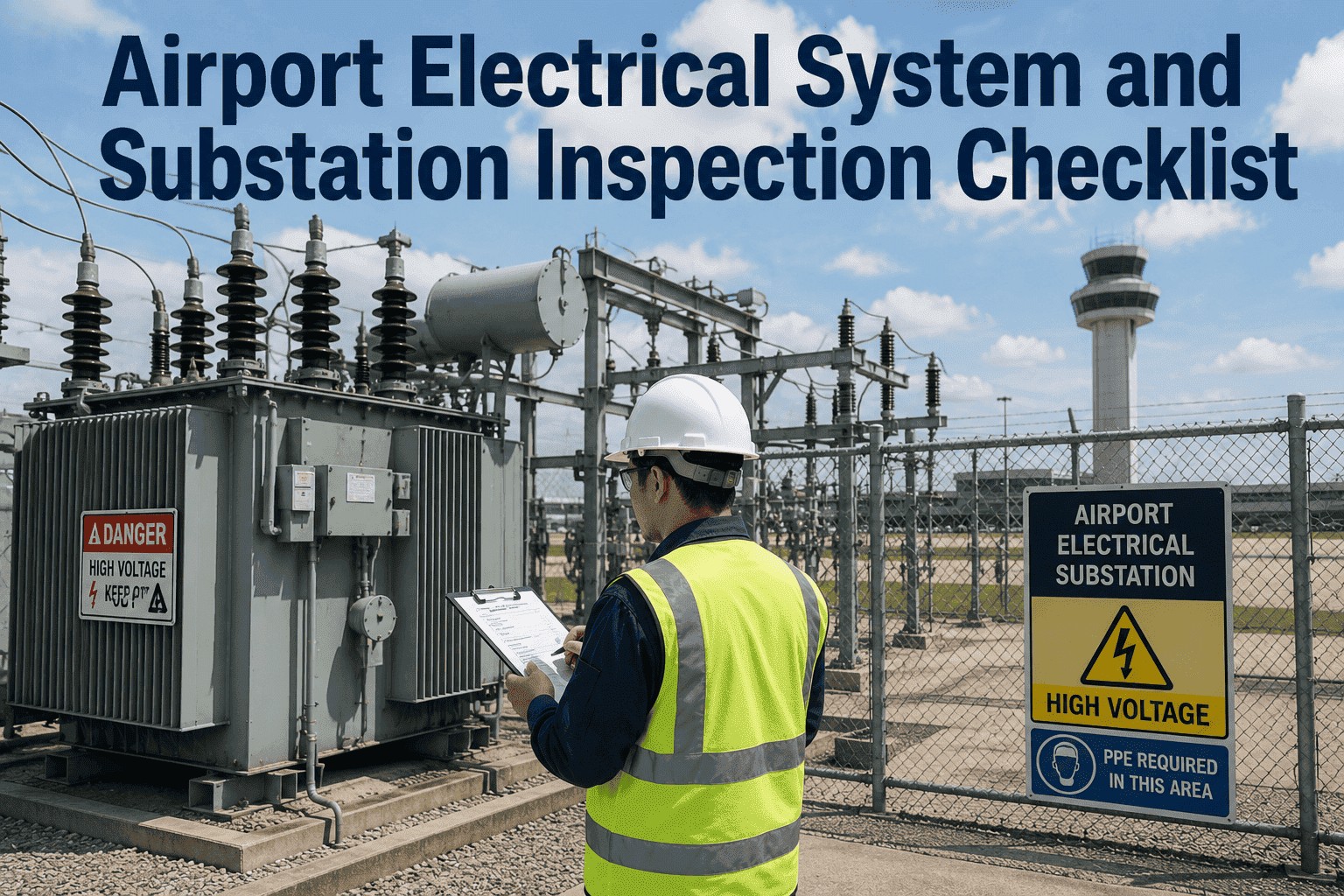
Every second of downtime at an airport costs thousands — and 73% of outages trace back to IT infrastructure that was never properly maintained. From server rooms running too hot to FIDS screens going dark mid-boarding, the risks are real, measurable, and preventable. This checklist gives airport IT and facilities teams a structured, analytics-ready framework to inspect, monitor, and protect every layer of communication infrastructure — before a failure makes the news. Book a Demo to see how iFactory's preventive analytics platform keeps airport systems running at peak reliability.
73%
of airport IT outages are caused by deferred preventive maintenance
6 layers
of interconnected systems — each a single point of failure if left unchecked
24/7
uptime demand means maintenance must be condition-based, not calendar-based
40%
reduction in unplanned downtime with real-time sensor-based monitoring
The Airport IT Infrastructure Stack
Six critical layers. Any one of them fails — the whole terminal feels it.
LAYER 01
Server Rooms
Power & Cooling
LAYER 02
Fiber Networks
Backbone Infra
LAYER 03
Wi-Fi Systems
Terminal Coverage
LAYER 04
PA Systems
Passenger Comms
LAYER 05
FIDS Network
Flight Displays
LAYER 06
Security Networks
Disaster Recovery
What Happens When You Skip a Layer
Every skipped inspection creates a compounding failure risk. Here is what the data says about deferred airport IT maintenance.
Server Room
Overheating Risk
Skip thermal checks → server throttling under peak load → FIDS, check-in, and baggage systems slow simultaneously
Fiber Network
Silent Degradation
Skip OTDR tests → degraded connectors fail during peak traffic → intermittent outages with no clear root cause
Wi-Fi Coverage
Passenger-Visible Failure
Skip RF surveys → dead zones appear at boarding gates → passengers photograph and post complaints in real time
PA System
Regulatory Liability
Skip emergency broadcast tests → PA fails during evacuation → CAA audit, enforcement action, and media exposure
FIDS Network
Boarding Disruption
Skip display health checks → dark screens at departure gates → manual boarding, delayed aircraft, missed connections
Security Network
Attack Surface Growth
Skip firewall reviews → unpatched rules accumulate → ransomware enters via legacy access point, crippling operations
Frequently Asked Questions
Inspection frequency should match the criticality and failure rate of each system. Server room thermal and power checks should run daily via automated sensors, with physical inspections monthly. Fiber and network equipment benefit from quarterly OTDR and performance reviews. PA systems and FIDS require full functional testing monthly, with emergency broadcast tests at least quarterly. Security network and firewall reviews should occur monthly, with penetration tests annually. Condition-based monitoring platforms like iFactory can replace rigid calendar schedules with real-time anomaly alerts, reducing unnecessary inspections while catching real degradation earlier.
Thermal management failures are consistently the leading cause of unplanned server and network equipment downtime in airports. Server rooms that rely on passive monitoring miss gradual cooling degradation until hardware throttles or fails. The second most common cause is deferred fiber connector maintenance — contaminated or damaged connectors degrade slowly over months, creating intermittent faults that are extremely difficult to diagnose under pressure. Both are preventable with a condition-based monitoring programme and structured inspection schedule.
Standard preventive maintenance follows fixed schedules — inspect every 30 days, replace every 12 months — regardless of actual equipment condition. Predictive analytics uses real-time sensor data (temperature trends, power draw, error rates, signal loss) to detect degradation patterns before failure occurs. For airports operating 24/7, this means maintenance windows can be planned during low-traffic periods rather than reacting to failures during peak boarding. Platforms like iFactory apply AI-driven anomaly detection to airport IT assets, generating prioritised work orders automatically when a system shows early signs of degradation.
Airport IT infrastructure maintenance must align with several overlapping frameworks. ICAO Annex 17 governs aviation security including communications systems. ACI (Airports Council International) publishes cybersecurity guidance for airport operators. National civil aviation authorities (CAA, FAA, EASA-aligned bodies) impose operational continuity requirements. For network security specifically, IEC 62443 applies to OT-integrated systems, and the NIST Cybersecurity Framework is widely adopted. PA and FIDS systems are also subject to life-safety standards in most jurisdictions. Maintaining audit-ready records for all inspections is essential — iFactory's platform timestamps every work order and inspection record automatically.
Yes. iFactory connects to existing CMMS platforms via REST API and supports standard network monitoring integrations. The platform is built for infrastructure operators who cannot replace existing systems and instead need AI-powered analytics layered on top. For airport IT specifically, iFactory ingests data from network monitoring platforms, building management systems, and sensor networks to create a unified asset health view — without requiring a rip-and-replace of current tools. Integration typically reaches pilot go-live within 4–8 weeks.
iFactory Preventive Analytics Platform
Stop Reacting to Airport IT Failures. Start Predicting Them.
iFactory connects to your server room sensors, network monitoring tools, and CMMS to deliver condition-based work orders before a component fails. Trusted by infrastructure operators across the UK, EU, Middle East, and Asia-Pacific.
Pilot in 30 days. Full integration in one quarter.