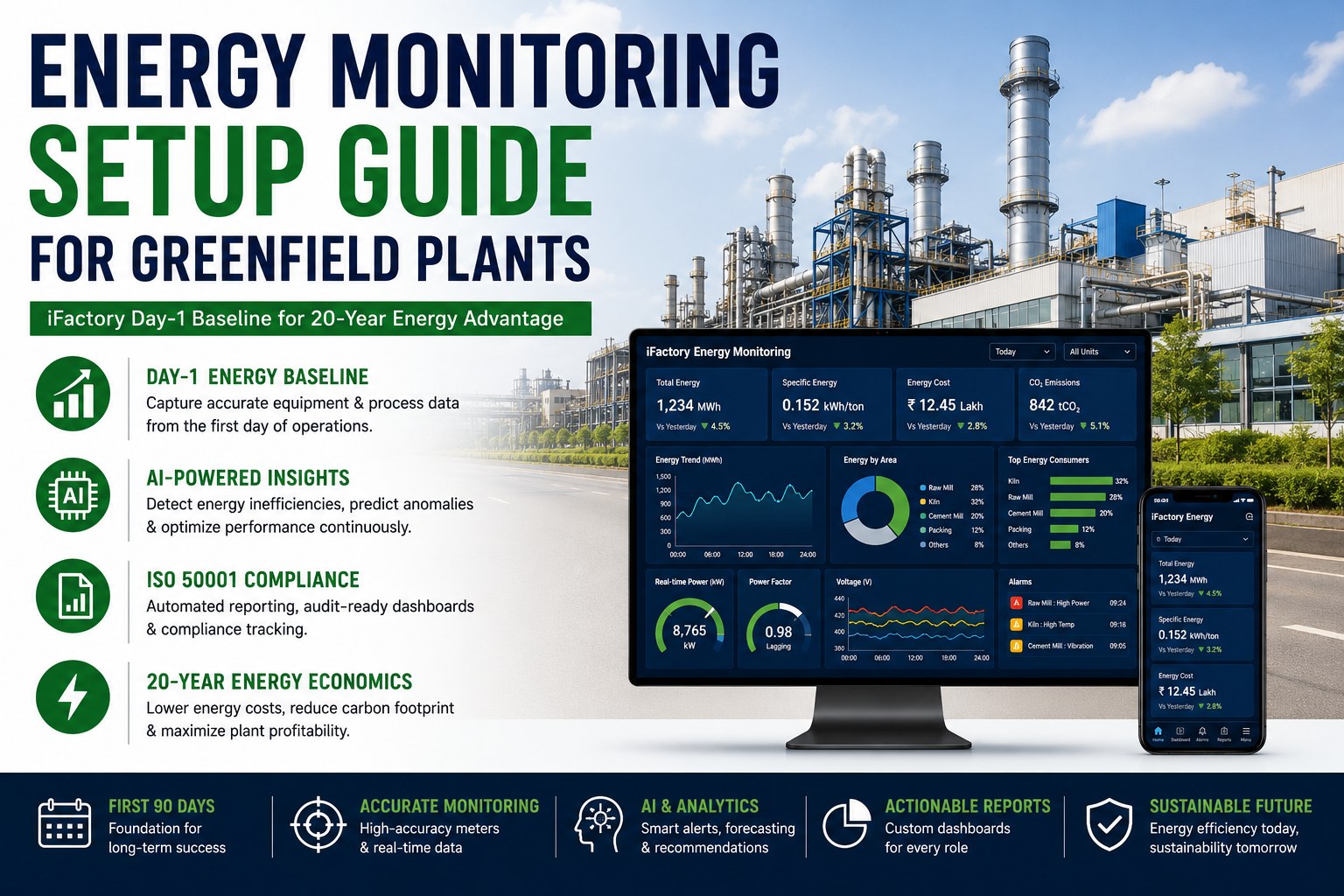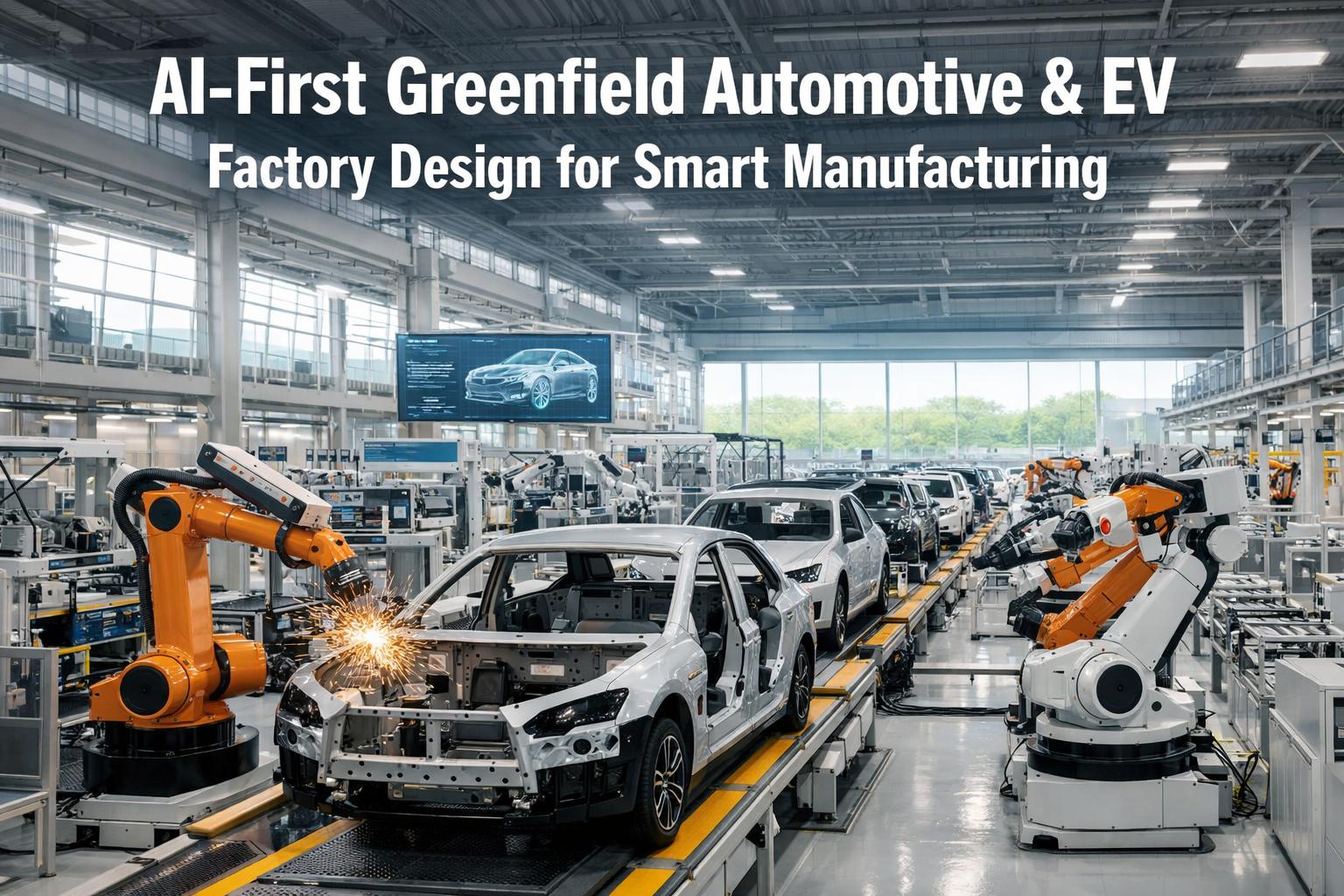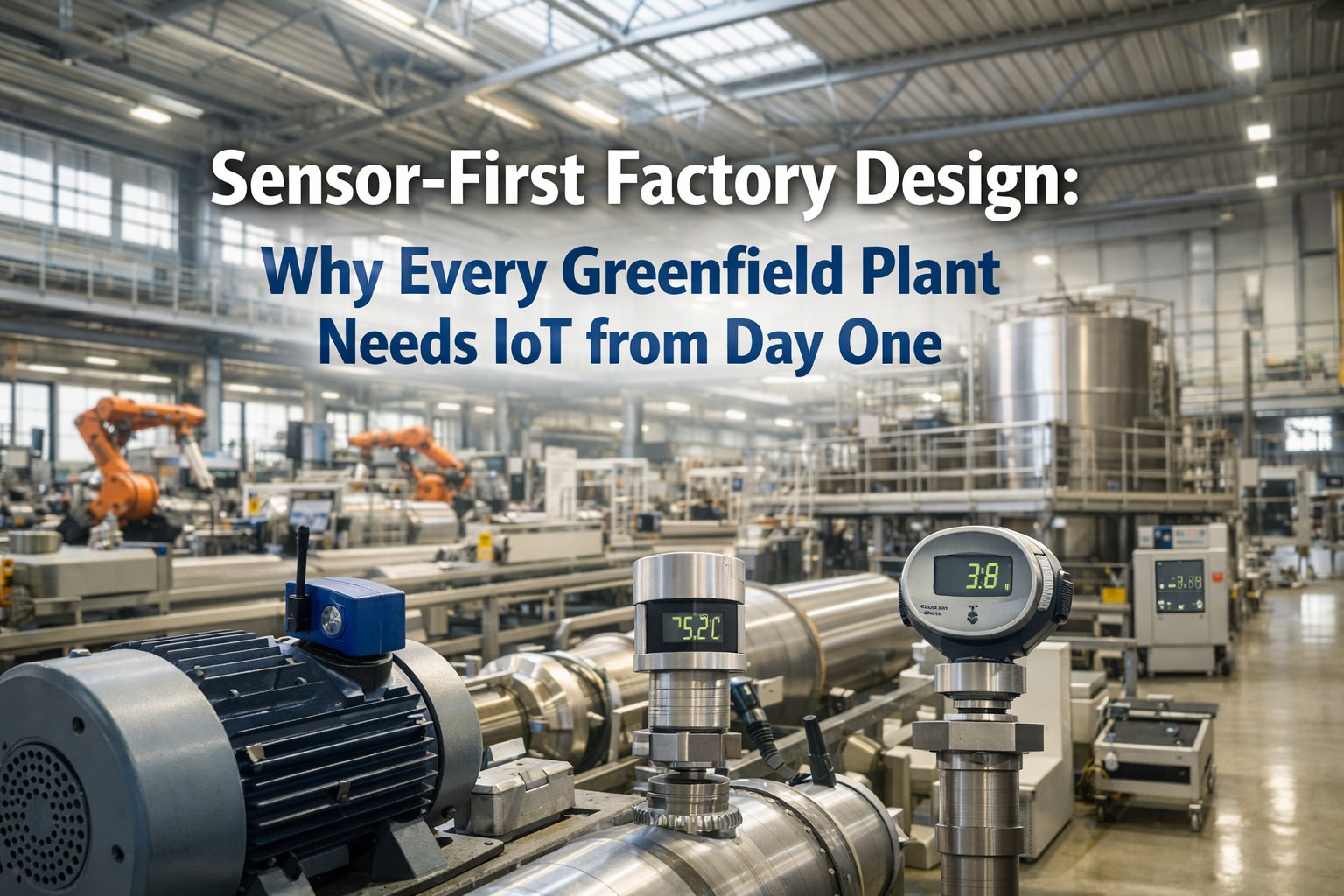
Retrofitting sensors into an existing factory costs 3–5x more than embedding them during construction. A greenfield auto plant runs $1–1.3 billion, while a brownfield IoT retrofit of the same facility costs roughly 200x less — but still wastes months on workarounds, incompatible protocols, and production downtime. The smarter move? Design sensors into the blueprint from day one. Here's the complete sensor-first playbook for 2026.
Why Sensor-First? The Greenfield Opportunity
When you build a new factory, you have a once-in-a-decade chance to architect IoT into every wall, conduit, and machine foundation. Deloitte's greenfield factory framework emphasizes that advanced digital technologies — sensors, wearables, robotics — should be embedded from the start to unlock full value from the investment. Greenfield lets you design the data architecture before pouring concrete, not after.
Planning a new facility or major expansion? Book a free consultation with our IoT specialists to design your sensor network architecture before construction begins — saving months of rework.
The 5 Sensor Layers Every Greenfield Plant Needs
A sensor-first factory isn't about scattering sensors randomly. It's a layered architecture — each layer feeding data into the next, creating a complete picture of operations from machine health to energy consumption to environmental safety.
Machine Health Sensors
Vibration, temperature, and acoustic sensors on every critical rotating asset — motors, pumps, compressors, turbines. These detect imbalance, misalignment, bearing wear, and lubrication issues weeks before failure.
Process Monitoring Sensors
Pressure, flow rate, level, and chemical composition sensors embedded in production lines. Real-time process data feeds AI models that optimize throughput, reduce scrap, and maintain quality six-sigma targets.
Energy & Utility Sensors
Power meters, gas flow monitors, and water consumption sensors across every utility connection. BMW's Regensburg plant cut electricity 30% after deploying 400 energy sensors with AI management — the same approach, built in from day one.
Environmental & Safety Sensors
Air quality, humidity, dust particulate, gas leak, and noise level sensors throughout the facility. These ensure regulatory compliance, worker safety, and optimal conditions for sensitive production processes.
Edge Computing & Gateway Layer
Edge nodes process sensor data locally for sub-millisecond response times, while gateways aggregate and transmit to cloud platforms. IDC predicts 50% of enterprise data will be processed at the edge by 2025 — your greenfield should be built for it.
Sensor Placement Strategy: Where It Matters Most
Not every asset needs every sensor type. The 80/20 rule applies: focus on the critical 20% of equipment that causes 80% of your downtime and quality issues. Here's a practical placement matrix for greenfield plants.
The ROI of Getting It Right from Day One
Smart factory platforms cut energy consumption 20–40% through AI-based forecasting and automated load-balancing. Predictive maintenance alone delivers 25–30% maintenance cost reductions and 35–50% downtime decreases. When sensors are embedded from construction, these savings begin from the first day of production — no months-long retrofit ramp-up needed.
Want to see how these savings apply to your facility? Book a free demo and our team will map sensor placement, expected ROI, and integration timelines tailored to your plant layout.
6-Step Sensor-First Implementation Roadmap
Whether you're 18 months from breaking ground or already in the design phase, this roadmap ensures sensors are woven into every stage of your greenfield project.
Asset Criticality Mapping
Identify every piece of equipment, rank by production impact, safety risk, and failure probability. This drives your sensor budget allocation.
Network Architecture Blueprint
Design your connectivity layer — wired conduits for high-density areas, private 5G or Wi-Fi 6 for flexible zones, edge nodes at strategic aggregation points.
Infrastructure Pre-Installation
Embed conduits, mounting points, power drops, and network cabling during construction. This step alone saves 60–70% vs. post-build retrofit.
Sensor Deployment & Commissioning
Install sensors as equipment arrives. Wireless sensors establish baselines within weeks. Connect everything to your CMMS platform before first production run.
Platform Integration & Calibration
Unify sensor data streams into a single CMMS/IoT platform. Set alert thresholds, train AI models on initial baseline data, and validate data accuracy.
Optimize, Learn & Scale
Refine predictive models as operational data accumulates (6–12 months for optimal accuracy). Expand monitoring to secondary assets based on ROI data.
Building a new facility? Schedule your iFactory consultation and get a sensor-first architecture plan tailored to your plant — or talk to our team to discuss your project.
Build Smart from the Ground Up
iFactory's AI-powered CMMS connects every sensor, automates work orders, and delivers predictive insights from startup. Don't bolt on intelligence later — build it in.