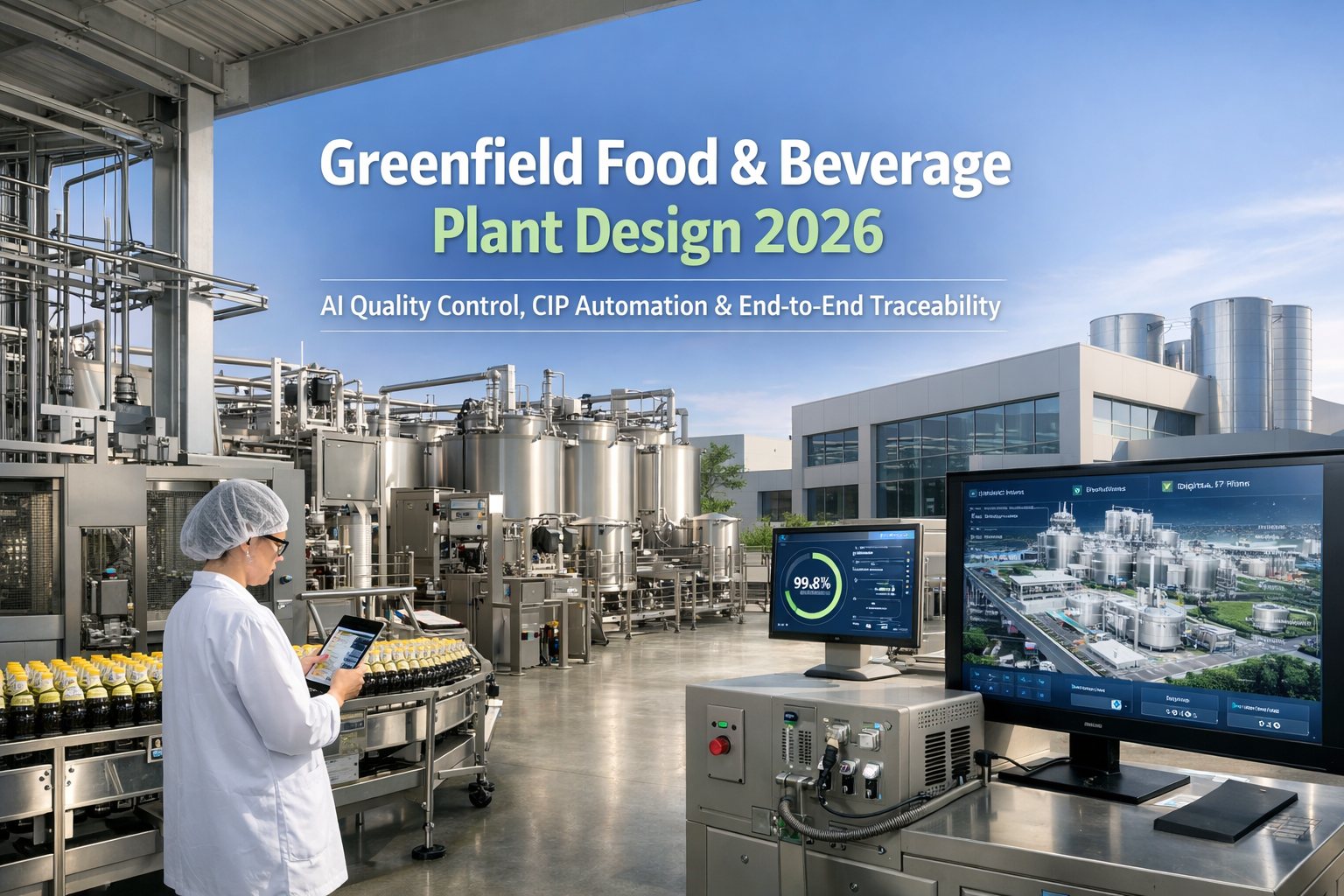
The AI in food safety and quality control market was valued at $2.7 billion in 2024 and is projected to reach $13.7 billion by 2029. Meanwhile, 48 million Americans still get sick from foodborne illness every year, and the FDA's FSMA Food Traceability Rule is pushing the entire industry toward source-to-shelf tracking within 24 hours. For manufacturers designing greenfield food and beverage plants in 2026, this creates a once-in-a-generation opportunity: build compliance, quality intelligence, and full traceability into your facility's DNA from day one — instead of retrofitting it later at 10x the cost.
Designing a greenfield food or beverage facility? Book a free 30-minute demo to see how iFactory embeds AI quality control, CIP automation, and traceability into your plant from the design phase.
Why Food & Beverage Is Different from Every Other Greenfield
A food plant isn't just a factory — it's a regulated environment where product safety is a public health matter, contamination can trigger multi-million dollar recalls, and every ingredient must be traceable from source to shelf. The design constraints are fundamentally different from automotive, semiconductor, or general manufacturing facilities.
Hygiene & Sanitation
Every surface, joint, and equipment mount must meet hygienic design standards. CIP (Clean-in-Place) systems require integration from the layout stage — not bolted on after construction.
Temperature Control Zones
Cold storage, blast freezing, ambient processing, and hot-fill areas must coexist with precise separation. Cold chain integrity from receiving dock to shipping determines product safety and shelf life.
Allergen Segregation
Physical separation of allergen zones, dedicated lines, and validated cleaning procedures must be designed into the plant architecture — not managed through SOPs alone.
Regulatory Compliance
FDA FSMA, HACCP, SQF, BRCGS, and EU food safety regulations require preventive controls, documented traceability, and audit-ready record-keeping built into every process.
The Smart Food Plant Technology Stack
A 2026 greenfield food plant needs technology embedded at every layer — from the physical production floor through to AI-driven decision-making. Here's the full stack that modern food plant consultants design into every new facility:
6 Technologies Defining the 2026 Food Plant
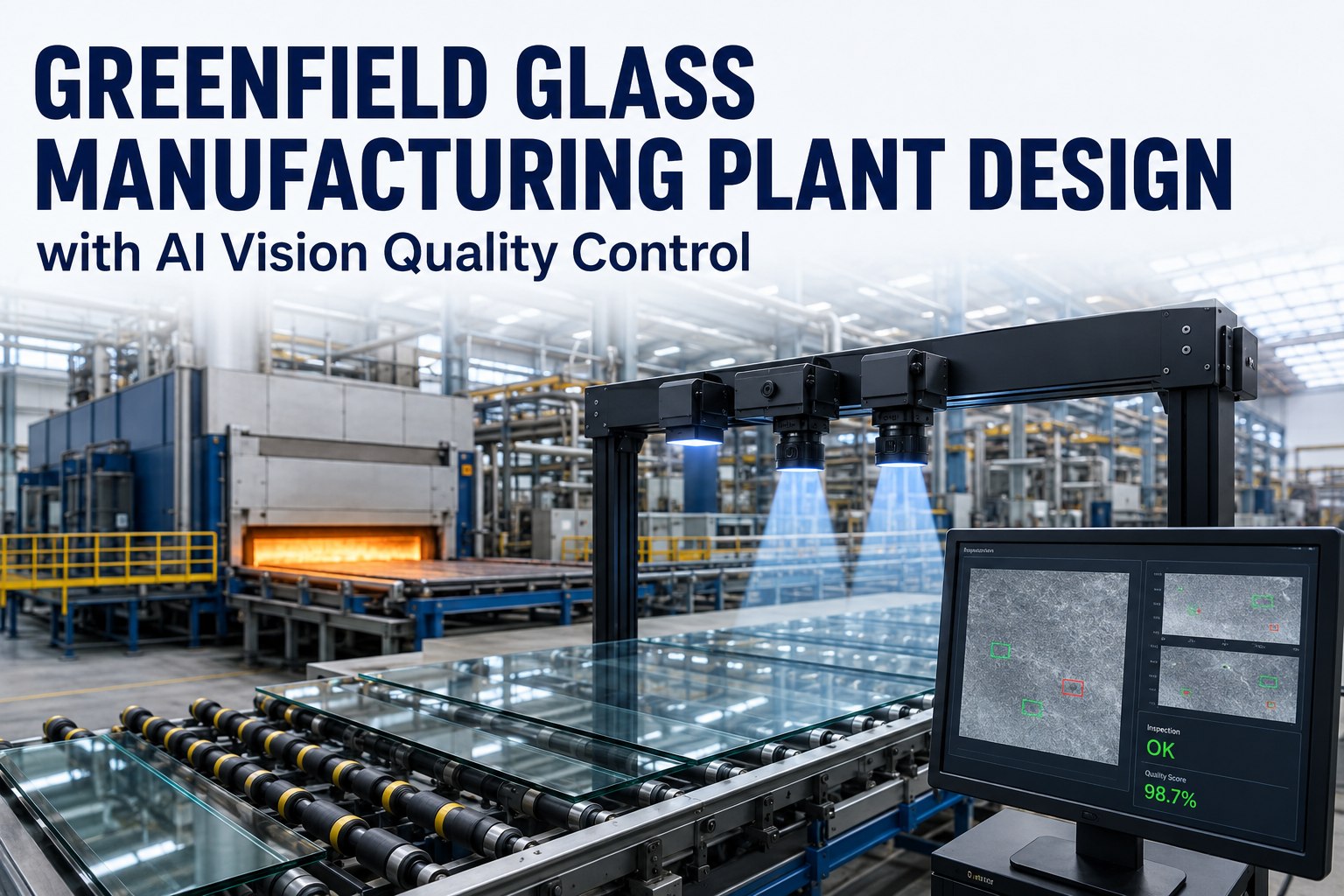
AI-Powered Quality Inspection
Computer vision systems scan products at production speed — detecting contaminants, foreign objects, dimensional defects, and packaging flaws that human inspectors miss. Over 60% of AI adoption in food manufacturing now focuses on real-time quality inspection and contamination detection.
Automated CIP Systems
Clean-in-Place systems with IoT sensors monitor wash cycle parameters — temperature, flow rate, chemical concentration, and contact time — in real time. Automated validation ensures every cleaning cycle meets food safety standards without manual verification.
End-to-End Traceability
Digital traceability systems track every ingredient from receiving to finished product — capturing lot codes, processing dates, and shipping details at every Critical Tracking Event. FSMA 204 compliance requires this data be retrievable within 24 hours of an FDA request.
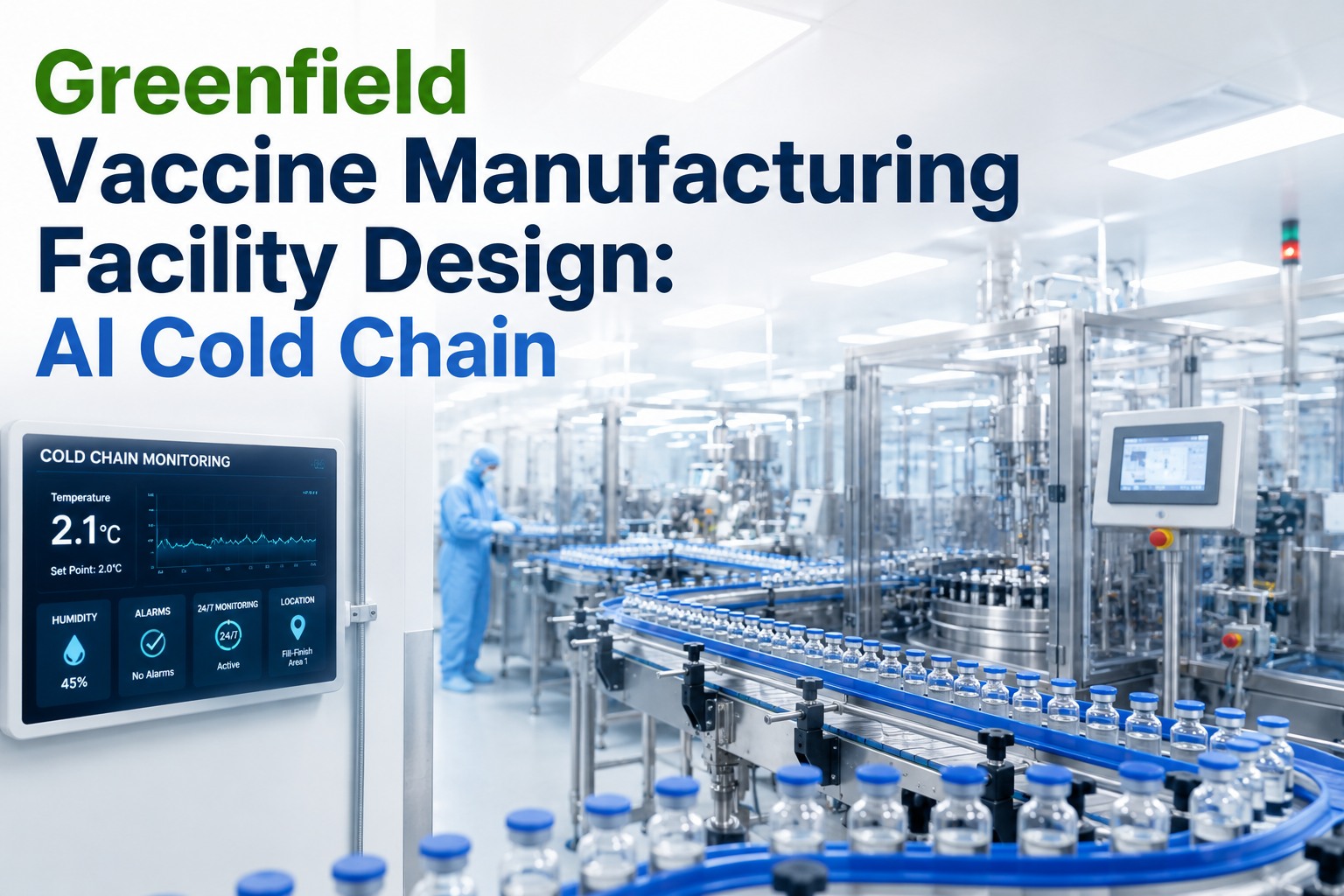
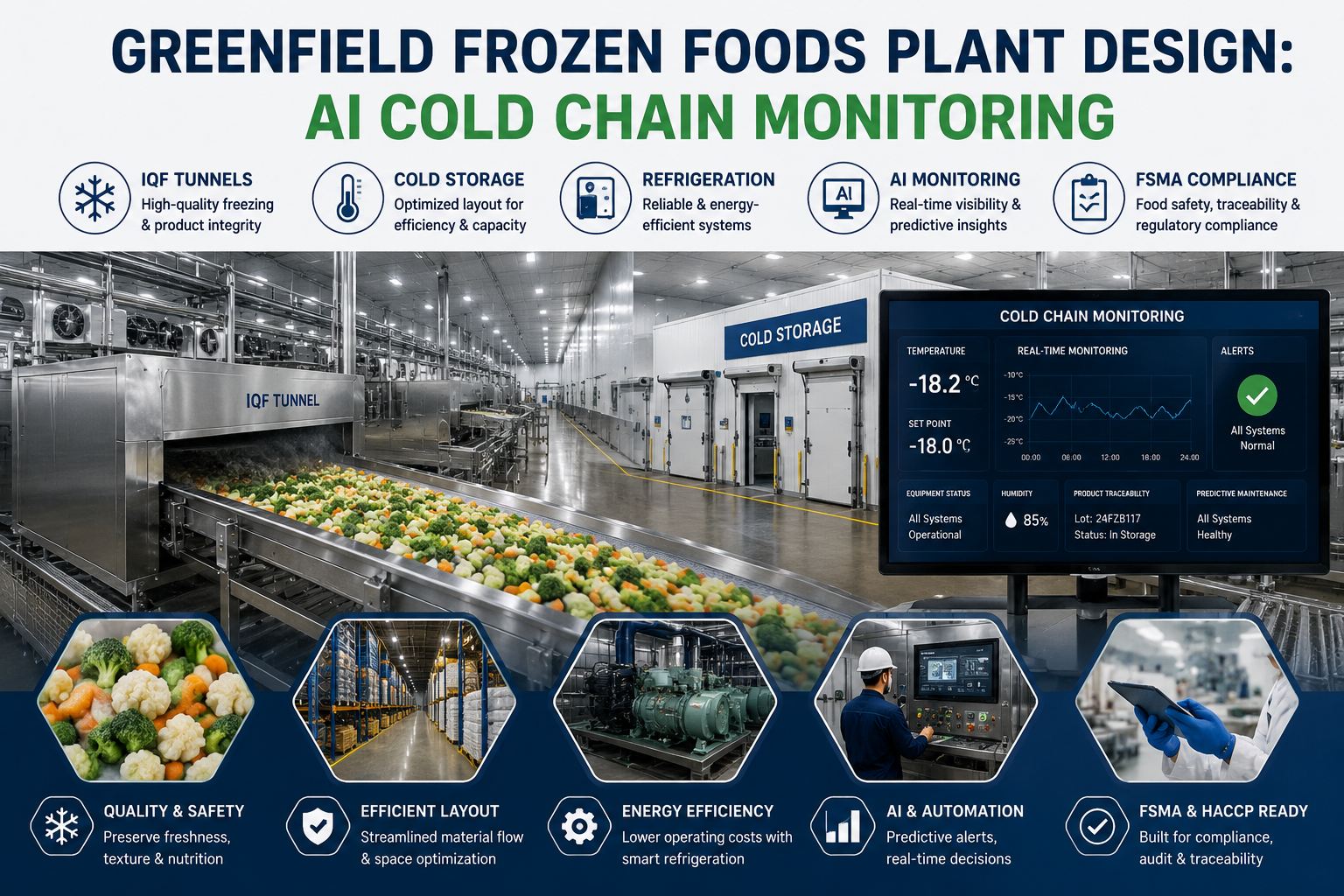
Cold Chain Monitoring
IoT temperature sensors across receiving docks, cold storage, processing, and shipping continuously verify cold chain integrity. AI flags deviations that risk product safety before they cascade into spoilage, waste, or regulatory violations.
ISA-88 Batch Control
Recipe-driven batch automation following ISA-88 standards ensures consistent product quality across every run. Automated recipe management eliminates manual errors in ingredient dosing, mixing sequences, and process timing — critical for allergen control.
Predictive Maintenance
AI models monitor vibration, temperature, and performance data from processing equipment, packaging lines, and refrigeration compressors — predicting failures weeks before they cause unplanned downtime or temperature excursions that compromise food safety.
Building a Greenfield Food or Beverage Plant?
iFactory's AI-powered CMMS delivers predictive maintenance, CIP tracking, cold chain monitoring, and compliance-ready asset management — from design through full production.
The FSMA Compliance Imperative
The FDA's Food Traceability Rule (FSMA 204) is the most significant regulatory shift in food manufacturing in decades. While the compliance deadline has been extended to mid-2028, major retailers are already requiring suppliers to meet these standards now. For greenfield plants, this creates a clear advantage: build traceability into your systems from day one.
Key Data Elements (KDEs)
Record lot codes, product descriptions, quantities, dates, and locations at every handoff point in the supply chain.
Critical Tracking Events (CTEs)
Capture data at growing, receiving, transforming, creating, shipping, and first land-based receiving of imported foods.
24-Hour Data Retrieval
Provide all traceability records to the FDA via electronic sortable spreadsheet within 24 hours of request.
2-Year Record Retention
Maintain all traceability records for at least two years, covering foods on the Food Traceability List including produce, seafood, and soft cheeses.
The Real Cost of Getting Food Safety Wrong
How iFactory Powers Smart Food Manufacturing
iFactory's AI-powered CMMS integrates into your greenfield food plant from the design phase — ensuring your maintenance strategy, food safety protocols, and equipment intelligence are operational before the first production run.
Hygienic Asset Architecture
Model your processing lines, CIP circuits, cold chain equipment, and packaging systems with maintenance strategies tailored to food-grade requirements and sanitation schedules.
Sensor & CIP Integration
Pre-configure IoT sensor flows for temperature monitoring, CIP validation, and equipment telemetry so your CMMS captures data the moment systems go live.
Predictive AI Activation
AI models learn baseline signatures for compressors, mixers, fillers, and packaging equipment during commissioning — detecting anomalies before they cause downtime or safety excursions.
Compliance & Continuous Intelligence
Real-time dashboards track cold chain integrity, CIP cycle validation, energy consumption, and equipment health — supporting HACCP compliance and audit readiness at all times.
Why Start CMMS in the Greenfield Phase?
Deploying iFactory during the design phase eliminates the reactive maintenance gap that plagues new food facilities. Your asset hierarchies, CIP schedules, sensor configurations, and predictive models are fully operational before the first ingredient is received — not months later when compliance gaps have already appeared on audit reports.
Build Food Safety Intelligence Into Your Plant's Foundation
See how iFactory integrates into your greenfield timeline — from hygienic design through full-scale production with compliance-ready traceability.