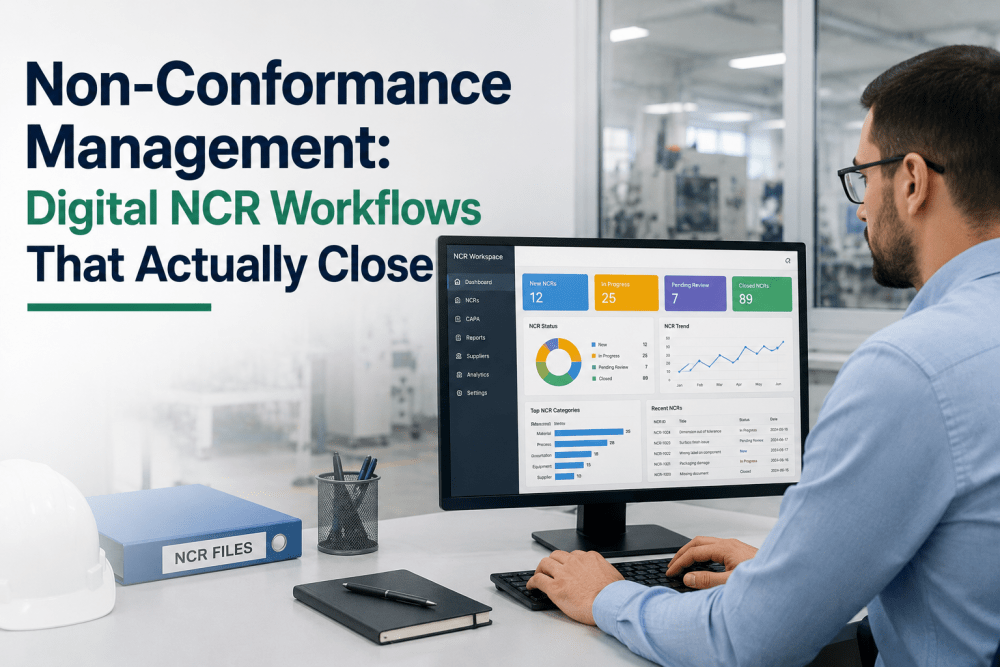
In U.S. manufacturing, a single out-of-tolerance sensor can cascade into a full production hold, a failed audit, or a costly product recall. Yet most facilities still track calibration due dates on spreadsheets, store certificates in filing cabinets, and rely on technicians to remember when instruments are due. That approach may have worked in 2005 — it does not work in a world where ISO 9001, FDA 21 CFR Part 11 and IATF 16949 auditors expect timestamped digital records at a moment's notice. Sensor calibration management has evolved from a maintenance task into a strategic quality function, and the facilities that treat it as such are the ones that pass audits without panic and keep production running without measurement-driven escapes.
Sensor Calibration Management: Stay Audit-Ready, Every Day
Why Spreadsheet-Based Calibration Tracking Is a Compliance Liability
Most calibration failures in audits are not technical failures — they are record-keeping failures. An instrument is calibrated on schedule, but the certificate is scanned to a shared drive no one organized, the due date is updated in a spreadsheet no one owns, and the next technician pulls the instrument back into service without verifying currency. The measurement is fine; the documentation is not. And in a 21 CFR Part 11 or IATF 16949 audit, undocumented calibration is the same as no calibration.
The core problem with spreadsheet tracking is that it requires human discipline at every step: updating records, filing certificates, sending reminders, flagging overdue instruments. Digital calibration management systems replace all of that human dependency with automated workflows — and if your facility is approaching an audit without a reliable digital system in place, a live demo of iFactory's calibration module can show you the gap in under 30 minutes.
The Digital Calibration Record: What Audit-Ready Actually Looks Like
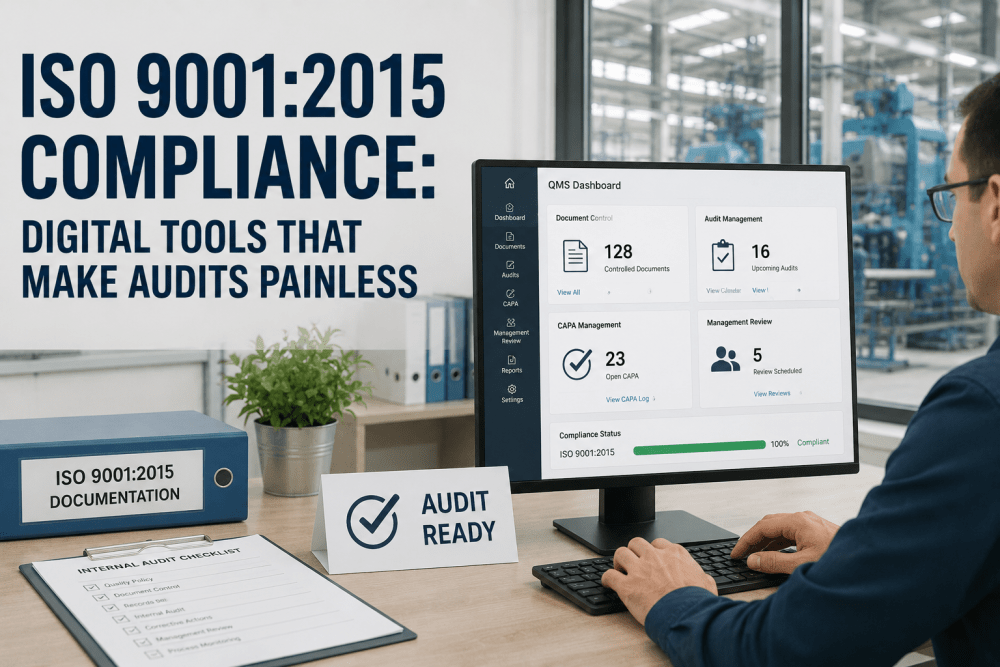
A digital calibration record is not a scanned PDF stored in a folder. It is a structured, searchable, timestamped entry linked to a specific instrument ID, calibration standard, technician, result, certificate, and next due date — with a full change log that satisfies 21 CFR Part 11 electronic record requirements. When an auditor asks for the calibration history of Instrument #TMP-0047, the answer should be three clicks, not three hours of searching.
If your team is still building this workflow manually, book a calibration management demo with iFactory to see how this entire process is automated from registration through audit reporting.
Compliance by Standard: ISO 9001, FDA 21 CFR, and IATF 16949 Requirements Side by Side
Each standard has distinct calibration record requirements, but all three converge on the same core expectation: documented evidence that measuring equipment is fit for purpose at the time of use. The table below maps those requirements so quality managers can build a single digital system that satisfies all three simultaneously.
| Requirement | ISO 9001:2015 (Clause 7.1.5) | FDA 21 CFR Part 11 / Part 820 | IATF 16949:2016 |
|---|---|---|---|
| Calibration Intervals | Defined and maintained at planned intervals | Established and documented procedures required | Calibration/verification records per customer-defined intervals |
| Traceability | Traceable to international or national measurement standards | Traceable to national standards where applicable | Traceable to NIST or equivalent; documented on certificate |
| Records Required | Calibration status, results, and identification of equipment | Electronic records with audit trail; 21 CFR 11 compliant signatures | As-found/as-left data, out-of-tolerance impact assessment |
| Out-of-Tolerance Action | Assess validity of previous results; corrective action required | Nonconformance documented; CAPA initiated | Formal impact analysis on affected production lots mandatory |
| Labeling / Status ID | Calibration status identified on equipment | Equipment labeled with calibration status and due date | Calibration status visible on instrument; restricted use if overdue |
| Retention Period | At least the life of the equipment | Minimum 2 years; device history record for medical devices | Minimum 1 year beyond calibration interval; customer-specific may extend |
Calibration Tracking Software: What Separates Good from Audit-Proof
Not all calibration tracking software is built for regulated manufacturing environments. Many tools handle reminder scheduling adequately but fall short on the record integrity, traceability linkage, and out-of-tolerance impact assessment that ISO and IATF auditors will probe. Here is what distinguishes a genuine calibration management system from a glorified reminder tool.
Your quality team's time is better spent on corrective action than certificate retrieval. Schedule a demo to see iFactory's calibration dashboard in your industry context and walk through how it maps to your current audit checklist.
Out-of-Tolerance Impact Assessment: The Step Most Facilities Skip
When a sensor is found out of tolerance during calibration, the compliance question is not just "did we fix it?" — it is "what did it measure while it was out of tolerance, and were those measurements used to accept product?" IATF 16949 and FDA Part 820 both require a documented impact assessment covering the period since the last known good calibration. Most facilities have no structured process for this. They fix the sensor, re-calibrate, and move on — leaving a compliance gap that experienced auditors know to probe.
Expert Perspective: What Auditors Look for in Calibration Records
"The auditors I work with do not spend much time on whether you calibrated on schedule — they assume you did. What they are looking for is whether your system can prove it instantly. Can you pull the calibration certificate for that specific gauge right now, with the reference standard it was calibrated against, the technician's signature, and the as-found data? And if that gauge was out of tolerance, can you show me the impact assessment you conducted? Facilities that answer 'yes' to both are the ones that finish audits in hours instead of days."
"The second thing auditors probe is interval justification. Why is that torque wrench on a 12-month cycle? Is that based on historical drift data, manufacturer recommendation, or just tradition? Digital calibration systems that track as-found deviation over time give quality managers the data to optimize intervals — tightening them where drift is rapid, extending them where instruments are consistently stable. That is how you demonstrate a risk-based calibration program, which is exactly what modern standards expect."
iFactory Advisory Team — Quality Management & Compliance Practice
Conclusion: Calibration Management Is a Competitive Advantage, Not Just a Compliance Requirement
Facilities that manage sensor calibration reactively — scrambling to find certificates before audits, discovering overdue instruments during quality walks, conducting impact assessments from memory — are operating with a structural quality risk that compounds over time. Every out-of-tolerance escape that goes undetected erodes product reliability. Every audit finding tied to calibration records damages customer confidence and drives corrective action costs that dwarf the investment in a proper digital system.
Digital calibration management is not expensive. It is significantly less expensive than a single major customer audit finding, a product recall, or the internal labor cost of maintaining manual records across a facility with hundreds of instruments. The facilities that treat calibration as a strategic quality function — automating records, enforcing traceability, and using drift data to optimize intervals — are the ones that pass audits without preparation sprints and measure product with confidence every single shift. Talk to iFactory's quality team to see what audit-ready calibration management looks like in a facility like yours.