A single steel ladle carries 20 to 400 tons of molten metal at temperatures above 1,600°C, and most integrated plants keep 15 to 30 of them circulating through tapping, refining, and casting at once. When heat counts are estimated on a whiteboard instead of tracked per wear zone, refractory overconsumption and emergency relines quietly eat millions from the maintenance budget every year. The plants that fix this do not buy new ladles, they simply stop guessing at how much lining is left — book a demo to see your fleet's real campaign status.
Steel Plant · Asset Tracking
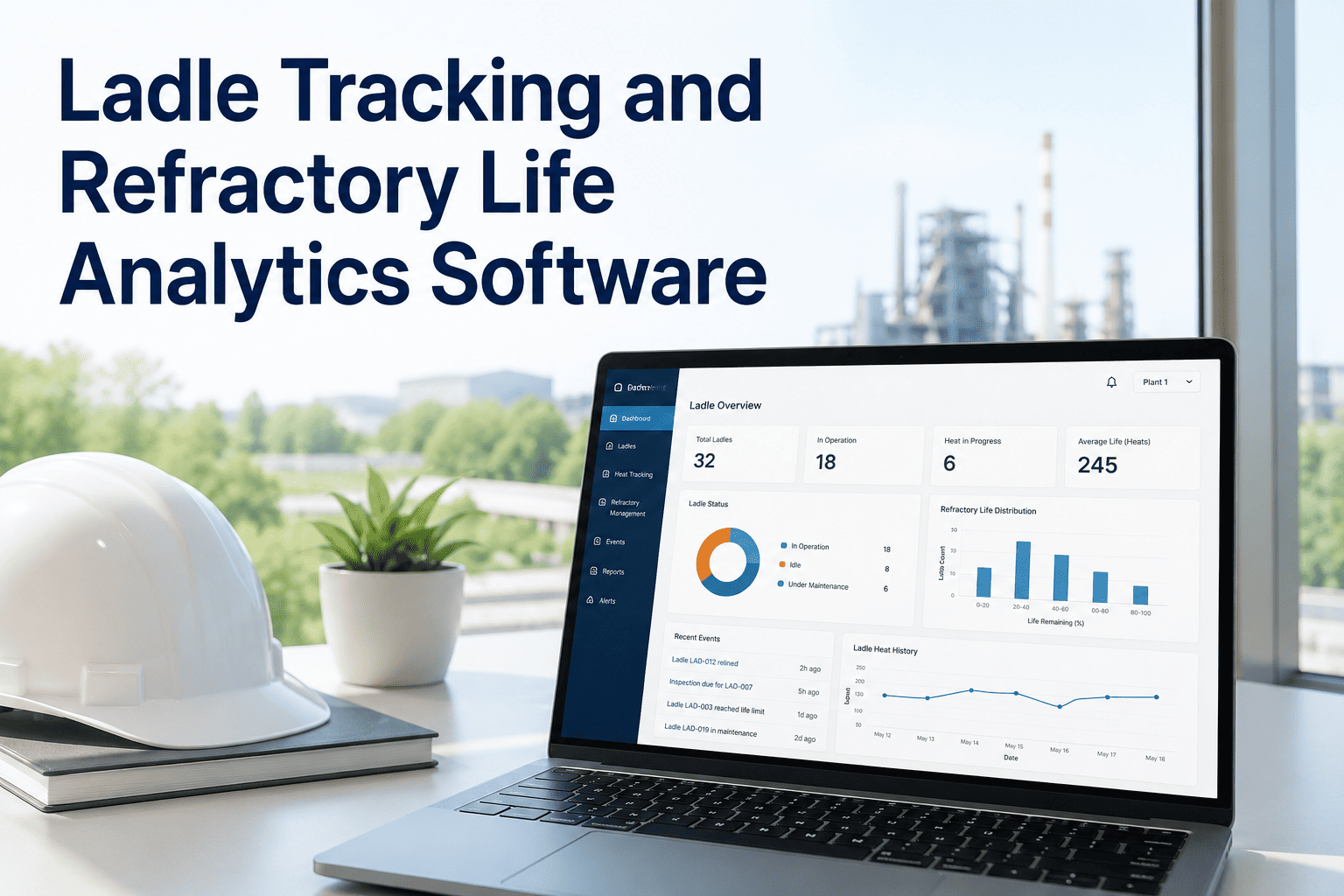
Ladle Tracking and Refractory Life Analytics for Every Vessel in the Fleet
A live digital record for every ladle — heat count by zone, refractory wear trend, and reline forecast — so campaign decisions are made on data instead of tribal memory.
30-50%
Campaign life variance between ladles in the same fleet
$15-30K
Typical cost of a single unplanned reline event
98→116
Average heats per campaign after AI wear prediction
What a Whiteboard Cannot Tell You
Managing a ladle fleet on paper logs and shift-change verbal handoffs feels manageable right up until it isn't. These are the gaps that show up again and again once a plant starts measuring instead of estimating.
01
Heat counts estimated, not measured
Zone-specific wear goes untracked until a shell hot spot forces an emergency inspection mid-campaign.
02
Refractory overconsumption
Ladles relined on fixed schedules instead of actual condition waste 2-4 kg of lining material per ton produced.
03
Breakout risk from missed thinning
A slag line worn below safe thickness without a systematic check is the leading precursor to a molten metal breakout.
04
Fleet coordination breakdowns
Two ladles reaching campaign limits in the same week can strand a caster strand without an available vessel.
Every Ladle Wears Differently, Zone by Zone
A ladle is not one refractory surface — it is several, each eroding at a different rate for a different reason. Tracking heats without separating these zones hides the one that will fail first.
Barrel Wall
Steady thermal cycling wear
Well Block & Seating
Replaced every 40-60 heats
From Ladle on Turret to Ladle on Reline
Every ladle cycles through the same eight stages. A digital record follows the vessel through each one, so nothing gets lost at shift change.
1
Refractory preparation and curing before first use
2
Preheat cycle compliance check against steel grade
3
Tapping — kinetic impact zone logged automatically
4
Secondary refining and slide gate cycle count
5
Continuous casting with live thermal profile
6
Slag dumping and shell hot-spot inspection
7
Deskulling and residual thickness measurement
8
Reline scheduling driven by predicted remaining life
An emergency reline costs far more than the material. Between lost tapping slots, contractor call-out fees, and a caster strand sitting idle, one missed campaign limit can outweigh a full year of tracking software.
Results Plants Report After Going Digital
28%
Drop in emergency reline events in the first quarter after switching from whiteboard tracking to automated heat counting.
18%
Average campaign length increase once gunning and patching decisions are driven by zone-level measurement instead of visual guesswork.
0
Cold-tap incidents reported after preheat compliance checks were enforced automatically before a ladle enters the tapping sequence.
Whiteboard Tracking vs. Digital Ladle Records
| Factor | Whiteboard / Paper Log | Digital Ladle Record |
|---|
| Heat count accuracy | Estimated by shift supervisor | Updated automatically from PLC data |
| Zone-level wear | Rarely separated by zone | Tracked independently per zone |
| Reline scheduling | Fixed heat-count average | AI-predicted remaining life |
| Preheat compliance | Manually checked, easily skipped | Enforced before tapping is allowed |
| Fleet visibility | One vessel, one binder | Entire fleet on one screen |
Frequently Asked Questions
How does ladle tracking software actually count heats per zone?
The system pulls tapping and casting cycle data directly from the plant's PLC or SAP PM records, then attributes wear to the correct zone based on process stage — kinetic impact during tapping, chemical erosion during slag contact, and thermal cycling through the full cycle. Laser thickness scans and thermal camera readings calibrate the model between physical measurements. This removes the manual step where a supervisor has to remember and log which zone took the most stress on a given heat.
Book a demo to see the zone model applied to your ladle geometry.
Can this integrate with our existing SAP PM or CMMS system?
Yes, refractory reline events, contractor hours, and material consumption are recorded against the ladle asset ID inside your existing maintenance system rather than a separate silo. Cost-per-heat and cost-per-supplier reporting is generated from the same connected data, so refractory engineers do not have to reconcile two systems at month end.
Contact support to review your current CMMS integration options.
How accurate is the predicted campaign end date?
Accuracy improves as a campaign progresses because the model recalibrates against every new physical measurement. Early in a campaign the forecast carries a wider margin, but by the time a ladle approaches its expected limit the prediction window narrows enough to plan a reline outage weeks in advance instead of reacting to a sudden shell temperature spike. This gives planners a realistic lead time for scheduling contractor crews and material delivery.
Book a demo to see forecast accuracy on your own historical heat data.
Does this work across BOF, EAF, ladle, and tundish vessels together?
A unified platform can track campaign life across every lined vessel type in the steelmaking route, since each has its own wear model and heat-count trigger but shares the same underlying tracking logic. Production planners see the full fleet picture — every ladle, tundish, and furnace lining status on one screen — instead of receiving disconnected per-unit alerts that make coordinating relines across the fleet unnecessarily difficult.
Contact support for a walkthrough of multi-vessel tracking.
What happens if a ladle approaches its refractory limit mid-shift?
The system flags the ladle before it re-enters the tapping rotation and surfaces the alert to both the shift supervisor and the maintenance planner simultaneously, so a replacement vessel can be staged rather than discovered as a shortage at the worst possible moment. This same threshold logic is what prevents a cold or under-preheated ladle from entering service in the first place.
Book a demo to see the alert workflow in action.
Know Every Ladle's Real Condition, Not Its Estimated One
Zone-level wear tracking, AI reline forecasts, and fleet-wide visibility that turns emergency relinings into scheduled maintenance windows.