A pump station failure rarely happens without warning — bearing wear, seal degradation, and cavitation all announce themselves through vibration and temperature changes weeks before a shutdown, but only if something is actually listening. Most pipeline operators still rely on scheduled inspection rounds that check a pump once a week or once a month, which means the earliest and most useful warning signs are gone long before anyone walks the site again. Continuous condition monitoring closes that gap by watching every pump around the clock, and the difference shows up directly in avoided downtime, so book a demo to see it running on your pump fleet.
Oil & Gas · Condition Monitoring
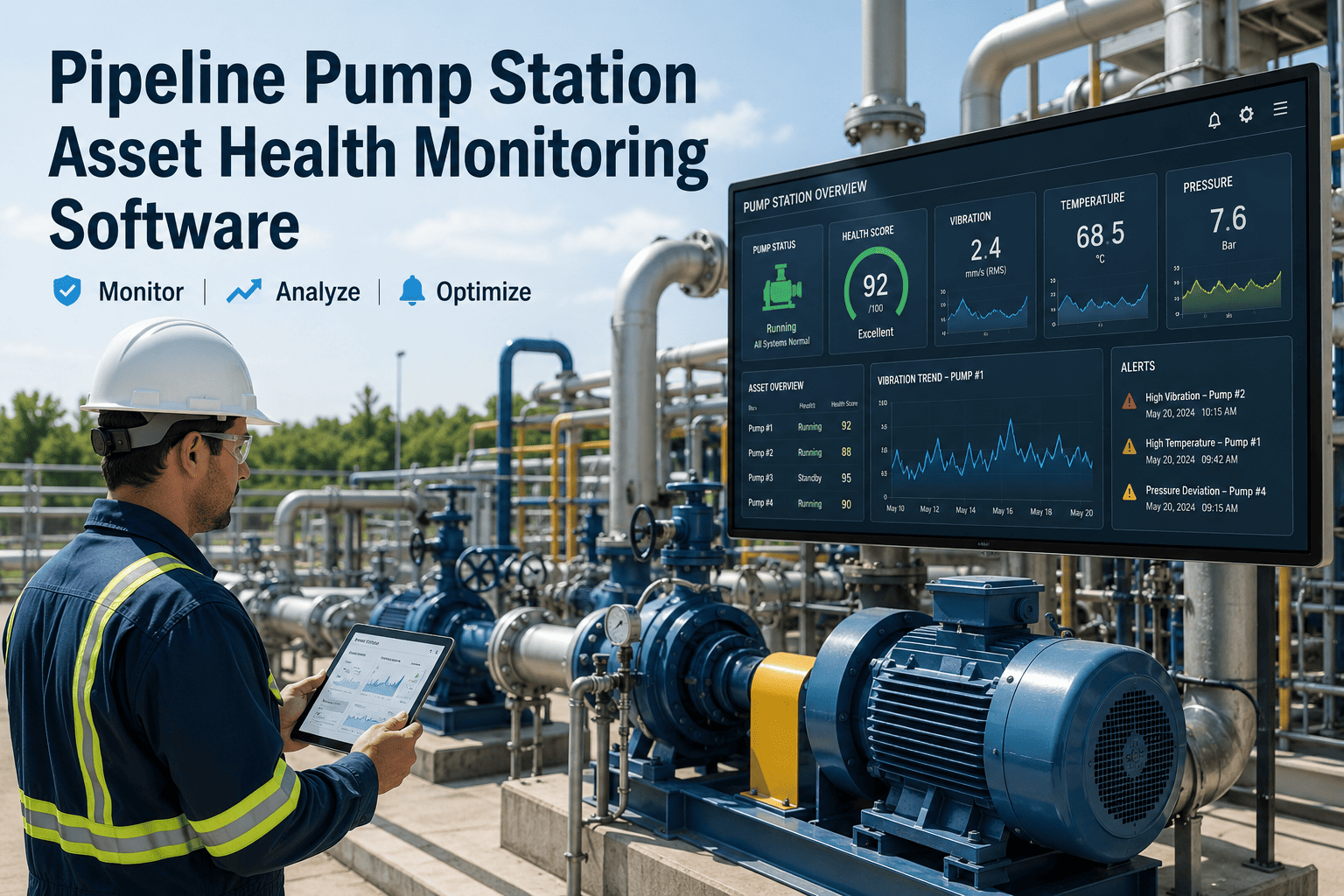
Pipeline Pump Station Asset Health Monitoring Software
Continuous vibration, temperature, and current monitoring across every pump in the station — with alerts weeks before a failure would otherwise force an emergency shutdown.
The Failure Modes That Condition Monitoring Catches Early
Each of these failure modes produces a detectable signature well before the pump actually trips, if the right parameters are being watched continuously.
Bearing Wear
Vibration frequency shifts appear weeks before a bearing seizes, giving time to schedule a planned replacement.
Seal Degradation
Rising case temperature and pressure fluctuation patterns flag a failing mechanical seal before product leaks.
Cavitation
Distinct high-frequency vibration signatures reveal cavitation damage happening inside the pump long before an audible change.
Impeller Degradation
Gradual current draw increase against a stable flow rate is an early sign of impeller wear or fouling.
What Gets Monitored Continuously
Vibration Amplitude & Frequency
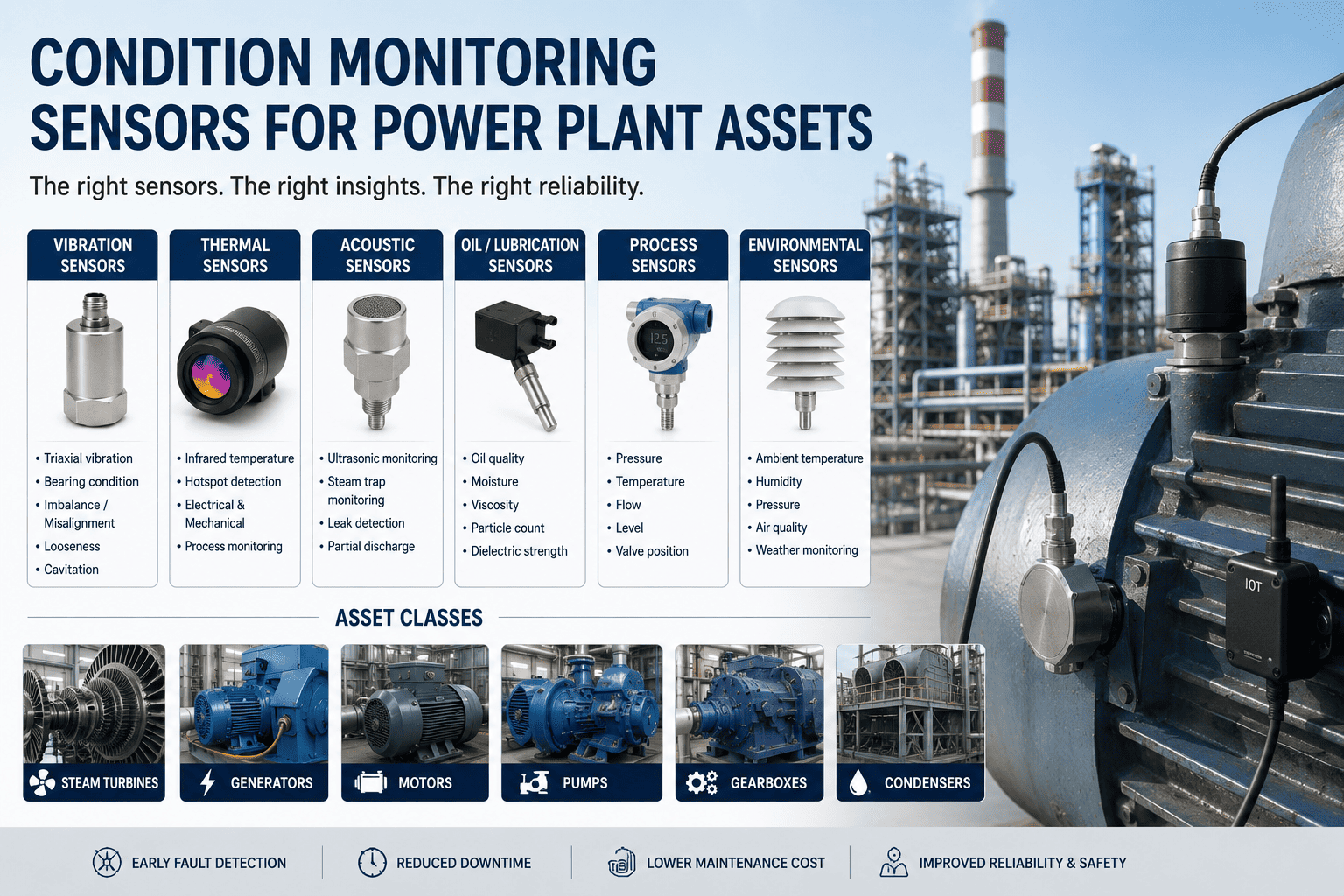
Triaxial sensors on bearing housings catch the earliest mechanical wear signatures
Bearing & Case Temperature
Thermal trending flags friction and lubrication issues before a hot alarm trips
Motor Current Draw
Baseline deviation reveals mechanical load changes without any new sensors on the pump itself
Pressure & Flow Rate
Correlated together to distinguish a genuine pump issue from an upstream or downstream process change
For every dollar spent on vibration sensors and analytics, plants have reported recovering roughly twelve dollars in avoided downtime costs. Early detection also means sourcing replacement parts at standard pricing instead of emergency rates.
From First Signal to Scheduled Repair
Week 1
Vibration signature begins drifting from established baseline
Week 3
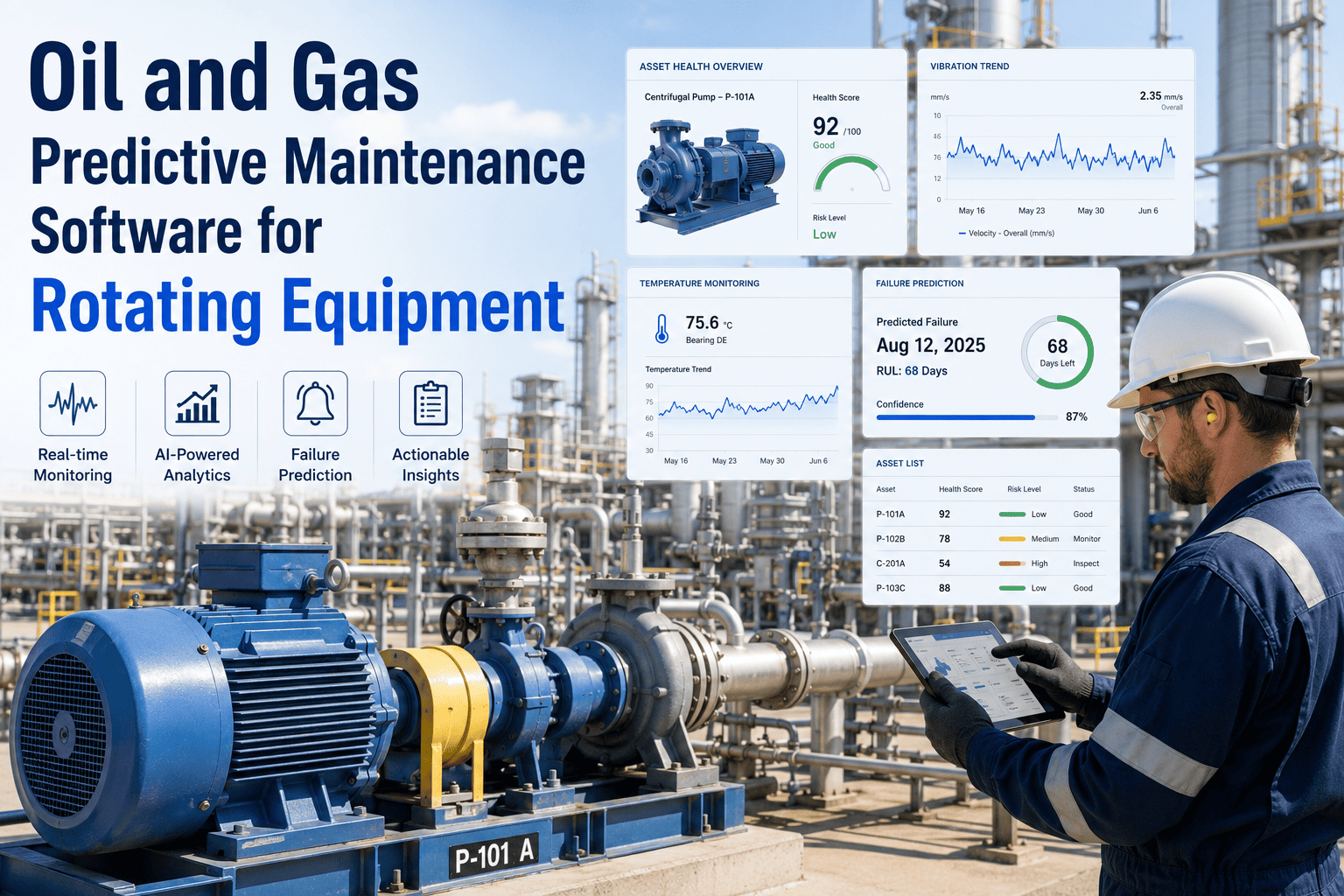
AI model flags the trend and alerts the maintenance planner
Week 5
Repair scheduled during a planned window, parts ordered at standard cost
Week 6
Pump serviced before failure — zero unplanned downtime incurred
Scheduled Inspection vs. Continuous Condition Monitoring
| Factor | Scheduled Inspection | Continuous Monitoring |
|---|
| Detection window | Only as frequent as the inspection round | Real time, every hour of every day |
| Lead time before failure | Often too late for planned repair | Typically four to eight weeks |
| Parts procurement | Emergency rates, premium pricing | Standard pricing, planned lead time |
| Root cause visibility | Snapshot at time of inspection only | Full trend history for every pump |
Frequently Asked Questions
Do we need to install new sensors on every pump in the station?
Most pump stations already have some combination of vibration monitors, RTD temperature probes, and motor current sensors in place, and the platform is designed to connect to that existing instrumentation rather than requiring a full new sensor deployment. Where genuine coverage gaps exist, additional sensors are recommended only for the specific pumps or parameters that matter most for that station's failure history.
Book a demo to review your current instrumentation against monitoring requirements.
How does the system tell the difference between a process change and an actual pump problem?
The AI model learns a normal operating envelope for each pump from historical data across vibration, temperature, current, and flow together, rather than judging any single parameter in isolation. A flow rate change driven by an upstream valve adjustment looks very different in the combined signature than a flow change caused by impeller wear, which is what allows the system to avoid raising a false alarm for routine operational changes.
Contact support to see the baseline model applied to your pump fleet.
How much lead time does condition monitoring typically provide before a failure?
Lead time varies by failure mode, but bearing degradation and cavitation damage commonly show detectable signatures four to eight weeks before they would otherwise cause a trip, which is enough time to schedule a repair during a planned maintenance window and order parts at standard pricing instead of emergency rates. Seal degradation can sometimes surface even earlier through gradual temperature trending.
Book a demo to see typical lead times for the failure modes most relevant to your station.
Can this connect to our existing SCADA or DCS historian?
Yes, the platform is built to ingest data over the existing plant control network from SCADA, DCS historians, and standalone vibration monitoring systems without requiring new field wiring or internet connectivity at remote pump stations. This lets stations spread across long pipeline routes be brought onto a single monitoring platform using data that is already being collected.
Contact support to review integration with your current SCADA and historian setup.
What does an alert actually look like when a problem is detected?
An alert names the specific pump, the parameter that triggered it, and the trend that led to the flag — for example a bearing frequency shift trending upward over a defined period — and links directly back to the underlying sensor data so the engineer reviewing it can verify the finding before scheduling work. This is designed to give maintenance teams enough context to act with confidence rather than just a generic warning.
Book a demo to see a sample alert and its supporting data.
Catch Pump Failures Weeks Before They Happen
Continuous condition monitoring across your entire pump station fleet, connected to the sensors and SCADA you already have.