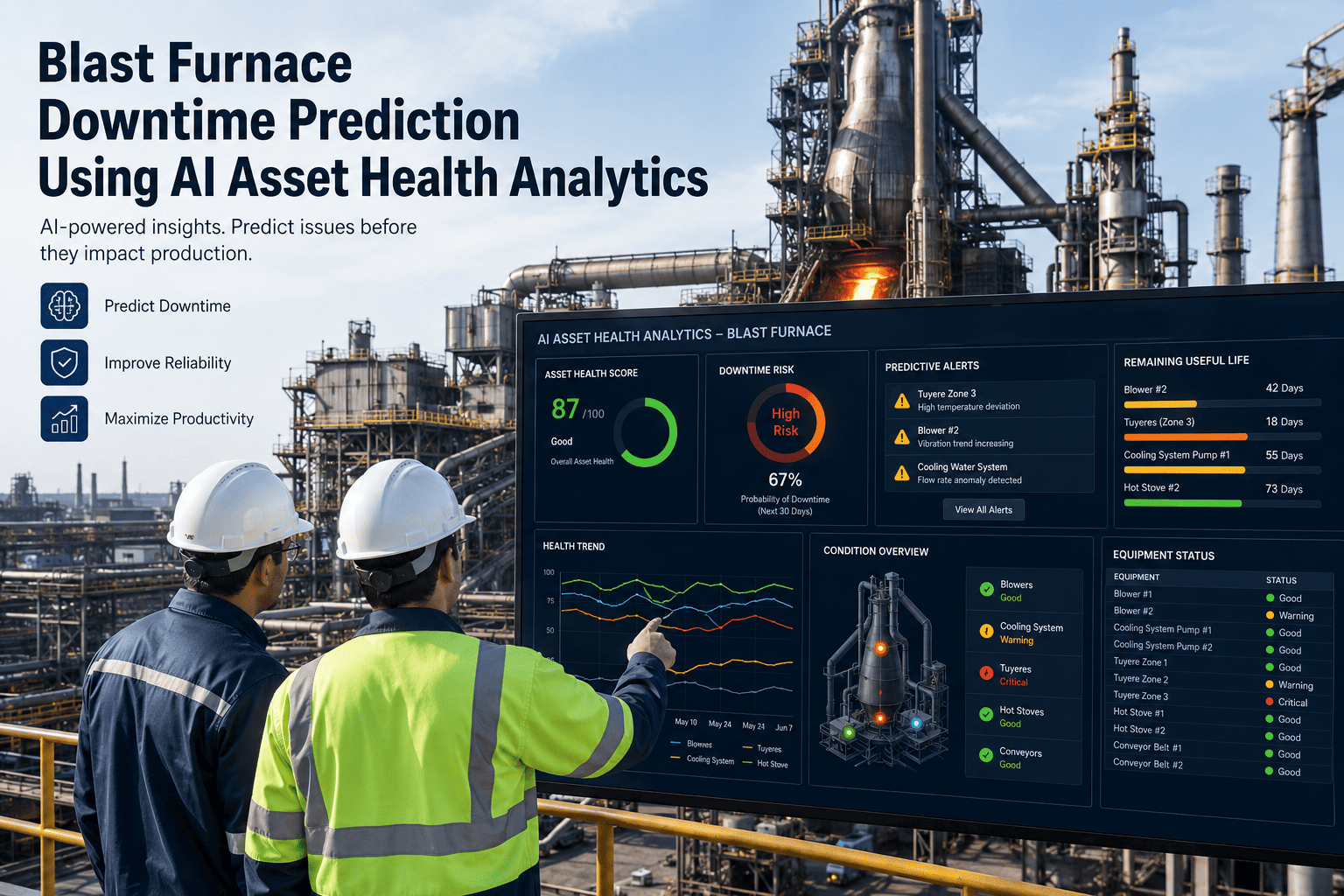
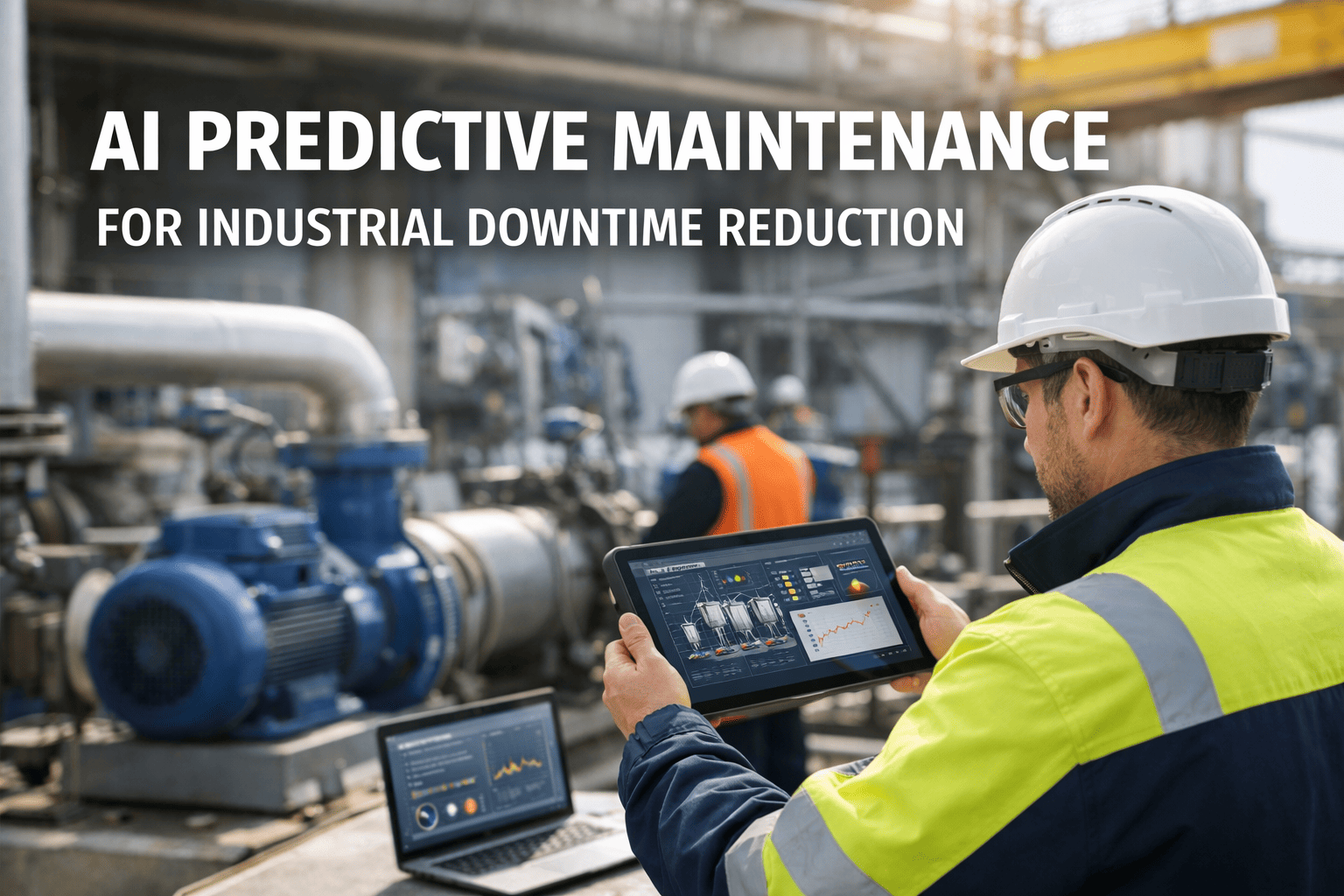
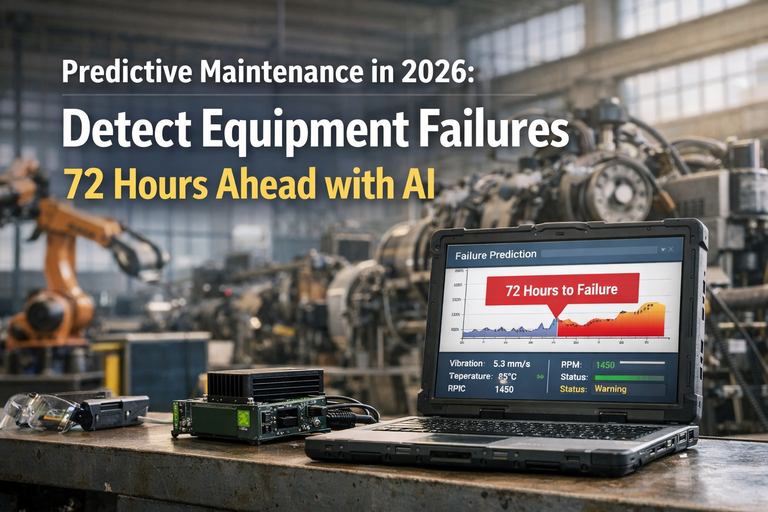
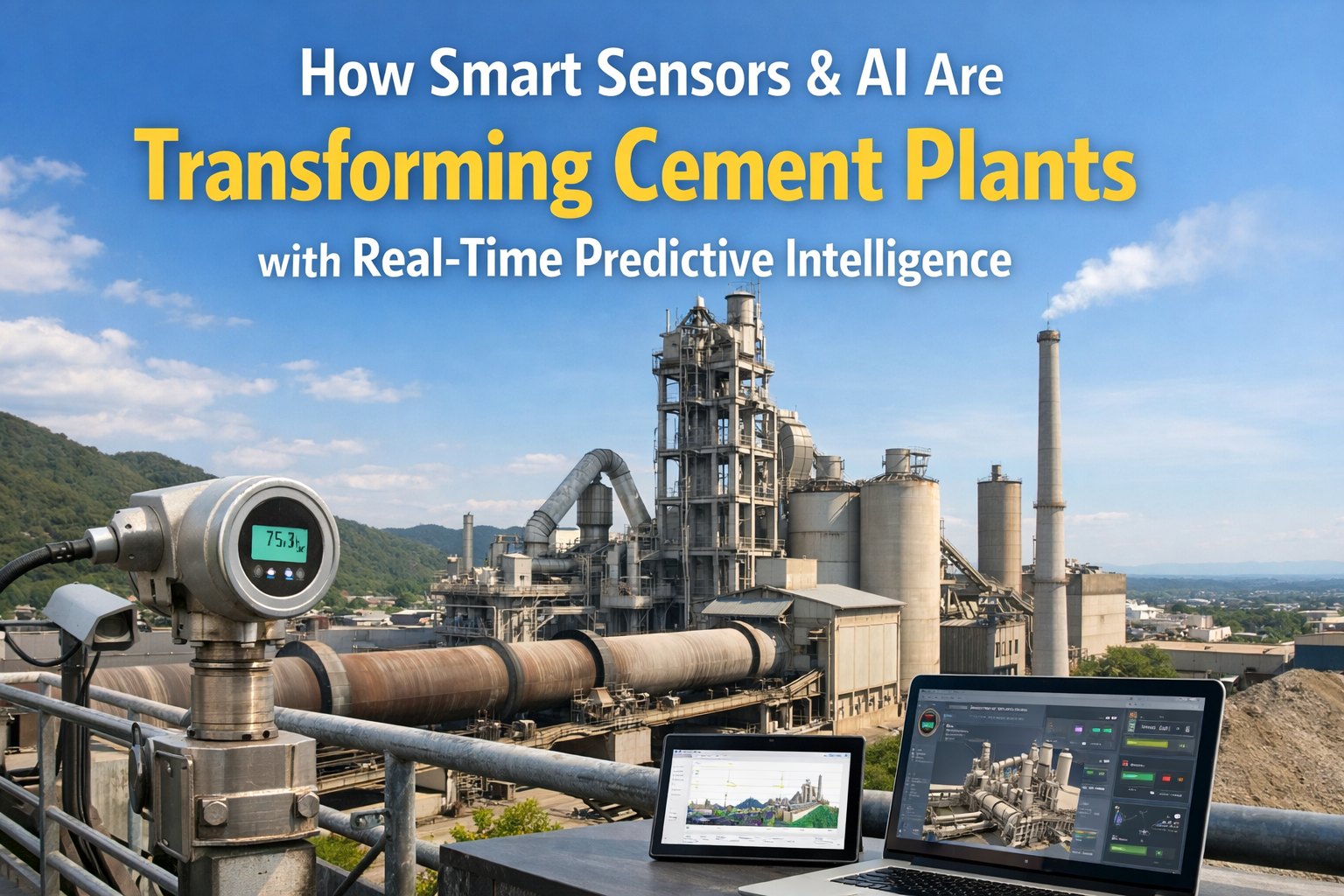
Every 37 seconds, an industrial machine somewhere fails without warning. Across U.S. manufacturing alone, unplanned downtime drains $50 billion per year — and equipment failure accounts for 80% of those stops. The cruel irony? Most of these failures announce themselves days or even weeks in advance through subtle shifts in vibration, temperature, and acoustic signatures. The problem was never the machines. It was our inability to listen. AI-based condition monitoring changes that equation permanently — transforming raw sensor streams into real-time health intelligence that catches failure signatures 48 to 96 hours before a forced stop. Here is how the technology works, what results leading manufacturers are achieving and how your plant can deploy it in weeks, not years.
AI-Powered Reliability
AI-Based Condition Monitoring for Industrial Equipment Reliability
Monitor vibration, temperature, acoustics, and pressure in real time — detect anomalies before they become failures — and turn every machine into a self-reporting asset.
$50B
Annual cost of unplanned downtime in U.S. manufacturing
80%
Of unplanned downtime caused by equipment failure
35%
Downtime reduction with condition monitoring systems
$6.8B
Condition monitoring market projected by 2034, 9.7% CAGR
Sources: Aberdeen Group · Siemens True Cost of Downtime · Fortune Business Insights · ZipDo Research
The Real Cost of Running Blind
Most manufacturers know downtime is expensive. Few realize how expensive. A Fluke Corporation survey of 600 manufacturers found that 61% experienced unplanned downtime in the past year, with weekly capital impact reaching up to $852 million across the sector. The average manufacturer loses $260,000 per hour of unplanned stoppage — and in automotive, that figure climbs to $3 million per hour. Yet over 80% of companies still cannot accurately calculate their true downtime costs. The invisible losses — scrapped materials, overtime labor, expedited parts, missed deliveries, eroded customer trust — typically run 3 to 5 times higher than visible repair costs.
Hidden Costs (3–5x Larger)
Missed Delivery Penalties
What Is AI-Based Condition Monitoring?
Condition monitoring is the continuous measurement of equipment health parameters — vibration, temperature, pressure, acoustics, oil quality, and electrical signals — to detect changes that indicate developing faults. Traditional condition monitoring relied on periodic manual readings and fixed threshold alarms. AI transforms this from a detection system into a prediction system. Machine learning models trained on thousands of failure patterns can identify anomaly signatures that human operators and rule-based systems miss entirely — catching degradation 48 to 96 hours before it causes a forced stop.
Traditional Approach
Manual periodic inspections
Fixed threshold alarms
Reactive — detects failure after it starts
Siloed data per machine
Scheduled maintenance (often unnecessary)
Requires expert interpretation
AI-Powered Approach
Continuous real-time streaming
Adaptive ML anomaly detection
Predictive — flags failure 48–96 hrs ahead
Cross-asset pattern correlation
Condition-based maintenance (only when needed)
Automated root-cause analysis
The 5 Core Monitoring Techniques
AI-based condition monitoring is not a single technology — it is a multi-modal sensing system where each technique captures a different failure signature. The most effective implementations combine multiple techniques to create overlapping detection coverage, so no failure mode goes undetected.
01
Vibration Analysis
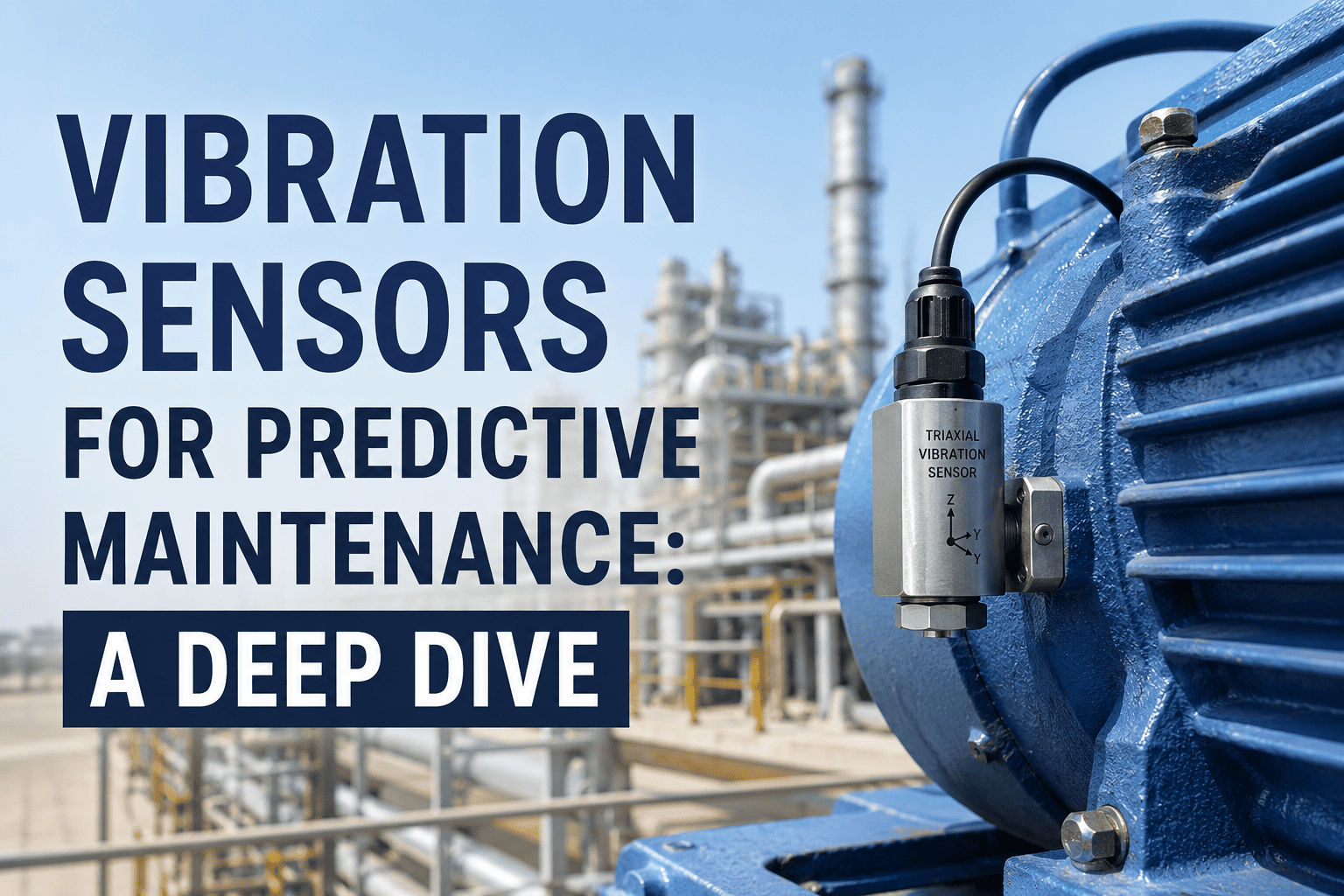
The dominant technique in condition monitoring, leading the market globally. Accelerometers and velocity sensors capture vibration signatures at frequencies from 1 Hz to 20 kHz — detecting bearing wear, shaft misalignment, rotor imbalance, gear tooth damage, and structural looseness. AI models learn each machine's unique vibration fingerprint and flag deviations invisible to threshold-based systems.
Detects 90% of rotating equipment failures
02
Thermal Monitoring
Infrared sensors and thermal cameras track surface and ambient temperatures across motors, transformers, switchgear, heat exchangers, and furnaces. AI detects abnormal heat patterns — hot spots from electrical resistance, friction from bearing degradation, insulation breakdown — and correlates thermal anomalies with vibration and load data for higher diagnostic accuracy.
Catches electrical and friction faults early
03
Oil & Lubricant Analysis
Online particle counters and viscosity sensors analyze oil condition in real time — detecting metal particles from gear wear, water contamination, oxidation products, and lubricant degradation. AI tracks wear particle trends over time, predicting component life remaining and triggering oil changes only when condition warrants, not by calendar schedule.
Extends lubricant life 30–50%
04
Ultrasonic & Acoustic Emission
High-frequency acoustic sensors detect sounds beyond human hearing — compressed air leaks, steam trap failures, partial discharge in electrical systems, and early-stage bearing defects. AI acoustic monitoring is the fastest-growing technique in the market, with a projected CAGR of 42.7% through 2032, as it catches faults that other methods miss in their earliest stages.
Fastest-growing monitoring technique globally
05
Motor Current & Electrical Signature Analysis
Current and voltage sensors on motor feeds detect electrical anomalies — stator winding faults, rotor bar defects, power quality issues, and load imbalances — without requiring physical access to the equipment. AI correlates electrical signatures with mechanical condition to provide a complete health picture of motor-driven assets.
Non-invasive monitoring for all motor-driven assets
Want to know which monitoring techniques match your equipment? Book a free sensor strategy session.
How AI Condition Monitoring Works: The Intelligence Loop
Raw sensor data without intelligence is just noise. The value of AI condition monitoring lies in the closed loop — from sensor to insight to action to outcome — that operates continuously without human intervention. Here is how each stage works.
1
Sense
IoT sensors stream vibration, temperature, pressure, acoustics, and electrical data at sub-second intervals from every monitored asset to a unified data lake.
2
Analyze
ML models compare real-time readings against each asset's learned baseline — detecting pattern shifts that indicate developing faults invisible to fixed thresholds.
3
Predict
Predictive algorithms estimate remaining useful life, classify fault type, and rank severity — giving maintenance teams a prioritized action queue, not a flood of alerts.
4
Act
The system auto-generates condition-based work orders in your CMMS, schedules interventions during planned windows, and orders parts before they are needed.
5
Learn
Every intervention outcome feeds back into the model — confirming predictions, refining baselines, and improving accuracy with every production cycle.
Results That Speak: AI Condition Monitoring by the Numbers
The ROI of AI condition monitoring is not theoretical — it is documented across thousands of implementations worldwide. Here is what manufacturers are achieving right now.
20–50%
Downtime Reduction
Predictive alerts convert unplanned stops into scheduled maintenance
10–40%
Maintenance Cost Savings
Eliminate unnecessary scheduled maintenance and emergency premiums
95%
Positive ROI Reported
Nearly all predictive maintenance adopters report positive return
More than 1 in 4 manufacturers achieve full payback within 12 months
10x
ROI on AI Maintenance
U.S. DOE documented tenfold return from AI-driven predictive programs
Sources: U.S. Dept of Energy · Deloitte Smart Manufacturing · Siemens True Cost of Downtime · Cervicorn Insights
Industries Where AI Condition Monitoring Delivers the Highest Impact
While every manufacturing environment benefits from condition monitoring, certain industries face uniquely high consequences from unplanned failure — making AI monitoring not just valuable, but mission-critical.
Oil & Gas
Refinery downtime costs have doubled in recent years, with single facility losses reaching $84 million annually. AI monitoring of pumps, compressors, and turbines prevents catastrophic failures in hazardous environments.
Automotive
Downtime costs up to $3 million per hour on high-volume lines. Condition monitoring on robotic welders, presses, and conveyors keeps just-in-time production on schedule.
Power Generation
Turbine and generator failures can take weeks to repair. AI vibration and thermal monitoring extends turbine life by years while preventing grid-level disruptions.
Steel & Metals
Furnace shutdowns and rolling mill failures cause catastrophic production losses. AI monitors bearing health, roll eccentricity, and cooling system integrity continuously.
Food & Beverage
Equipment failures risk product contamination and regulatory violations. Condition monitoring ensures HACCP compliance while preventing spoilage from unplanned stops.
Mining
Remote locations make emergency repairs extremely expensive. AI predictive monitoring of crushers, mills, and haul trucks enables planned fly-in maintenance cycles.
The Market Is Moving Fast
The global condition monitoring market was valued at $3 billion in 2025 and is projected to reach $6.8 billion by 2034 at a 9.7% CAGR. Meanwhile, the broader AI-driven predictive maintenance market is growing at 39.5% CAGR — from $1.77 billion in 2025 to $19.27 billion by 2032. Manufacturers who delay adoption are not standing still — they are falling behind competitors who are already capturing these returns.
39.5%
CAGR for AI predictive maintenance through 2032
87%
Of manufacturers now investing in predictive maintenance
Getting Started: From Pilot to Full-Scale in 8 Weeks
The fastest path to results is not a multi-year digital transformation program. It is a focused pilot on your most critical assets that proves ROI in weeks, then scales based on demonstrated savings.
Identify your top 10 failure-prone assets by downtime history. Deploy wireless IoT sensors — vibration, temperature, current — on each. Connect to iFactory's cloud analytics platform. No PLC integration required for initial deployment.
AI models learn each asset's normal operating signatures across all load conditions, shifts, and ambient environments. The system builds unique baselines per machine — not generic thresholds — so anomaly detection adapts to your specific equipment.
Activate predictive alert engine. Connect to your existing CMMS via REST API — iFactory auto-generates condition-based work orders when alerts fire. Your maintenance team keeps using the same interface they know.
Measure downtime prevented, costs avoided, and maintenance efficiency gains against your pre-deployment baseline. Present board-ready ROI analysis. Decide which additional asset classes to monitor next based on proven returns.
Ready to run a no-risk pilot on your most critical assets? Schedule your free equipment assessment.
Frequently Asked Questions
What is AI-based condition monitoring and how does it differ from traditional monitoring?
AI-based condition monitoring uses machine learning algorithms to analyze continuous sensor data streams — vibration, temperature, acoustics, oil quality — and detect developing faults before they cause failures. Unlike traditional monitoring that relies on fixed thresholds and periodic manual readings, AI learns each machine's unique operating signature and identifies subtle pattern shifts that precede failure by 48 to 96 hours.
Book a demo to see it in action.
How much does unplanned downtime actually cost manufacturers?
The average cost is $260,000 per hour across all manufacturing sectors. In automotive, it reaches $3 million per hour. Across U.S. manufacturing, unplanned downtime costs an estimated $50 billion annually. The hidden costs — overtime, scrapped materials, expedited parts, missed deliveries — typically run 3 to 5 times higher than visible repair expenses.
Which equipment types benefit most from condition monitoring?
Rotating equipment delivers the highest ROI: motors, pumps, compressors, turbines, gearboxes, fans, and generators. Vibration analysis alone detects 90% of rotating equipment failures. Beyond rotating assets, condition monitoring is highly effective for heat exchangers, transformers, hydraulic systems, conveyor systems, and any critical asset where unplanned failure has high consequences.
How long does it take to see ROI from an AI condition monitoring system?
Most manufacturers see measurable downtime reduction within the first 30 days of full activation. Across the industry, 27% of adopters achieve full payback within 12 months, and 95% report positive ROI overall. The U.S. Department of Energy has documented tenfold returns from AI-driven predictive maintenance programs.
Schedule a demo to model your specific ROI.
Does AI condition monitoring integrate with our existing CMMS?
Yes. iFactory connects to your existing CMMS — SAP PM, Maximo, eMaint, Fiix, or any system with REST API support — and auto-generates condition-based work orders directly when a predictive alert fires. Your maintenance team continues using the same CMMS interface they already know. iFactory adds the predictive intelligence layer that traditional CMMS cannot provide on its own.
Stop Reacting. Start Predicting.
Your Equipment Is Already Telling You What's About to Fail
iFactory deploys AI-powered condition monitoring alongside your existing CMMS and IoT infrastructure — turning raw sensor data into predictive intelligence that prevents failures, cuts maintenance costs, and extends asset life from day one.
48–96h
Early warning before forced equipment stops
8 Weeks
From sensor deployment to full predictive operation
10x
Documented ROI from AI predictive maintenance (U.S. DOE)
Zero
PLC integration required for initial deployment