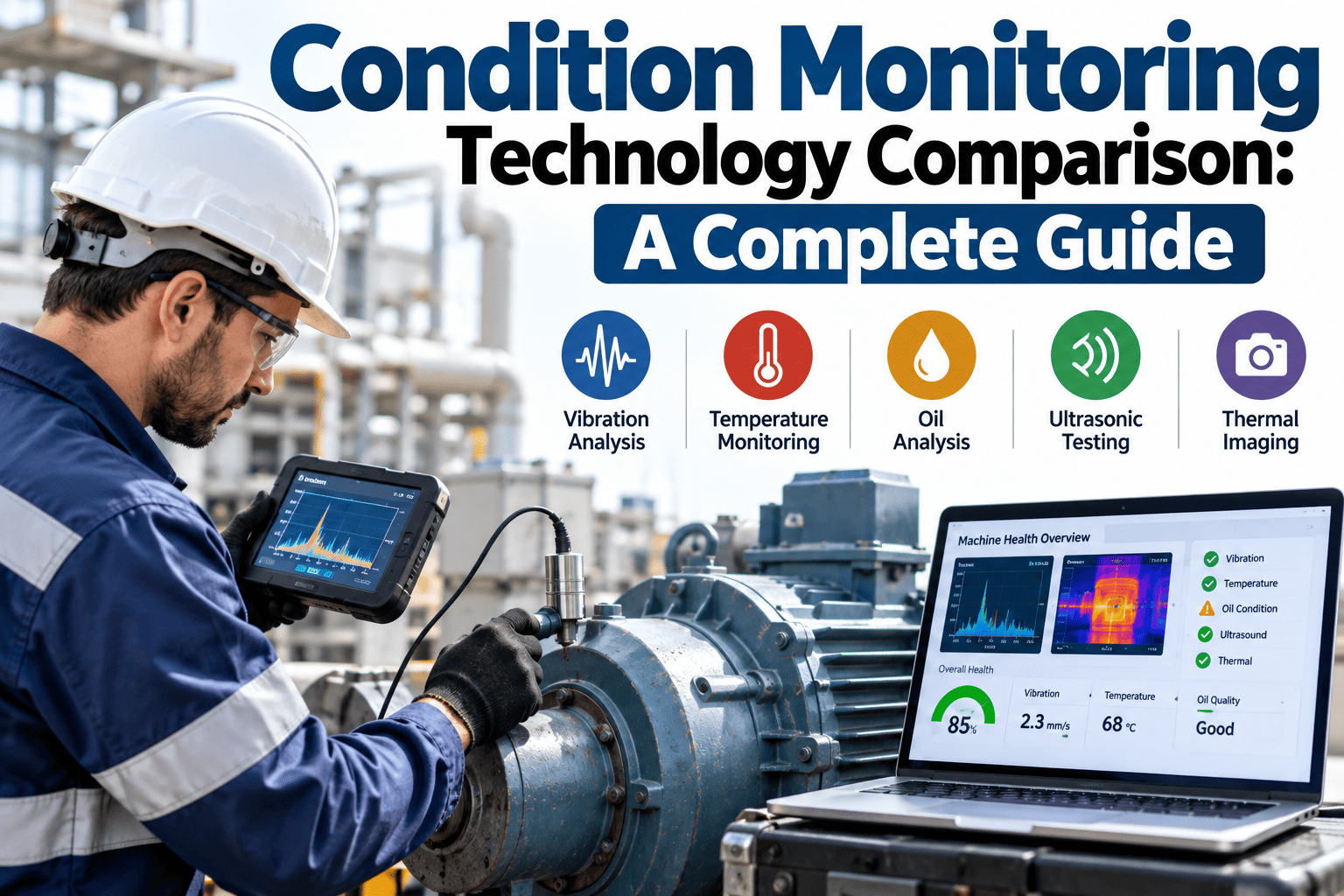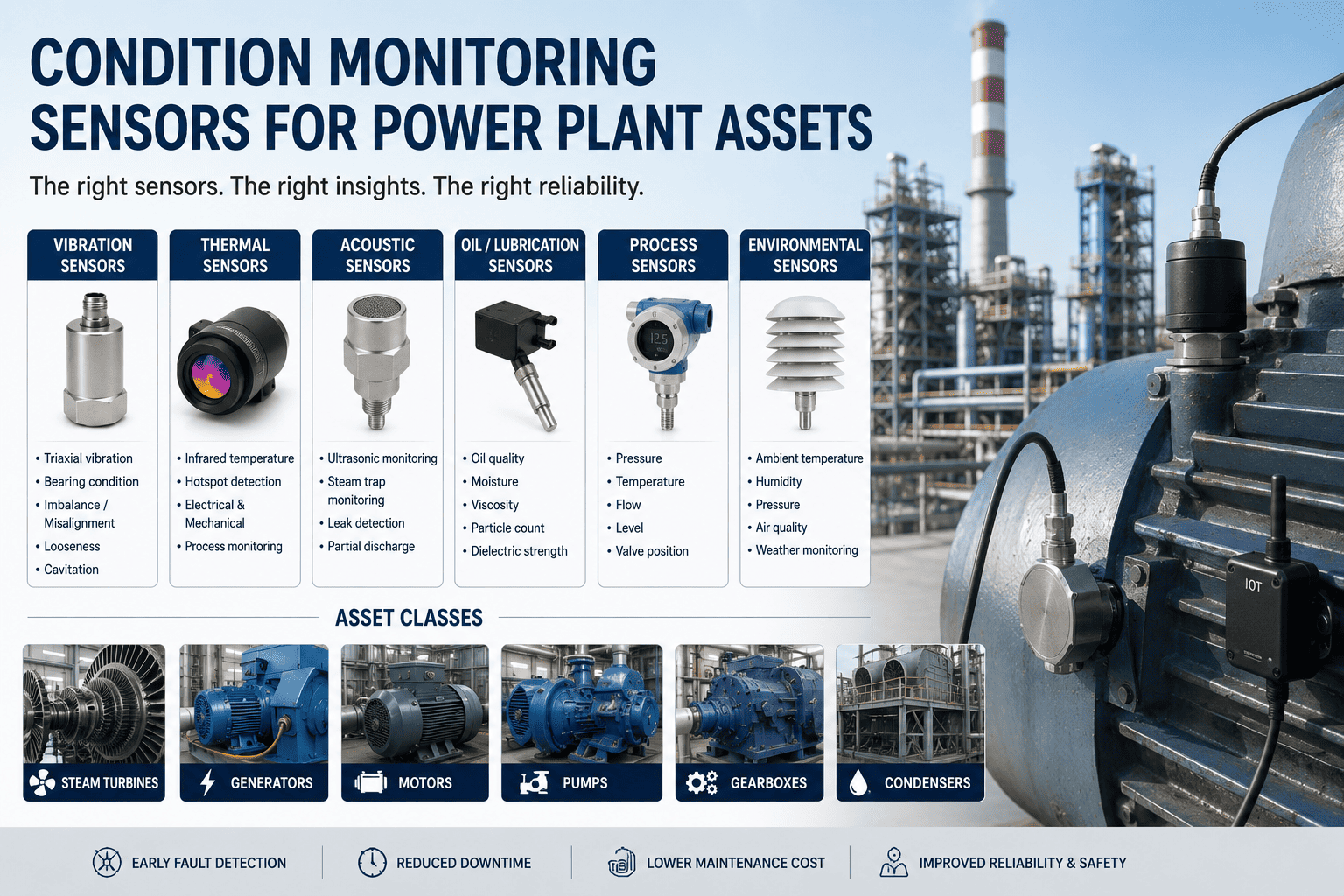
Every hour a critical motor runs unmonitored, you are gambling with downtime that costs far more than the sensors that could have prevented it. Manufacturers relying on time-based maintenance schedules lose an estimated 20–30% of asset lifespan to either premature replacement,or catastrophic failure — two outcomes that triaxial vibration monitoring eliminates with surgical precision. The question is not whether you can afford condition monitoring. It is whether you can afford to operate without it.
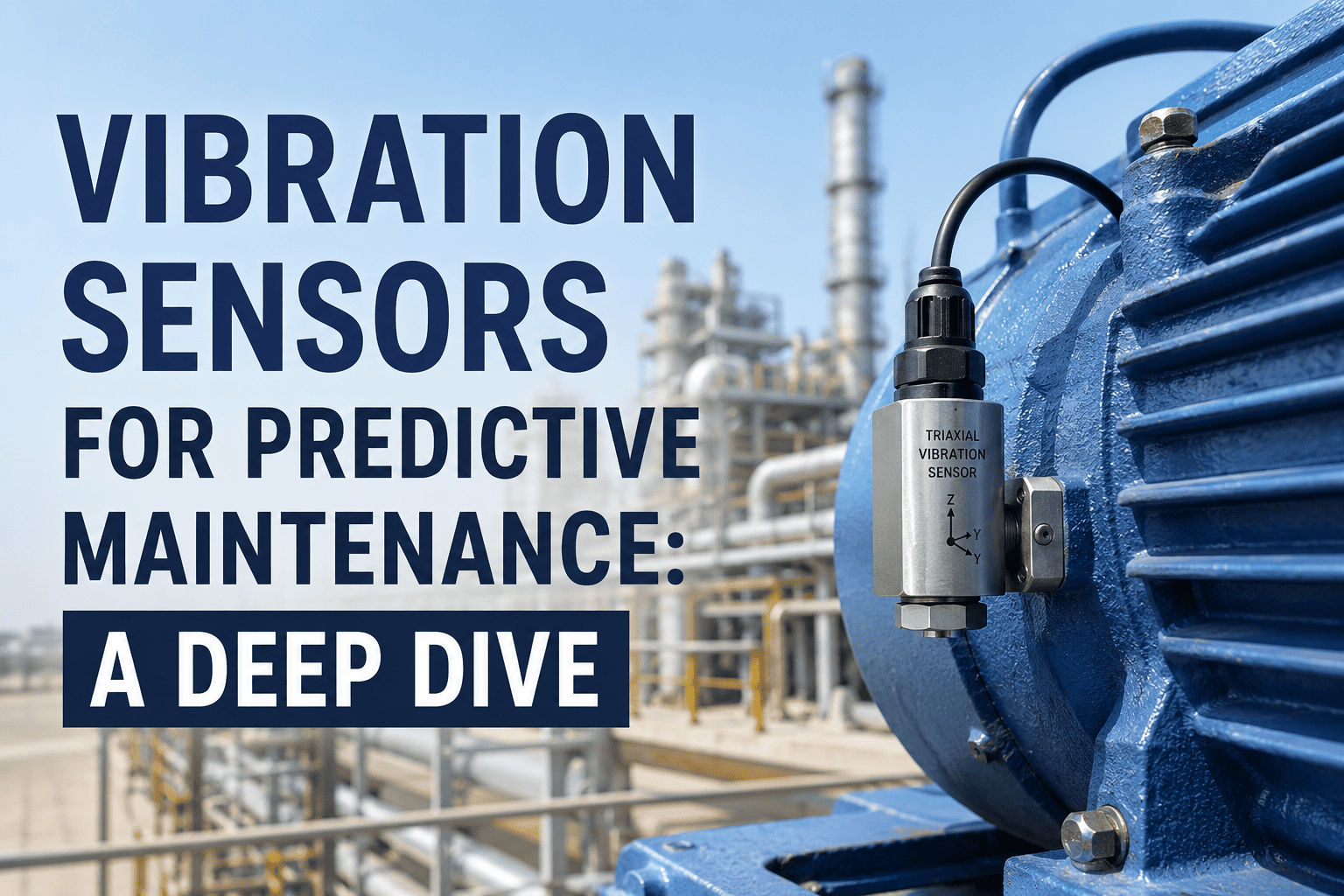
Vibration Sensors for Predictive Maintenance: A Deep Dive
Why Vibration Is the Leading Indicator Maintenance Teams Miss
Rotating equipment — motors, pumps, compressors, fans, gearboxes — fails in predictable ways. Bearing defects, misalignment, imbalance, and looseness all generate characteristic vibration signatures weeks before they produce heat, noise, or visible damage. Thermal cameras catch problems in hours. Vibration sensors catch them in weeks. That time advantage is the difference between a scheduled 2-hour parts swap and an emergency 48-hour shutdown.
The challenge has never been the physics. It has been the cost and complexity of instrumentation. Industrial vibration sensors now cost $50–100 per monitoring point. Wireless installation requires no plant shutdown. AI platforms like iFactory ingest the raw waveforms, run FFT decomposition automatically, and surface actionable alerts — no vibration analyst required on staff.
How Triaxial Vibration Sensors Work
A triaxial accelerometer measures vibration simultaneously across three orthogonal axes — X (radial), Y (axial), and Z (tangential). Each axis reveals different fault types. Radial vibration identifies bearing outer-race defects and rotor imbalance. Axial vibration exposes misalignment and thrust bearing wear. Tangential data captures looseness and resonance conditions. A single-axis sensor misses the faults that triaxial sensors catch — and the faults it misses are often the most expensive ones.
FFT Analysis: What the Frequency Spectrum Actually Tells You
Time-domain vibration data — a waveform plot — shows you that something is wrong. Frequency-domain data from FFT analysis shows you what is wrong and where. Each mechanical fault produces energy at predictable frequencies calculated from shaft speed and bearing geometry. Bearing outer-race defects appear at BPFO (Ball Pass Frequency, Outer Race). Inner-race faults appear at BPFI. Gearmesh faults appear at multiples of the tooth-pass frequency. When iFactory's AI detects an emerging spectral peak at a known defect frequency, it does not just alert you — it tells you which component is degrading and projects remaining useful life.
| Fault Type | Frequency Indicator | Axis | Lead Time |
|---|---|---|---|
| Bearing Outer Race | BPFO and harmonics | Radial (X) | 3–6 weeks |
| Bearing Inner Race | BPFI and sidebands | Radial (X) | 2–4 weeks |
| Rotor Imbalance | 1× running speed | Radial (X, Z) | 4–8 weeks |
| Shaft Misalignment | 2× running speed | Axial (Y) | 4–10 weeks |
| Mechanical Looseness | 0.5×, 1×, 2× and harmonics | All axes | 1–3 weeks |
| Gearmesh Fault | Tooth-pass frequency multiples | Radial (X) | 2–5 weeks |
Legacy vs. Modern: The Maintenance Gap That's Costing You
The table below reflects reality for most manufacturing facilities today — not edge cases. If your maintenance programme looks like the left column, your competitors using condition-based monitoring are operating with a structural cost advantage you cannot close with labour or scheduling alone.
The Business Impact: Three Dimensions of Value
- Maintenance planners shift from reactive dispatch to proactive scheduling
- AI-generated work orders include fault type, parts list, and priority level
- Technicians arrive with the right tools and components on the first visit
- CMMS integration eliminates manual work order creation
- Operator rounds reduced — sensors monitor continuously between checks
- Emergency labour premiums eliminated — all work executed at planned rates
- Unnecessary preventive replacements reduced by 30–40%
- Expedited parts freight costs drop to near zero
- Secondary damage repair costs eliminated — faults caught before cascade
- Vibration analyst headcount not required — AI provides expert-level analysis
- OEE improvements of 8–15% typical in first year of deployment
- Production throughput increases as unplanned stoppages disappear
- Asset lifespan extended 20–30% through optimised maintenance timing
- CAPEX deferred — data-backed replacement decisions replace gut feel
- ESG reporting enhanced with energy-per-unit production metrics
Sensor Mounting: Where You Place It Determines What You Detect
The most sophisticated vibration sensor delivers inaccurate data if mounted incorrectly. Stud mounting is the gold standard — it delivers the highest frequency response and the cleanest signal. Magnetic mounting is acceptable for surveys and portable instruments but introduces resonances above 1,000 Hz that corrupt high-frequency bearing defect analysis. Adhesive mounting is a field expedient only. For permanent condition monitoring, stud mount on a flat, clean, unpainted surface as close to the bearing housing as the geometry allows. Every millimetre of structural path between sensor and bearing is signal the platform cannot recover.
ROI Calculation: What the Numbers Look Like for Your Facility
The ROI of vibration monitoring is not abstract — it is calculable from your own maintenance records. Take your three most expensive unplanned failures from the last 24 months. Add the emergency labour, expedited parts, and lost production revenue for each event. That total is your annual exposure. A single avoided failure from a $100 sensor typically delivers 50–200× return on the sensor investment. At facility scale, the economics become transformative.
iFactory IoT Sensor Integration: What Sets It Apart
Most vibration monitoring platforms stop at data collection. iFactory's IoT Sensor Integration layer connects raw triaxial accelerometer data to an AI engine that learns each asset's unique baseline, identifies fault-specific frequency signatures, projects remaining useful life, and auto-generates work orders — all without requiring a vibration analyst on your team. The platform ingests OPC-UA, MQTT, and REST feeds from existing SCADA and historian infrastructure, so you are not starting from zero.