Every minute your MES, SCADA, PLC, and IIoT systems operate in silos, you are haemorrhaging production efficiency, accumulating invisible maintenance debt and handing your competitors a decisive operational edge. Manufacturers who delay smart factory integration report up to 23% higher unplanned downtime costs and 18% lower OEE than their integrated peers — a gap that widens every quarter.
iFactory Integration Intelligence
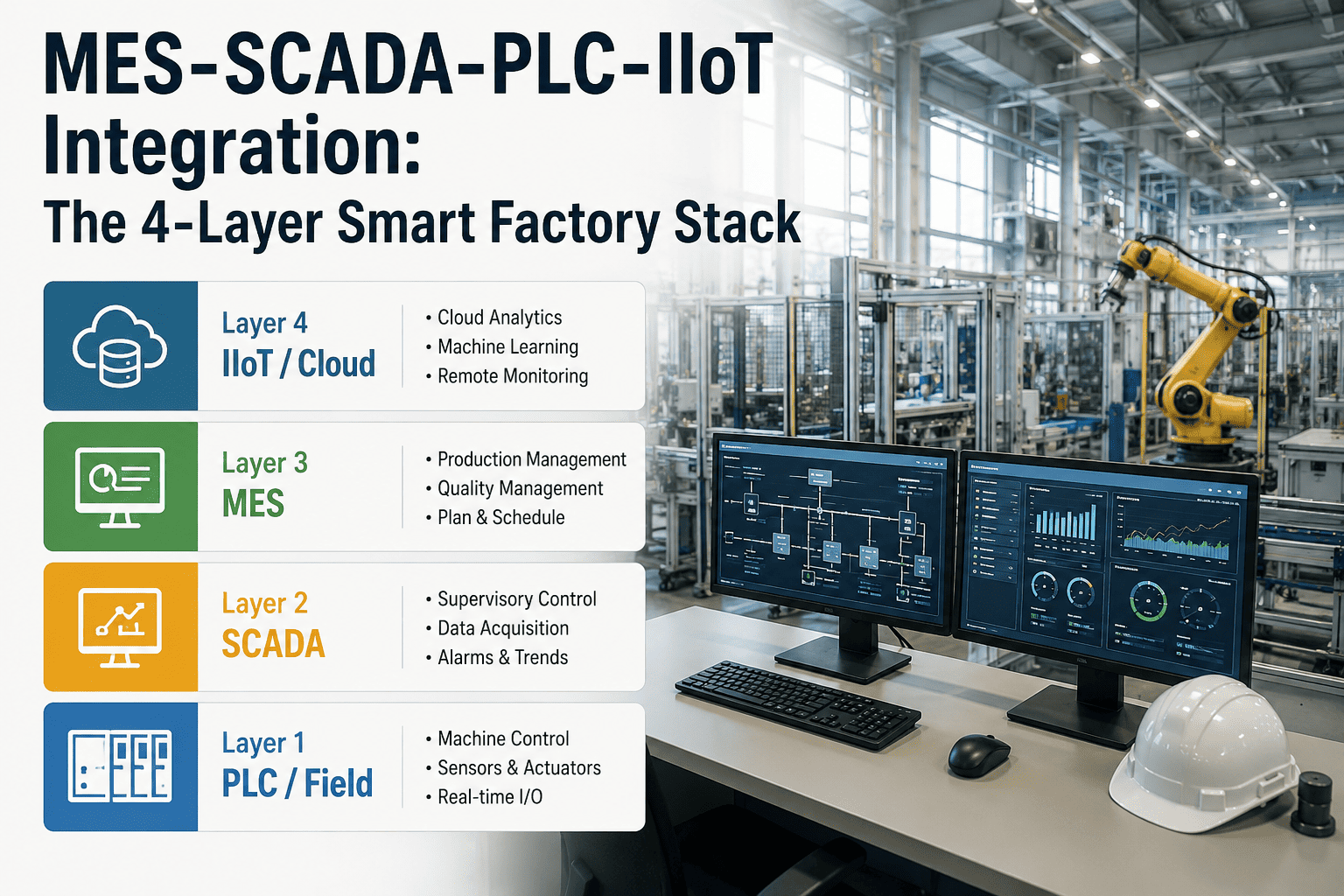
MES, SCADA, PLC & IIoT Integration: The 4-Layer Smart Factory Stack
How leading manufacturers unify plant-floor data into one intelligent architecture — and achieve 25% downtime reduction within 12 months
25%
Average downtime reduction post-integration
4-Layer
Proven ISA-95 smart factory architecture
3×
Faster fault diagnosis with unified data
12mo
Typical full ROI payback on integration
Why Fragmented Factory Systems Are a Hidden Revenue Drain
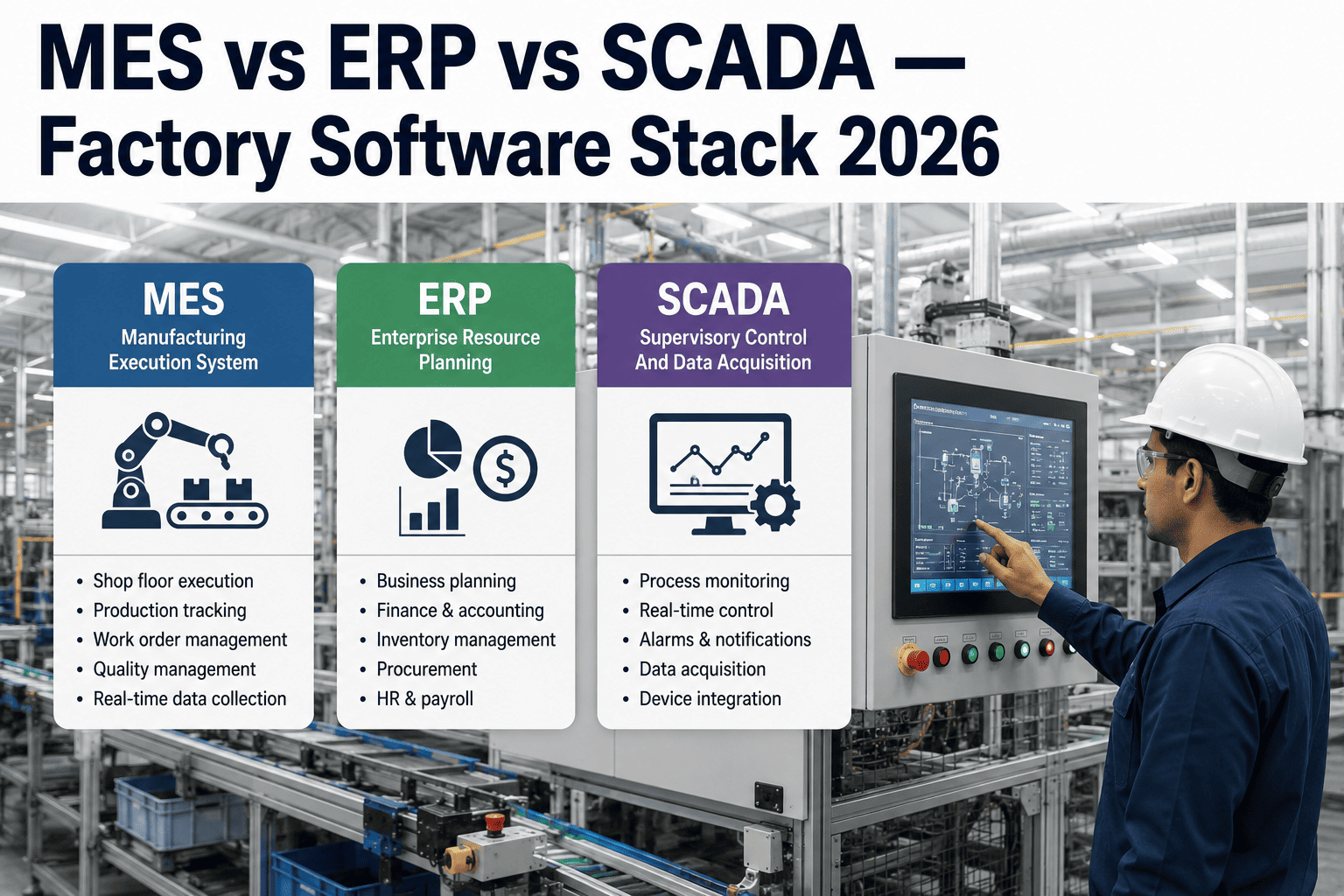
Most manufacturers have invested heavily in individual automation layers: PLCs for machine control, SCADA for supervisory visibility, MES for production execution, and IIoT sensors for real-time telemetry. The problem is not the technology — it is the gaps between them. When these layers cannot communicate fluidly, operators make decisions on stale data, engineers duplicate effort across systems, and leadership lacks the unified view needed for strategic action.
⚠
Blind Spots Between Layers
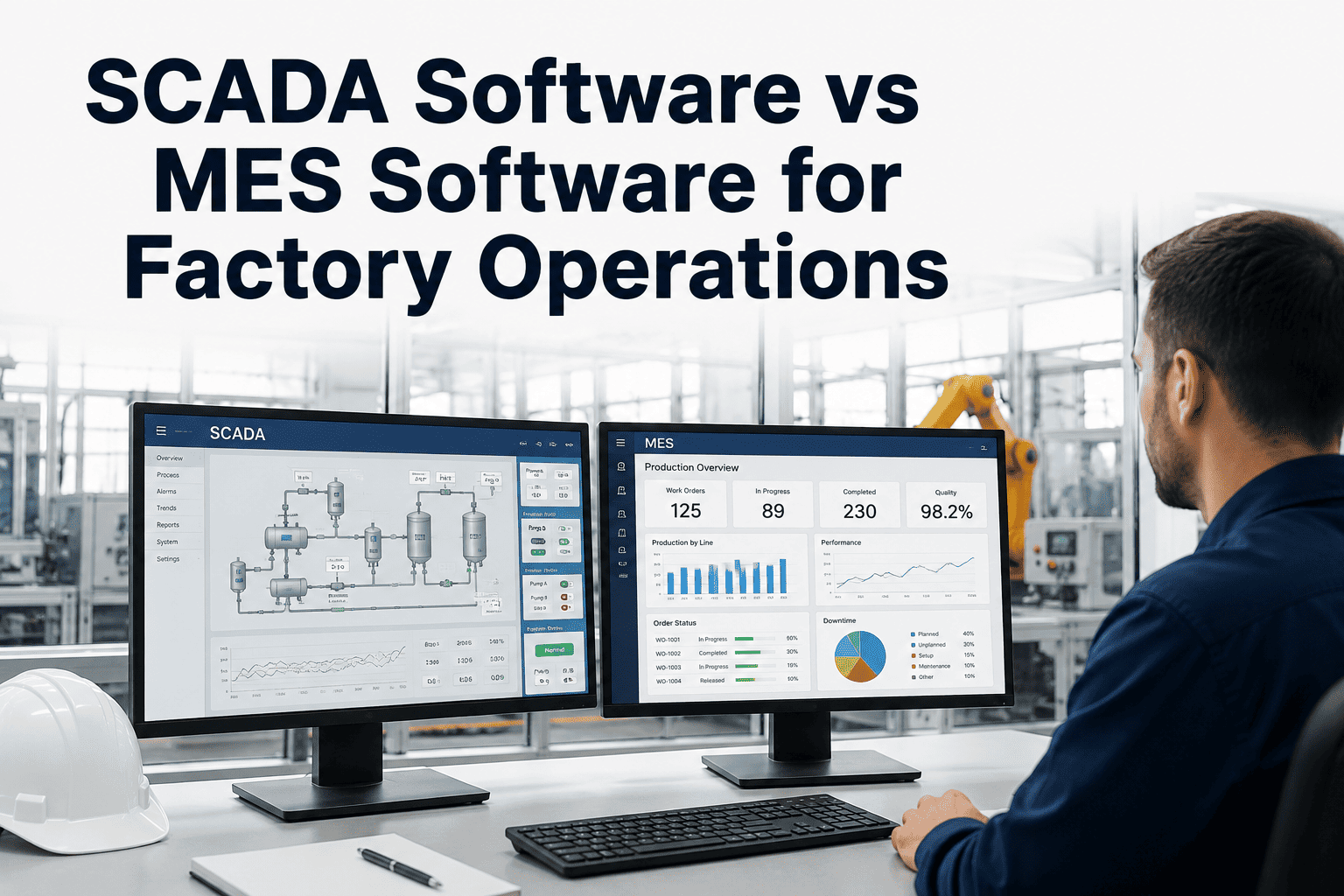
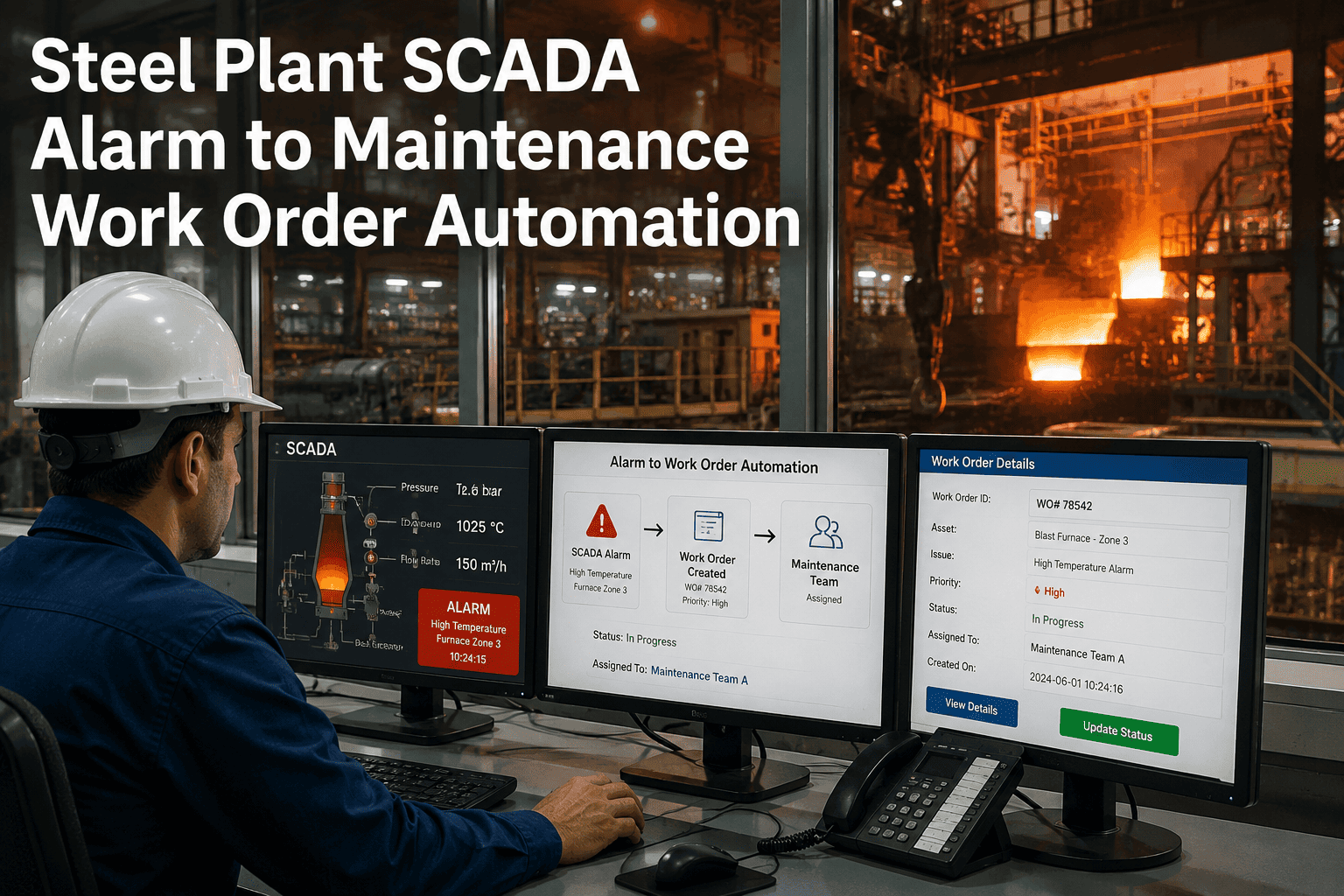
SCADA shows a temperature spike but MES does not know which production order is affected. The result: delayed response, wasted batches, and post-mortem analysis instead of prevention.
⚙
Manual Data Bridging
Engineers spending 6–10 hours per week extracting, reformatting, and reconciling data across historian, ERP, and maintenance systems — work that zero-integration automation eliminates entirely.
?
OEE Leakage at Every Layer
Without cross-layer visibility, availability losses, performance losses, and quality losses remain invisible until they compound into a production crisis or a customer complaint.
The 4-Layer Smart Factory Stack: Architecture Overview
The ISA-95 model defines four functional layers in a modern smart factory. Successful MES-SCADA-PLC-IIoT integration means each layer communicates bidirectionally with the layers above and below it — in real time, using standardised protocols, with no manual handoffs.
Layer 1
PLC — Device Control
Programmable Logic Controllers execute machine-level commands in milliseconds. They are the physical interface between software intelligence and mechanical action. Integration requirement: real-time tag publishing via OPC-UA or Modbus TCP to the SCADA layer.
Layer 2
SCADA — Supervisory Visibility
SCADA aggregates PLC data into operator dashboards, alarm management, and historian databases. Integration requirement: bidirectional data exchange with MES for production order context and with IIoT platform for enriched sensor feeds.
Layer 3
MES — Production Execution
Manufacturing Execution Systems translate ERP production schedules into shop-floor work orders, track WIP, enforce quality checkpoints, and record genealogy. Integration requirement: live consumption of SCADA and IIoT data to link asset state to order performance.
Layer 4
IIoT — Sensor Intelligence
Industrial IoT devices — vibration sensors, current monitors, thermal cameras — capture asset-level data invisible to traditional SCADA. Integration requirement: edge processing via MQTT or REST API, feeding enriched telemetry upward to SCADA, MES, and AI analytics layers.
See how iFactory connects all four layers in a single deployment.
Book a Demo
Legacy Friction vs. Optimised Excellence: The Integration Gap
The following comparison illustrates the operational and financial difference between a fragmented legacy architecture and a fully integrated 4-layer smart factory stack. The gap is not theoretical — it is measurable in downtime hours, labour cost, and defect rate.
| Dimension |
Legacy Friction (Old Way) |
Optimised Excellence (New Way) |
| Data Latency |
15–60 minute reporting cycles; decisions on stale data |
Sub-second real-time data across all four layers |
| Fault Diagnosis |
Multi-system investigation taking 2–4 hours per incident |
Unified root-cause view in under 10 minutes |
| Maintenance Triggers |
Calendar-based schedules regardless of asset condition |
Condition-based and predictive work orders from IIoT data |
| Production Context |
SCADA alarms with no link to active production order |
Every alarm tagged to order, shift, operator, and product |
| Data Reconciliation |
6–10 hrs/week of manual export, reformat, re-import cycles |
Automated bi-directional sync; zero manual data bridging |
| OEE Visibility |
Monthly OEE reports with limited loss categorisation |
Live OEE with real-time availability, performance, quality breakdown |
| Compliance Documentation |
Manual log assembly; audit preparation takes days |
Auto-generated traceability records from integrated data streams |
| Scalability |
Each new asset requires custom point-to-point integration |
New assets onboarded via standardised connectors in hours |
Integration Protocols That Power the Stack
Selecting the right communication protocols at each layer boundary is the most consequential technical decision in any smart factory integration project. These are the four protocols that define modern MES-SCADA-PLC-IIoT architecture.
OPC-UA
PLC → SCADA, SCADA → MES
The gold standard for secure, platform-agnostic PLC-to-SCADA communication. Supports data modelling, security certificates, and semantic context — making it the preferred protocol for ISA-95 compliant integrations across heterogeneous vendor environments.
MQTT
IIoT Sensors → Edge → Cloud
Lightweight publish-subscribe protocol designed for constrained IIoT devices. Enables thousands of sensors to stream telemetry with minimal bandwidth overhead. Ideal for wireless vibration monitors, current transducers, and environmental sensors feeding the SCADA historian.
REST API
MES → ERP, MES → AI Platform
HTTP-based integration layer connecting MES to enterprise systems including SAP, Oracle, and AI analytics platforms. Enables production order synchronisation, inventory updates, and KPI reporting without proprietary middleware dependencies.
Modbus TCP
Legacy PLC → Modern SCADA
The legacy protocol that still powers the majority of installed PLC base globally. Modern integration platforms use Modbus TCP gateways to bridge legacy controllers into OPC-UA and MQTT ecosystems — protecting existing capital investment while enabling smart factory capability.
Business Impact Across Three Dimensions
A fully integrated 4-layer stack does not just improve technical performance — it produces quantifiable business outcomes across operational efficiency, cost reduction, and strategic growth capability.
Operational Efficiency
- 25% reduction in unplanned downtime through predictive maintenance
- 3× faster fault diagnosis with cross-layer root-cause visibility
- Real-time OEE tracking replacing monthly retrospective reporting
- Automated shift handover reports eliminating manual documentation
- Order-linked alarms reducing mean time to respond by 40%
Overhead Reduction
- Elimination of 6–10 hrs/week per engineer in manual data bridging
- Condition-based maintenance reducing parts spend by 15–25%
- Auto-generated compliance documentation cutting audit prep from days to hours
- Standardised connectors reducing integration cost for new assets by 60%
- Single-platform monitoring replacing multi-system licence overhead
Growth & Scalability
- New production lines onboarded in days using pre-built protocol adapters
- Cross-facility benchmarking enabled by unified data architecture
- AI predictive analytics layer activates as training data matures
- ESG and sustainability reporting automated from integrated energy data
- Strategic CAPEX decisions backed by asset performance intelligence
Case Study: 25% Downtime Reduction in 10 Months
A mid-sized automotive components manufacturer operating three production lines faced a familiar challenge: SCADA, MES, and PLCs from three different vendors with no shared data model. Maintenance engineers spent 8+ hours per week manually reconciling system logs to diagnose recurring conveyor failures. Planned maintenance intervals were calendar-driven, resulting in both unnecessary shutdowns and surprise failures.
Before Integration
- 3 disconnected vendor systems with no unified data layer
- 8+ hrs/week manual log reconciliation per shift engineer
- Average fault-to-resolution time: 3.5 hours
- 14 unplanned downtime events in 12 months
- OEE at 67% — well below industry benchmark
After Integration (10 Months)
- Unified 4-layer stack: PLC → SCADA → MES → IIoT via OPC-UA and MQTT
- Manual reconciliation eliminated — full automation
- Average fault-to-resolution time: 55 minutes
- Unplanned downtime events reduced to 4 in 12 months
- OEE improved to 84% — exceeding industry benchmark
Implementation Roadmap: Four Integration Milestones
Successful MES-SCADA-PLC-IIoT integration follows a deliberate sequence. Attempting full-stack integration in a single deployment phase is the most common cause of project failure. The phased approach below delivers measurable value at each milestone while building toward full-stack capability.
M1
Protocol Audit and Connectivity Baseline — Weeks 1–3
Map existing PLC, SCADA, and MES communication interfaces. Identify protocol gaps, unsupported legacy controllers, and historian data availability. Deploy OPC-UA or MQTT gateways for pilot assets. Confirm data flowing into unified platform before advancing.
M2
SCADA-MES Bidirectional Link — Weeks 4–8
Establish real-time order context injection from MES into SCADA alarm management. Every supervisor alert is tagged to production order, product, and shift. Operators gain immediate order-linked visibility — eliminating post-incident log reconciliation.
M3
IIoT Layer Activation — Months 3–5
Deploy MQTT-connected vibration, temperature, and current sensors on critical assets. Feed enriched telemetry into SCADA historian and AI analytics layer. Anomaly detection goes live. First condition-based maintenance alerts replace calendar-driven schedules.
M4
Full-Stack Optimisation and ERP Integration — Months 6–12
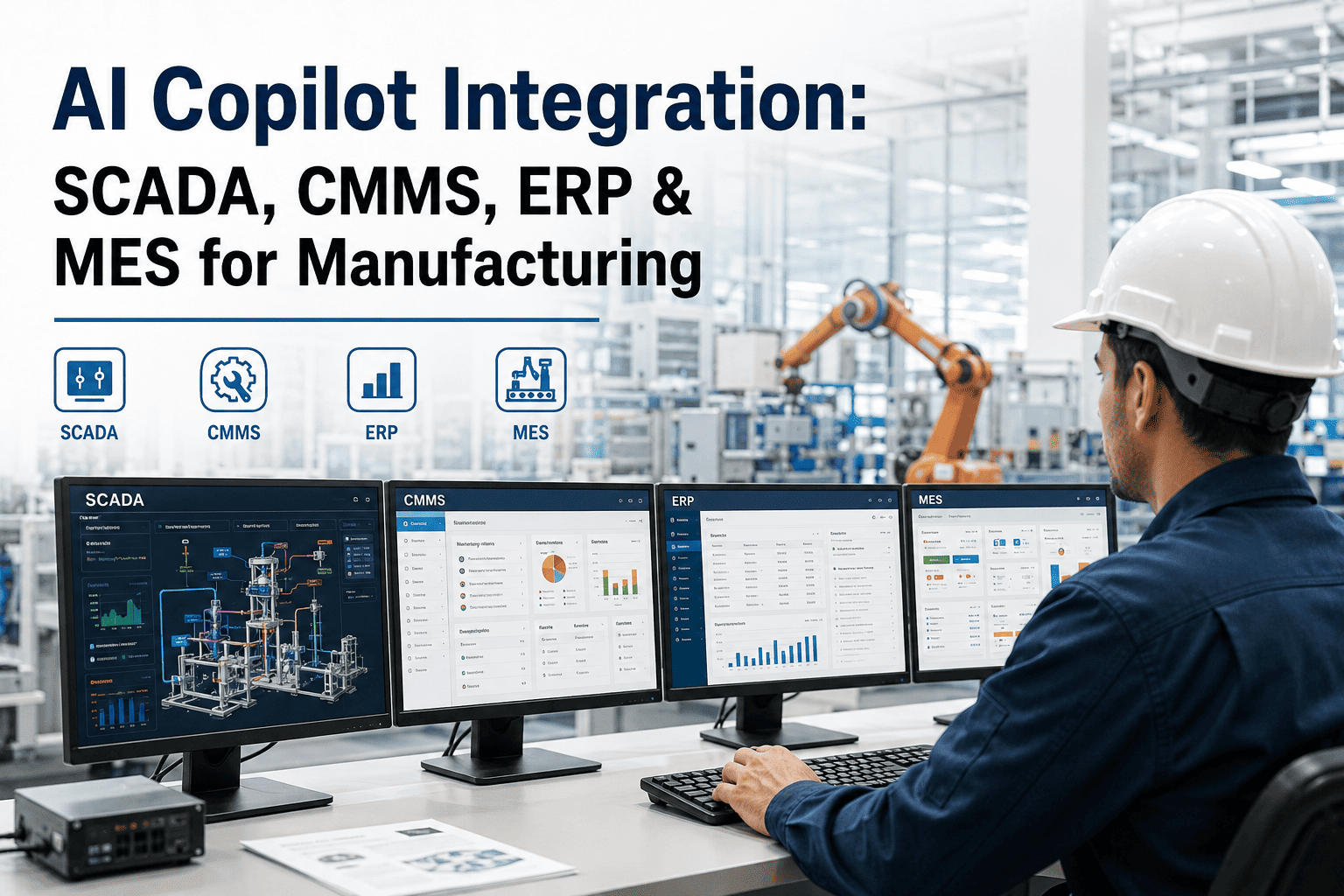
Connect integrated plant-floor data to ERP via REST API. AI-generated work orders feed CMMS. Predictive failure alerts operating at 90%+ accuracy. Cross-facility benchmarking active. Full OEE dashboard with live availability, performance, and quality decomposition.
Frequently Asked Questions
Can we integrate our existing legacy PLCs without replacement?
Yes. Modbus TCP and legacy OPC-DA gateways bridge older controllers into modern OPC-UA and MQTT architectures without replacing hardware. Most installed PLC bases — including Siemens S7, Allen-Bradley, and Mitsubishi Q-series — can be connected using protocol translation middleware, protecting capital investment while unlocking smart factory capability.
How long does a full MES-SCADA-PLC-IIoT integration take?
Connectivity baseline for 10–20 pilot assets is achievable in 3–4 weeks. Full four-layer integration — including IIoT sensors, MES order linking, and ERP connectivity — typically completes within 6–10 months depending on existing infrastructure complexity and vendor diversity.
Will integration disrupt current production operations?
The phased approach is designed for zero-disruption deployment. The integration platform runs alongside existing systems via read-only protocol connections during initial phases. No rip-and-replace of existing SCADA or MES is required. Operators continue using familiar interfaces while gaining enhanced visibility from the unified data layer.
What security model governs OT-IT data exchange?
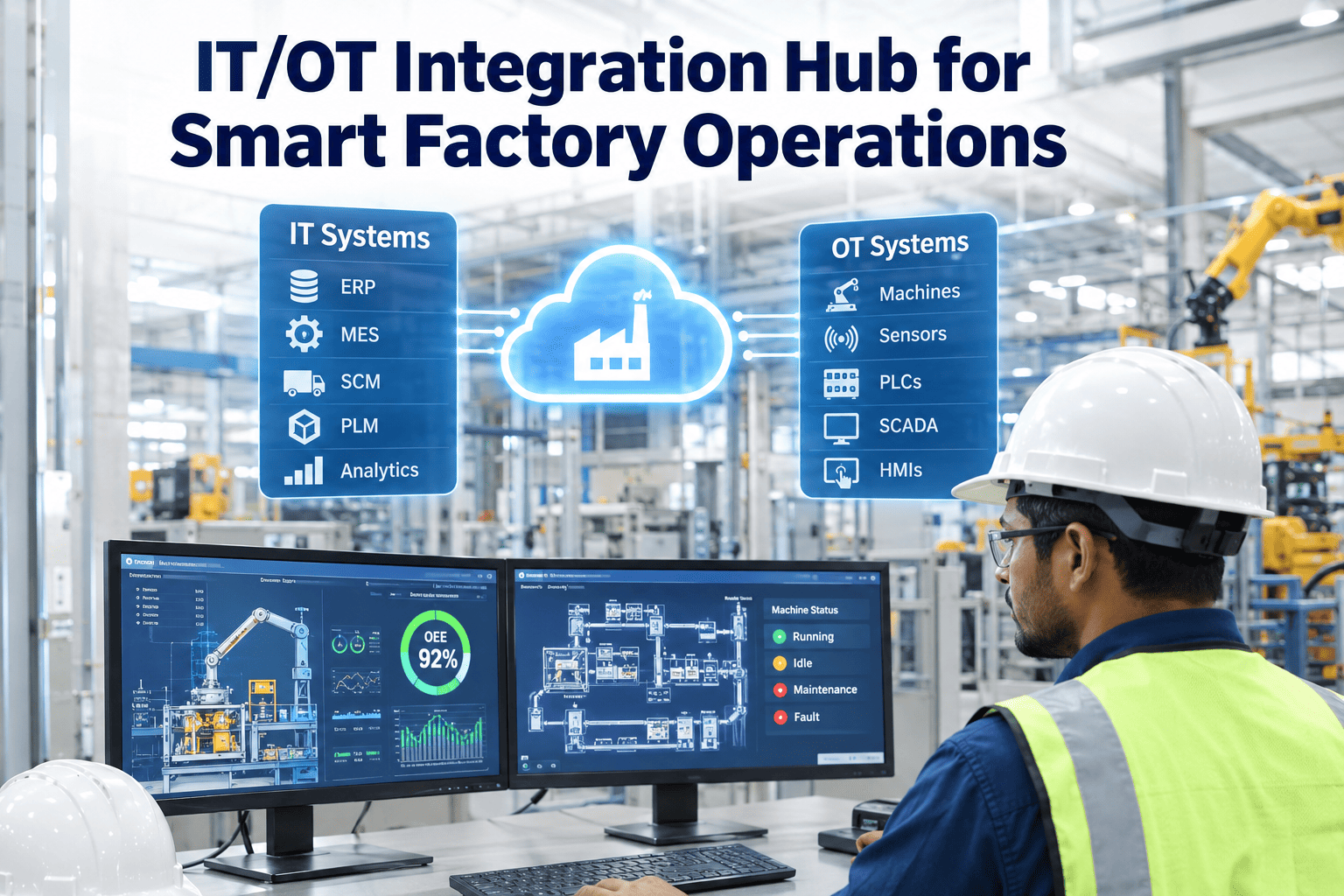
OPC-UA's built-in security model uses X.509 certificates, encrypted channels, and role-based access control — keeping OT and IT networks logically separated while enabling controlled data flow. MQTT broker deployments use TLS encryption and client authentication. No OT credentials or control access are exposed to IT or cloud layers.
Start Your Integration Assessment
Stop Leaving OEE Points on the Table
iFactory's integration engineers will audit your existing MES, SCADA, PLC, and IIoT infrastructure, identify the highest-value connection points, and deliver a phased roadmap with projected ROI — at no cost.
3×
Faster fault resolution
$3.5M
Annual savings potential
10-30×
Return on investment