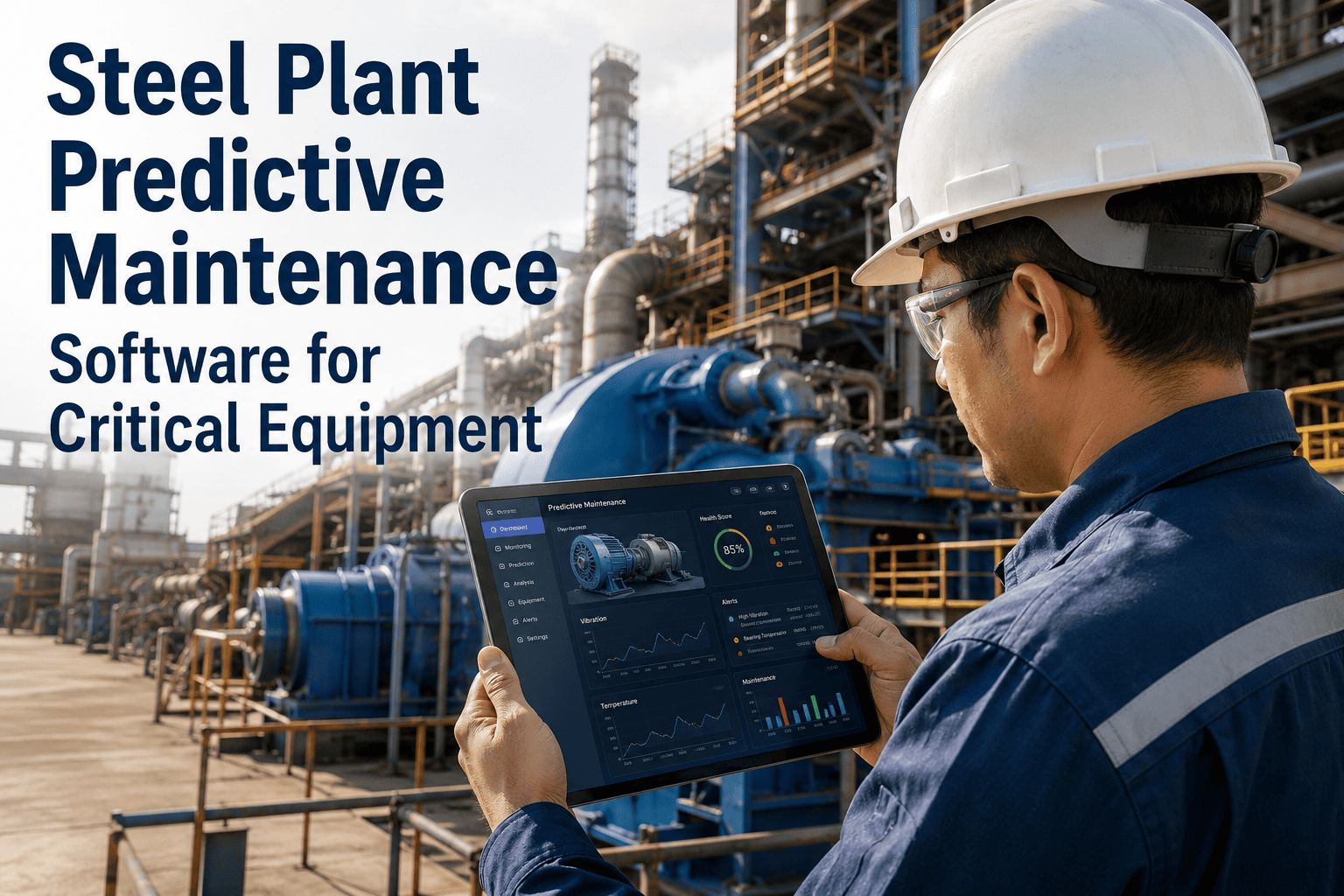
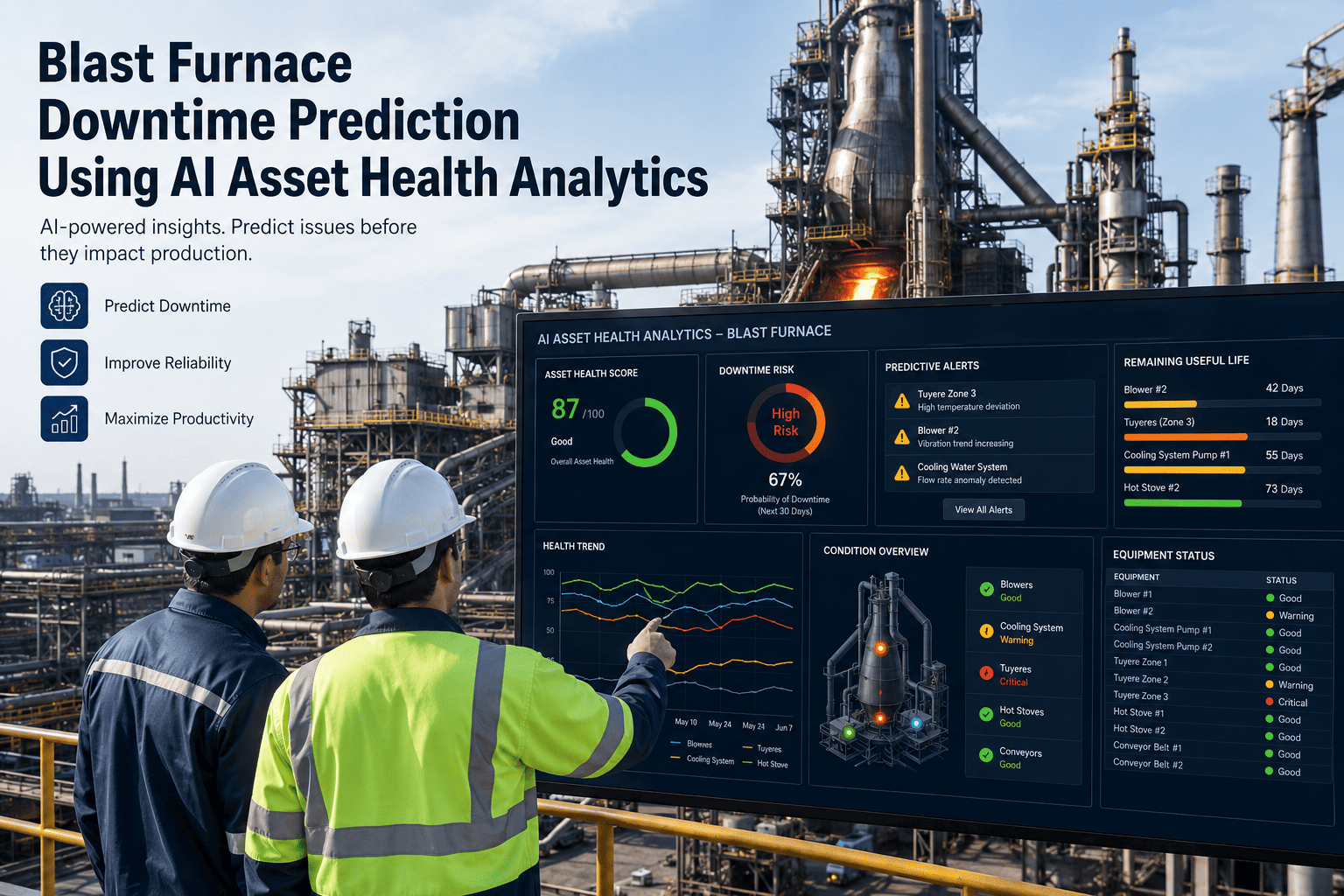
A blast furnace blower bearing running with a developing defect gives almost no warning on a standard control room dashboard — temperature and pressure stay within normal range right up until the bearing seizes, usually during a production run nobody wants to interrupt. A rolling mill gearbox with early-stage tooth wear sounds the same as a healthy one to routine walkaround inspection, until the failure happens mid-shift and takes the line down for 18-30 hours. Steel plants run hundreds of critical rotating and thermal assets where a single unplanned failure costs far more than any predictive maintenance program, yet most plants still rely on fixed inspection intervals and reactive repair. iFactory monitors your blast furnace, rolling mill, and continuous casting equipment continuously, flagging the specific asset and failure mode developing before it becomes a forced outage. Book a free predictive maintenance assessment for your plant.
Quick Answer
iFactory continuously monitors critical steel plant equipment — blast furnace blowers, rolling mill gearboxes, continuous casting rolls, and ladle metallurgy furnaces — detecting bearing wear, gear degradation, and thermal anomalies weeks before failure. Steel plants typically reduce unplanned downtime on monitored assets by 35-45% within the first two quarters.
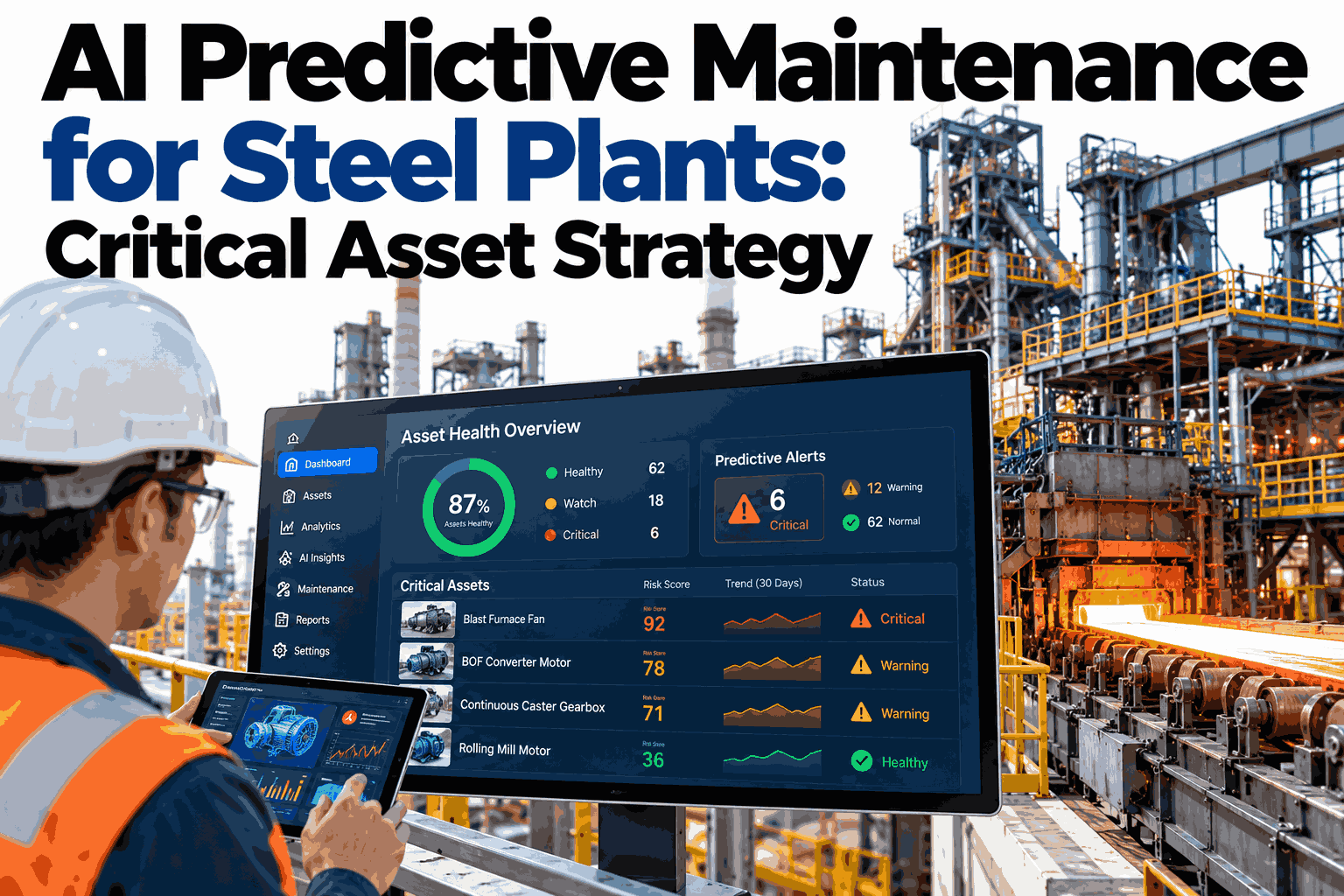
Asset Health at a Glance: Critical Equipment Scorecard
Rather than a wall of raw sensor readings, iFactory presents each critical asset's health as a single trending score your reliability team can act on immediately. Here is how a typical plant's critical asset scorecard looks mid-quarter.
92
Blast Furnace Blower #2
Healthy
68
Rolling Mill Gearbox #4
Watch — Bearing Trend
88
Continuous Caster Roll Bank
Healthy
41
Ladle Furnace Transformer
Action Required
Illustrative scorecard view. Actual asset health scores are calculated from vibration, thermal, and electrical signature data specific to your equipment fleet.
Know Which Critical Asset Needs Attention This Week — Not After It Fails
iFactory's assessment reviews your existing sensor data and maintenance history to build a first health scorecard for your critical equipment before any commitment is made.
How iFactory Predicts Failure on Steel Plant Critical Equipment
Blast furnace, rolling mill, and casting equipment each fail in different, well-documented ways. iFactory applies a specific detection model to each asset class rather than one generic vibration alarm. See the models applied to your specific equipment list.
Blast Furnace
Blower & Auxiliary Fan Monitoring
Vibration signatures from cold blast blowers and auxiliary fans are tracked continuously for bearing defect frequencies and imbalance, catching degradation weeks before a seizure risks a furnace trip.
Rolling Mill
Gearbox & Roll Stand Analytics
Gear mesh frequency analysis detects tooth wear and pitting on mill gearboxes, while roll stand vibration tracks bearing condition on the highest-load, highest-consequence rotating assets in the mill.
Continuous Casting
Roll Bank & Segment Wear Tracking
Caster roll bearing temperature and vibration trends are monitored per segment, flagging wear before it causes a breakout risk or surface quality defect on cast product.
Electrical Systems
Transformer & Motor Thermal Analytics
Thermal imaging and load trend analysis on ladle furnace transformers and large motors catches insulation degradation and loose connections before a thermal event forces an outage.
iFactory vs Traditional Steel Plant Maintenance Approaches
Fixed preventive maintenance schedules, standalone vibration route programs, and generic condition monitoring platforms each address part of the reliability problem. iFactory combines continuous monitoring with steel-specific failure mode logic. Compare against your current maintenance program.
| Capability | iFactory | Fixed PM Schedule | Route-Based Vibration Program | Generic CBM Platform |
|---|
| Monitoring Frequency |
| Continuous monitoring vs periodic checks | Continuous, every asset | Calendar-based only | Weekly or monthly routes | Depends on sensor coverage |
| Steel-Specific Failure Logic |
| Blast furnace and caster-specific models | Built in | Not modeled | General vibration analysis | Requires custom configuration |
| Reporting & Action |
| Single asset health score, not raw readings | Included | Not available | Analyst-dependent | Dashboard-dependent |
| Auto CMMS work order on threshold breach | 60 sec | Manual scheduling | Manual reporting | API integration |
Based on publicly available product documentation as of Q2 2026. Verify current capability with each vendor before procurement decisions.
Our Numbers
35-45%
Fewer Unplanned Outages on Monitored Assets
72+ hrs
Advance Warning on Critical Bearing Failure
6 wks
To Full Critical Asset Scorecard
30%
Reduction in Unnecessary Preventive Maintenance
Find Out Which Critical Asset Is Trending Toward Failure Right Now
iFactory's pre-deployment assessment reviews your existing sensor data and maintenance history at no cost.
What Our Clients Say
"Our rolling mill gearboxes run on a fixed overhaul schedule that assumes every unit wears at the same rate, which we always knew wasn't true but had no better alternative for. iFactory's gear mesh analysis picked up early tooth wear on one gearbox nearly two months before its scheduled overhaul, and we replaced it in a planned maintenance window instead of risking a mid-campaign failure. That single catch alone justified the platform for our reliability team, and we've since expanded monitoring to our blast furnace blowers as well."
Maintenance & Reliability Manager
Integrated Steel Plant, Odisha
Frequently Asked Questions
QDo we need to install new vibration sensors on every critical asset, or can iFactory use our existing instrumentation?
Most steel plants already have some vibration or process instrumentation on their highest-consequence assets, and iFactory connects to these existing sensors wherever available rather than requiring a full replacement. Where a critical asset has no monitoring at all, iFactory's pre-deployment assessment identifies which additions would deliver the fastest payback based on failure consequence and current data gaps.
Book an assessment to review your current sensor coverage.
QHow does the asset health score account for the harsh operating conditions typical of a steel plant environment?
iFactory's health scoring models are calibrated against baseline operating conditions specific to each asset, including the high ambient temperatures, dust, and vibration noise floor typical of blast furnace and rolling mill environments. This calibration period, usually four to six weeks, ensures the health score reflects genuine degradation rather than normal environmental noise that would otherwise trigger false alerts in a generic monitoring platform.
QCan iFactory integrate with our existing CMMS so that a flagged asset automatically generates a work order?
Yes, when an asset's health score crosses a configured threshold, iFactory can automatically generate a work order in your existing CMMS with the relevant diagnostic data attached, typically within 60 seconds of the threshold breach. This removes the delay between detection and action that occurs when a reliability engineer has to manually review a dashboard and separately log a maintenance request.
Ask about your specific CMMS integration during a demo.
QHow does iFactory prioritize which of our hundreds of assets to monitor first?
The pre-deployment assessment ranks assets by failure consequence — production impact, safety risk, and repair cost — combined with current data availability, so the highest-value assets with the fastest path to useful monitoring are prioritized first. Most plants start with blast furnace blowers, rolling mill gearboxes, and continuous casting rolls, since these carry the highest downtime cost per failure event.
QHow long does it take to see the first meaningful predictive alert after going live?
Most plants see their first meaningful predictive alerts within four to six weeks of going live, once the system has established a reliable baseline for each monitored asset under normal operating conditions. Assets with an already-developing fault sometimes generate a useful alert sooner than the full baseline period, since a clear defect signature can be distinguished from normal operation even early in the monitoring window.
Every Critical Asset Scored. Every Failure Mode Tracked. Before It Becomes an Outage.
iFactory monitors your blast furnace, rolling mill, and casting equipment continuously, turning hundreds of raw sensor feeds into a single health score your reliability team can act on.
Continuous Monitoring
Steel-Specific Failure Models
Automatic CMMS Work Orders
Single Asset Health Score