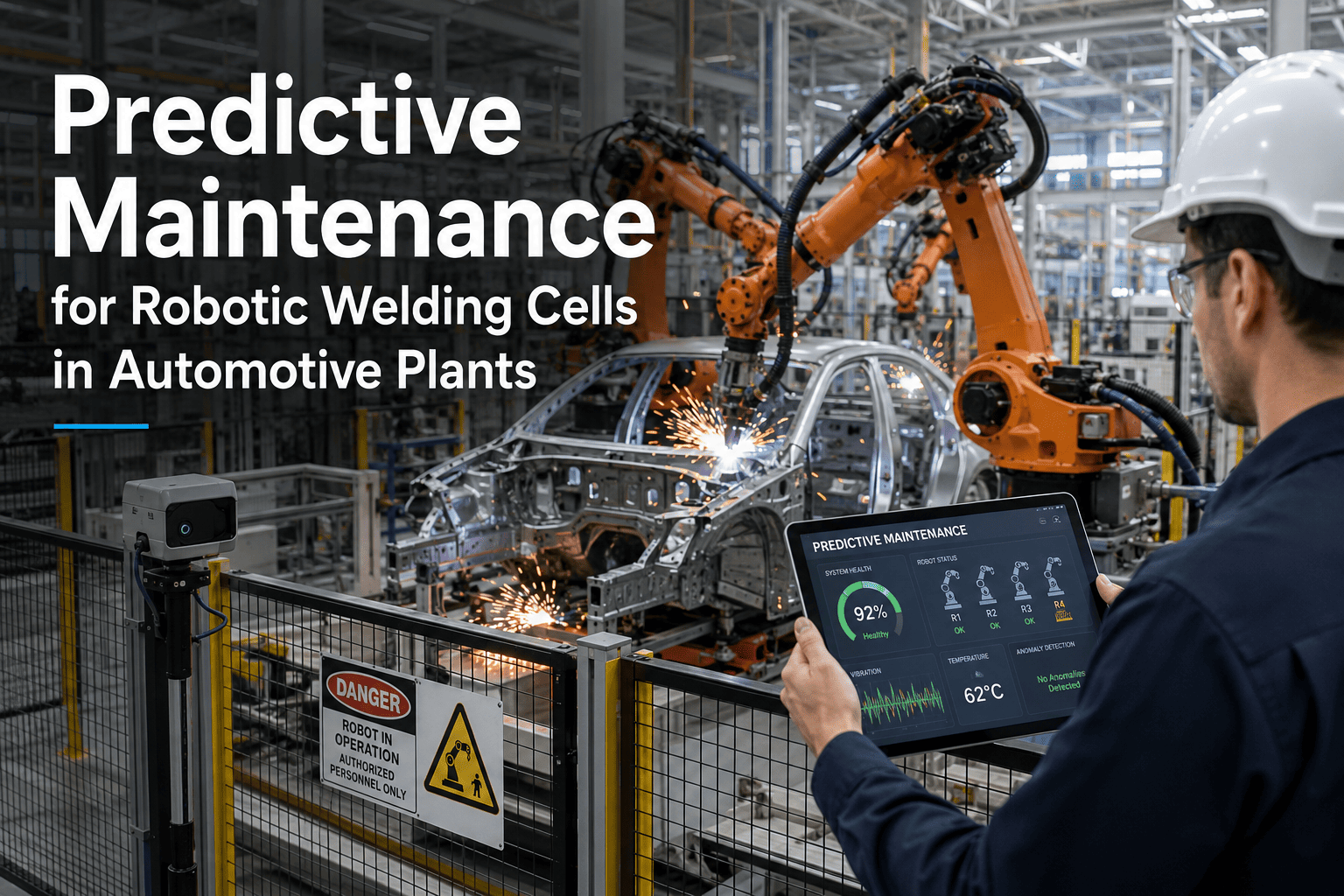
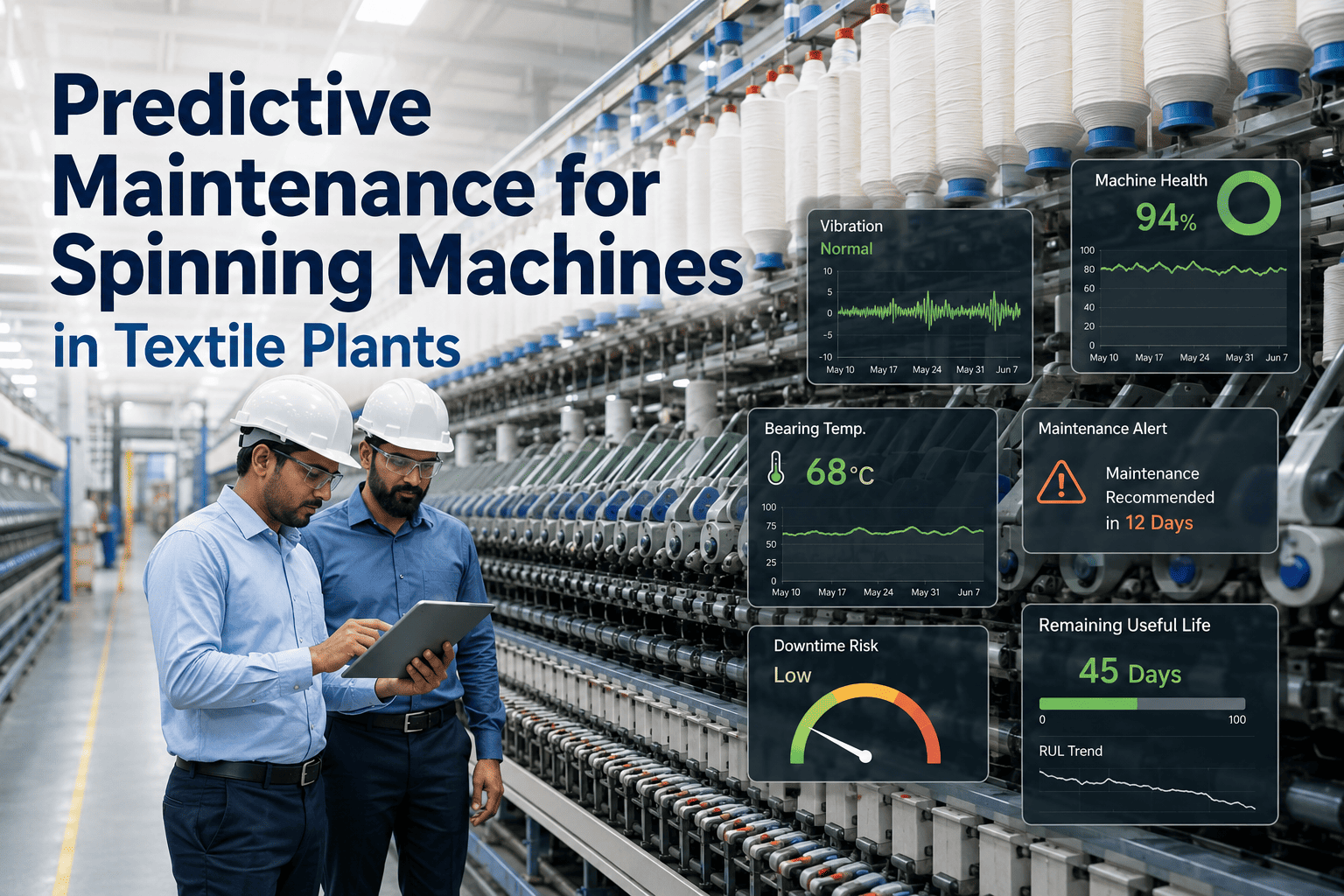
A robotic welder on Line 4 starts drawing 12% more current than baseline. Nobody noticesthe parts still look fine. Three weeks later, the servo motor seizes mid-shift. 340 vehicles don't get built. Your OEM customer calls about late deliveries. The $47 bearing that failed just cost you $2.3 million. That motor was screaming for help for 21 days. Condition monitoring would have heard it on Day 1. Book a free consultation to see what your equipment is telling you.
Monitor Motors, Conveyors, and Critical Assets to Avoid Unexpected Downtime
What Condition Monitoring Actually Means
It's the difference between listening to your equipment and waiting for it to scream.
Continuous Data Collection
IoT sensors on motors, bearings, gearboxes, and conveyors stream vibration, temperature, current, and acoustic data 24/7.
AI Pattern Detection
Machine learning algorithms compare live readings against normal baselines and historical failure signatures to spot degradation early.
Predictive Warnings
When degradation crosses a threshold, the system alerts maintenance 3–21 days before failure — with specific diagnosis and recommended action.
CMMS Work Orders
iFactory CMMS converts alerts into scheduled work orders, pre-orders parts, assigns technicians — repair happens during planned windows.
5 Equipment Signals That Predict Failure
Every piece of automotive equipment tells you it's failing — if you're measuring the right things.
Bearing wear, imbalance, misalignment, looseness. Catches 80%+ of rotating equipment failures weeks in advance.
Overheating motors, friction buildup, coolant failures. A 12°F rise above baseline often signals imminent failure.
Motors drawing more amps indicate winding degradation, mechanical binding, or increased load — invisible to the human eye.
Ultrasonic emissions detect compressed air leaks, electrical arcing, and early-stage bearing defects humans can't hear.
Gradual slowdowns — even 3–5% — indicate mechanical degradation, programming drift, or tool wear before the obvious breakdown.
What Gets Monitored — Asset by Asset
Condition monitoring isn't one-size-fits-all. Each asset type has different failure modes and sensor requirements.
Your Equipment Is Talking. Are You Listening?
iFactory's condition monitoring integrates with your CMMS to turn sensor data into scheduled repairs — not emergency breakdowns. See it in action.
Before vs. After Condition Monitoring
What Condition Monitoring Delivers in Automotive
These aren't projections — they're documented outcomes from automotive plants that deployed condition monitoring.
An automotive assembly plant monitored welding robots for current signatures to detect tip wear. Unplanned downtime dropped from 4.7 to 0.8 hours per week — an 83% reduction.
Connected over 10,000 assets globally. Within 12 weeks, the system delivered a 12% reduction in unplanned downtime and early warnings for several high-impact failures.
An automotive manufacturer prevented a catastrophic stamping press failure through predictive alerts, avoiding $500,000 in prevented rebuild costs in a single incident.
Deployed AI that analyzes existing conveyor data — no new sensors needed — to detect anomalies before stoppages. Prevents over 500 minutes of production disruption annually.
5 Ways iFactory Condition Monitoring Protects Your Assets
Every capability is designed to convert equipment signals into maintenance action — automatically.
Multi-Parameter Sensor Fusion
Vibration alone catches some failures. Combining vibration + temperature + current + acoustics catches nearly all of them. iFactory correlates multiple data streams per asset to reduce false positives and increase prediction accuracy.
Automatic CMMS Work Order Generation
When sensor data crosses a degradation threshold, iFactory creates a prioritized work order in your CMMS — complete with diagnosis, recommended parts, and suggested repair window. No manual entry. No phone calls. No delays.
Equipment Health Scoring
Every monitored asset gets a real-time health score from 0–100. Plant managers see at a glance which assets are green (healthy), yellow (degrading), or red (action needed) — and can sort by production criticality.
Production-Aware Maintenance Scheduling
Condition monitoring data integrates with production schedules. Repairs are automatically suggested during changeovers, shift gaps, or low-demand windows — not during peak production runs.
Failure Trend Analytics & Reporting
Historical condition data feeds into trend dashboards showing which asset types fail most, which failure modes dominate, and where your maintenance spend should focus. Turn reactive firefighting into strategic asset management.
Stop Waiting for Equipment to Break. Start Listening.
iFactory condition monitoring gives automotive plants sensor-to-work-order intelligence — so maintenance happens on your schedule, not your equipment's.
Common Questions About Condition Monitoring
What's the difference between condition monitoring and predictive maintenance?
Condition monitoring is the data collection layer — sensors that continuously measure equipment health. Predictive maintenance is the intelligence layer that uses that data to forecast failures. iFactory provides both: the sensors feed the AI, and the AI feeds your CMMS with actionable work orders.
Do we need to install new sensors on every machine?
Not necessarily. Many modern PLCs, drives, and robots already output vibration, current, and temperature data. iFactory can tap into existing SCADA and PLC systems via OPC-UA, Modbus, or MQTT. New sensors are only added where gaps exist.
How fast is the ROI for automotive plants?
Most automotive manufacturers report ROI within 6–12 months. At $2.3M per hour of downtime, preventing even one major stoppage per quarter pays for the entire system. Plants also see 25% lower maintenance costs and 10–20% higher uptime.
How far in advance can failures be predicted?
It depends on the asset and failure mode. Bearing failures can be detected 14–28 days out. Motor winding degradation typically shows 7–21 days before failure. Some hydraulic and pneumatic issues show just 3–7 days ahead. The system improves accuracy over time as it learns your specific equipment patterns.
Can we start with just critical assets?
Absolutely — and we recommend it. Start with your bottleneck line or highest-cost-of-failure assets (stamping presses, paint booth systems, robotic welders). Prove the value there, then expand to conveyors, motors, and support equipment.
Does this replace our existing CMMS?
No — it supercharges it. iFactory integrates with your existing CMMS, feeding it condition-based work orders instead of calendar-based ones. Your technicians still use the same system, but now they're fixing things that actually need fixing.