Power Plant O&M: Predictive Maintenance for Turbines, Boilers & HRSGs
By Daniel Brooks on May 29, 2026
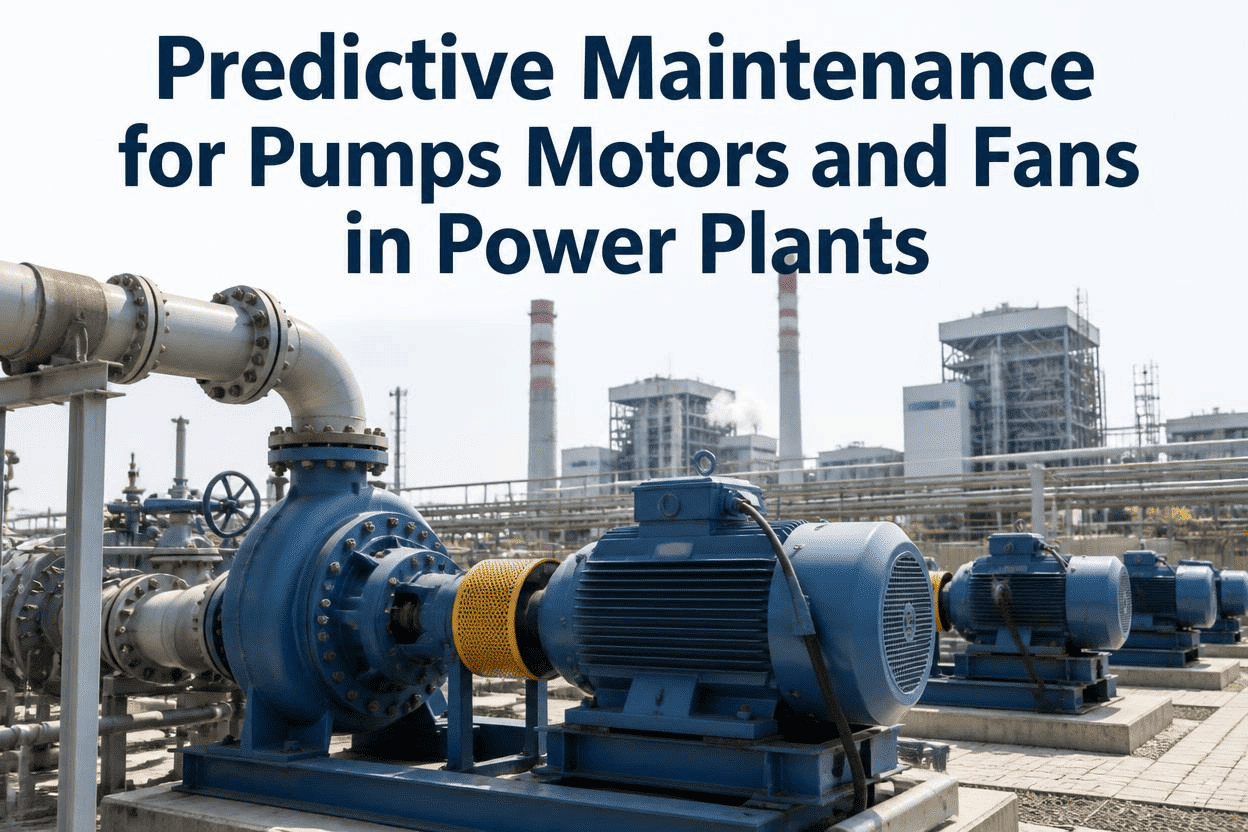
Power plant operations have always run on a single hard truth: unplanned outages are catastrophic. A forced outage on a 500 MW steam unit can cost $500,000–$1.5 million per day in lost generation, replacement power, and emergency repair premiums — before you factor in regulatory penalties or grid reliability obligations. For decades, the industry managed this risk with time-based maintenance schedules and reactive repair. That model no longer holds up against modern generation economics, tightening O&M budgets, and the reliability demands of an increasingly electrified grid. AI-powered predictive maintenance (PdM) changes the equation entirely — catching turbine bearing degradation, boiler tube thinning, and HRSG duct cracking weeks before they escalate into forced outages. This page covers exactly how iFactory's Predictive Maintenance platform applies to power plant O&M — across steam turbines, boilers and HRSGs — and what the implementation looks like in practice.
Power Plant O&M · AI Predictive Maintenance · Turbines · Boilers · HRSGs
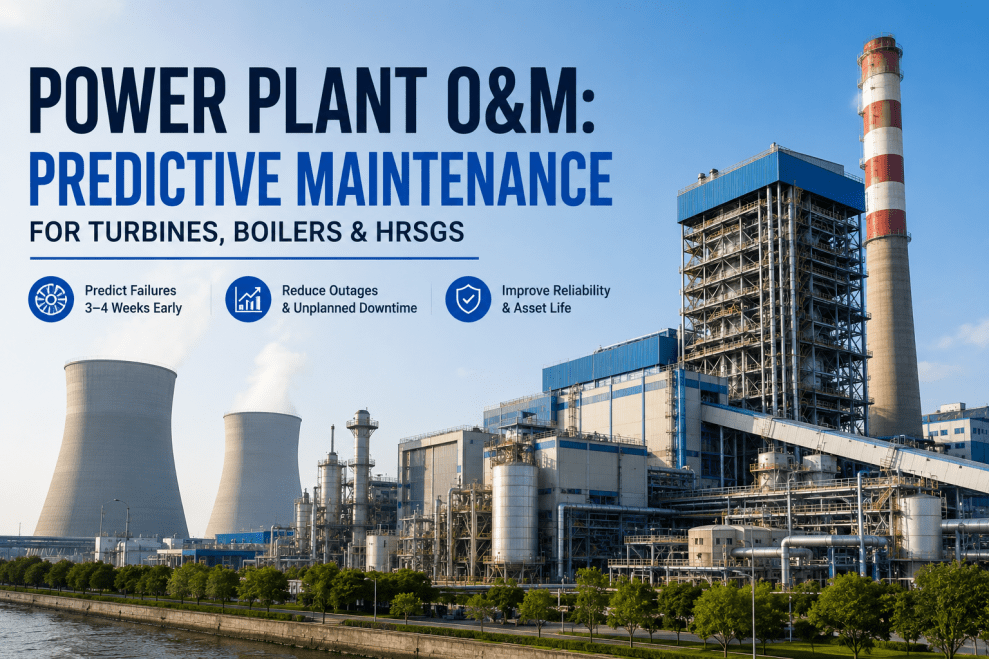
Power Plant O&M: Predictive Maintenance for Turbines, Boilers & HRSGs
AI-powered diagnostics that catch steam turbine vibration anomalies, boiler tube failures, and HRSG degradation 3–4 weeks before forced outages — so your plant runs on schedule, not on luck.
Sources: NERC Reliability Standards · EPRI Power Plant O&M Research · iFactory Platform Deployment Data 2026
Why Time-Based Maintenance Fails Power Plants
Traditional planned maintenance intervals were designed around average failure modes, not actual asset condition. The problem is that thermal cycling, load-following demands, fuel quality variation, and partial load operation all accelerate degradation in ways that fixed calendars cannot anticipate. A steam turbine blade that was inspected six months ago may have experienced 2,000 more load-follow cycles since then — or it may have been running at base load with minimal stress. The interval tells you nothing about actual condition.
Maintenance Strategy Comparison for Power Plant Assets
Time-Based vs. Condition-Based vs. AI Predictive Maintenance
Dimension
Time-Based (PM)
Condition-Based (CBM)
AI Predictive (PdM)
Failure Warning
None
Days to hours
3–4 weeks advance
Inspection Basis
Calendar / hours
Manual rounds
Continuous sensor streams
Turbine Coverage
Scheduled outage only
Selected parameters
All critical parameters
Boiler Tube Monitoring
Visual inspection only
Ultrasonic spot checks
Continuous thermal + acoustic
HRSG Diagnostics
Outage-based
Partial
AI drift detection
Outage Planning
Fixed schedule
Reactive
Risk-ranked, planned window
Avg. O&M Cost Impact
Baseline
–15 to –20%
–35 to –50%
Steam Turbine Predictive Maintenance — What AI Monitors
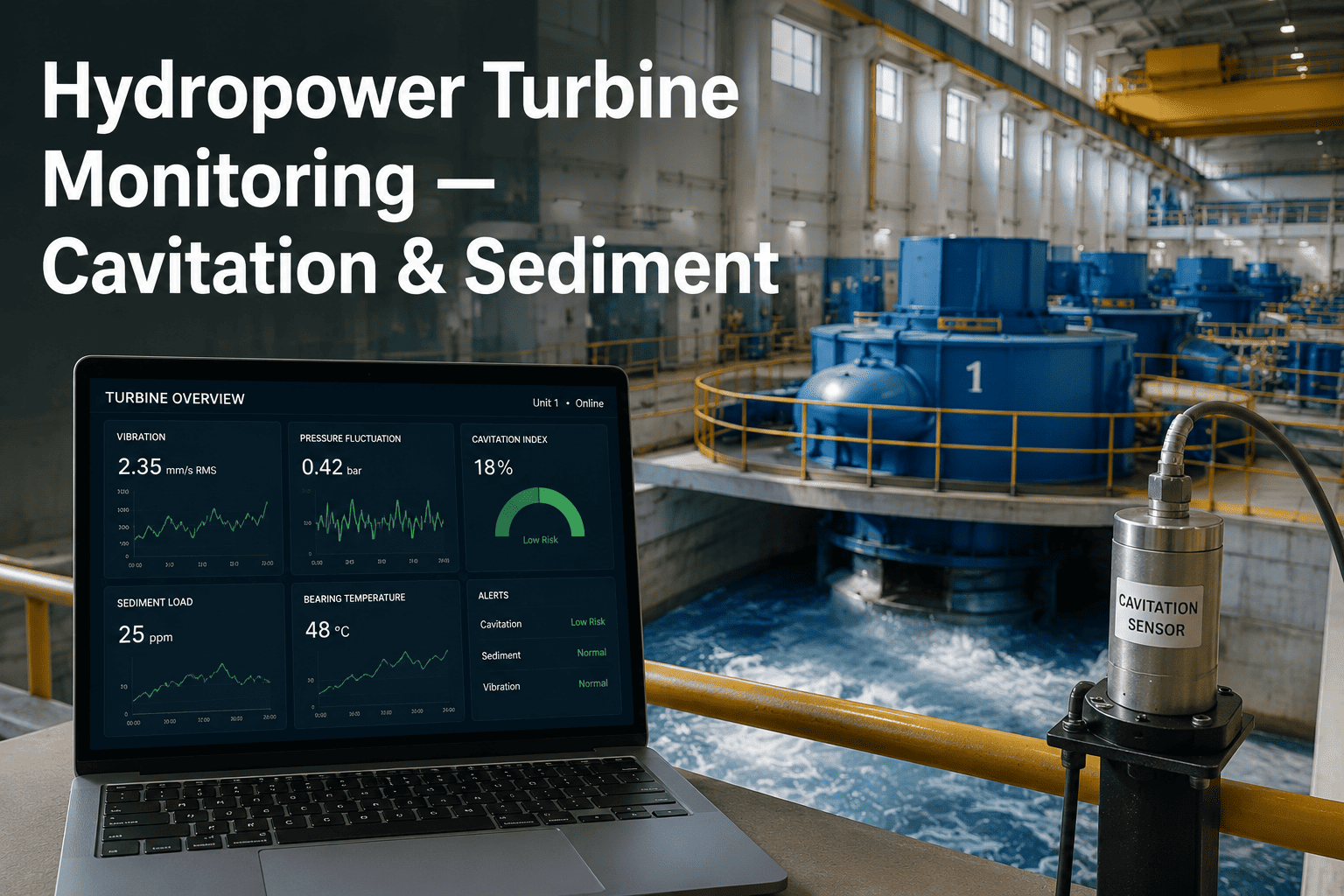
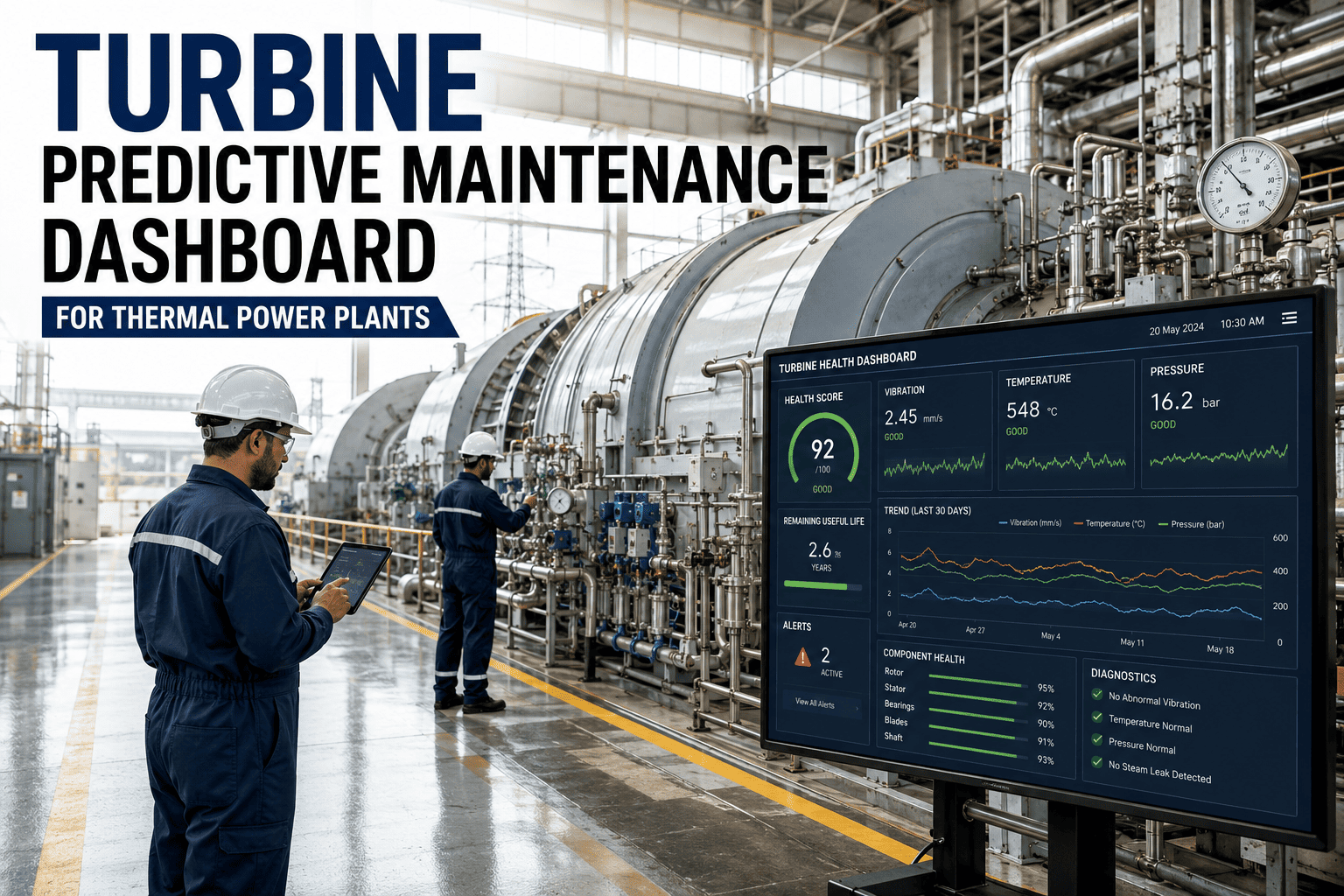
Steam turbines are the highest-consequence asset in any thermal plant. A catastrophic turbine failure — LP blade liberation, thrust bearing collapse, or rotor rub — results in multi-month outages and eight-figure repair costs. iFactory's PdM platform monitors the full turbine health envelope continuously, using multi-axis vibration analysis, bearing temperature trending, and differential expansion modeling to detect degradation patterns that are invisible to periodic inspection.
Shaft Vibration Analysis
Continuous proximity probe monitoring across LP, IP, and HP sections. FFT-based spectral analysis identifies imbalance, misalignment, rub, and oil whirl signatures weeks before trip thresholds are reached.
Journal and thrust bearing temperature trending with rate-of-change alerting. Metal temperature deviations from baseline thermal models flag oil film breakdown and babbitt degradation before contact damage occurs.
Rotor vs. casing differential expansion during startups, load ramps, and trips. AI models flag abnormal thermal growth patterns indicative of steam path fouling, blade deposits, or seal degradation before physical contact.
Parameters · DE sensors, casing temperature distribution, startup/shutdown profiles
Steam Path Performance Degradation
Efficiency trending across turbine stages using heat rate deviation modeling. Progressive efficiency loss from blade erosion, deposit buildup, or seal wear is quantified and trended to schedule cleaning before generation loss becomes significant.
Boiler Tube Monitoring — Stopping the #1 Cause of Forced Outages
Boiler tube failures are the single leading cause of forced outages in coal, gas, and oil-fired steam plants — accounting for roughly 30–40% of all unplanned shutdowns across utility-scale generation. The failure mechanisms are well understood: long-term overheating, short-term overheating, corrosion fatigue, fly ash erosion, and hydrogen damage. What has historically been hard is detecting these mechanisms in real time across thousands of tube sections under high pressure and temperature. iFactory's platform integrates acoustic leak detection, thermal imaging, and tube metal temperature trending into a unified AI diagnostic layer that flags developing tube failures with enough lead time to schedule a planned repair during an upcoming maintenance window rather than an emergency shutdown.
Boiler Tube Failure Detection Workflow
01
Continuous Acoustic Emission Monitoring
AE sensors mounted on headers and drums detect micro-crack propagation and early-stage leak signatures at sub-threshold levels — catching tube failures at initiation, not rupture.
02
Tube Metal Temperature Trending
Per-tube thermocouple arrays and infrared pyrometers track metal temperature deviations from expected profiles. Overtemperature events are logged with duration and magnitude for creep life consumption modeling.
03
Corrosion & Erosion Rate Modeling
AI correlates fuel chemistry data, flue gas composition, and tube metal temperature history to model localized corrosion and fly ash erosion rates — predicting remaining wall thickness without manual UT inspection.
04
Risk-Ranked Work Order Generation
iFactory automatically generates CMMS work orders ranked by failure probability and consequence severity. Maintenance planners receive actionable repair recommendations with 3–4 week advance windows for planned outage scheduling.
05
Post-Repair Validation & Baseline Reset
After tube repair or replacement, AI baselines are automatically reset from post-repair thermal profiles. Repair effectiveness is tracked and deviation from expected post-repair performance flags incomplete repairs.
HRSG Diagnostics — Combined Cycle O&M's Hardest Problem
Heat recovery steam generators present a unique diagnostic challenge. Unlike fired boilers, HRSGs operate in rapid thermal cycling regimes driven by gas turbine startups and shutdowns — the operational pattern that combined cycle plants increasingly face in a grid with high renewable penetration. This cycling regime drives thermal fatigue cracking at headers, tube-to-header welds, and duct expansion joints faster than traditional OEM inspection intervals anticipate. iFactory's HRSG diagnostics module applies cycle counting, thermal gradient modeling, and acoustic monitoring to track cumulative fatigue damage in real time.
01
Thermal Fatigue Cycle Counting
Every startup/shutdown cycle is logged with thermal gradient severity. Cumulative fatigue consumption is modeled against OEM design life curves for headers, drum nozzles, and tube welds — giving remaining life estimates rather than arbitrary intervals.
Cycle damage · Header welds · Drum connections
02
Flow-Accelerated Corrosion Detection
FAC is the leading cause of economizer and evaporator tube failures in HRSGs. iFactory models feedwater chemistry, pH, oxygen levels, and flow velocity to identify high-FAC-risk circuits and trigger targeted UT inspection campaigns.
Duct burner firing patterns, flame scanner health, and bypass stack damper actuation are monitored for anomalies that indicate combustion instability, refractory degradation, or damper seal failure — preventing stack fires and duct damage.
Drum level dynamics during load transients are modeled to detect shrink/swell abnormalities that indicate scale buildup on drum internals or damaged steam separators — preventing carryover events that damage turbine blades downstream.
iFactory's Predictive Maintenance platform is not a standalone point solution. It connects natively to your existing DCS/SCADA historian, PLC sensor networks, and CMMS — eliminating the manual data bridging that creates latency and information loss between condition monitoring and maintenance execution. The architecture follows ISA-95 principles: sensor data flows from Level 0–1 field devices through your existing control layer, aggregated into iFactory's edge or cloud analytics engine, and actionable work orders flow back into your maintenance management workflow.
iFactory Integration Architecture — Power Plant Stack
ISA-95 aligned · DCS/SCADA historian integration · CMMS work order automation
Expert Review: What O&M Directors Are Saying
After implementing iFactory's predictive maintenance module across our combined cycle plant, we moved from reactive turbine pulls to condition-justified overhauls. The vibration trending caught an LP blade root issue 22 days before our next planned inspection window — we repaired it in a scheduled 4-day window instead of a 6-week forced outage. The ROI calculation is straightforward once you run the numbers on one avoided forced outage.
Director of Plant Maintenance · 840 MW Combined Cycle Facility
Verified iFactory Customer · Combined Cycle O&M
The HRSG thermal fatigue cycle counting feature solved a gap we've had for years. We were running hard starts on a grid that needed fast response — and we had no real-time visibility into cumulative header damage. Now we have remaining life estimates per circuit. It's changed how our scheduling team communicates with operations.
See iFactory Predictive Maintenance Running on a Power Plant Asset Stack
Walk through a live demonstration of turbine vibration analysis, boiler tube failure detection, and HRSG diagnostics — configured for your plant type and existing historian infrastructure.
Of forced outages caused by boiler tube failures — all detectable
$500K+
Daily cost of a forced outage on a 500 MW unit
22 Days
Average advance warning on blade and tube anomalies
ISA-95
Native integration with existing DCS/SCADA historian
Conclusion
Power plant O&M in 2026 is operating in a fundamentally different economic environment than a decade ago — tighter capacity margins, higher cycling frequency, reduced staffing, and no tolerance for the unplanned outages that were once absorbed by reserve margins. Predictive maintenance is not a technology experiment for power plants anymore; it is a core operational requirement for any plant that needs to compete on reliability and availability. iFactory's platform — covering steam turbine vibration, boiler tube diagnostics, HRSG thermal fatigue, and generator health — gives O&M teams the 3–4 week advance warning they need to convert forced outages into planned repairs, and planned repairs into optimized outage windows. The platform connects to your existing historian and CMMS without infrastructure replacement. Book a demo to see it applied to your plant configuration.
Frequently Asked Questions
What sensor data does iFactory require for steam turbine predictive maintenance?
iFactory ingests data from your existing proximity probes (shaft vibration, position), thermocouple arrays (bearing metal temperature, casing temperatures), differential expansion sensors, and performance parameters (stage pressures, steam temperatures, exhaust pressure). If your plant already streams this data to a DCS historian (OSIsoft PI, Honeywell Uniformance, GE Proficy), iFactory connects via standard OPC-UA or REST API — no additional sensor installation required for most turbine monitoring use cases. Book a demo to review your existing data architecture.
How does iFactory detect boiler tube failures before they rupture?
The platform uses a layered detection approach: acoustic emission sensors detect micro-crack propagation signatures at sub-threshold levels; tube metal temperature trending identifies overtemperature events that accelerate creep damage; and AI models correlate fuel chemistry and flue gas data with corrosion and erosion rate predictions. Each layer operates continuously — not just during inspection rounds — giving O&M teams 3–4 weeks of advance warning on developing failures across the most common failure mechanisms (long-term overheating, FAC, fly ash erosion, corrosion fatigue).
How does iFactory handle HRSG diagnostics for plants that cycle frequently?
iFactory's HRSG module was specifically designed for cycling-regime operation. Every startup and shutdown cycle is logged with thermal gradient severity, and cumulative fatigue consumption is modeled against OEM design life curves for headers, drum nozzles, and tube welds. This gives remaining life estimates per circuit rather than time-based intervals — critical for combined cycle plants running two-shift or daily cycling schedules driven by grid dispatch requirements. The platform also models flow-accelerated corrosion risk from feedwater chemistry data, which is the leading failure mechanism in economizer and lower-pressure evaporator circuits.
Does iFactory integrate with existing plant CMMS and DCS historians?
Yes — native integration is a core platform requirement, not an add-on. iFactory connects to OSIsoft PI, Honeywell Uniformance, GE Proficy, and other major DCS historians via OPC-UA, REST API, or direct database connectors. Work orders generated by predictive models feed directly into your existing CMMS (SAP PM, IBM Maximo, or iFactory's built-in CMMS module). The integration follows ISA-95 architectural principles — iFactory sits at Level 3, reading from your Level 2 historian and writing to your maintenance management layer — without touching or replacing control system infrastructure.
What is the typical implementation timeline for a power plant deployment?
For plants with an existing DCS historian and CMMS, the standard deployment timeline is 6–10 weeks from contract to first AI model predictions. This covers historian connectivity and data validation (weeks 1–2), asset model configuration for turbines, boilers, and HRSGs (weeks 3–4), AI model baseline training on 6–12 months of historical data (weeks 5–7), and dashboard configuration with alert threshold tuning (weeks 8–10). Greenfield plants or facilities without existing historian infrastructure require additional data layer setup and run 12–16 weeks.