Unplanned downtime remains the single most expensive operational risk in modern manufacturing, costing industrial enterprises an estimated $50 billion annually across sectors. For a mid-sized plant operating 200 critical assets, each hour of unexpected stoppage can erode profit margins by $25,000 to $50,000 when factoring in lost production, idle labor, expedited shipping, and missed delivery penalties. Traditional reactive maintenance models leave plant managers scrambling to diagnose failures after they occur, while calendar-based preventive strategies waste resources on healthy equipment. iFactory's AI-driven predictive maintenance platform transforms this paradigm by continuously analyzing vibration, temperature, pressure, and acoustic data from sensors and PLCs to forecast failures weeks in advance. Our manufacturing downtime cost calculator enables you to quantify your current losses and visualize the direct financial impact of switching to a condition-based, AI-optimized maintenance strategy. Book a Demo to see how leading manufacturers are cutting downtime by up to 60% and achieving ROI in under six months.
Calculate Your Downtime Savings Now
Understand your true downtime cost and see how AI predictive maintenance can deliver measurable ROI. Schedule a personalized demo today.
Real-Time Asset Health Score
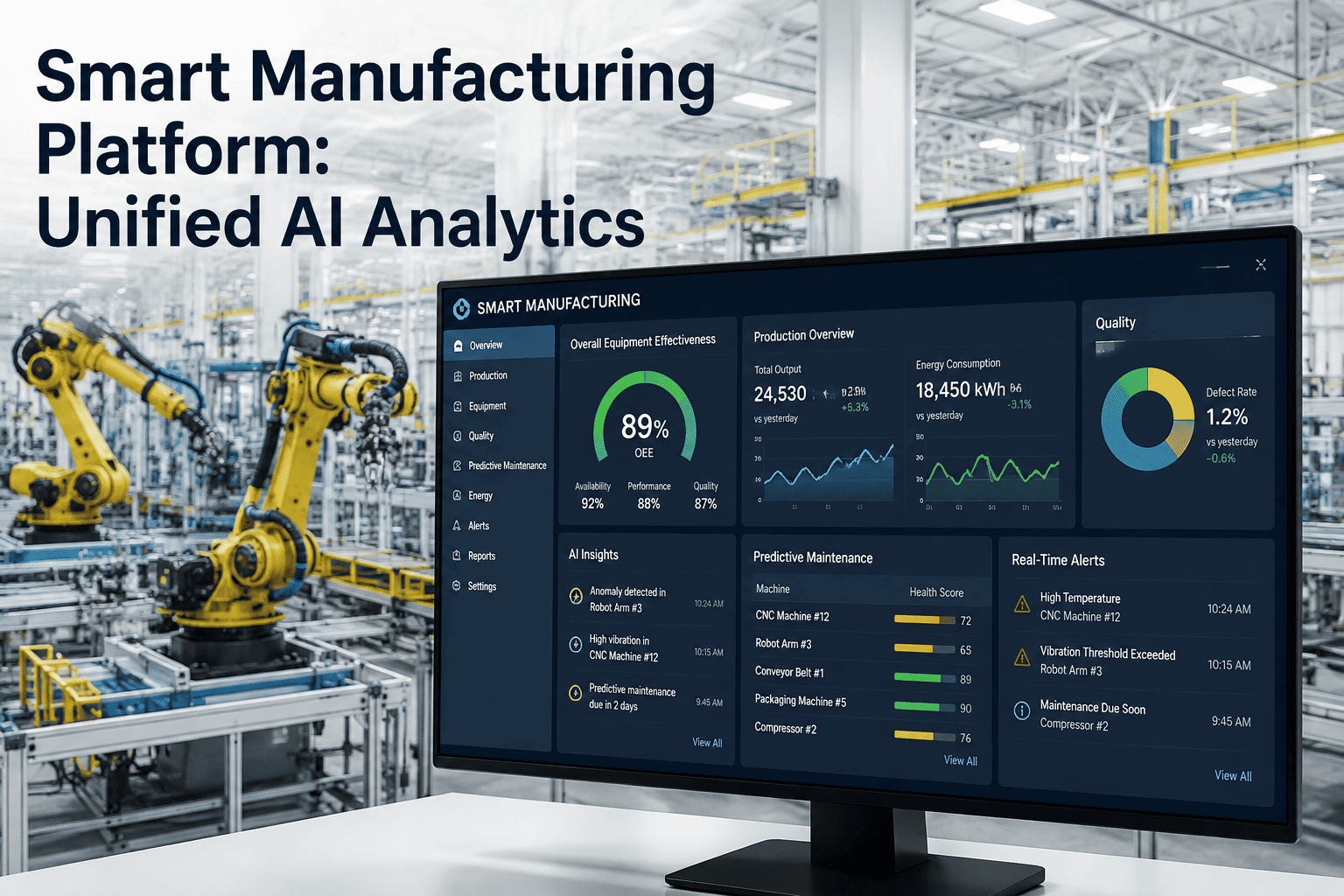
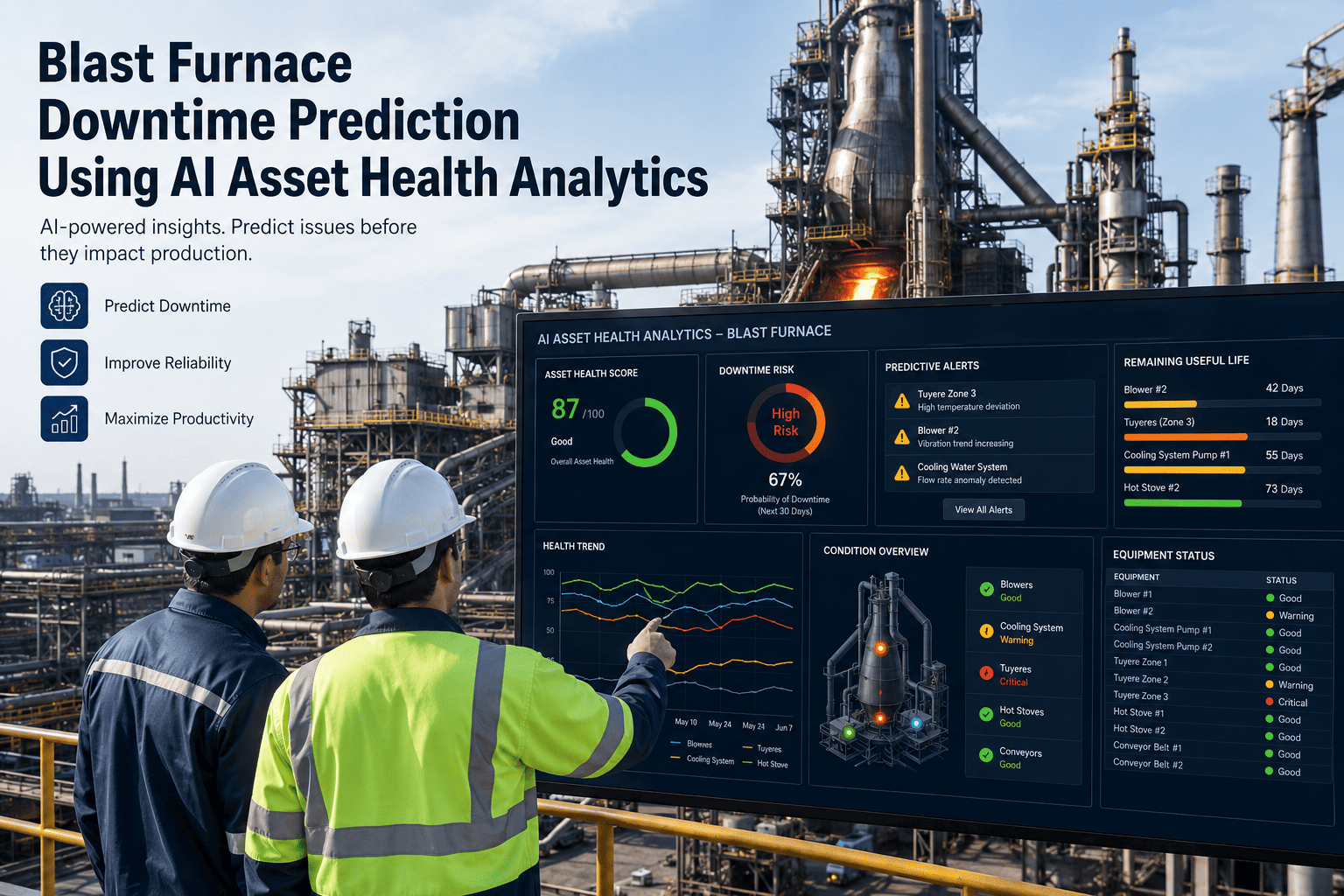
iFactory aggregates sensor data from vibration, temperature, and pressure sensors to compute a unified health score for each asset. This score updates every minute, providing a live snapshot of equipment condition. When the score drops below a configurable threshold, the system automatically generates a maintenance alert with a predicted failure timeline. This enables maintenance teams to prioritize interventions based on criticality and remaining useful life, rather than reacting to breakdowns. The health score algorithm incorporates machine learning models trained on historical failure patterns, ensuring accuracy improves over time. Plant managers can view a dashboard of all assets color-coded by risk level, allowing instant identification of equipment requiring immediate attention.
Failure Prediction Confidence Intervals
Unlike simple threshold-based alarms, iFactory's AI models output probabilistic predictions with confidence intervals. For each asset, the system estimates the probability of failure within a specified time window (e.g., 7 days, 30 days) and provides a confidence percentage. This allows maintenance planners to make risk-informed decisions: a 90% confidence failure prediction within 7 days mandates immediate intervention, while a 60% confidence within 30 days may be scheduled during the next planned shutdown. The confidence intervals are continuously calibrated against actual outcomes, ensuring that the system maintains high precision and avoids false alarms that erode trust. This statistical rigor is essential for enterprises that cannot afford unnecessary maintenance or unexpected breakdowns.
Downtime Cost Calculation Engine
iFactory includes a built-in cost calculator that quantifies the financial impact of every downtime event. The engine factors in direct costs such as lost production volume, idle labor, raw material waste, and emergency repair expenses. It also accounts for indirect costs like missed delivery penalties, overtime premiums, and expedited shipping fees. By integrating with your ERP and MES systems, the calculator automatically pulls actual production rates, labor costs, and order data to compute precise figures. The output is displayed in a dashboard showing total downtime cost per asset, per line, and per plant over any selected time period. This transparency empowers plant managers to build compelling business cases for investing in predictive maintenance technology.
Maintenance Prioritization Matrix
iFactory's prioritization matrix combines asset criticality (based on impact on production, safety, and quality) with predicted failure probability to generate a ranked list of maintenance tasks. Assets with high criticality and high failure probability are flagged as top priority, while low criticality assets with low probability are deferred. The matrix is displayed as a 2x2 grid on the dashboard, with color-coded zones for immediate action, schedule, monitor, and no action. Maintenance planners can drag and drop tasks to adjust schedules, and the system automatically recalculates resource allocation and downtime impact. This structured approach ensures that maintenance efforts are always aligned with business objectives, reducing both downtime and maintenance costs.
Implementing AI Predictive Maintenance: A 5-Step Roadmap
Sensor Deployment and Data Integration
Begin by identifying critical assets and installing IoT sensors (vibration, temperature, pressure, current) or integrating existing PLC and SCADA data streams. iFactory supports OPC UA, MQTT, Modbus, and REST APIs, ensuring seamless connectivity with legacy and modern equipment. The platform automatically normalizes data formats and stores historical baselines. Typical deployment takes 2–4 weeks for a mid-sized plant and requires no changes to existing control systems.
AI Model Training and Calibration
iFactory's machine learning engine ingests historical failure data and normal operating patterns to train anomaly detection and remaining useful life models. The system uses ensemble methods combining random forests, gradient boosting, and deep learning to maximize accuracy. Models are calibrated using cross-validation and are continuously retrained as new data arrives. The initial training phase typically requires 30 days of data to achieve reliable predictions, though the system provides useful insights from day one based on statistical baselines.
Dashboard Configuration and Alert Setup
Configure role-based dashboards for plant managers, maintenance planners, and technicians. Each dashboard displays relevant KPIs such as overall equipment effectiveness, asset health scores, predicted failures, and maintenance backlog. Set up multi-channel alerts via email, SMS, or push notifications for critical events. Alerts include contextual information such as predicted failure mode, recommended action, and estimated downtime cost if ignored.
Workflow Integration with CMMS/EAM
Integrate iFactory with your existing computerized maintenance management system or enterprise asset management platform (e.g., SAP, IBM Maximo, Oracle). The integration enables automatic work order creation when a predictive alert is triggered. Work orders include detailed failure analysis, suggested spare parts, and estimated labor hours. This closed-loop automation reduces response time from hours to minutes and ensures that maintenance actions are documented and auditable.
Continuous Optimization and ROI Tracking
After deployment, iFactory continuously monitors prediction accuracy and downtime reduction. The platform generates monthly ROI reports comparing actual downtime costs before and after implementation. These reports highlight savings from avoided failures, reduced emergency repairs, and optimized spare parts inventory. Plant managers can use these insights to fine-tune maintenance strategies and justify further investments in automation and digitalization.
Downtime Cost Breakdown by Industry
| Industry | Average Cost per Hour | Typical Failure Modes | iFactory Accuracy Gain |
|---|---|---|---|
| Automotive | $1.3M | Robotic arm failure, conveyor jams | 70% reduction in unplanned stops |
| Pharmaceutical | $1.8M | HVAC deviation, centrifuge imbalance | 65% reduction in batch loss |
| Food & Beverage | $0.5M | Pump seal failure, compressor issues | 55% reduction in spoilage |
| Electronics | $2.1M | Solder paste printer clog, pick-and-place errors | 80% reduction in quality defects |
| Oil & Gas | $5.0M | Compressor surge, pipeline corrosion | 75% reduction in safety incidents |
Condition Monitoring
Continuous analysis of vibration, temperature, pressure, and acoustic data to detect early signs of wear, misalignment, or imbalance. iFactory's algorithms can identify specific failure modes such as bearing degradation, gear tooth fracture, or cavitation. Alerts are generated with a recommended maintenance window, allowing teams to plan interventions during scheduled downtime.
Predictive Analytics
Machine learning models forecast remaining useful life for each asset with quantifiable confidence intervals. The system uses survival analysis and regression techniques to predict time-to-failure. Predictions are updated in real time as new sensor data arrives, enabling dynamic maintenance scheduling. The platform also provides what-if analysis to evaluate the impact of deferring maintenance.
Prescriptive Recommendations
Beyond prediction, iFactory recommends optimal maintenance actions based on cost, resource availability, and production schedule. For example, if a motor is predicted to fail in 10 days and the plant has a planned shutdown in 8 days, the system will recommend deferring maintenance to the shutdown window. Recommendations are generated using constraint optimization algorithms that balance risk and cost.
Ready to Transform Your Maintenance Strategy?
Join hundreds of manufacturers who have reduced unplanned downtime by 60% with iFactory's AI-powered platform. Get a personalized demo and see your potential savings.
Frequently Asked Questions
How does iFactory's predictive maintenance software integrate with existing factory systems?
iFactory offers native connectors for major industrial protocols including OPC UA, MQTT, Modbus TCP, and Siemens S7. It also provides REST APIs and database connectors for ERP and MES systems like SAP, Oracle, and Microsoft Dynamics. Integration typically requires minimal configuration and can be completed within a few days with the support of our engineering team. Contact our support team to discuss your specific integration needs.
What is the typical ROI timeline for implementing AI predictive maintenance?
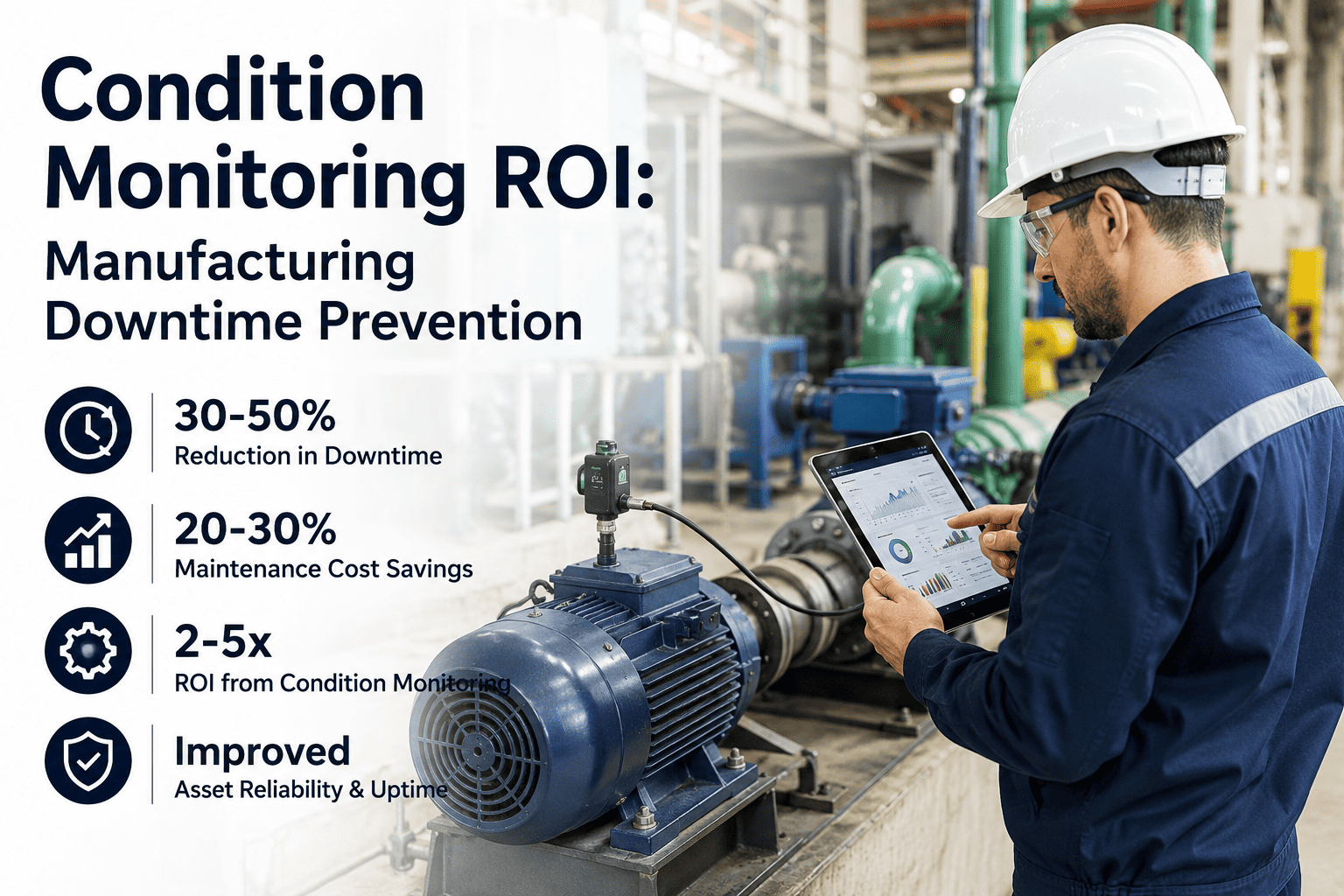
Most customers achieve a positive return on investment within 6 to 12 months of deployment. The ROI is driven by a combination of reduced unplanned downtime (average 60% reduction), lower maintenance costs (up to 30% savings on spare parts and labor), and extended asset life (20% increase in equipment lifespan). Our cost calculator can provide a personalized estimate based on your plant data. Book a Demo to get your customized ROI analysis.
Can iFactory's platform handle legacy equipment without modern sensors?
Yes, iFactory can work with legacy equipment through several approaches. We can integrate with existing PLC and SCADA systems to extract available data, deploy non-invasive retrofit sensors (e.g., wireless vibration sensors that attach magnetically), or use data from manual inspections entered via mobile app. Our platform is designed to start generating value even with limited data and progressively improve as more data becomes available. Contact us to discuss your specific equipment profile.
How accurate are iFactory's failure predictions?
Our production-validated models achieve an average accuracy of 85% for predicting failures within a 7-day window. Accuracy varies by asset type and data quality, but our continuous learning architecture ensures that models improve over time. We provide confidence intervals with every prediction so that maintenance teams can make risk-informed decisions. False positive rates are typically below 10%, ensuring that teams trust the alerts. Book a Demo to see accuracy benchmarks for your industry.
What support and training does iFactory provide after deployment?
We offer comprehensive onboarding including system configuration, user training, and data integration support. Our customer success team provides ongoing monitoring, model tuning, and quarterly business reviews. We also offer advanced training modules for power users who want to customize dashboards and alerts. All plans include 24/7 technical support via phone, email, and chat. Visit our support page for more details on service levels.
Stop Unplanned Downtime. Start Predictive Maintenance.
Calculate your potential savings today and join the leaders in smart manufacturing. Schedule your demo now.