How Much Does Manufacturing Downtime Cost Per Hour? (2026 Cost Breakdown)
By Riley Quinn on February 13, 2026
When your production line stops, your cash register doesn't. According to Siemens' 2024 research, unplanned downtime now costs the world's 500 largest companies $1.4 trillion annually—that's 11% of total revenues evaporating into thin air. For mid-sized manufacturers, even one hour of downtime can wipe out an entire day's profit. The question isn't whether downtime is costing you money. It is how much—and what you're going to do about it.
The Real Cost of One Hour of Downtime
Automotive
$2.3M
per hour
$600 per second
Heavy Manufacturing
$500K
per hour
Supply chain impact
General Manufacturing
$260K
per hour
Industry average
Mid-Sized Plants
$125K
per hour
ABB survey average
Source: Siemens True Cost of Downtime 2024, ABB Value of Reliability Report
The Downtime Reality Check
Most plant managers know downtime is expensive. What they often miss is the full picture. The numbers above represent just the tip of the iceberg—the visible costs. Beneath the surface lies a mountain of hidden expenses that can double or triple your actual losses.
800
Hours of downtime per year (average manufacturer)
25
Downtime incidents per month (major manufacturers)
11%
Of annual revenue lost to unplanned downtime
80%
Of businesses experienced unplanned downtime (last 3 years)
Every factory is different. Use this framework to calculate what one hour of downtime actually costs your operation—including the hidden costs most calculators miss.
Downtime Cost Formula
Direct Costs (Visible)
Lost Production Value
Units/hour × Margin per unit
Idle Labor Cost
Workers × Hourly rate (still paid)
Wasted Materials
In-process inventory scrapped
Emergency Repair Costs
Parts + overtime labor + expedited shipping
+
Hidden Costs (Often Missed)
Missed Delivery Penalties
Contract penalties + expedited shipping to customers
Restart & Ramp-up Losses
Time to reach full speed + startup scrap
Overtime to Recover
Extra shifts to meet backlog
Customer & Reputation Impact
Lost future orders + relationship damage
=
True Hourly Downtime Cost
Typically 2-3× the "visible" cost alone
What's Actually Causing Your Downtime?
Before you can fix the problem, you need to understand it. Research shows these are the primary culprits behind unplanned manufacturing downtime.
Skipped PMs, reactive instead of preventive approach
18%
Operator Error
Training gaps, procedure violations, human mistakes
12%
Supply Chain Issues
Parts shortages, material delays, vendor problems
5%
Other
Power outages, cyber incidents, weather events
Not sure what's causing your downtime? Talk to our team about implementing root cause tracking.
Stop Guessing, Start Measuring
iFactory's AI-driven platform tracks downtime automatically, identifies root causes and predicts failures before they happen—reducing unplanned downtime by 30-50%.
OEE (Overall Equipment Effectiveness) is the gold standard for measuring manufacturing productivity. Downtime attacks the "Availability" component directly—and drags down your entire score.
Availability
Run Time ÷ Planned Time
Directly Hit by Downtime
×
Performance
Actual Speed ÷ Ideal Speed
Ramp-up losses
×
Quality
Good Units ÷ Total Units
Startup scrap
=
OEE
Your True Efficiency
The Math That Matters
If your plant produces 1,000 units/day at 70% OEE with $20 margin per unit, each 1% OEE improvement = 14+ additional units = $285/day or $105,000+ annually per production line.
Proven Strategies to Reduce Downtime
The good news? Manufacturers who implement the right strategies are seeing dramatic results. Here's what actually works.
01
Predictive Maintenance
Use AI and sensor data to predict failures before they happen. Fix issues during planned windows, not emergencies.
Up to 50%Downtime Reduction
02
Real-Time Monitoring
See equipment status instantly. Catch small problems before they become big breakdowns.
25-40%Faster Response
03
Preventive Maintenance Programs
Shift from reactive to proactive. Schedule maintenance based on usage, not just calendar dates.
80/20Planned vs Unplanned
04
Root Cause Tracking
Don't just fix problems—understand why they happened. Pareto analysis reveals the vital few issues causing most downtime.
ContinuousImprovement
Ready to implement these strategies? Schedule a demo to see how iFactory makes it easy.
Expert Insight
"Predictive maintenance is a 'must-have' technology. Fixing before failure reduces the need for replacement parts by up to 40%, reducing wastage and carbon usage. Companies have reduced their unscheduled downtime hours—the only reason expenses have not spun out of control."
— Siemens, The True Cost of Downtime 2024
Turn Downtime Into Uptime
Join manufacturers who have cut unplanned downtime by 30-50% with iFactory's AI-powered predictive maintenance and real-time monitoring platform.
How much does manufacturing downtime cost per hour on average?
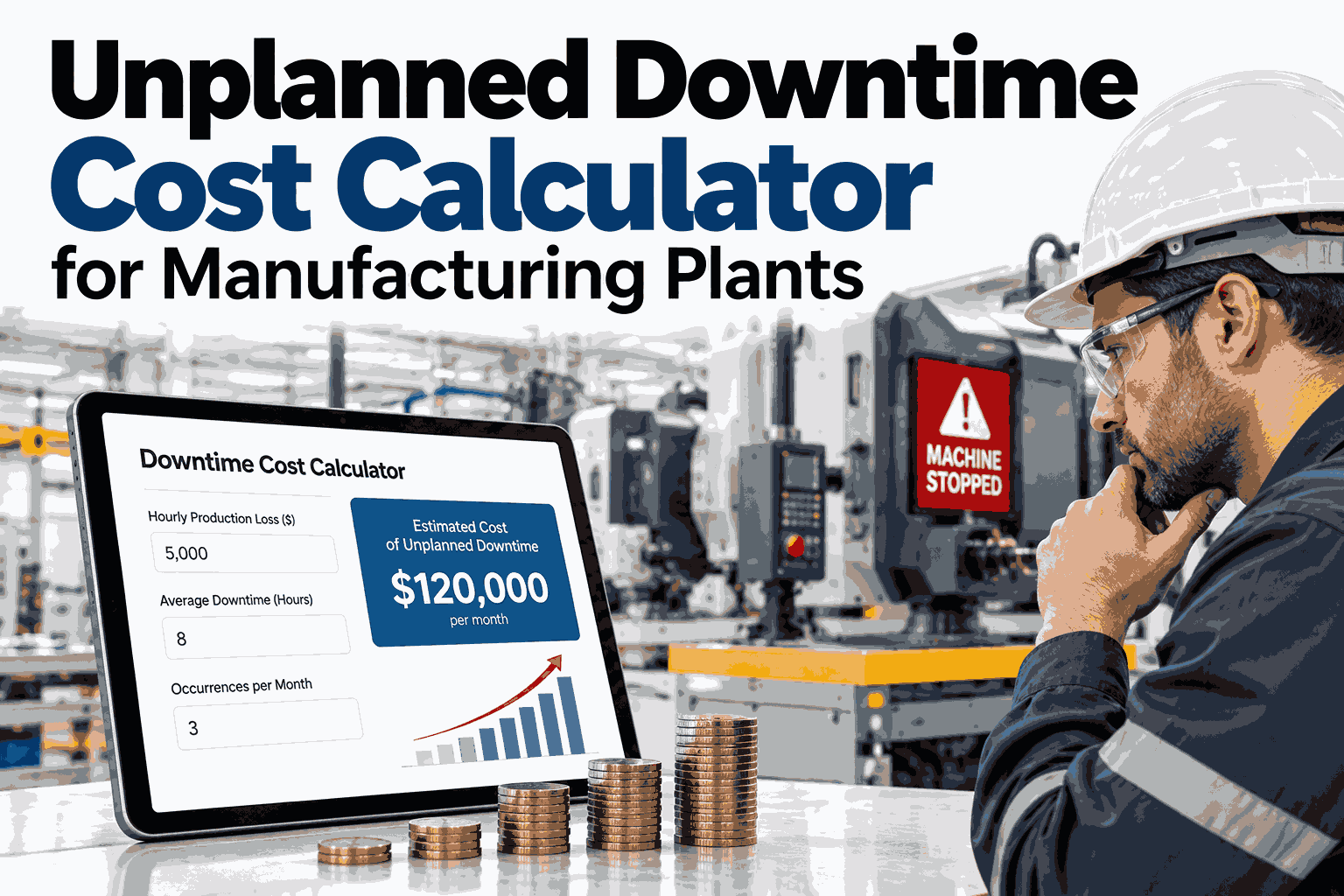
The average manufacturing downtime cost is approximately $260,000 per hour, though this varies significantly by industry. Automotive plants lose around $2.3 million per hour, while mid-sized facilities typically see $125,000 per hour. The key is calculating your specific cost including both direct losses and hidden expenses.
What are the hidden costs of downtime most companies miss?
Hidden costs include: overtime to catch up on backlog, expedited shipping to meet delayed orders, contract penalties for missed deliveries, startup scrap when restarting production, customer relationship damage, and lost future business. These hidden costs typically add 2-3× to the visible production loss.
How does downtime affect OEE?
Downtime directly reduces the "Availability" component of OEE (Availability × Performance × Quality). Every minute of downtime reduces your run time, dragging down overall OEE. Additionally, restarts often cause performance losses (ramp-up time) and quality losses (startup scrap), creating a triple impact.
How much can predictive maintenance reduce downtime?
Studies show predictive maintenance can reduce unplanned downtime by 30-50%, cut maintenance costs by 25%, and reduce spare parts needs by up to 40%. By predicting failures before they happen, you can schedule repairs during planned windows instead of experiencing costly emergency breakdowns.
What's the biggest cause of unplanned downtime?
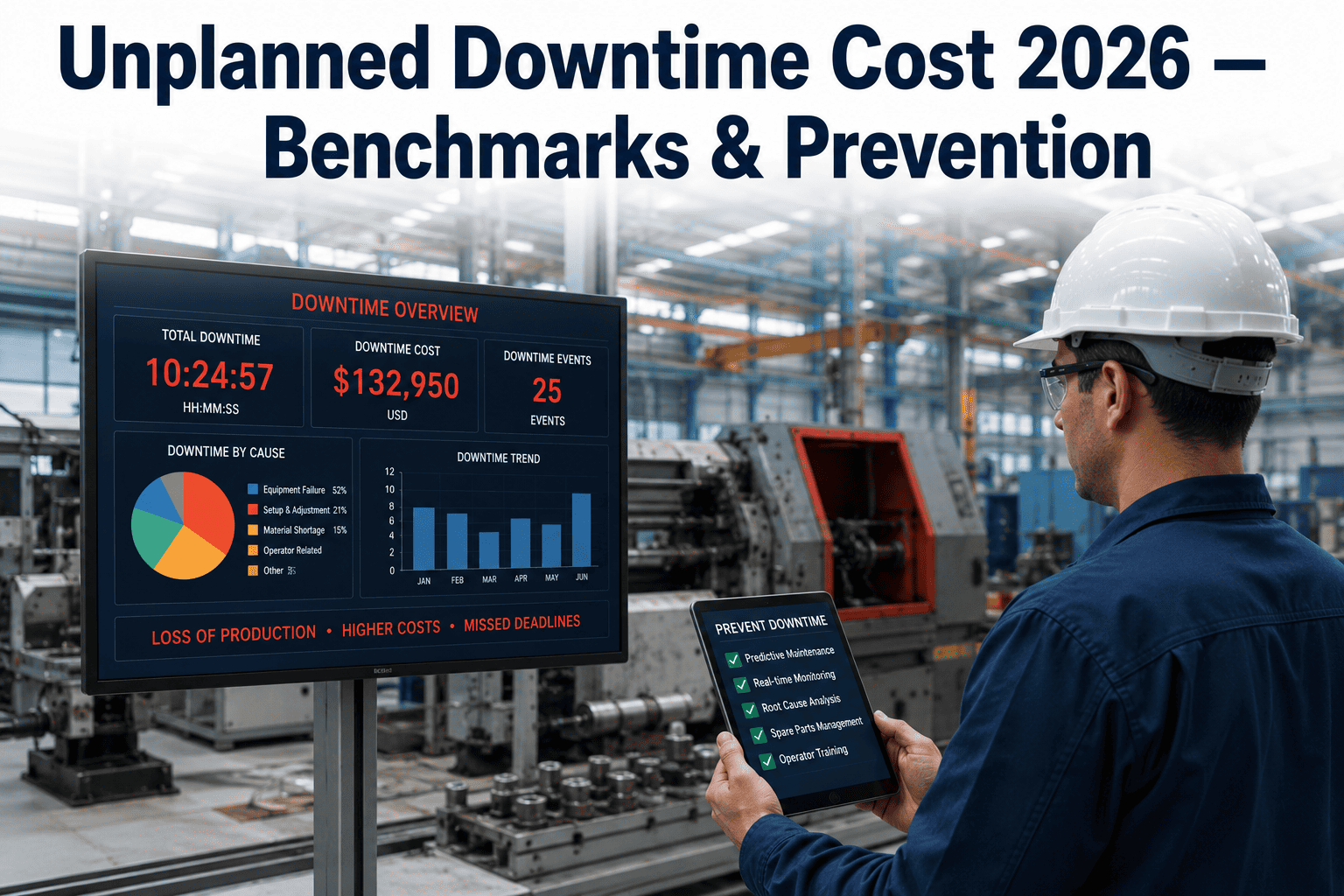
Equipment failures account for approximately 42% of unplanned downtime, followed by poor maintenance planning (23%), operator error (18%), and supply chain issues (12%). The good news: equipment failures and maintenance planning issues are highly preventable with the right software and processes.