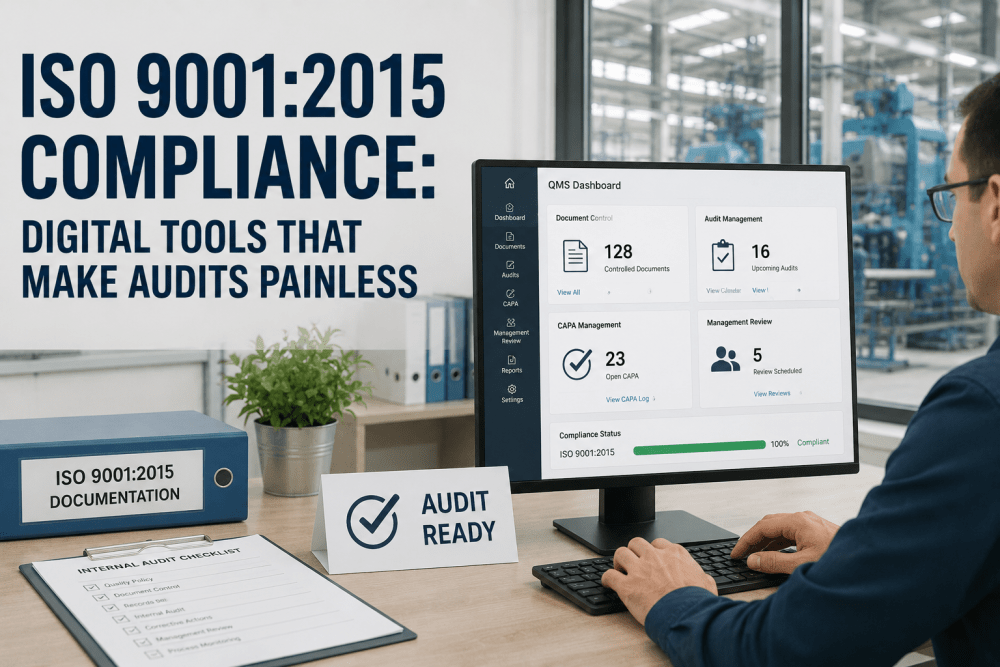
ISO 9001:2015 is the world's most widely adopted quality management standard, with over one million organizations certified globally. Yet most manufacturers still wrestle with binders, spreadsheets, and last-minute audit panic. Digital quality management tools change that—turning ISO 9001 compliance from a paperwork burden into a competitive advantage with automated document control, real-time CAPA tracking, and audit-ready evidence available at a click.
Digital QMS Tools for Document Control, CAPA, and Audit Readiness
Why ISO 9001:2015 Compliance Still Trips Up Manufacturers
Ask any quality manager what keeps them up at night before a certification audit, and you'll hear the same answers: missing signatures on controlled documents, CAPA actions logged in three different spreadsheets, training records that don't match current roles, and supplier evaluations buried in email threads. The standard itself isn't the problem—the manual systems are.
ISO 9001:2015 is built on Clauses 1 through 7, organized around the Plan-Do-Check-Act cycle, with risk-based thinking woven into every requirement. The expected 2026 revision is anticipated to deepen the focus on digital oversight, AI-driven analytics, and continuous performance monitoring. Manufacturers still relying on paper-based or fragmented digital workflows will find each surveillance audit harder, not easier. A modern, integrated QMS removes that friction by tying documents, training, audits, and corrective actions into one traceable system.
The Seven Clauses That Drive Real Compliance Work
Clauses 1 through 7 are where manufacturers spend most of their certification effort. Understanding what each clause demands—and which digital capability solves it—is the foundation of a painless audit.
Context of the Organization
Define the QMS scope, identify interested parties, and map internal and external issues that affect quality outcomes.
Leadership
Top management must demonstrate commitment, establish the quality policy, and assign clear roles and responsibilities.
Planning
Address risks and opportunities, set measurable quality objectives, and plan changes to the QMS in a controlled manner.
Support
Provide resources, ensure personnel competence, manage communication, and control documented information.
Operation
Control the full product lifecycle—design, supplier management, production, release, and handling of nonconforming outputs.
Performance Evaluation
Monitor, measure, and analyze the QMS through internal audits, customer feedback, and management reviews.
Improvement
Drive continual improvement by acting on nonconformities, implementing corrective actions, and capturing improvement opportunities.
Want to map your current QMS gaps against ISO 9001 clauses? Book a Demo with our quality management specialists.
Digital Tools That Make Each Audit Element Painless
The right digital quality management system replaces five painful audit tasks with five automated ones. Here's how each capability maps to a real ISO 9001 requirement—and what it eliminates from your team's workload.
| Capability | What It Does | ISO Clause | Audit Pain Eliminated |
|---|---|---|---|
| Document Control | Version-controlled SOPs and policies with e-signatures and revision history | 7.5 | Hunting for the latest revision in shared drives |
| CAPA Management | Issue logging, root cause analysis, effectiveness verification, trending | 10.2 | Disconnected spreadsheets and lost action items |
| Internal Audit Module | Scheduling, checklist automation, finding tracking, NCR closeout | 9.2 | Paper checklists and manual finding compilation |
| Training Management | Competence matrices linked to roles, automatic re-training triggers | 7.2 | Outdated training records and missed renewals |
| Risk Register | Live risk identification, scoring, mitigation tracking, and review | 6.1 | Annual risk reviews that nobody updates |
| Supplier Management | Qualification, evaluation, performance scorecards, re-approval cycles | 8.4 | Supplier files scattered across procurement emails |
| Calibration & Equipment | Asset records, calibration schedules, automatic due-date alerts | 7.1.5 | Out-of-cal equipment caught only at audit |
| NCR & Defect Tracking | Real-time logging on the shop floor with photo evidence and disposition | 8.7 | Hand-written tags lost between shifts |
Building Audit Readiness with iFactory AI Quality Management
iFactory AI integrates quality management with the broader manufacturing operations stack—MES, CMMS, and production monitoring—so quality data is never siloed. That means audit evidence is generated as a byproduct of normal work, not a separate compliance project.
Smart Document Management
Controlled SOPs, work instructions, and policies with version history, approval workflows, and instant publishing to the shop floor.
Quality Control Management
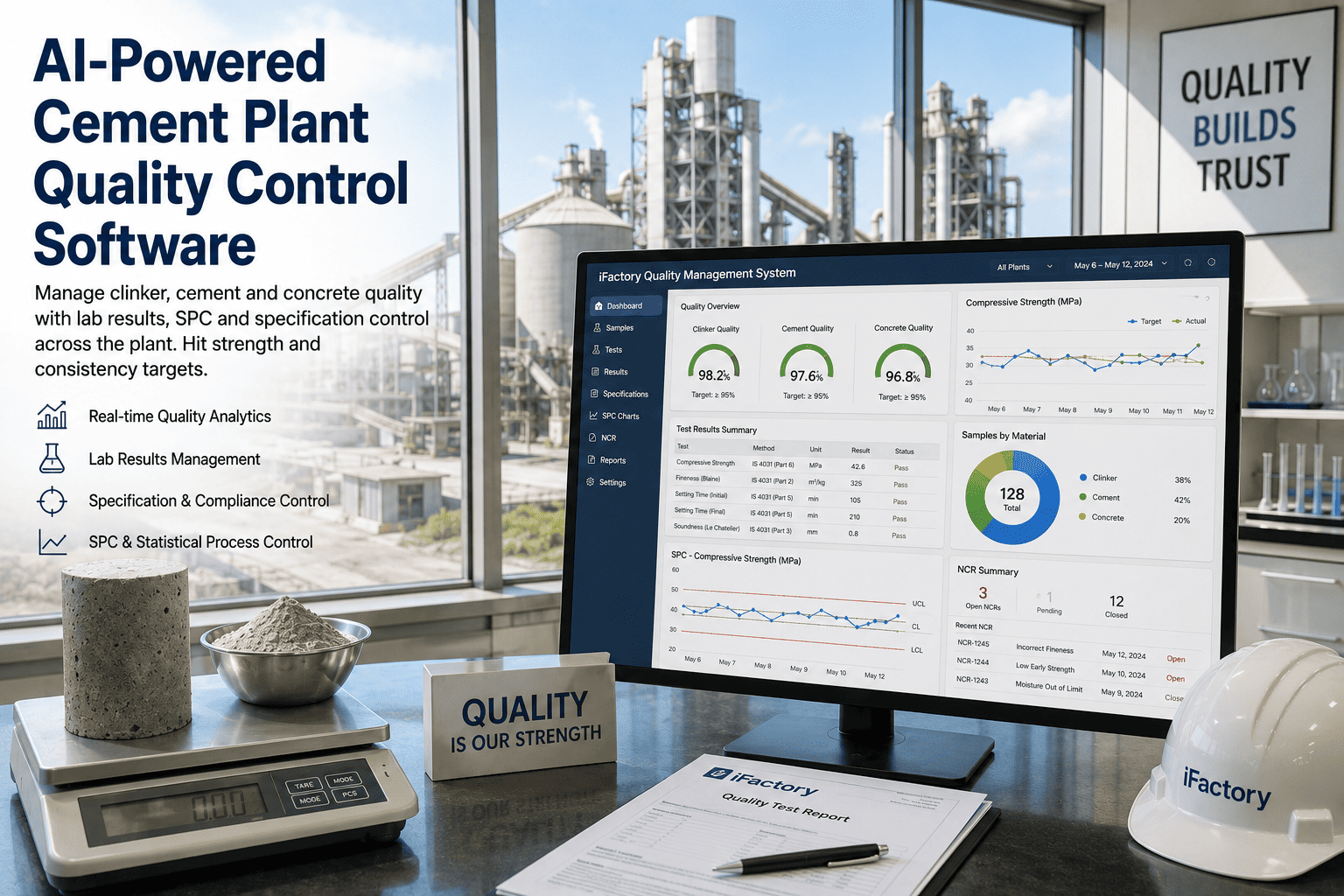
Inline inspection plans, statistical quality control charts, and AI vision integration for automated defect detection on production lines.
Inspection Management
Schedule incoming, in-process, and final inspections with mobile checklists, photo evidence, and automatic NCR escalation.
Statistical Quality Control
Real-time SPC charts, Cp/Cpk monitoring, and trend analysis that feed directly into management review evidence.
Vendor & Supplier Management
Qualification workflows, performance scorecards, audit history, and re-approval cycles built around Clause 8.4 requirements.
Automated Analytics Reporting
One-click management review reports, KPI dashboards, and audit-ready evidence packs that satisfy Clause 9 requirements.
The Five-Step Path to a Painless Audit
Audit pain is rarely about the auditor. It's about what you have to scramble to find the week before. A digital QMS shifts the work from a one-week sprint to a continuous, low-effort routine.
Centralize Controlled Documents
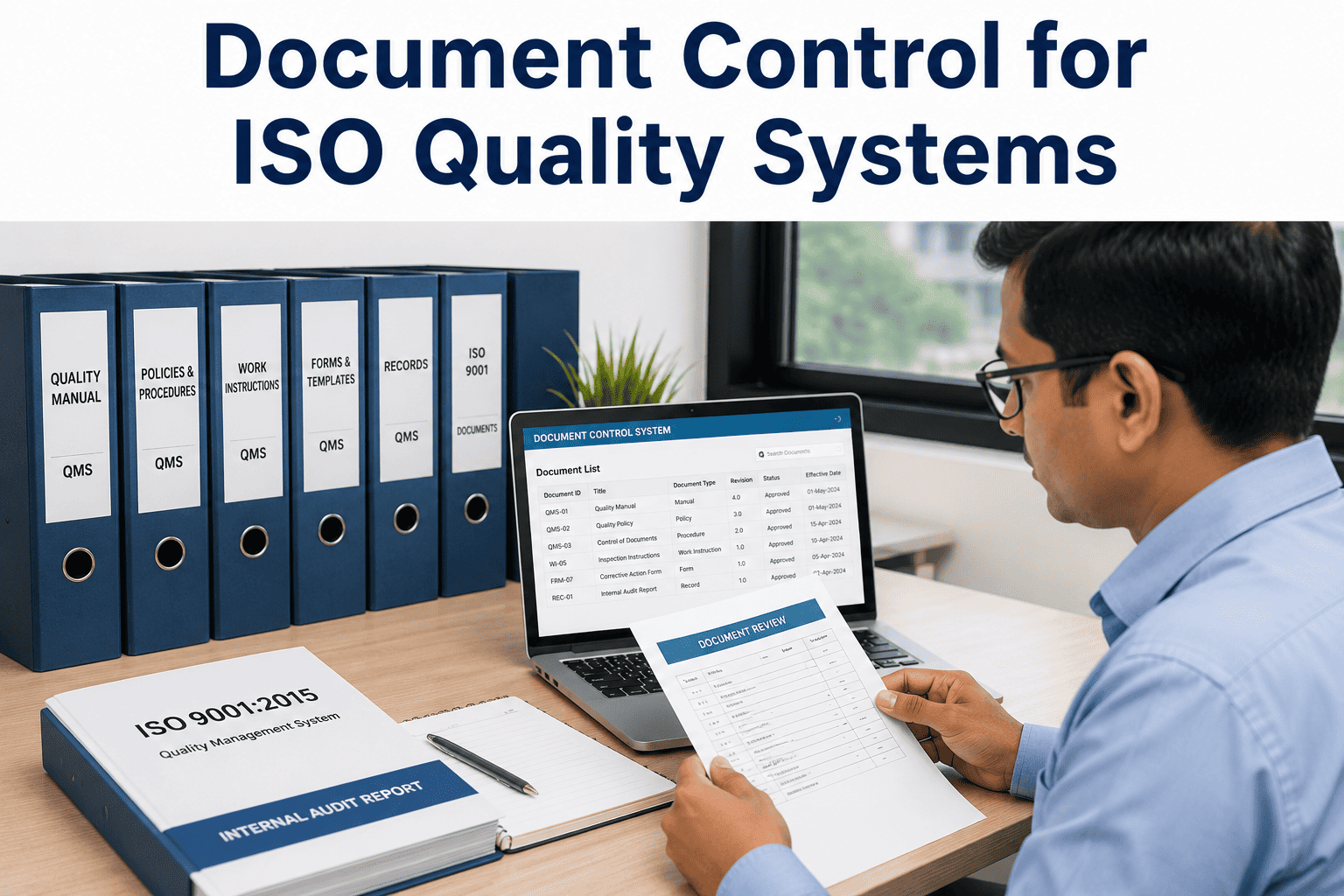
Move every SOP, work instruction, form, and policy into a single repository with version control, approval workflows, and e-signatures. Auditors should never see two versions of the same document.
Digitize CAPA and NCR Workflows
Issues logged on the shop floor flow into a single CAPA queue with root cause fields, action owners, and effectiveness verification. Trending happens automatically.
Link Training to Roles and Documents
When an SOP changes, affected personnel are automatically re-tasked for training acknowledgment. Competence matrices stay current without manual updates.
Automate Internal Audits
Schedule audits by clause or process, conduct them on mobile checklists, and roll findings directly into CAPA. Internal audit becomes a habit, not an event.
Generate Evidence on Demand
When the certification body arrives, every document, action, training record, and KPI is one filter away. Audit prep collapses from weeks to hours.
Expert Review: What Auditors Actually Look For
Experienced ISO 9001 lead auditors emphasize that the biggest red flag is not what's missing—it's what's inconsistent. When the document register says one version is current but the operator at workstation 12 is using last year's print-out, that's a major nonconformity waiting to happen. Auditors increasingly expect digital evidence trails: who approved this SOP, who acknowledged the training, when was the last calibration verified. Manufacturers using integrated QMS platforms close audits with fewer findings because the evidence is generated automatically as work happens, not retrofitted before the audit.
Want an honest pre-audit gap assessment? Book a Demo and we'll walk through your current QMS clause by clause.
Measurable Outcomes from Digital QMS Adoption
Evidence packs generated on demand instead of compiled manually over weeks.
Automated routing, escalation, and effectiveness verification removes bottlenecks.
Single source of truth eliminates outdated SOPs and unauthorized revisions.
Every approval, training acknowledgment, and corrective action is timestamped.
Conclusion: Compliance as a Byproduct of Good Work
ISO 9001:2015 was never meant to be a paperwork exercise—it's a framework for consistent quality. When digital tools replace binders and spreadsheets, compliance stops being a separate project and becomes a natural output of how the plant already runs. Document control, CAPA, training, audits, and supplier management connect into a single system where evidence is generated continuously, not assembled in panic before the certification body arrives.
With the expected 2026 revision likely to emphasize digital oversight and continuous performance monitoring even more, manufacturers who modernize now will spend less time on audit prep and more time on actual improvement. That's the real promise of a digital QMS: not just painless audits, but a quality system that earns its keep every day.
Frequently Asked Questions
Turn Your Next ISO 9001 Audit Into a Non-Event
From document control to CAPA tracking to automated audit evidence, iFactory AI helps U.S. manufacturers run quality systems that stay audit-ready every day of the year.