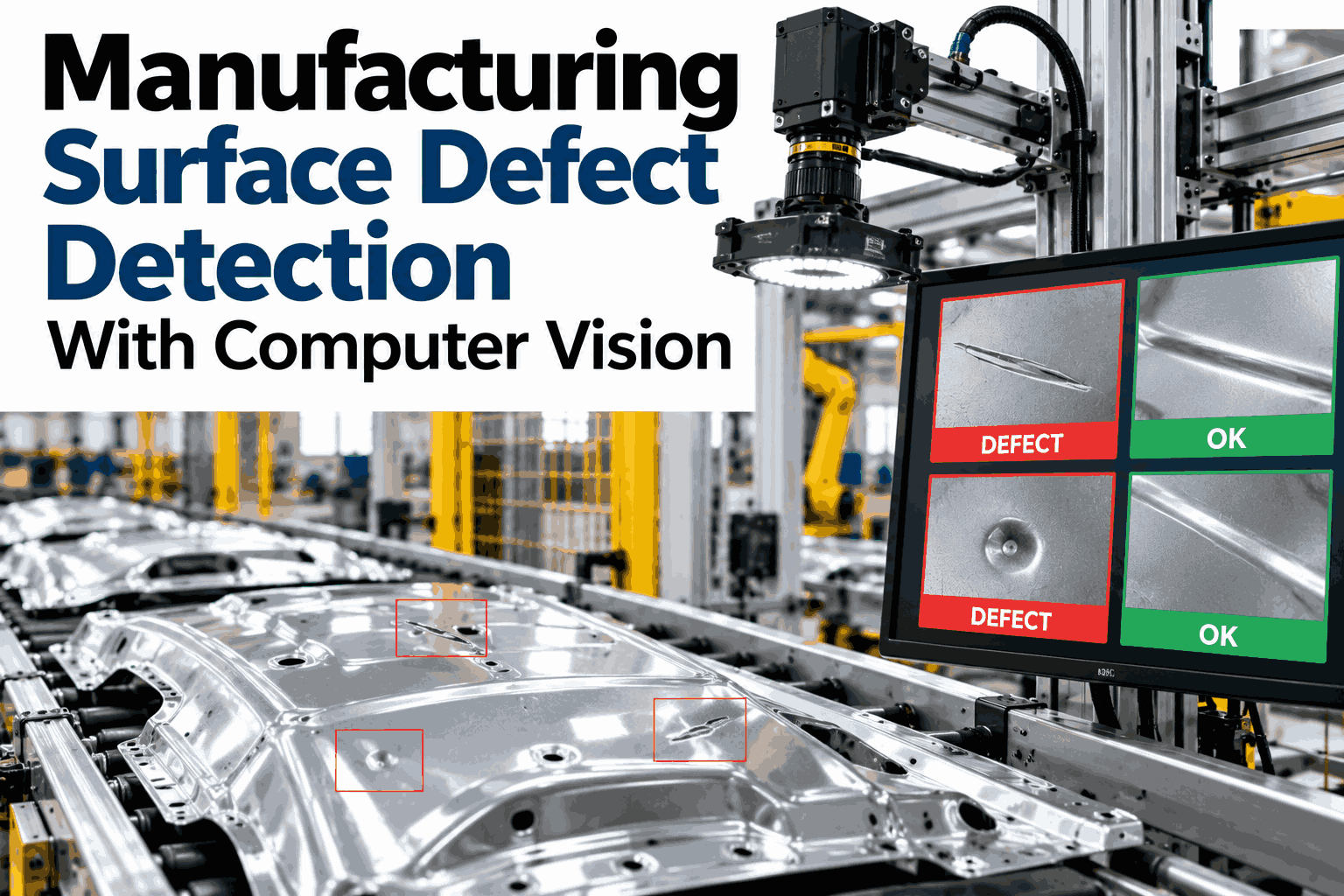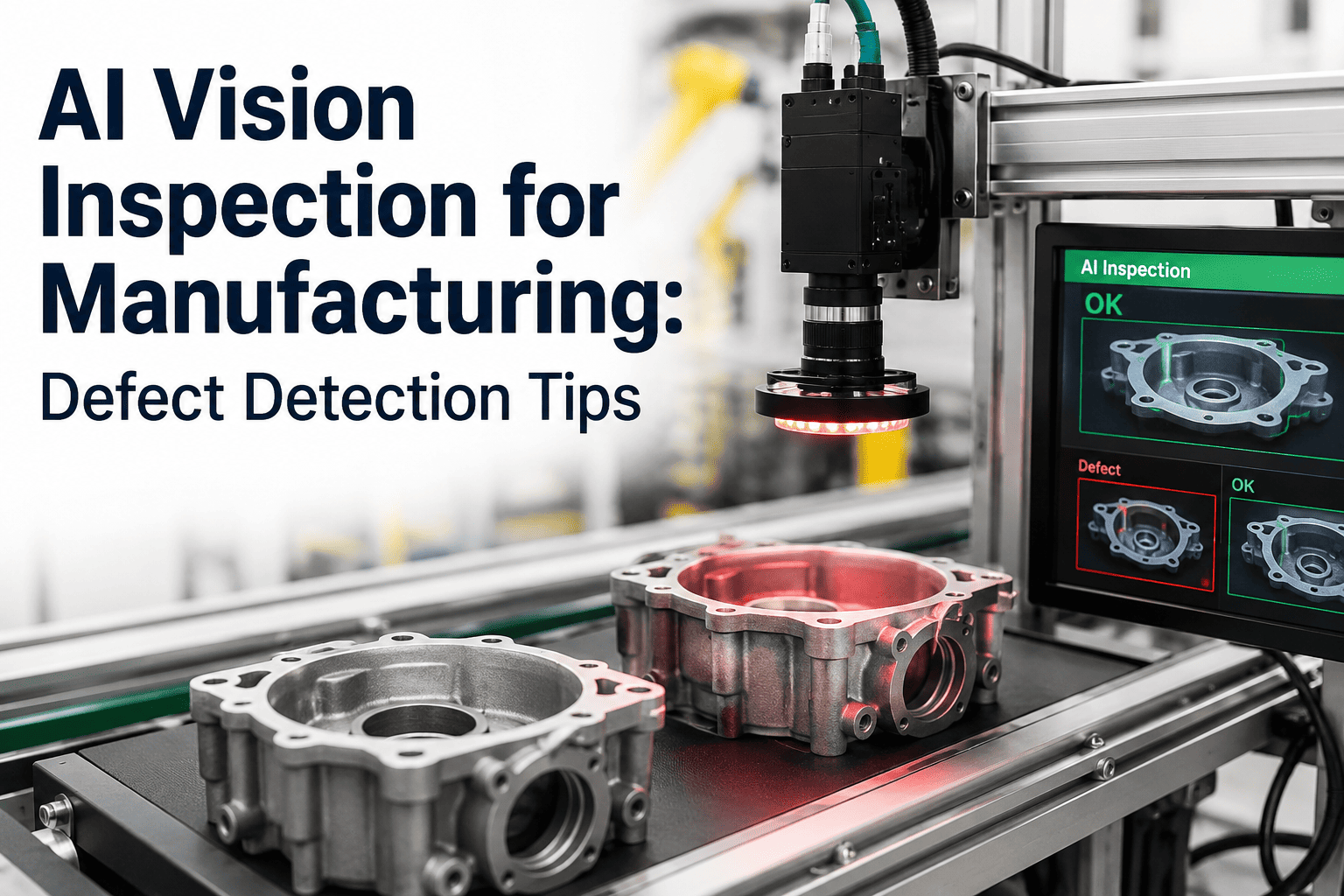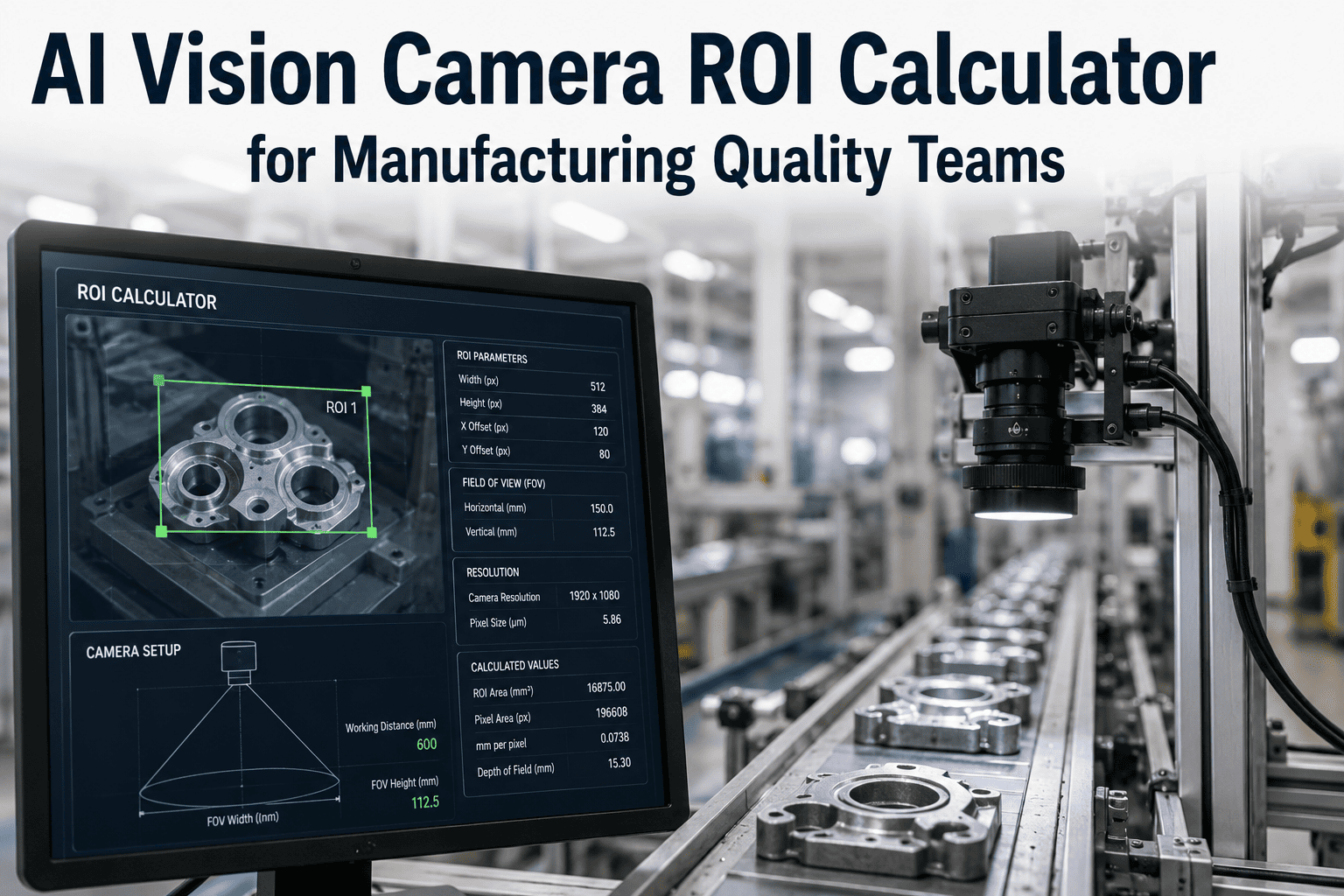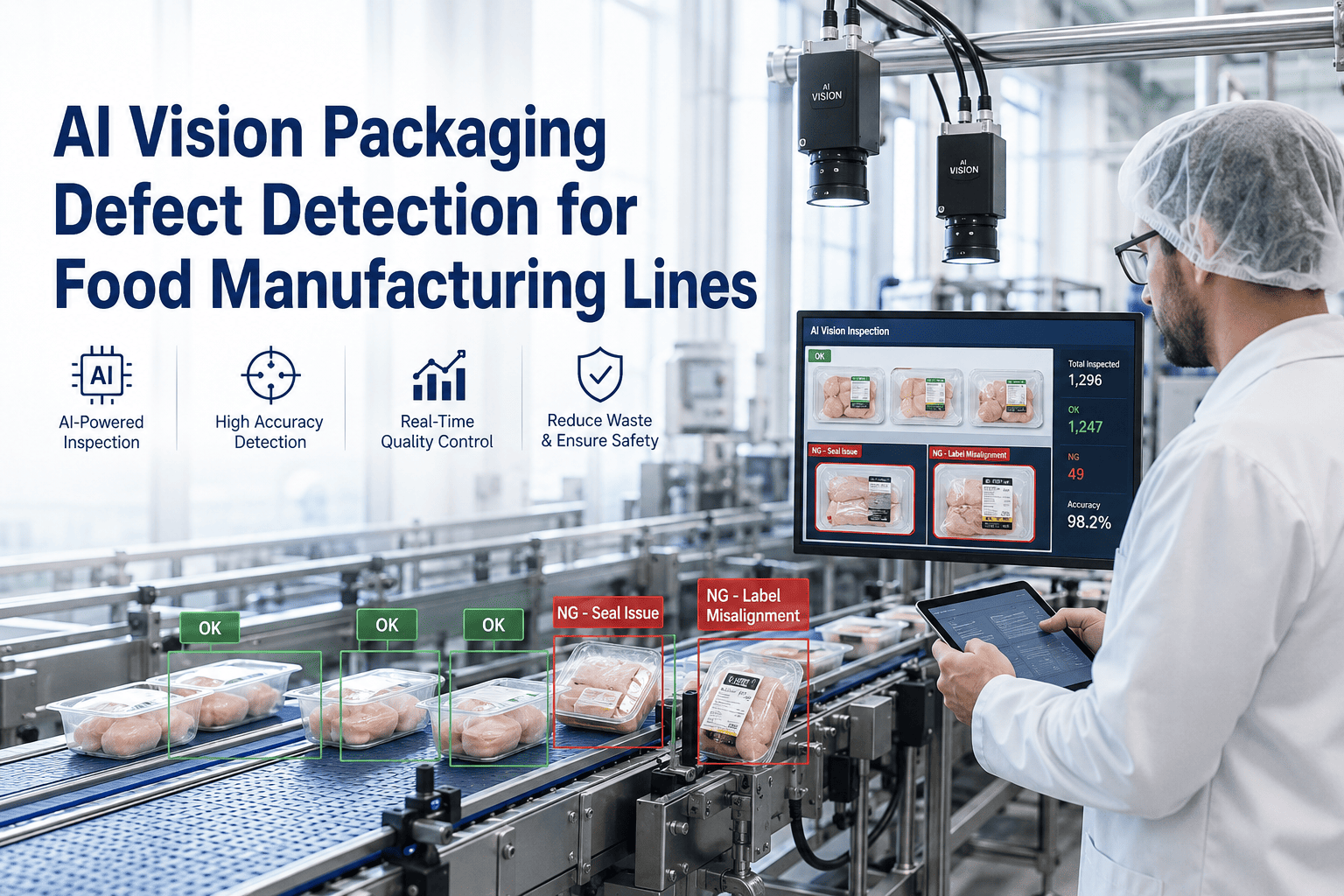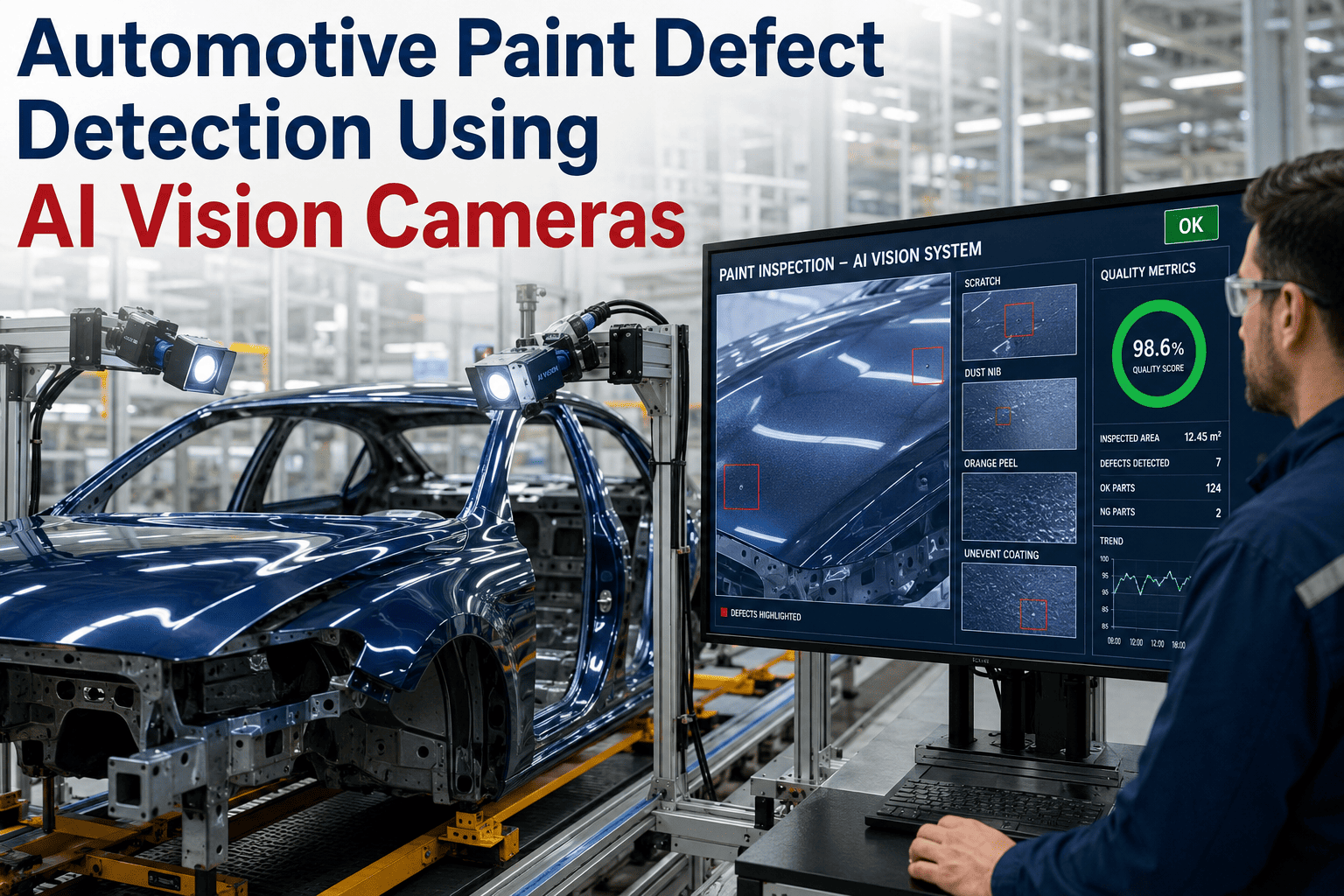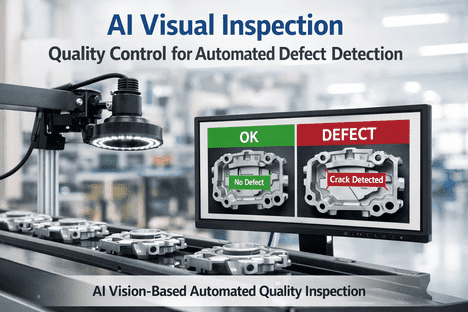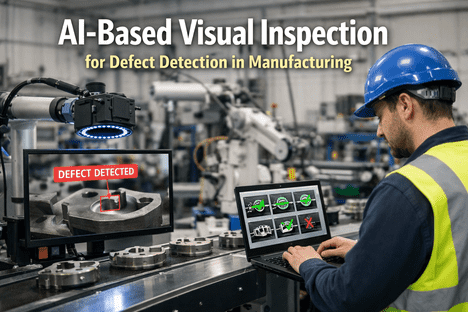
Every year, manufacturers lose an estimated 25–40% of production costs to the hidden factory of rework, scrap, and defect escapes. Human inspectors, even the best ones, catch only 80% of defects at peak performance — and accuracy drops 25–40% after the first hour. AI vision systems now detect what human eyes and legacy cameras consistently miss, delivering 99%+ accuracy at full production speed. Book a free consultation to see AI vision in action on your production line.
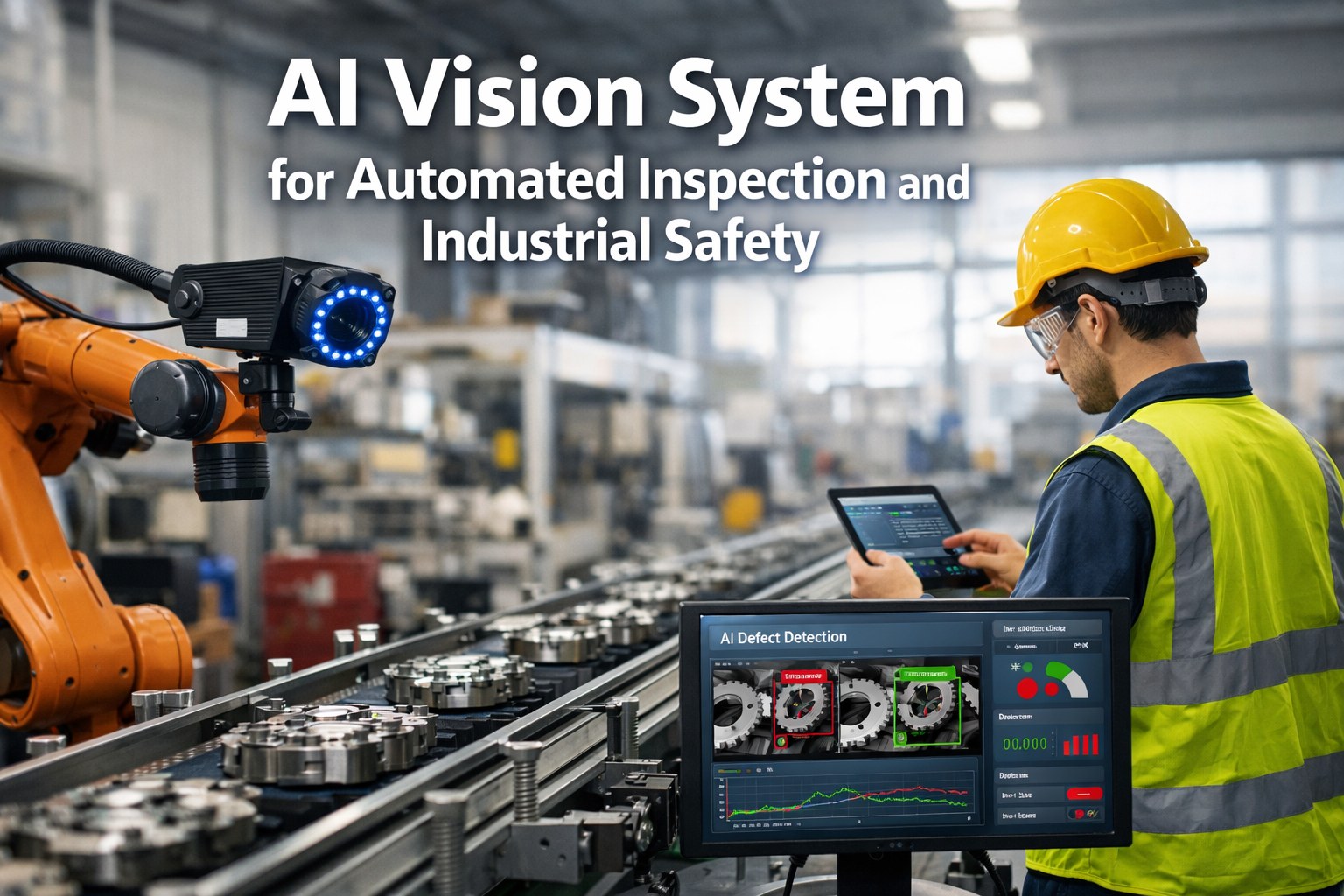
AI Vision System for Automated Inspection and Industrial Safety
Deep Learning Computer Vision That Sees What Humans and Legacy Cameras Cannot
What Is an AI Vision System?
From cameras to decisions — how intelligent visual inspection actually works.
An AI vision system combines high-resolution industrial cameras with deep learning algorithms to automatically inspect, measure, and classify products on the production line. Unlike traditional rule-based machine vision that follows rigid if-then logic, AI vision learns from real-world examples — recognizing defect patterns, surface anomalies, and process deviations that no human programmer could anticipate or code for.
These systems process thousands of images per minute, making pass/fail decisions in milliseconds while continuously improving their accuracy with every inspection cycle. The result is a quality gate that never tires, never loses focus, and adapts to new product variants without reprogramming.
Why Traditional Inspection Is Failing Modern Manufacturing
The gap between what your line produces and what your inspection catches is costing you millions.
How AI Vision Improves Manufacturing Quality Inspection
From catching invisible micro-cracks to eliminating costly false rejects.
Microscopic Defect Detection
AI vision detects flaws smaller than 0.1mm — scratches, micro-cracks, contamination, and coating inconsistencies invisible to the human eye — at full production line speed.
Zero Fatigue, Zero Variance
Unlike human inspectors whose accuracy degrades within 20–30 minutes, AI systems deliver identical precision on the first part and the millionth part across every shift.
Fewer False Rejects
AI distinguishes cosmetic anomalies from functional defects with adjustable thresholds — halving the scrap rate from overkill that wastes perfectly good products.
Self-Improving Accuracy
Deep learning models learn continuously from every inspection, adapting to product variations, lighting changes, and new defect types without manual reprogramming.
Detecting Surface, Assembly, and Process Defects with AI
Stop Guessing. Start Seeing.
Manufacturers using AI vision report 10x fewer defect escapes and ROI within the first year. Find out what your line is missing.
AI Vision for Workplace Safety and PPE Compliance
The same cameras that inspect products can protect your people.
AI Vision vs Traditional Machine Vision Systems
Why deep learning outperforms rule-based inspection in every measurable dimension.
| Capability | Traditional Machine Vision | AI Deep Learning Vision |
|---|---|---|
| Defect Detection Rate | 80–90% | 97–99.5% |
| New Product Setup | Days to weeks of reprogramming | 5–50 sample images, hours to deploy |
| Complex Surfaces | Struggles with glare, texture, curves | Handles reflective, textured, variable surfaces |
| Unknown Defect Types | Cannot detect what is not programmed | Learns and generalizes to novel anomalies |
| False Reject Rate | High — flags cosmetic as critical | Low — adjustable severity thresholds |
| Maintenance | Constant manual tuning required | Self-improving with continuous learning |
Integrating AI Vision with MES, SCADA, and IoT Platforms
AI vision does not work in isolation — it becomes the eyes of your entire smart factory ecosystem.
Manufacturing Execution Systems
Every inspection result feeds directly into your MES for real-time production tracking, SPC charting, and automated lot disposition — no manual data entry, no delays.
Supervisory Control
AI vision triggers automated line holds, speed adjustments, and process parameter corrections through SCADA when defect rates exceed thresholds — closed-loop quality control.
Industrial IoT Sensors
Combine visual inspection data with temperature, vibration, and humidity sensor data for root cause analysis that connects process drift to defect patterns.
Enterprise Resource Planning
Quality data flows into ERP for supplier scorecards, warranty cost tracking, and compliance documentation — creating full traceability from raw material to finished product.
Industries Using AI Vision Systems Today
AI vision is not a future technology — it is deployed and delivering ROI across every major manufacturing sector right now.
The AI Vision Market Is Accelerating — Are You Keeping Up?
The manufacturers adopting AI vision now are building an insurmountable quality advantage.
Frequently Asked Questions
How accurate is AI vision compared to human inspection?
Modern AI vision systems achieve 97–99.5% defect detection accuracy, compared to 60–80% for human inspectors. AI systems maintain this accuracy 24/7 without degradation from fatigue, which causes human accuracy to drop 25–40% within the first hour of repetitive inspection tasks.
How long does it take to deploy an AI vision system?
With modern transfer learning and few-shot training, initial deployment can happen in days rather than weeks. Most systems need only 5–50 labeled defect images to begin detecting anomalies, and accuracy improves continuously as production data accumulates.
What is the typical ROI for AI visual inspection?
Most manufacturers achieve positive ROI within 6–12 months through combined savings from reduced scrap, fewer customer returns, lower inspection labor costs, and decreased warranty exposure. Intel, for example, reported $2M in annual savings from AI vision deployment.
Can AI vision integrate with our existing factory systems?
Yes. Modern AI vision platforms are designed to integrate with MES, SCADA, ERP, and IoT systems through standard protocols (OPC-UA, MQTT, REST APIs). Inspection data flows directly into your existing quality management and production tracking workflows.
Does AI vision also help with workplace safety?
Absolutely. The same AI vision infrastructure monitors PPE compliance, restricted zone access, and unsafe behaviors in real time. Manufacturers have reported up to 87% reduction in safety violations and 64% fewer recordable incidents within the first six months.
Will AI vision replace our human inspectors?
In most high-volume environments, AI handles repetitive inspection with superior consistency. However, most manufacturers transition human inspectors to higher-value roles: managing AI-flagged exceptions, process optimization, quality engineering, and continuous improvement initiatives.
Deploy AI Vision to Catch What Your Current Inspection Misses
See how iFactory's AI vision platform combines deep learning inspection, safety monitoring, and full system integration to eliminate defect escapes and protect your workforce.