Industrial safety has undergone a profound transformation over the past five decades. Worker deaths in America have dropped from an average of 38 per day in 1970 to 15 per day in 2023, while injury rates have declined from 10.9 incidents per 100 workers to just 2.4. Yet despite this progress, 5,283 workers still lost their lives on the job in 2023, and 2.6 million injury and illness cases were reported. The next frontier in safety improvement requires a fundamental shift—from reactive compliance to proactive prevention, powered by executive leadership, predictive analytics, and automation technologies.
The workplace safety market reflects this evolution, projected to grow from $19.64 billion in 2025 to $38.55 billion by 2030. This growth is driven by the integration of AI, IoT, and predictive analytics that enable organizations to identify and mitigate risks before they result in incidents. For manufacturing leaders, understanding how to champion this transformation is not just a moral imperative—it is a strategic advantage that directly impacts operational performance, regulatory compliance, and competitive positioning.
Market Transformation
The Industrial Safety Revolution
From reactive compliance to predictive prevention
2025
$19.64B
2030
$38.55B
14.4%CAGR Growth
AI & Predictive Analytics
IoT & Connected Devices
Regulatory Compliance
Worker Protection Focus
This guide explores how executive leadership is evolving to foster proactive safety systems, the role of predictive analytics and automation in safety tracking, and the measurable outcomes that prove investment in safety leadership delivers real business results. Ready to discuss how to strengthen safety leadership in your organization? Schedule a consultation with our team.
Analyzes How Executive Roles Are Evolving in Safety Leadership
The role of executives in industrial safety has fundamentally transformed. Where safety was once delegated to compliance departments, today's most effective organizations treat it as a board-level strategic priority. Research shows that when CEOs personally champion safety initiatives, organizations achieve dramatically better outcomes—with some companies reducing lost-time injuries by 40% and saving over $2 million in insurance and incident costs.
Five Decades of Safety Progress
OSHA's impact on American workplace safety since 1970
1970
38
deaths/day
2023
15
deaths/day
Worker Fatalities
60% Reduction
1972
10.9
per 100
2023
2.4
per 100
Injury Rate
78% Reduction
Despite progress, 5,283 workers lost their lives in 2023 and 2.6 million injuries were reported. The next breakthrough requires proactive, predictive approaches.
The Safety Leadership Maturity Model
Four stages of executive safety governance
Stage 1
Reactive
Safety seen as someone else's responsibility. Engagement only after incidents occur.
Stage 2
Compliant
Focus on meeting regulatory requirements. Safety metrics reported but not prioritized.
Stage 3
Proactive
CEO champions safety personally. Board subcommittee established. Lead indicators tracked.
Stage 4
Transformational
Safety integrated into all decisions. Predictive systems deployed. Culture of continuous improvement.
Research from the Campbell Institute identifies four criteria of safety leadership specifically applicable to senior executives: vision, personal commitment, decision-making, and transparency. Organizations where leaders demonstrate these qualities consistently outperform their peers in safety outcomes. The transition from compliant to transformational safety governance requires executives to move beyond viewing safety as a cost center to recognizing it as a strategic driver of operational excellence.
Executive Safety Leadership Behaviors
The four pillars that drive safety culture transformation
Vision
Articulate a clear safety vision that inspires commitment across all levels. Make "zero harm" a credible organizational aspiration.
Include safety in strategic plansSet ambitious, measurable goalsCommunicate vision consistently
Personal Commitment
Demonstrate visible, consistent engagement with safety initiatives. Actions speak louder than policies.
Conduct regular site visitsLead safety meetings personallyRecognize safe behaviors
Decision-Making
Integrate safety considerations into every business decision—from acquisitions to product development.
Include safety in M&A due diligenceAllocate resources proactivelyPrioritize safety over production
Transparency
Share safety data openly—both successes and failures. Create psychological safety for reporting concerns.
Report lead and lag indicatorsShare learnings across organizationEncourage near-miss reporting
Details Predictive Analytics for Proactive Safety Management
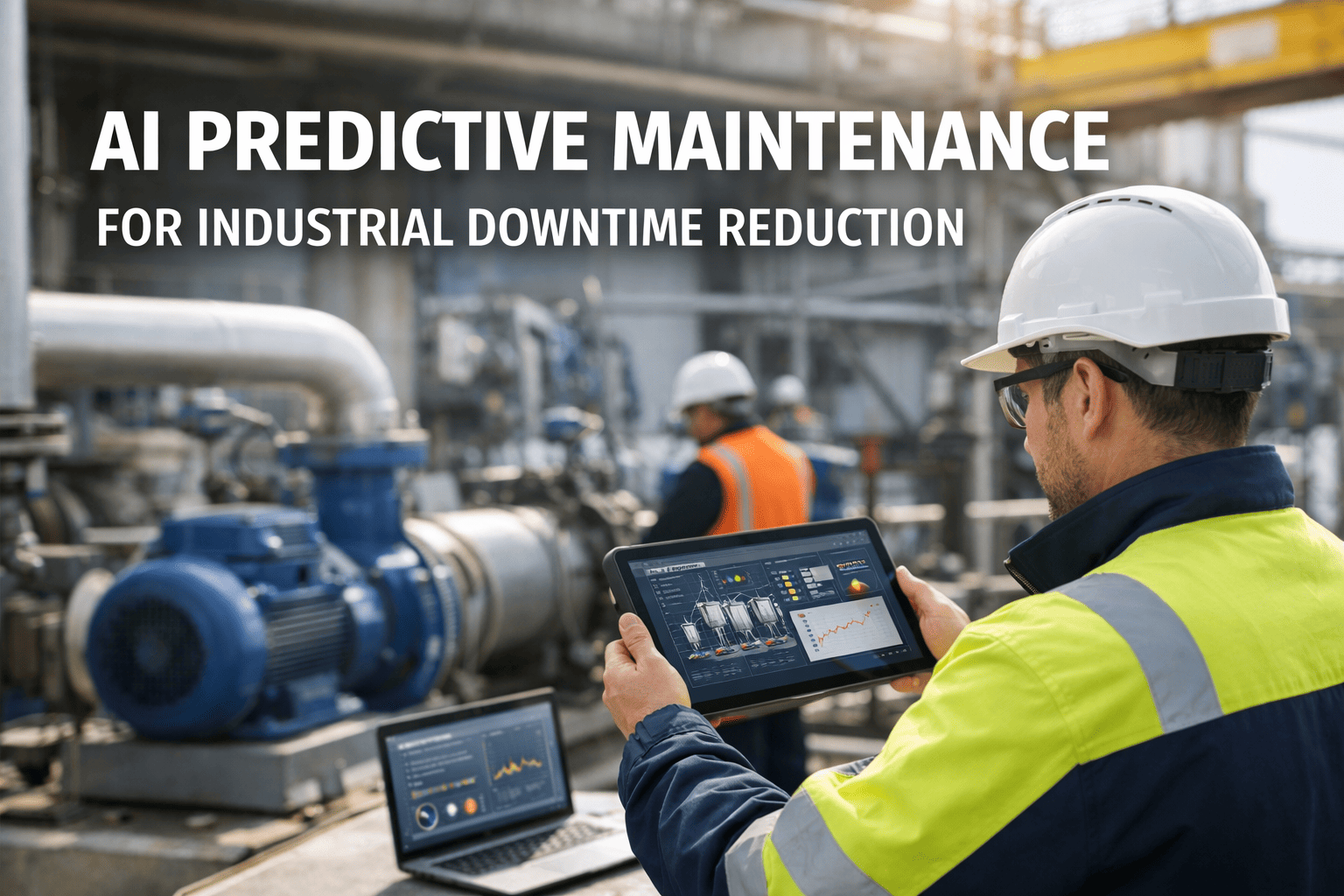
The shift from reactive to predictive safety management represents one of the most significant advances in industrial safety history. Predictive analytics uses historical data, machine learning algorithms, and real-time sensor information to identify patterns and predict future incidents before they occur. Research demonstrates that predictive models can achieve accuracy levels between 80-97% in forecasting workplace injuries, enabling organizations to deploy targeted interventions that prevent harm.
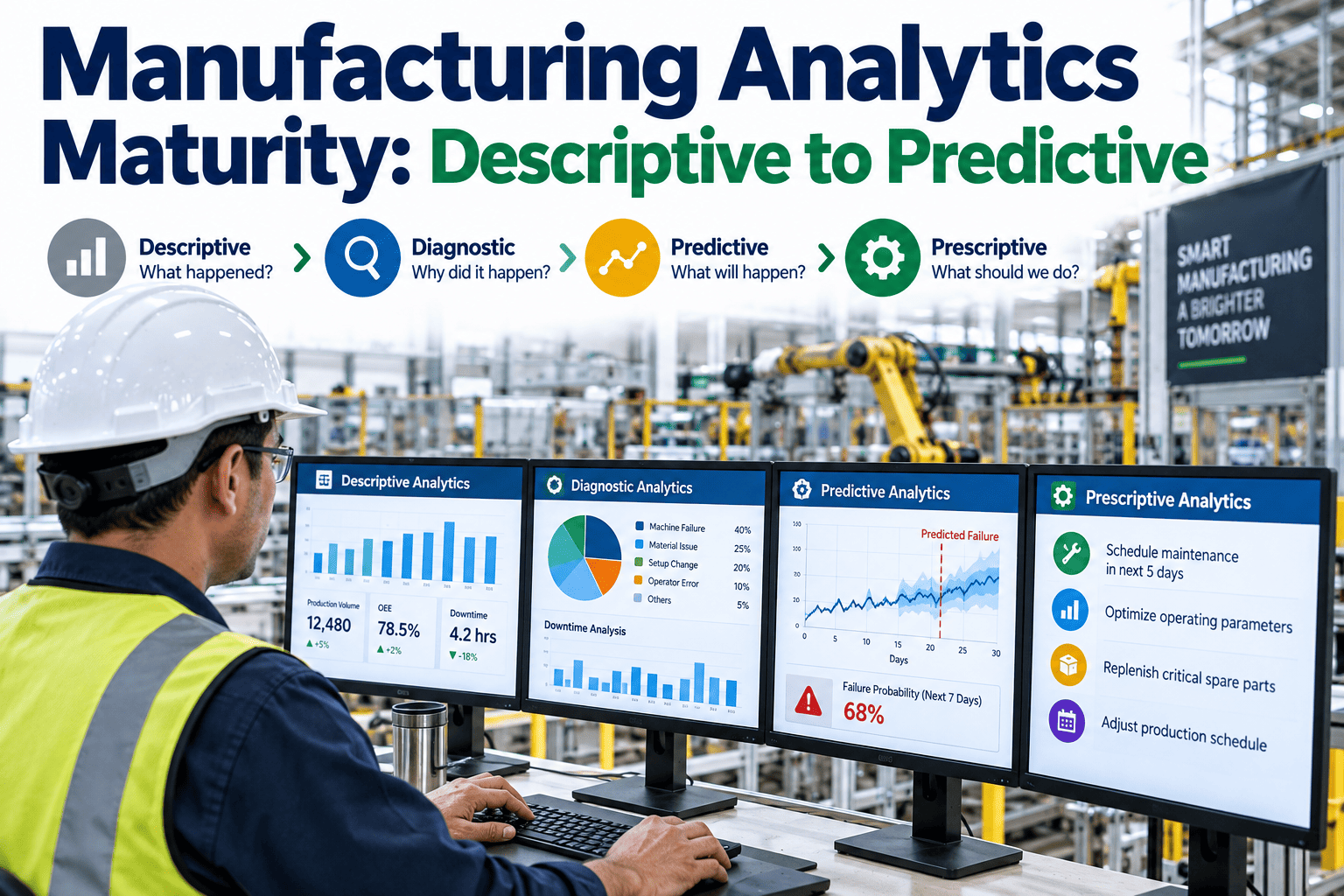
The Analytics Maturity Journey
From investigating incidents to preventing them
Descriptive
What happened?
Historical incident reports and trend analysis
Diagnostic
Why did it happen?
Root cause analysis and correlation discovery
Predictive
What will happen?
ML models forecasting incident probability
Prescriptive
What should we do?
Automated recommendations and interventions
Proven Results
The Power of Predictive Safety Analytics
80-97%
Accuracy in predicting workplace injuries
Carnegie Mellon/Predictive Solutions Research
76%
Incident rate reduction using predictive analytics
Fortune 200 Manufacturing Company
67%
Incident reduction in one year
Fortune 150 Energy Company
60%
Workers' compensation cost reduction
Construction Contractor (2 consecutive years)
Research proves: The higher the volume of safety inspections, the fewer the injuries. Predictive analytics helps organizations focus inspection efforts where they matter most.
The foundation of predictive safety analytics lies in distinguishing between leading and lagging indicators. Lagging indicators—like incident rates and lost-time injuries—tell you what has already happened. Leading indicators—like near-miss reports, safety observations, and inspection findings—provide signals that can predict future incidents. Organizations that systematically collect and analyze leading indicator data can intervene before incidents occur.
Leading vs. Lagging Safety Indicators
The shift from measuring failure to predicting success
Lagging Indicators
What already happened
OSHA Recordable Injury Rate
Lost-Time Incidents (LTI)
Days Away, Restricted, Transfer (DART)
Workers' Compensation Costs
Fatality Rate
Leading Indicators
What predicts future outcomes
Safety Observation Volume
Near-Miss Reports
Training Completion Rates
Hazard Identification Reports
PPE Compliance Rates
Explores Automation and IoT for Real-Time Safety Monitoring
The Industrial Internet of Things (IIoT) is revolutionizing safety monitoring by connecting equipment, workers, and environments in real-time. IoT-enabled wearables, environmental sensors, and machine monitoring systems provide continuous data streams that enable immediate hazard detection and proactive intervention. The IoT-enabled industrial wearables market alone is projected to grow from $2.68 billion in 2024 to $5.15 billion by 2033, reflecting the rapid adoption of connected safety technologies.
Connected Safety
The IoT Safety Ecosystem
Real-time monitoring across workers, equipment, and environment
Air quality sensorsGas leak detectionNoise level trackingTemperature/humidity
Access Control
Zone authorizationProximity warningsGeofencing alertsEmergency lockdown
40%
of industrial companies investing in wearable IoT for safety monitoring
50%
accident reduction with smart helmet implementation
35%
of workplace accidents linked to human error—targeted by IoT
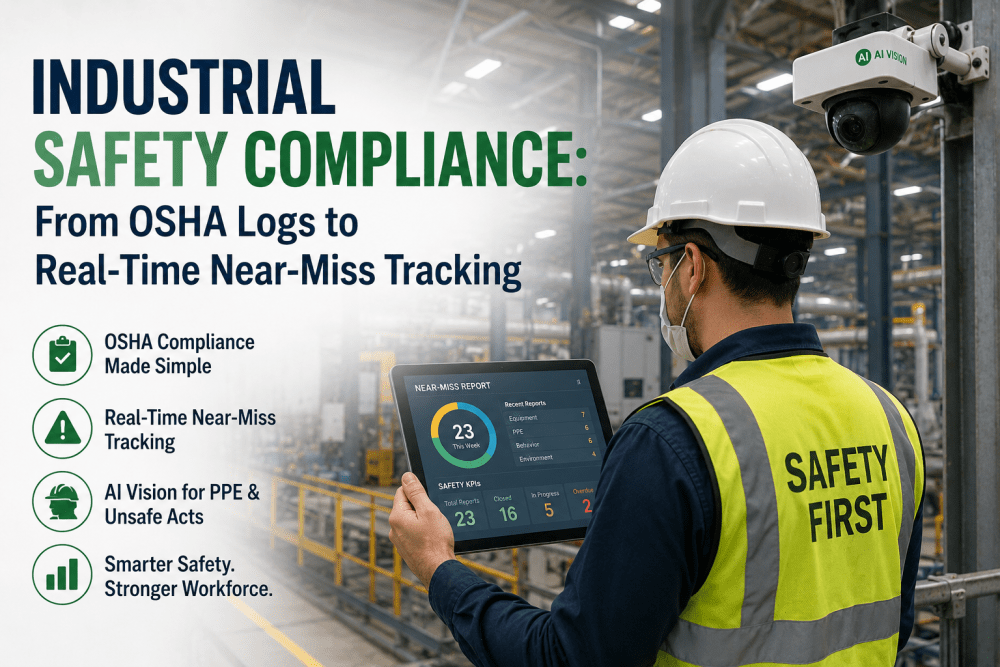
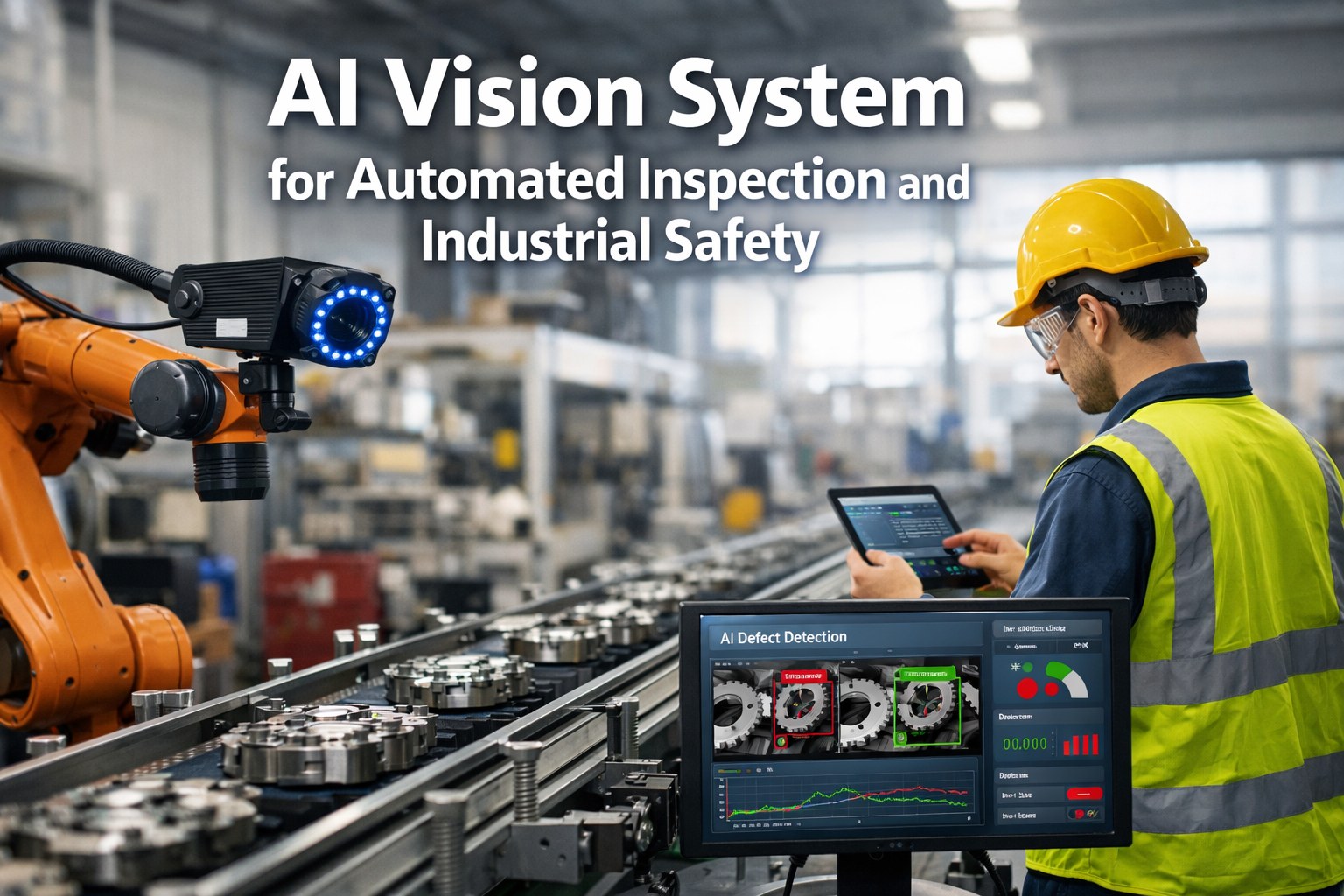
AI-powered computer vision adds another layer of protection by automatically detecting safety violations in real-time. These systems can identify when workers fail to wear required PPE, enter restricted zones, or engage in unsafe behaviors—triggering immediate alerts to supervisors. Combined with IoT sensor data, AI enables organizations to move from periodic inspections to continuous, automated safety monitoring.
For organizations seeking to implement these technologies, integration with existing systems is critical. Modern EHS software platforms connect with Manufacturing Execution Systems (MES), Enterprise Asset Management (EAM), and other operational technologies to provide a unified view of safety performance. This integration enables safety professionals to correlate safety data with operational metrics, identifying patterns that might otherwise remain hidden. Interested in learning how iFactory can integrate safety monitoring into your operations? Contact our support team to explore options.
Builds a Safety-First Culture Through Leadership Action
Technology and analytics are powerful tools, but they are only effective when deployed within a culture that prioritizes safety. Research consistently shows that safety culture—the collective attitudes and behaviors toward safety—is the strongest predictor of safety outcomes. Building this culture requires intentional, sustained leadership action that goes beyond policies and procedures to shape how people think about and practice safety every day.
The Five Elements of Safety Culture Excellence
Leadership Commitment
Visible, consistent engagement from executives
Clear Accountability
Everyone owns safety, from CEO to frontline
Open Communication
Psychological safety to report concerns
Continuous Learning
Learn from incidents and near-misses
Worker Empowerment
Authority to stop work for safety
The Business Case for Safety Culture
40%
Lost-time injury reduction with executive engagement
$2M+
Savings in insurance and incident costs
25%
Employee engagement improvement
81%
Believe mental health and safety must be managed together
Addresses Top Industry Safety Violations
Understanding where safety systems most commonly fail provides valuable guidance for prioritizing improvement efforts. OSHA's annual list of most-cited violations highlights areas where organizations consistently fall short—and where proactive leadership attention can yield significant results.
OSHA FY 2024
Top 10 Most Cited Safety Violations
Where proactive leadership attention is most needed
1
Fall Protection (General Requirements)
29 CFR 1926.501
2
Hazard Communication
29 CFR 1910.1200
3
Lockout/Tagout (Control of Hazardous Energy)
29 CFR 1910.147
4
Ladders (Construction)
29 CFR 1926.1053
5
Respiratory Protection
29 CFR 1910.134
6
Powered Industrial Trucks
29 CFR 1910.178
7
Fall Protection Training (Construction)
29 CFR 1926.503
8
Scaffolding (Construction)
29 CFR 1926.451
9
Eye and Face Protection (Construction)
29 CFR 1926.102
10
Machine Guarding
29 CFR 1910.212
Transform Your Safety Leadership with the Right Platform
iFactory's integrated EAM, MOM, and MES platform provides the real-time visibility, predictive analytics, and compliance infrastructure that safety leaders need to move from reactive to proactive safety management.
What is the role of leadership in industrial safety?
Leadership plays the most critical role in establishing and maintaining safety culture. When executives prioritize safety, demonstrate personal commitment through visible actions, integrate safety into business decisions, and maintain transparency about safety performance, organizations achieve dramatically better outcomes. Research shows that companies with engaged executive safety leadership can reduce lost-time injuries by 40% or more while saving millions in insurance and incident costs.
What is predictive analytics in workplace safety?
Predictive analytics in safety uses historical data, machine learning algorithms, and real-time sensor information to identify patterns and forecast potential incidents before they occur. Unlike traditional approaches that focus on lagging indicators (what already happened), predictive analytics emphasizes leading indicators to enable proactive intervention. Research from Carnegie Mellon University and Predictive Solutions demonstrates that predictive models can achieve 80-97% accuracy in forecasting workplace injuries.
How much is the workplace safety market worth?
The global workplace safety market was valued at approximately $19.64 billion in 2025 and is projected to reach $38.55 billion by 2030, growing at a compound annual growth rate (CAGR) of 14.4%. This growth is driven by increasing adoption of AI, IoT, and predictive analytics technologies, stricter regulatory requirements, and growing recognition of the business value of proactive safety management.
What are leading vs lagging safety indicators?
Lagging indicators measure outcomes that have already occurred—such as injury rates, lost-time incidents, and workers' compensation costs. Leading indicators measure activities that predict future outcomes—such as safety observation volume, near-miss reports, training completion rates, and hazard identification reports. Organizations that systematically track and analyze leading indicators can intervene before incidents occur, shifting from reactive to proactive safety management.
How does IoT improve worker safety?
IoT improves worker safety through continuous, real-time monitoring of workers, equipment, and environments. Wearable devices can track vital signs, detect fatigue, and trigger fall alerts. Environmental sensors detect hazardous conditions like gas leaks or temperature extremes. Equipment sensors enable predictive maintenance to prevent machinery failures. Research shows that companies implementing smart wearables have reduced workplace accidents by up to 50%, while 40% of industrial companies now invest in IoT-enabled safety monitoring.
What are the most common OSHA violations?
The most frequently cited OSHA violations in Fiscal Year 2024 were: Fall Protection (general requirements), Hazard Communication, Control of Hazardous Energy (lockout/tagout), Ladders, Respiratory Protection, Powered Industrial Trucks, Fall Protection Training, Scaffolding, Eye and Face Protection, and Machine Guarding. These consistent violation patterns highlight areas where organizations should focus proactive improvement efforts and leadership attention.
Safety Leadership Is the Foundation of Operational Excellence
The evolution of industrial safety leadership represents a fundamental shift in how organizations protect their most valuable asset—their people. The data is clear: executive commitment, predictive analytics, and connected technologies can dramatically reduce workplace injuries while improving operational performance and reducing costs.
Organizations that embrace this evolution gain advantages that extend beyond safety metrics. They attract and retain better talent, reduce insurance and incident costs, achieve higher productivity, and build reputations as employers of choice. Those that delay face increasing regulatory pressure, competitive disadvantage, and the moral weight of preventable harm.
The question is not whether safety leadership matters—the evidence is overwhelming. The question is how quickly your organization will make the transition from reactive compliance to proactive prevention.