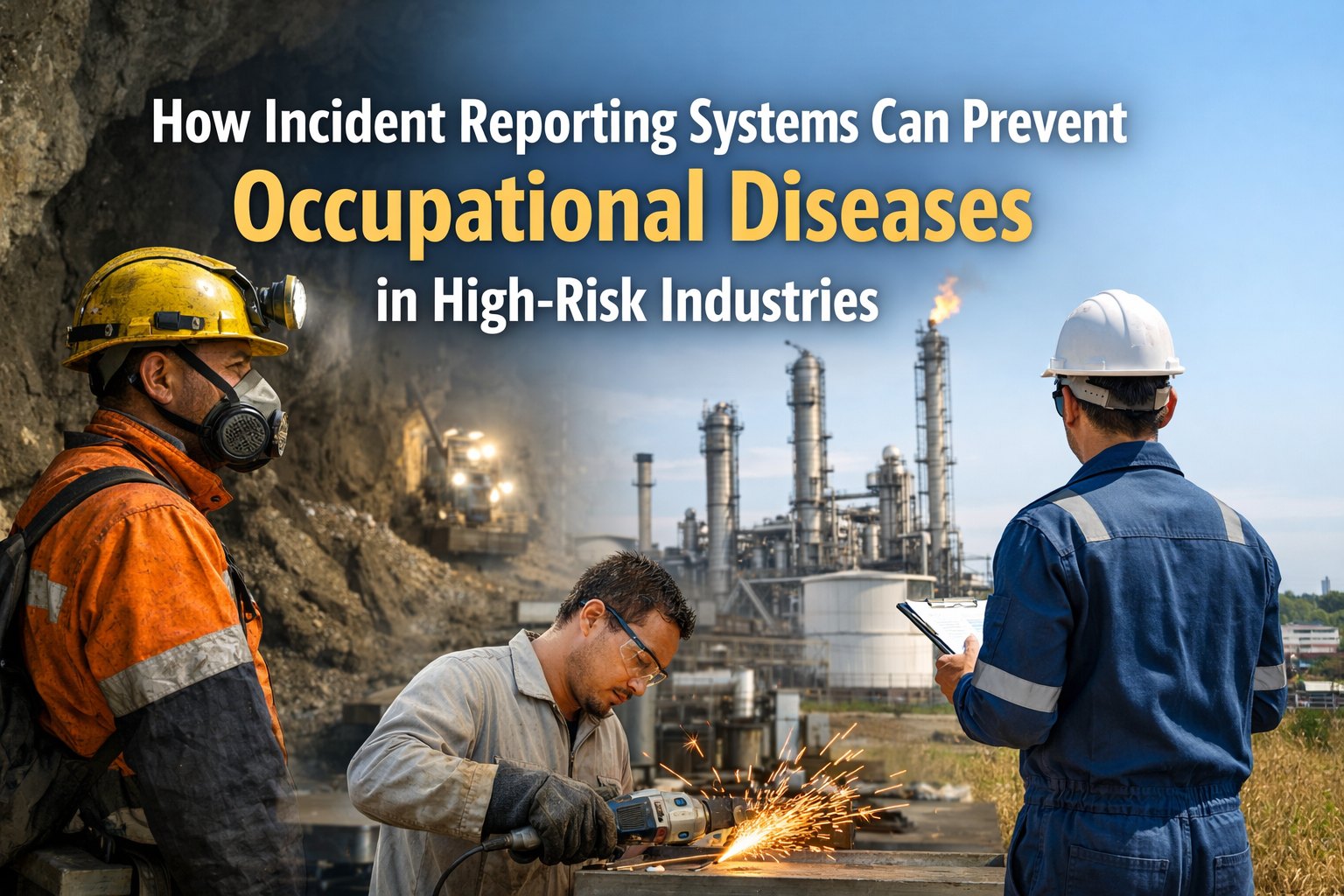
Prevent Occupational Diseases with Incident Reporting in High-Risk Industries
By Riley Quinn on March 5, 2026
Every year, an estimated 135,000 American workers die from occupational diseases—conditions that develop silently over months or years of exposure to workplace hazards. Unlike sudden injuries, occupational diseases like silicosis, hearing loss, and respiratory illness give no immediate warning. By the time symptoms appear, the damage is often irreversible. But here's what most safety managers miss: those diseases leave a trail of early warning signs in your incident data. The problem isn't detection—it's that most facilities aren't capturing the right information at the right time. Digital incident reporting systems change this equation entirely, transforming scattered observations into actionable intelligence that prevents disease before it takes hold.
The Hidden Cost of Occupational Disease
135,000
Workers die annually from occupational diseases in the U.S.
— AFL-CIO Death on the Job Report 2025
$8B–$23B
Missed workers' comp costs annually
2.5M
Workplace injuries & illnesses reported (2024)
385
Workers harmed every day
Why High-Risk Industries Face Greater Occupational Disease Threats
Certain industries expose workers to hazards that accumulate over time—dust particles, chemical vapors, repetitive noise, and toxic substances that don't cause immediate harm but build toward serious illness. The challenge is that traditional safety programs focus on acute injuries while chronic exposures slip through the cracks.
The Top Occupational Diseases—And How Incident Reporting Catches Them Early
Occupational diseases don't appear overnight. Each condition follows a progression from initial exposure to early symptoms to chronic illness. Incident reporting systems capture the warning signs at each stage—if you know what to track.
Respiratory Diseases
Silicosis, Asbestosis, COPD, Occupational Asthma
MiningConstructionManufacturing
Early Warning Signals to Report:
Dust exposure incidents
PPE respirator failures
Ventilation system complaints
Coughing/breathing difficulty reports
Hearing Loss
Noise-Induced Hearing Loss (NIHL)
ManufacturingMiningConstruction
Early Warning Signals to Report:
Noise level threshold breaches
Missing hearing protection observations
Worker complaints about ringing ears
Communication difficulty reports
Skin Disorders
Contact Dermatitis, Chemical Burns, Eczema
ChemicalHealthcareManufacturing
Early Warning Signals to Report:
Chemical spill incidents
Glove/barrier failures
Skin irritation complaints
Improper chemical handling
Musculoskeletal Disorders
Carpal Tunnel, Back Injuries, Tendonitis
WarehousingManufacturingHealthcare
Early Warning Signals to Report:
Repetitive motion task reports
Ergonomic hazard observations
Pain/fatigue complaints
Heavy lifting incidents
Not sure what early warning signs your team should be reporting? Talk to our EHS specialists for customized reporting templates.
How Incident Reporting Prevents Occupational Disease: The Process
Effective incident reporting doesn't just document problems—it creates a closed-loop system that identifies patterns, triggers interventions, and verifies that corrective actions actually work. Here's how digital reporting transforms reactive safety into proactive disease prevention.
1
Capture
Workers report hazards, near-misses, and early symptoms in real-time via mobile devices
2
Analyze
AI identifies patterns across incidents—linking exposures to health outcomes
3
Alert
Automatic notifications when thresholds are exceeded or patterns emerge
4
Act
Corrective actions assigned, tracked, and verified through completion
5
Prevent
Systemic changes implemented to eliminate root causes before disease develops
25–35%
Reduction in incident recurrence with systematic root cause analysis and verified corrective actions
60%
Faster incident reporting and documentation with digital systems vs. paper-based
$4–$6
Saved for every $1 invested in proactive safety observation programs
Digital vs. Paper: Why Traditional Reporting Fails to Prevent Disease
Paper-based incident reporting captures individual events but misses the patterns that predict occupational disease. Digital systems aggregate data across time, locations, and workers—revealing exposure trends before they become health crises.
iFactory's incident reporting module captures early warning signs, identifies exposure patterns, and ensures corrective actions are completed—turning your safety data into disease prevention.
Expert Perspective: The Case for Predictive Safety
"Providing access to injury and illness data will assist in identifying unsafe conditions and workplace hazards that may cause occupational injuries and illnesses. Recognizing these hazards will help detect ways to control or prevent them and reduce future injuries. At the core, making this data available protects workers and ensures their health and safety throughout their working day."
— OSHA, on the importance of electronic injury tracking (2024)
61%
of industrial accidents mitigated through predictive analytics in EHS systems
22%
rise in OSHA workplace safety inspections in 2024
1.5M
injury/illness records filed electronically via OSHA's ITA in 2024
Not all incident reporting software is created equal. For occupational disease prevention, you need specific capabilities that track exposure over time and connect individual reports to systemic risks.
Mobile-First Reporting
Workers capture hazards instantly with photos, GPS, and timestamps—even offline
Exposure Tracking
Cumulative records link individual workers to specific hazard exposures over time
Predictive Analytics
AI identifies emerging patterns before they become widespread health issues
Automated OSHA Compliance
Generate Forms 300, 300A, and 301 automatically from your incident data
Corrective Action Tracking
Assign, monitor, and verify that fixes are implemented—not just documented
Real-Time Dashboards
Visualize incident trends, open actions, and compliance status at a glance
Protect Your Workers. Protect Your Business.
iFactory's AI-powered incident reporting system helps high-risk facilities identify occupational disease risks early, ensure OSHA compliance, and build a culture where safety observations prevent illness before it starts.
What is an occupational disease, and how does it differ from a workplace injury?
An occupational disease is a health condition that develops over time due to prolonged exposure to workplace hazards—such as silicosis from silica dust, hearing loss from noise, or respiratory illness from chemical vapors. Unlike acute workplace injuries that result from a single incident, occupational diseases accumulate gradually, often over months or years. This makes them harder to detect but preventable with proper monitoring and incident reporting that tracks exposure patterns over time.
How can incident reporting systems help prevent occupational diseases?
Digital incident reporting systems capture early warning signs—near-misses, hazard observations, exposure incidents, and worker complaints—before they escalate into chronic illness. By aggregating this data, the system identifies patterns that human reviewers would miss: repeated dust exposure in specific areas, consistent PPE failures, or clusters of similar complaints. This enables proactive interventions like engineering controls, PPE upgrades, or process changes that eliminate the root cause of disease risk.
What industries have the highest risk of occupational diseases?
High-risk industries include mining (silicosis, black lung disease), oil and gas extraction (chemical exposure, respiratory illness), manufacturing (hearing loss, repetitive strain), construction (asbestosis, silicosis), and healthcare (infectious disease, musculoskeletal disorders). Agriculture, forestry, and transportation also face elevated risks. These industries benefit most from robust incident reporting systems that track cumulative exposure and identify hazards before they cause irreversible harm.
What should workers report to help prevent occupational diseases?
Workers should report any observation that could indicate hazardous exposure: unusual dust or fumes, PPE failures or missing protective equipment, equipment malfunctions that increase exposure, early symptoms like coughing or skin irritation, ergonomic concerns, and noise levels that seem excessive. Near-misses and "minor" observations are especially valuable—these early warning signs are the data points that predictive systems use to identify emerging disease risks before anyone gets sick.
How does digital incident reporting improve OSHA compliance?
Digital systems automatically generate OSHA-required forms (300, 300A, and 301) from your incident data, eliminating manual paperwork and reducing errors. They ensure timely reporting by sending automatic reminders for required notifications—like the 8-hour deadline for fatalities or 24-hour deadline for hospitalizations. The system also maintains a complete audit trail of all incidents, corrective actions, and follow-ups, so you're always audit-ready when OSHA inspectors arrive.