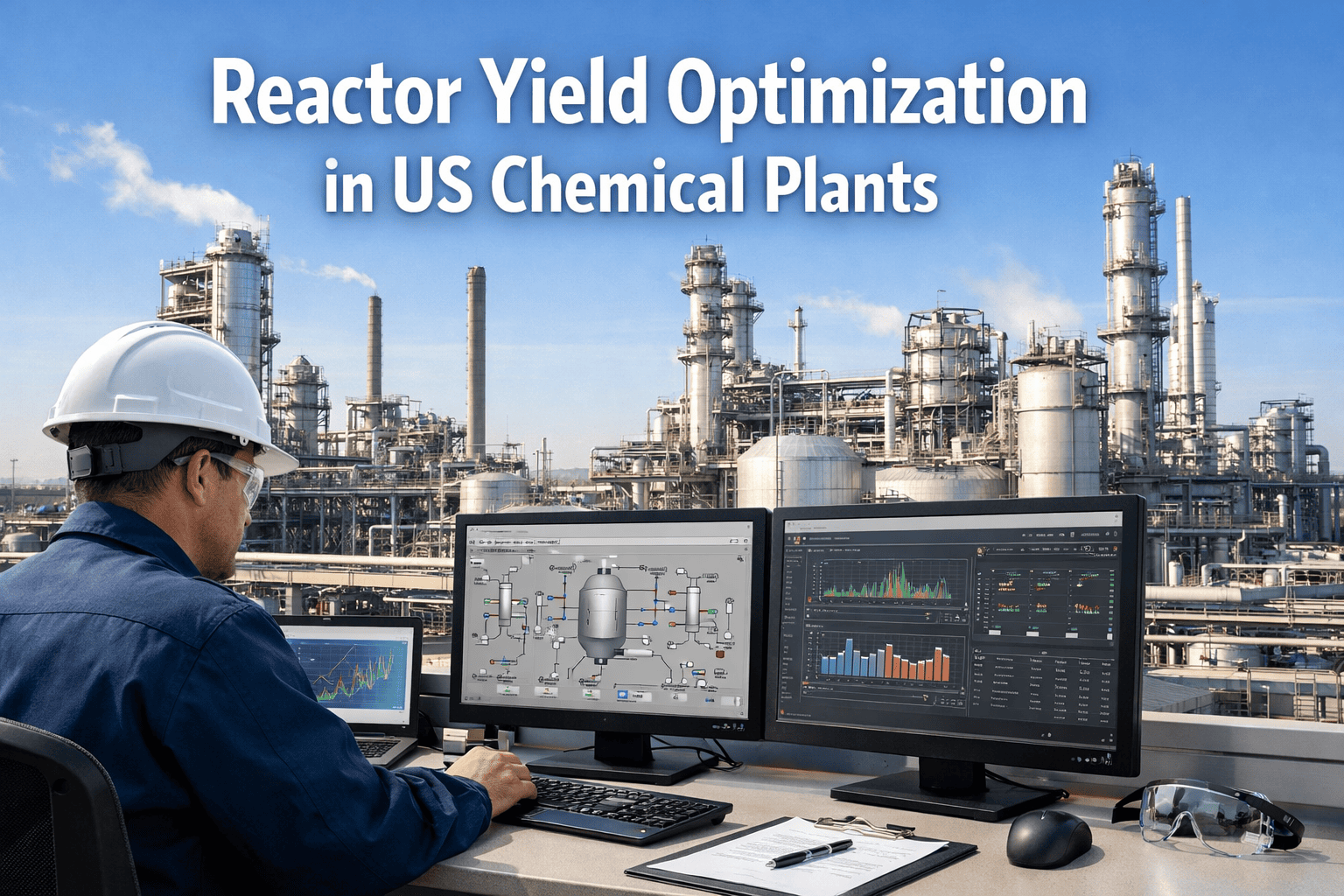
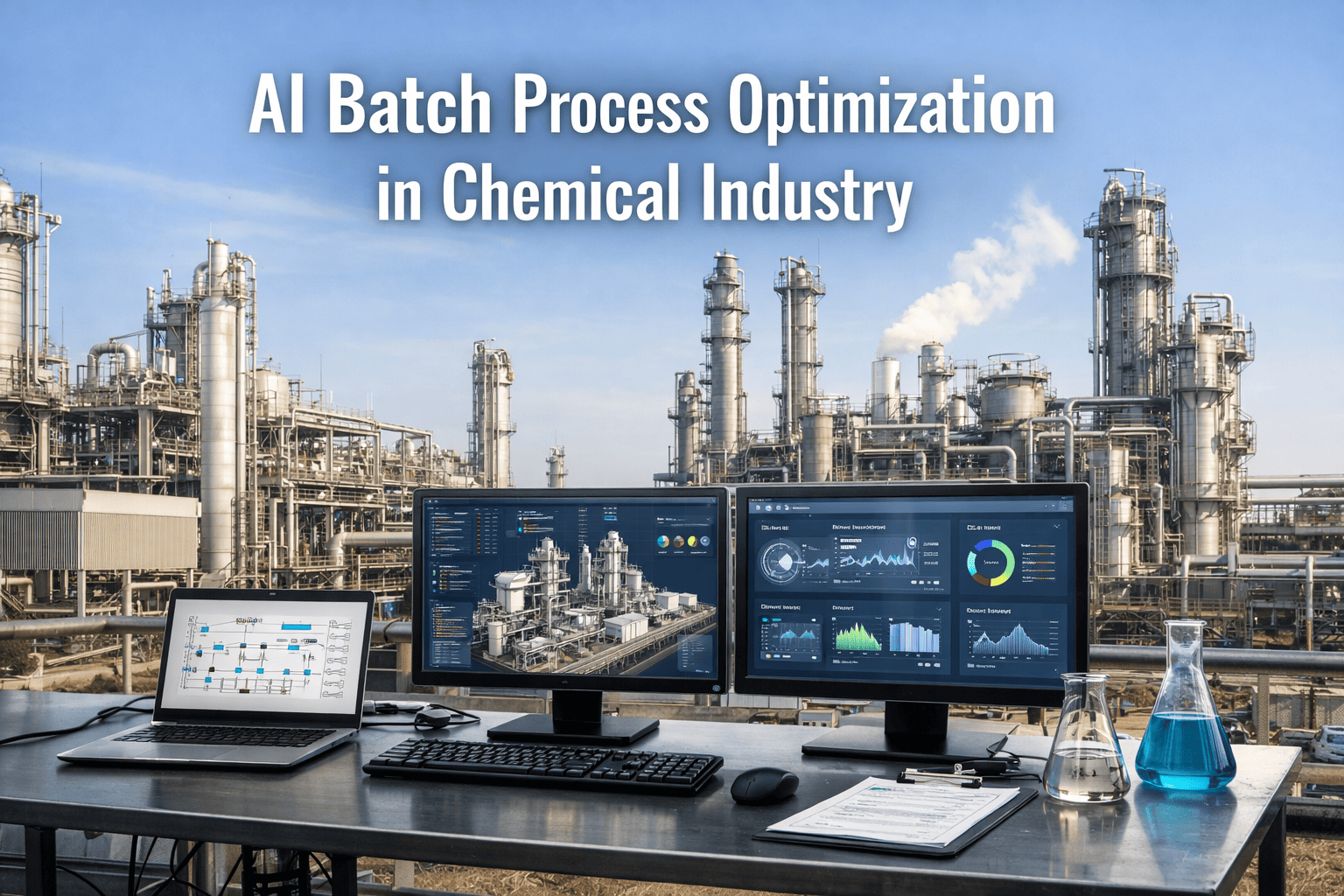
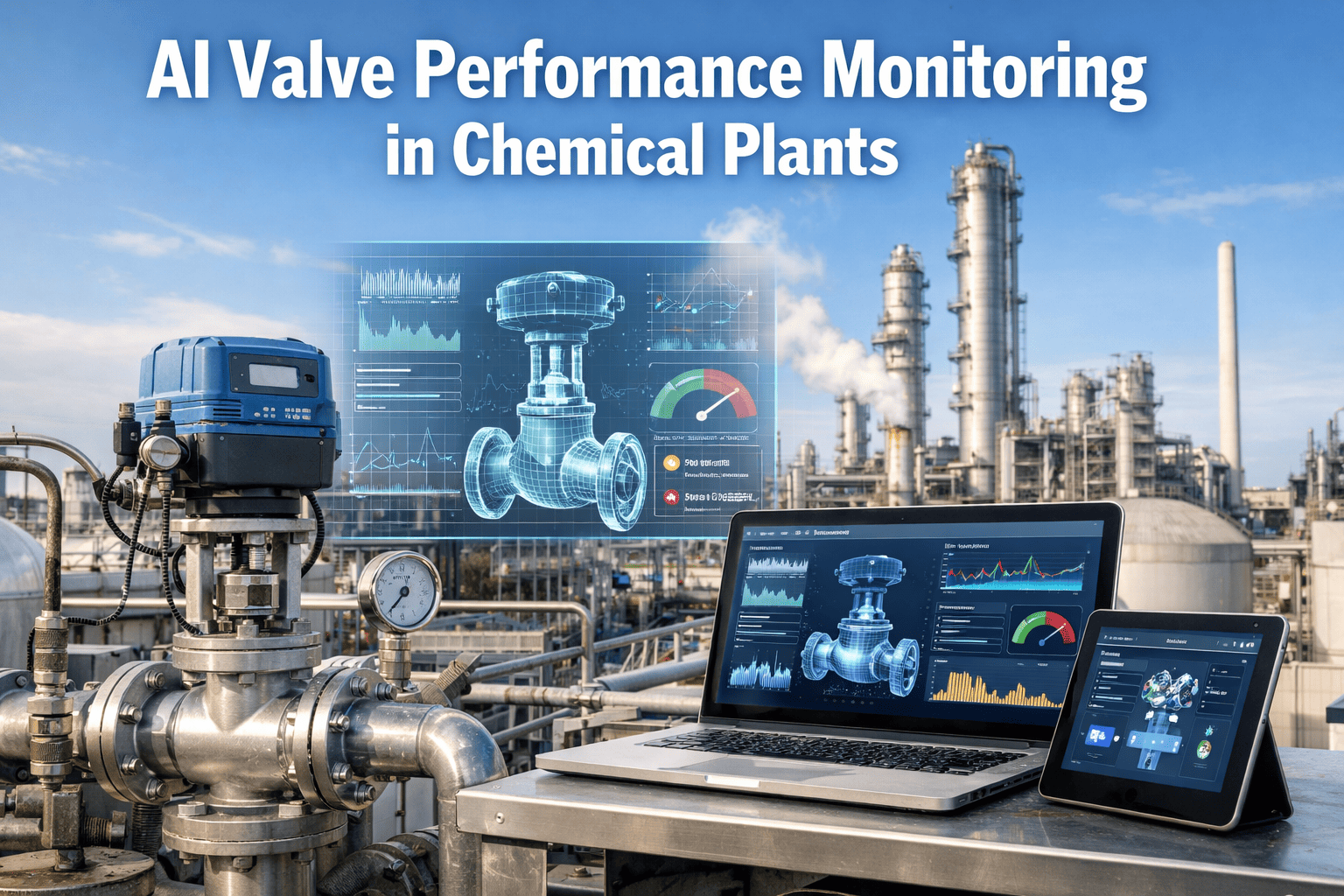
Chemical plants experience an average of 14–29% reactor yield variance annually due to suboptimal reaction conditions — not from catalyst limitations, but from inconsistent feed ratios, temperature drift, mixing inefficiencies, and delayed analytics that no manual sampling or legacy DCS alarms can correct in time. By the time off-spec batches, catalyst deactivation, or energy waste trace back to reaction deviations, the compounding costs are already realized: raw material loss, reprocessing costs, throughput constraints, and margin erosion. iFactory Reactor Yield Platform changes this entirely — optimizing reaction parameters in real time, predicting yield deviations before batch completion, and integrating directly into your existing DCS, LIMS, and process historian systems without disrupting operations. Book a Demo to see how iFactory deploys reactor yield optimization across your plant within 7 weeks.
98%
Batch yield consistency with AI-driven reaction control vs. 71% for manual optimization
$2.1M
Average annual value capture from yield improvement, reduced rework, and energy savings
93%
Reduction in off-spec production vs. static setpoint or operator-dependent reactor control
7 wks
Full deployment timeline from reaction audit to live yield optimization go-live
Every Suboptimal Reaction Condition Is Lost Margin. Precision Control Recovers It.
iFactory's reactor platform monitors temperature profiles, feed composition, catalyst activity, mixing dynamics, and reaction kinetics in real time — with adaptive setpoint adjustment, early deviation alerts, and automated optimization recommendations for batch and continuous processes.
The Hidden Cost of Yield Variability: Why Manual Reactor Control Limits Chemical Plants
Before exploring solutions, understand the root causes of yield inconsistency in chemical reactions. Manual or static reactor control introduces systemic inefficiencies that compound across batches — inefficiencies that AI-driven optimization directly addresses.
Feed Ratio Drift
Manual feed adjustments or delayed analytics cause stoichiometric imbalances. Excess reactants waste raw materials; deficient feeds limit conversion. Yield losses accumulate before quality labs detect deviations.
Temperature Profile Variability
Reactor temperature excursions — from heating/cooling lag, fouling, or ambient shifts — alter reaction kinetics and selectivity. Manual PID tuning cannot adapt to dynamic process conditions in real time.
Catalyst Performance Blind Spots
Catalyst deactivation, poisoning, or regeneration cycles are often detected only after yield drops. Without real-time activity modeling, plants over-compensate with excess catalyst or accept suboptimal conversion.
Mixing and Mass Transfer Gaps
Inadequate agitation, poor gas-liquid contact, or viscosity changes create localized concentration gradients. Reactions proceed unevenly, generating byproducts and reducing target yield — issues invisible to bulk sensors.
How iFactory Solves Reactor Yield Optimization Challenges in US Chemical Plants
Traditional chemical plant reactor control relies on fixed setpoints, operator intuition, and post-batch lab analysis — all of which introduce yield variability, energy waste, and quality risk. iFactory replaces this with an adaptive optimization platform designed for chemical reaction environments that models kinetics in real time, adjusts parameters proactively, and creates a digital twin for continuous improvement. See a live demo of iFactory optimizing batch reactors, continuous stirred-tank reactors, and fixed-bed catalytic systems in a US chemical manufacturing facility.
01
Real-Time Reaction Kinetics Modeling
iFactory ingests temperature, pressure, flow, composition, and spectroscopic data to model reaction rates, conversion, and selectivity in real time — enabling dynamic setpoint adjustment before yield deviations occur.
02
Adaptive Feed Ratio Control
Proprietary ML models optimize reactant ratios based on real-time feed composition, catalyst activity, and target product specs. Excess raw material use drops 18–34% while maintaining or improving conversion.
03
Temperature Profile Optimization
iFactory's predictive thermal model anticipates heating/cooling demands, compensates for fouling or ambient shifts, and maintains optimal reaction temperature trajectories — reducing energy use and improving selectivity.
04
Catalyst Activity Forecasting
Track catalyst performance in real time using reaction data, not just time-on-stream. iFactory predicts deactivation onset, recommends regeneration timing, and optimizes catalyst loading — extending life and stabilizing yield.
05
DCS, LIMS & Historian Integration
iFactory connects to Honeywell, Siemens, Emerson, Yokogawa, and custom DCS environments plus lab systems and process historians via OPC-UA, Modbus TCP, and REST APIs. No new hardware required. Integration completed in under 10 days.
06
Yield Decision Support
iFactory presents ranked optimization recommendations per batch or continuous run: adjust feed rate, modify temperature ramp, extend reaction time, or trigger catalyst regeneration — with projected yield impact and risk scores.
Industry Standards Support: Built for US Chemical Manufacturing Compliance
iFactory's reactor optimization platform is pre-configured to support documentation and traceability requirements of major US chemical industry frameworks. Quality, safety, and environmental reporting is automatic.
EPA RMP / PSM
Process Safety Management alignment: operating procedures, management of change documentation, and incident investigation support — with full parameter traceability for reactor optimization actions.
ISO 9001 / API Q1
Quality management system support: batch records, process validation data, corrective action tracking, and continuous improvement metrics — structured for certification audits and customer quality reviews.
OSHA 1910.119
Process safety information: reactor design basis, operating limits, safety system interlocks, and deviation logs — auto-generated for compliance audits and internal safety reviews.
TSCA / EPCRA
Chemical reporting support: production volumes, byproduct tracking, emission estimates, and inventory reconciliation — formatted for EPA submissions and state-level environmental reporting.
iFactory Reactor Optimization Implementation Roadmap
iFactory follows a fixed 5-stage deployment methodology designed specifically for chemical plant reaction workflows — delivering pilot optimization in week 3 and full production rollout by week 7. No open-ended implementations. No production disruption.
01
Reaction Audit
Map current processes & identify yield gaps
02
System Integration
Connect to DCS, LIMS, historian via APIs
03
Pilot Configuration
Deploy optimization to 2–3 critical reactors
04
Validation & Training
User acceptance testing & role-based training
05
Full Production
Plant-wide reactor yield optimization go-live
7-Week Deployment and ROI Plan
Every iFactory engagement follows a structured 7-week program with defined deliverables per week — and measurable ROI indicators beginning from week 3 of deployment. Request the full 7-week deployment scope document tailored to your plant's reactor configurations.
Weeks 1–2
Discovery & Design
Current reactor workflow assessment across batch, continuous, and catalytic processes
Optimization strategy design aligned with reaction kinetics, safety constraints, and product specs
Integration planning with DCS, LIMS, and process historian systems
Weeks 3–4
Pilot & Validation
Deploy yield optimization to high-impact reactors: exothermic batch, continuous polymerization, fixed-bed catalytic
Adaptive control and early-warning workflows activated; deviation alerts tested with process engineers
First yield improvements captured — ROI evidence begins here
Weeks 5–7
Scale & Optimize
Expand to full plant coverage: all reactor types, all shifts, all product lines
Automated quality and compliance reporting activated for applicable regulatory frameworks
ROI baseline report delivered — yield gains, raw material savings, and energy efficiency improvements
ROI IN 5 WEEKS: MEASURABLE RESULTS FROM WEEK 3
Plants completing the 7-week program report an average of $245,000 in captured yield value and reduced raw material waste within the first 5 weeks of full production rollout — with batch yield consistency improvements of 22–38% detected by week 3 pilot validation.
$245K
Avg. value capture in first 5 weeks
22–38%
Yield consistency gain by week 3
89%
Reduction in off-spec batch frequency
Eliminate Yield Variability. Optimize Reactors in 7 Weeks. ROI Evidence in Week 3.
iFactory's fixed-scope deployment program means no open timelines, no production disruption, and no months of customization before you see a single yield improvement.
Use Cases and KPI Results from Live Deployments
These outcomes are drawn from iFactory deployments at operating US chemical plants across three reactor optimization categories. Each use case reflects 6-month post-deployment performance data. Request the full case study report for the reactor type most relevant to your plant.
A US specialty chemical plant operating 16 exothermic batch reactors was experiencing recurring yield variability (±12%) traced to inconsistent temperature ramp rates, feed addition timing, and cooling capacity constraints. iFactory deployed adaptive temperature profiling with real-time heat release modeling and feed ratio optimization. Within 4 weeks of go-live, the system reduced batch-to-batch yield variance to ±3.2% and increased average conversion by 6.8%.
6.8%
Average yield increase across pilot reactors in first 4 weeks
$580K
Estimated annual value from yield improvement and reduced rework
97%
Batch consistency rate (up from 68%)
A US polymer manufacturer operating continuous stirred-tank reactors was struggling with molecular weight distribution drift due to subtle feed composition changes and catalyst activity decay. Legacy DCS controls could not adapt quickly enough, resulting in 14–18% off-spec production. iFactory implemented real-time kinetics modeling with adaptive monomer/catalyst ratio control and molecular weight prediction. Off-spec production dropped to 3.1%, and catalyst consumption decreased by 22%.
3.1%
Off-spec production rate (down from 16%)
22%
Catalyst consumption reduction
$1.1M
Annual value from yield recovery and catalyst savings
A US petrochemical derivatives plant operating fixed-bed hydrogenation reactors was experiencing unpredictable catalyst deactivation cycles, leading to yield drops and unplanned regeneration downtime. Manual monitoring could not detect early-stage activity loss. iFactory deployed catalyst activity forecasting using reaction data, temperature profiles, and feed impurity tracking. The system predicted deactivation onset 18–36 hours in advance, enabling optimized regeneration scheduling and stabilizing yield at 94.2% vs. prior 81–89% variability.
94.2%
Stabilized average yield (vs. 81–89% prior variability)
31%
Reduction in unplanned regeneration downtime
$890K
Annual value from yield stability and downtime reduction
What US Chemical Plant Teams Say About iFactory Reactor Platform
The following testimonials are from process engineers, plant managers, and operations directors at US chemical facilities currently running iFactory's reactor yield optimization platform.
We eliminated the "why did this batch underperform" mystery. The system shows us exactly which parameter drifted, when, and how to correct it. Our last customer quality audit had zero yield-related findings.
Senior Process Engineer
Specialty Intermediates Plant, Texas
Catalyst costs were our second-largest variable expense. iFactory's activity forecasting let us extend catalyst life by 19% without sacrificing yield. That alone paid for the platform in four months.
Plant Operations Manager
Polymer Manufacturing Facility, Louisiana
Integration with our Emerson DCS and OSIsoft PI took 8 days. The iFactory team understood both reaction engineering and industrial protocols. Operators adopted the system quickly because it makes their jobs easier and safer.
Director of Process Technology
Petrochemical Derivatives Complex, Ohio
We prevented a potential batch loss during a cooling water excursion. The system detected temperature deviation 22 minutes before it would have impacted yield, and recommended a feed hold that saved the batch. That single event justified the investment.
Shift Supervisor
Fine Chemicals Facility, New Jersey
Frequently Asked Questions
Does iFactory require new sensors or analyzers on reactors?
In most deployments, iFactory connects to existing DCS tags, lab results, and process historians — no new hardware required. Where critical measurement gaps are identified during the Week 1 reaction audit, iFactory recommends targeted additions only (typically 2–4 sensors per reactor), not a full instrumentation overhaul. Integration is complete within 10 days in standard environments.
Which reactor types does iFactory support?
iFactory supports batch reactors (exothermic/endothermic), continuous stirred-tank reactors (CSTR), plug flow reactors (PFR), fixed-bed catalytic reactors, slurry-phase reactors, gas-liquid reactors, polymerization reactors, and fermentation systems. Reaction-specific models are configured during the Week 1–2 audit phase.
Can iFactory optimize both batch and continuous processes in the same plant?
Yes. iFactory trains separate optimization sub-models per reactor type and operating mode — accounting for batch kinetics, continuous steady-state dynamics, catalyst management, and product transition requirements. Multi-reactor, multi-product plants are fully supported within a single deployment.
How does iFactory ensure safety during optimization?
All optimization recommendations operate within predefined safety constraints: temperature limits, pressure ratings, composition boundaries, and interlock logic. Changes require operator acknowledgment or supervisor approval based on risk tier. Full audit trail maintained for PSM compliance.
How long before the optimization model produces reliable yield predictions?
Baseline model training on historical reaction data typically takes 4–6 days using 30–60 days of plant operating history. First live optimizations are validated during the Week 3–4 pilot phase. Full model calibration — with prediction accuracy >95% — is achieved within 5 weeks of deployment for standard chemical reaction environments.
Can iFactory adapt to seasonal feedstock or utility variations?
Yes. iFactory uses adaptive modeling — combining historical reaction baselines, feed composition analytics, ambient condition correlation, and real-time sensor feedback — to maintain optimization across all operating conditions. Seasonal, feedstock-switching, and turnaround variations are fully supported. Optimization scope is confirmed during the Week 1 reaction audit.
Stop Losing Yield to Suboptimal Reactions. Start Capturing Margin with AI Optimization.
iFactory gives US chemical plant teams real-time reaction optimization, adaptive parameter control, automated quality reporting, and seamless DCS integration — fully deployed in 7 weeks, with ROI evidence starting in week 3.
98% batch yield consistency with AI-driven reaction control
DCS, LIMS & historian integration in under 10 days
EPA RMP, ISO 9001, and OSHA PSM audit trails out-of-the-box
Predictive yield forecasting 30–120 minutes before batch completion