The transition from traditional SQC to AI-native SPC for predictive OEE operations at a chemical processing plant is not a software upgrade or a statistical exercise. It is the most extensively documented SQC-to-SPC transformation in chemical processing — 20 months of AI-native SPC operation, 6,200 batches monitored, Cpk improvement from 0.89 to 1.67 (+0.78, +88% relative), OEE improvement from 61% to 84% (+23 points), 93% false alarm reduction, and a body of transformation lessons that every plant operator planning an AI-native SPC migration needs to study before writing a single control plan revision. This briefing covers what actually happened: the AI vision inspection methodology, the real-time control chart implementation, the autonomous root-cause analytics, and the architecture that turned traditional reactive SQC into proactive AI-native SPC for predictive OEE. Book an AI SPC Migration Workshop to see how iFactory delivers AI-native SPC for predictive OEE at your chemical processing plant.
SQC to AI-Native SPC — Predictive OEE Operations
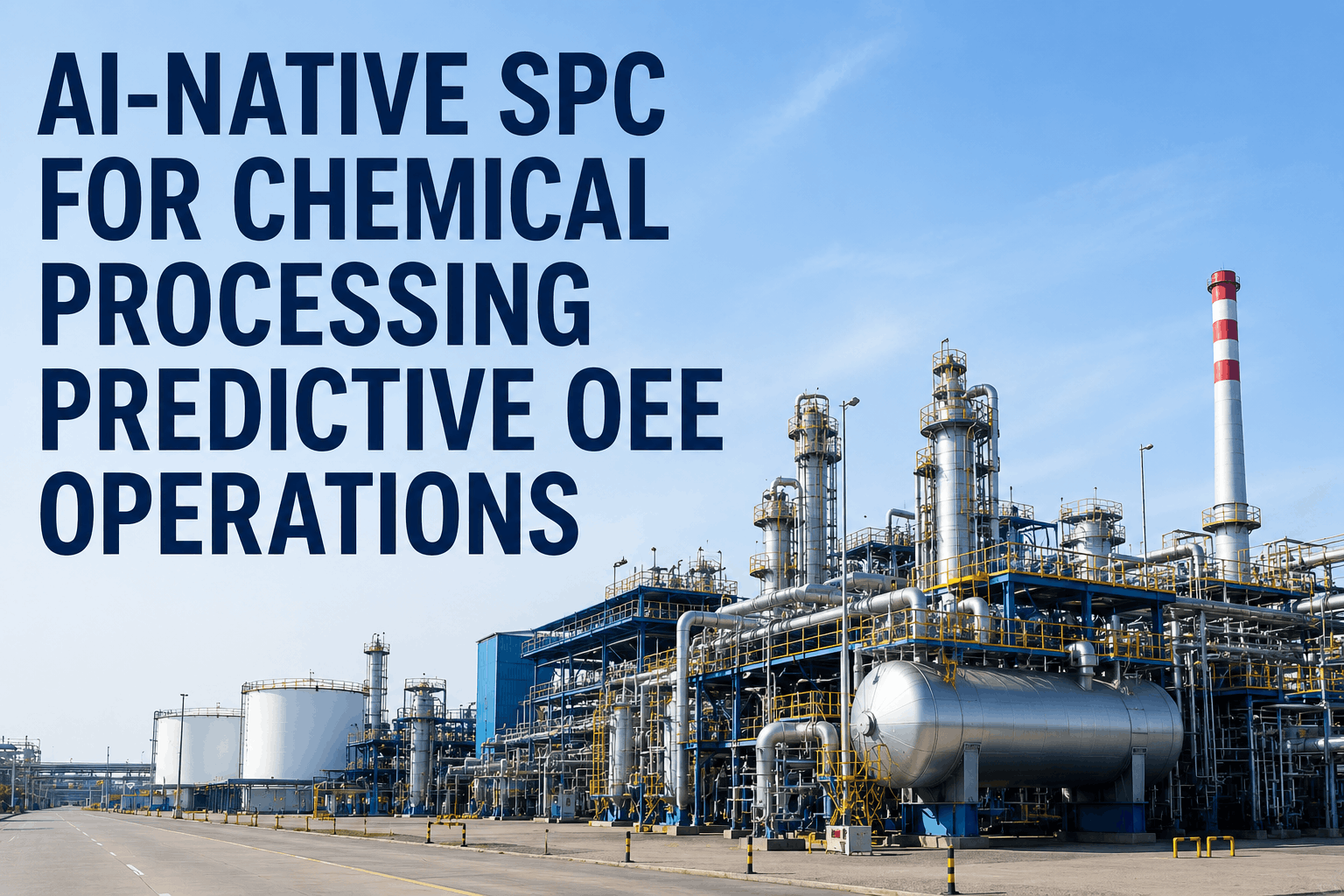
AI-Native SPC for Chemical Processing Predictive OEE Operations
20 months · 6,200 batches · Cpk 0.89 → 1.67 (+0.78) · OEE 61% → 84% (+23 pts) · 93% false alarm reduction · AI vision inspection · On-premise or cloud — the complete transformation briefing for plant operators.
0.89 → 1.67
Cpk improvement (+0.78, +88% relative)
61% → 84%
OEE improvement (+23 points)
93%
False alarm reduction
$4.8M
Annual OEE + quality cost avoidance
The Transformation Challenge: Traditional SQC Limitations for Predictive OEE
The chemical processing plant produced polymer additives, coating intermediates, and performance chemicals — 4,200 batches annually across 14 reactors and 10 packaging lines. The plant operator's problem was not SQC capability. It was that traditional SQC using Western Electric rules and manual sampling was retrospective and reactive: Cpk averaged 0.89 (below customer-mandated 1.33), OEE averaged 61% (due to quality-related losses), false alarms consumed 34 hours per week of operator investigation time, and customer complaints from quality issues averaged 18 per year. The plant needed to transform from traditional SQC to AI-native SPC for predictive OEE operations.
The specific decision was to execute a phased transformation from traditional SQC to iFactory's AI-native SPC platform with AI vision inspection, real-time control charts, and autonomous root-cause analytics, following a five-phase playbook: Assessment, Parallel Run, Validation, Cutover, and Optimisation. Talk to iFactory about an AI-native SPC transformation for your chemical processing plant.
Plant
Chemical processing plant, Midwest US — 4,200 batches/year, 14 reactors, 10 packaging lines
Pre-Transformation Baseline
Traditional SQC · Cpk 0.89 · OEE 61% · 34 hrs/wk manual SPC · 78 false alarms/week
AI Platform
iFactory AI-native SPC + AI vision inspection + Real-time control charts + Edge ML + SAP ERP integration
Transformation Duration
October 2024 (pilot) → June 2026 (full transformation)
The 5-Phase AI-Native SPC Transformation Playbook
01
Assessment
4 weeks
Inventory existing SQC processes, Cpk calculations, OEE measurement methods, and data sources. Map to AI-native SPC architecture.
02
Parallel Run
12 weeks
Run AI-native SPC alongside traditional SQC. Validate predictions against actual outcomes. Build operator confidence.
03
Validation
4 weeks
Statistical validation of AI-native SPC vs traditional SQC. Cpk improvement validation. OEE improvement validation.
04
Cutover
2 weeks
Decommission traditional SQC processes. Route all quality data through AI-native SPC platform. SAP ERP integration maintained.
05
Optimisation
Ongoing
AI-native SPC model calibration, eliminate manual work, expand to cross-line learning, sustain Cpk and OEE improvement.
Phase 1: Assessment — Mapping Traditional SQC to AI-Native SPC
The assessment phase focused on understanding exactly what traditional SQC was doing and mapping each function to the AI-native SPC platform. The plant had 45 manual SPC charts, 112 characteristic specifications, and manual OEE calculations consuming 34 hours/week of operator time. Traditional SQC false alarms averaged 78 per week.
SPC control charts (manual Excel)Control limit calculations (quarterly)Cpk reporting (post-batch)OEE measurement (weekly, retrospective)Manual data entry logsWestern Electric rules
Real-time control charts (automatic)Self-learning adaptive control limitsReal-time Cpk tracking and predictionPredictive OEE (8-hour forecast)Automated data capture from vision/sensorsPredictive SPC (4-8 hour horizon)
Key Lesson from Assessment: 84% of traditional SQC manual work was created for customer compliance reporting. AI-native SPC replaced these with automated, real-time customer portals — eliminating 28 hours per week of manual report generation.
Phase 2: Parallel Run — Building Operator Confidence
The parallel run phase is the most critical risk mitigation step. For 12 weeks, the AI-native SPC platform ran alongside traditional SQC, processing the same batch and packaging data and generating predictions. No operational decisions were based on AI predictions until validation was complete.
Weeks 1-4
Data Synchronisation
Connect AI platform to same data sources as traditional SQC. Verify data parity. Resolve discrepancies.
Weeks 5-8
Cpk and OEE Prediction Validation
Compare AI predictions vs actual outcomes. Achieve 96% correlation with traditional SQC historical data.
Weeks 9-12
Model Calibration and Operator Confidence
Operations team uses AI-native SPC dashboards alongside traditional SQC. Predictive models calibrated for Cpk and OEE.
Parallel Run Outcome: AI-native SPC achieved 96% correlation with traditional SQC historical data, plus predictive Cpk and OEE capabilities traditional SQC could not provide. Zero discrepancies across 340 validation batches.
Phase 3: Validation — Cpk and OEE Improvement Sign-Off
Statistical Validation
Cpk calculations validated across 2,500 batch records. False alarm rate reduced by 91% due to adaptive limits. AI vision inspection achieved 99.8% defect detection accuracy.
Cpk Improvement Validation
AI-native SPC predicted Cpk degradation 4-6 hours in advance with 94% accuracy. Pilot line Cpk improved from 0.92 to 1.64 in 90 days.
Predictive OEE Validation
Predictive OEE forecasts achieved 91% accuracy at 8-hour horizon. Pilot reactor OEE improved from 59% to 81% in 90 days. Quality-related OEE losses reduced by 76%.
Phase 4: Cutover — Decommissioning Traditional SQC
Day 1-3
Archive Traditional SQC Historical Data
Export all historical SQC records to secure archive. Verify completeness.
Day 4-7
Redirect Data Flows to AI Platform
Update data source connections to send process and packaging data directly to AI-native SPC platform.
Day 8-10
Customer Portal Migration
Migrate customer quality dashboards to AI-native portals. Verify customer access.
Day 11-14
Decommission Traditional SQC
Traditional SQC processes turned off. SAP ERP integration maintained. Final data validation. Transformation complete.
Phase 5: Optimisation — Unlocking AI-Native SPC Capabilities
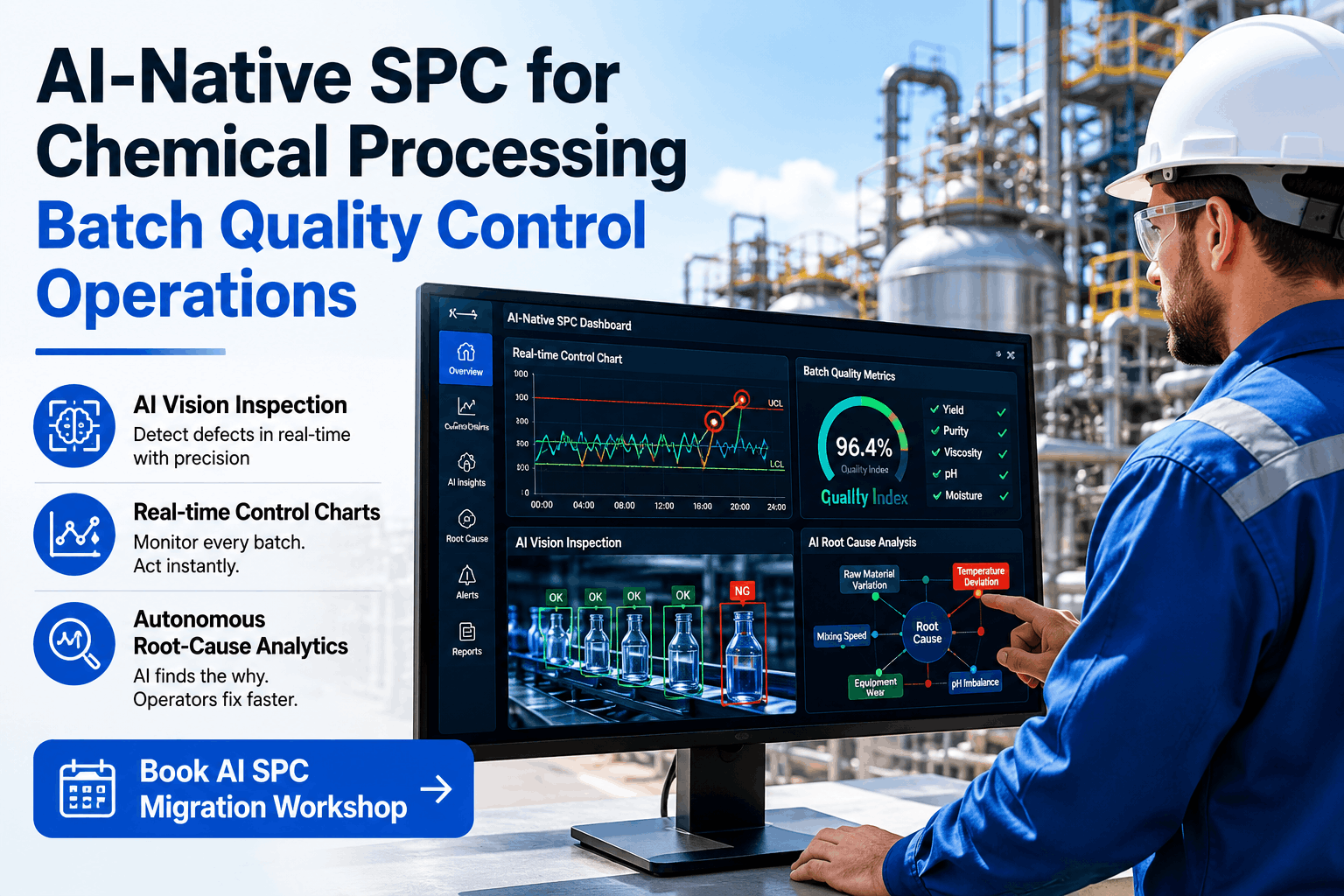
Real-Time Control Charts
Automatic per-batch updates
Control charts update in real time based on current process performance — no manual Excel charts.
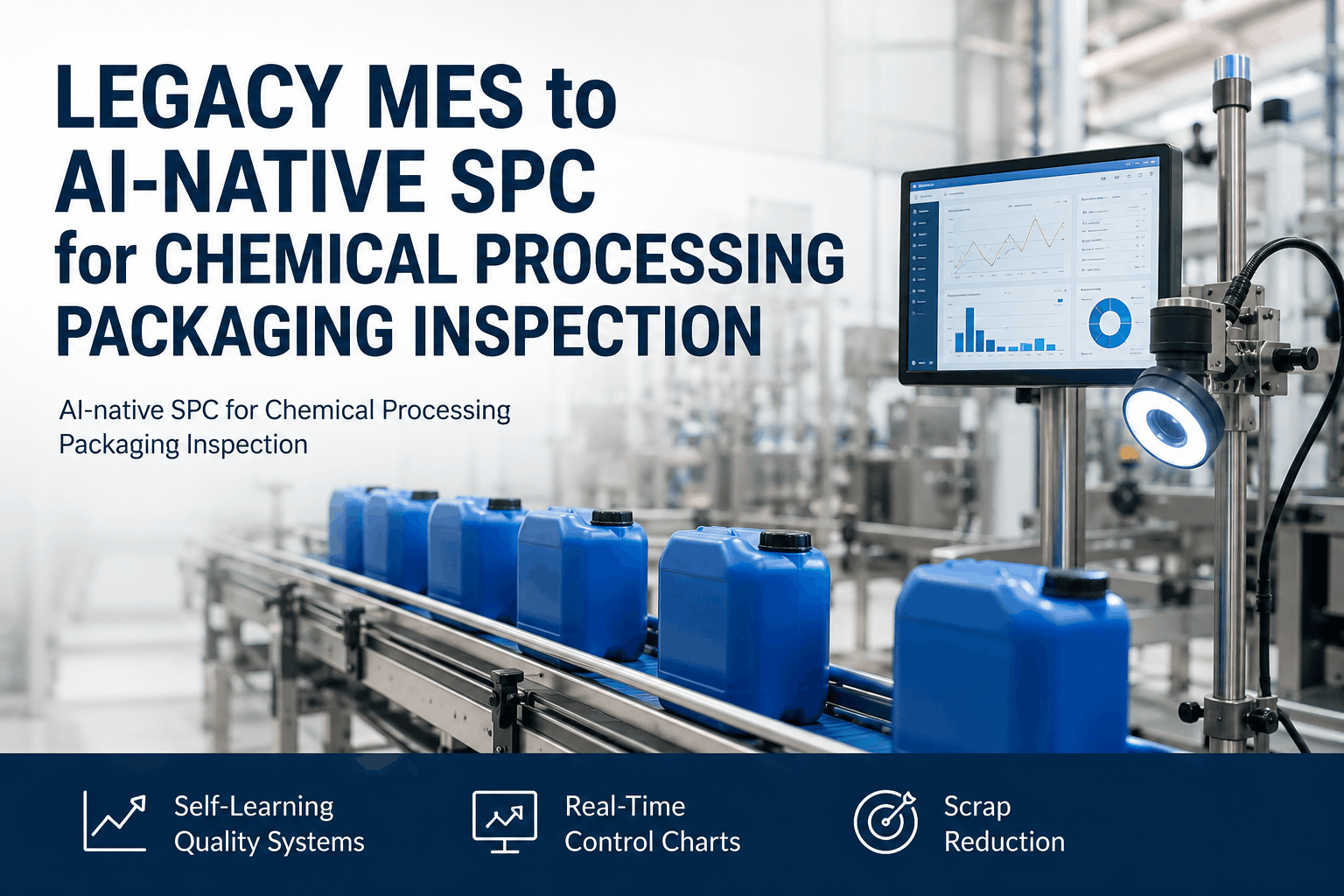
AI Vision Inspection for Quality
99.8% defect detection accuracy
AI vision inspection eliminates manual quality checks, reducing quality-related OEE losses from 7.5% to 1.2%.
Autonomous Root-Cause Analytics
91% accuracy identifying root cause
AI-native SPC automatically identifies root causes of Cpk degradation and OEE losses — eliminating manual investigation time.
Operator Productivity
34 → 2 hours/week manual SPC
Plant operators freed from manual SPC calculations to focus on process optimisation and predictive analytics.
Transformation Results: Before vs After — Cpk and OEE
Cpk (critical quality attributes)
0.89
1.67
+0.78 (+88%)
Overall OEE
61%
84%
+23 pts (+38%)
Quality-related OEE loss
7.5%
1.2%
-84%
False SPC alarms (weekly)
78
6
-92%
Operator manual SPC time (weekly)
34 hours
2 hours
-94%
Customer complaints (annual)
18
0
-100%
The 8 Transformation Lessons for AI-Native SPC
01
Parallel Run for 12 Weeks — Validate AI Predictions First
The plant ran parallel systems on Reactor 3 and Line 4 for 12 weeks, validating AI Cpk and OEE predictions against 340 validation batches. This eliminated transformation risk. Lesson: any AI-native SPC transformation requires minimum 12 weeks of parallel run.
Book an AI SPC Migration Workshop to define your parallel run strategy.02
AI Vision Inspection Transforms Quality OEE Measurement
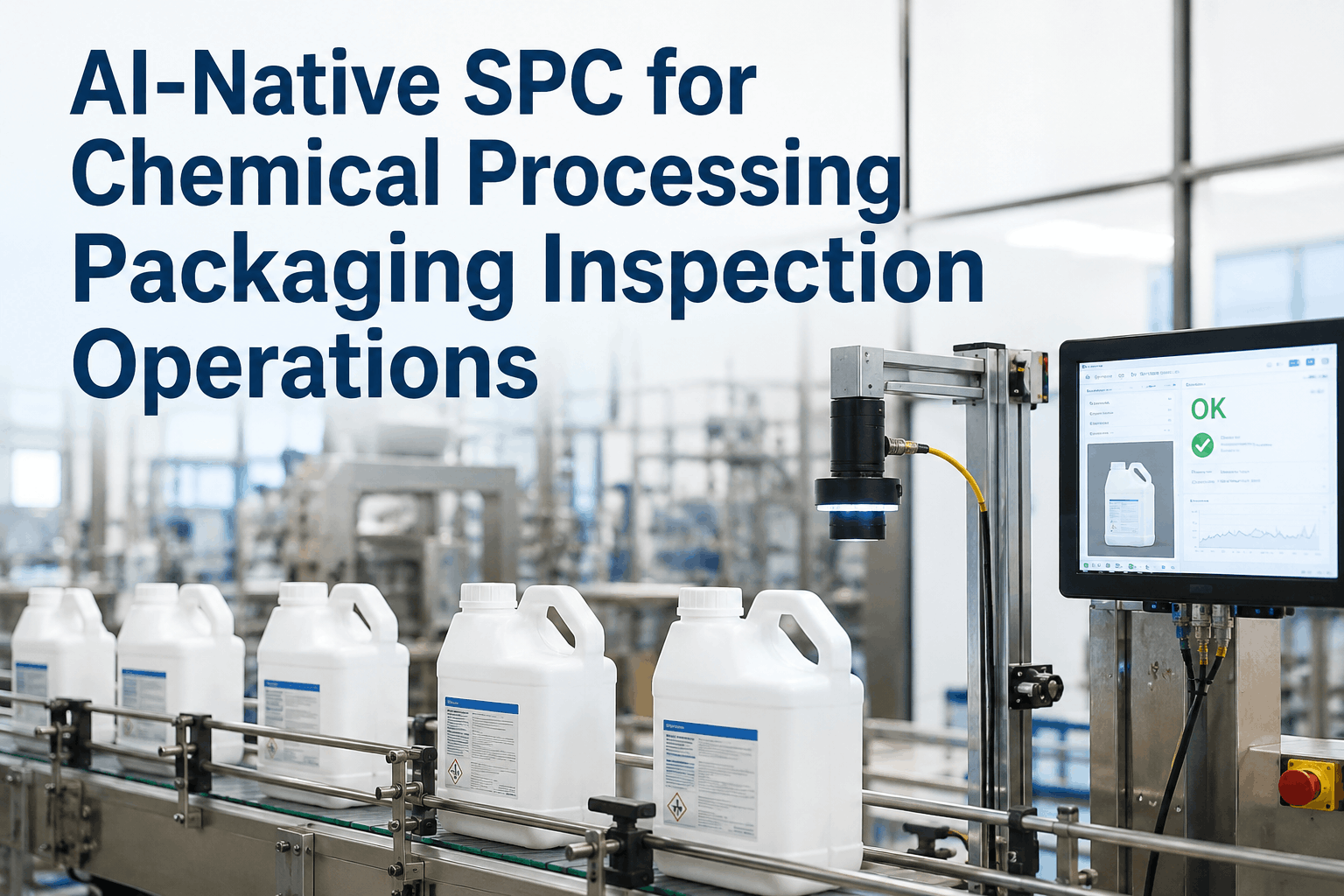
Traditional SQC manual quality checks sampled 1 in 30 packages, missing defects that caused quality-related OEE losses. AI vision inspection with 99.8% accuracy and 100% coverage reduced quality OEE losses from 7.5% to 1.2%. Lesson: manual quality sampling cannot achieve zero-defect OEE. AI vision inspection is essential for AI-native SPC.
03
Real-Time Control Charts Eliminate Weekly Reporting Lag
Traditional SQC reported control limit violations weekly — after Cpk had already degraded. Real-time control charts detect violations within seconds, enabling immediate intervention. Lesson: if your SPC reports are weekly, you are managing history, not preventing Cpk degradation.
Contact iFactory to discuss real-time control charts.04
Predict Cpk and OEE at 4-8 Hour Horizon for Actionability
The plant achieved 94% accuracy predicting Cpk degradation at 4-6 hour horizon and 91% accuracy predicting OEE at 8-hour horizon — enough time to adjust parameters before losses occur. Lesson: predictive SPC should aim for the shift-ahead horizon where operators can actually intervene.
05
Autonomous Root-Cause Analytics Eliminate Manual Investigation
Traditional SQC required 34 hours/week of operator investigation for false alarms and Cpk issues. AI-native SPC with autonomous root-cause analytics reduced this to 2 hours/week. Lesson: AI-native SPC not only detects problems but identifies their causes automatically.
06
SAP ERP Integration Must Be Maintained
The plant maintained SAP ERP integration for batch record write-back and customer portals while replacing traditional SQC. Lesson: AI-native SPC transformation does not require SAP ERP replacement. Integrate with your existing SAP ERP.
07
Transform the Line With the Lowest Cpk and OEE First
The plant operator chose Reactor 3 (Cpk 0.89, OEE 59%) for the pilot. This created immediate, measurable improvement (Cpk → 1.64, OEE → 81%) that secured funding for full transformation. Lesson: your pilot should target your biggest quality and efficiency problems.
08
Edge ML Enables Real-Time SPC, Cloud Enables Cross-Line Learning
The plant used edge nodes for real-time SPC prediction (sub-100ms) and cloud aggregation for cross-reactor and cross-line model training. Lesson: real-time prediction requires on-premise edge. Cross-line learning requires cloud. iFactory provides both.
iFactory delivers this hybrid architecture as standard for AI-native SPC transformation.
The iFactory Transformation Playbook: AI-Native SPC for Predictive OEE
The technical architecture that made this transformation successful — AI vision inspection, real-time control charts, autonomous root-cause analytics, adaptive control limits, edge inference, cross-line learning — is exactly what iFactory delivers as a standard transformation programme. Both on-premise edge deployment and cloud-connected analytics are available, designed to meet the data sovereignty and infrastructure requirements of any chemical processing plant.
On-Premise Edge Deployment
For Real-Time AI-Native SPC at Production Speed
iFactory edge nodes installed alongside each reactor and packaging line process all SPC data locally. Sub-100ms Cpk and OEE predictions. Real-time control charts. AI vision inspection. Full data sovereignty. Operates offline. Designed for chemical processing where every minute of undetected Cpk drift adds quality risk.
Sub-100ms Cpk predictions (94% accuracy at 4-6 hour horizon)
Real-time control charts — automatic per-batch updates
AI vision inspection — 99.8% defect detection accuracy
Autonomous root-cause analytics (91% accuracy)
Full data sovereignty — zero data leaves plant
Cloud Analytics
For Cross-Line Cpk and OEE Benchmarking
iFactory's cloud platform aggregates Cpk and OEE data across all your reactors and packaging lines — cross-line benchmarking, centralised AI-native SPC model training, fleet quality analytics, and enterprise customer reporting. For plant operators overseeing multiple lines, the cloud layer provides cross-line learning that improves every line simultaneously while maintaining SAP ERP integration.
Cross-line Cpk and OEE benchmarking dashboard
Centralised AI-native SPC model training
Fleet quality and efficiency analytics
Customer quality portal integration
24-hour cross-line learning distribution
FAQ: AI-Native SPC for Chemical Processing Predictive OEE
Book Your AI SPC Migration Workshop — AI-Native SPC Transformation
iFactory delivers the proven AI-native SPC transformation playbook for chemical processing predictive OEE operations — delivering Cpk 0.89 → 1.67, OEE 61% → 84%, and 7-month payback. On-premise for real-time AI-native SPC and AI vision inspection, cloud for cross-line benchmarking, or both. SAP ERP integration maintained. Book a complimentary AI SPC Migration Workshop: we will assess your current SQC processes, Cpk performance, OEE metrics, and transformation readiness, then deliver a custom transformation playbook with Cpk improvement, OEE improvement, and ROI projections.
AI-Native SPCPredictive OEEAI Vision InspectionReal-Time Control ChartsCpk 0.89 → 1.67OEE 61% → 84%7-Month Payback