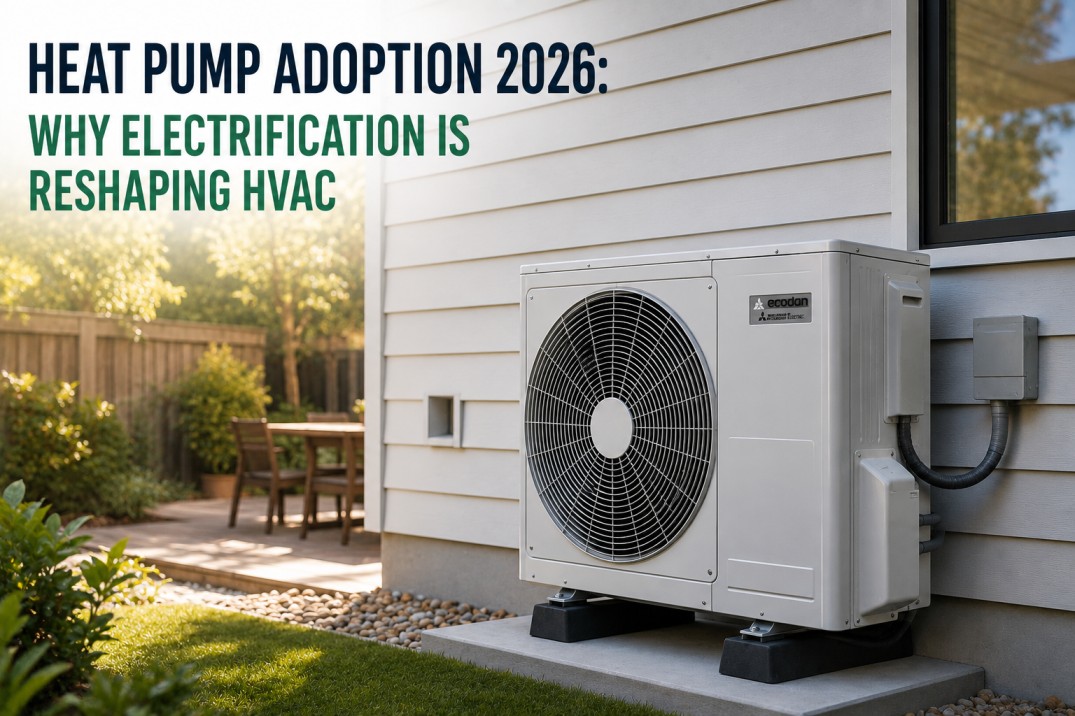
The electrification of heating is the largest technology transition the HVAC industry has ever experienced. The global heat pump market — valued at $87.4 billion in 2025 — is growing at over 10% CAGR toward $180 billion by 2032, with the US surpassing China as the world's number one heat pump market in 2025 and 90% of heat pump owners saying they'd recommend the technology to a friend. But this rapid adoption is running headlong into a maintenance skills gap: heat pumps are fundamentally different from the gas furnaces and conventional AC systems that most HVAC technicians have serviced for decades. They operate year-round in both heating and cooling modes, use inverter-driven variable-speed compressors with complex refrigerant circuits, integrate with IoT controls and smart thermostats, and must perform in extreme cold conditions down to -22°F (-30°C). The maintenance practices, diagnostic approaches, and failure modes are different — and technicians trained exclusively on gas furnaces are discovering this on every service call. Student enrollment in two-year HVACR programs jumped nearly 30% in 2025, but the skills gap between legacy knowledge and heat pump expertise persists across the installed base. iFactory's CMMS platform helps HVAC service organizations manage heat pump maintenance programs with digital checklists, predictive diagnostics, technician skill tracking, and IoT-integrated monitoring. Book a free demo and modernize your heat pump maintenance operations.
HEROHeat Pump Maintenance in the Electrification Era
Best Practices for New Technology
The installed heat pump base is expanding faster than the maintenance workforce can adapt. This guide delivers the complete heat pump maintenance playbook — from inverter compressor diagnostics and defrost cycle optimization to low-GWP refrigerant handling, cold-climate service protocols, and IoT-driven predictive maintenance.
Why Heat Pump Maintenance Is Fundamentally Different
Year-Round Operation Doubles Component Wear
Gas furnaces idle for more than half the year. Heat pumps run continuously in both heating and cooling modes — compressing refrigerant, cycling fans, and reversing flow year-round. This doubles operating hours and fundamentally changes component wear patterns, refrigerant stress, and maintenance frequency requirements.
Inverter Compressor Complexity Requires New Diagnostics
Modern heat pumps use inverter-driven variable-speed compressors that modulate capacity continuously across a frequency range. Diagnosing issues requires understanding inverter electronics, variable refrigerant flow behavior, frequency-based fault codes, and EEV (electronic expansion valve) operation — none of which exist in legacy furnace service. See digital diagnostics tools
Reversing Valve and Defrost Cycles Are Entirely New Territory
Heat pumps reverse refrigerant flow via a 4-way valve — a component that doesn't exist in conventional AC. In winter, outdoor coils collect ice that must be periodically melted via defrost cycles. Monitoring defrost initiation, duration, and effectiveness is critical maintenance territory that furnace technicians have zero experience with.
Low-GWP Refrigerant Transition Demands New Safety Protocols
The industry is rapidly shifting from HFC refrigerants to low-GWP alternatives. R-290 (propane) is mildly flammable (A3), R-32 is mildly flammable (A2L), and R-744 (CO₂) operates at extremely high pressures. Each refrigerant demands different handling procedures, leak detection equipment, recovery tools, and technician certifications.
IoT Integration Turns Maintenance Into a Data Operation
Modern heat pumps integrate with smart thermostats, building energy management systems, demand response programs, and cloud monitoring platforms. Maintenance now encompasses firmware updates, connectivity troubleshooting, sensor calibration, data-driven COP optimization, and automated fault detection — a digital layer that didn't exist in legacy HVAC. See IoT maintenance platform
Cold-Climate Performance Pushes Components to Limits
Cold-climate heat pumps now operate down to -22°F (-30°C) — manufacturers like Rheem have demonstrated this in DOE testing. But extreme-temperature performance stresses compressor oil management, defrost effectiveness, auxiliary heat staging, and outdoor unit protection. These units need specialized cold-climate service protocols that didn't exist even five years ago.
Year-Round Heat Pump Service Schedule — What to Do and When
Unlike furnaces with a single pre-season service, heat pumps demand attention across all four seasons. This calendar maps every maintenance task to its optimal timing.
Pre-Cooling Season Service
Mid-Season Performance Check
Pre-Heating Season Service (Critical)
Cold-Climate Active Monitoring
Critical Maintenance by System Component
Inverter Compressor & Refrigerant Circuit
The inverter compressor is the heart of the modern heat pump — and its most complex component. Unlike single-speed compressors that simply turn on and off, inverter compressors modulate speed continuously, adjusting capacity to match load in real time. This sophistication delivers superior comfort and efficiency but demands a fundamentally different diagnostic approach.
Key maintenance tasks include monitoring current draw across the full operating frequency range (not just startup amps), checking EEV stepper motor response, verifying superheat and subcooling against manufacturer specifications for the specific refrigerant type, and performing leak detection with equipment rated for the installed refrigerant. For flammable R-290 systems, use only approved electronic leak detectors — never open flames.
Defrost System & Outdoor Unit
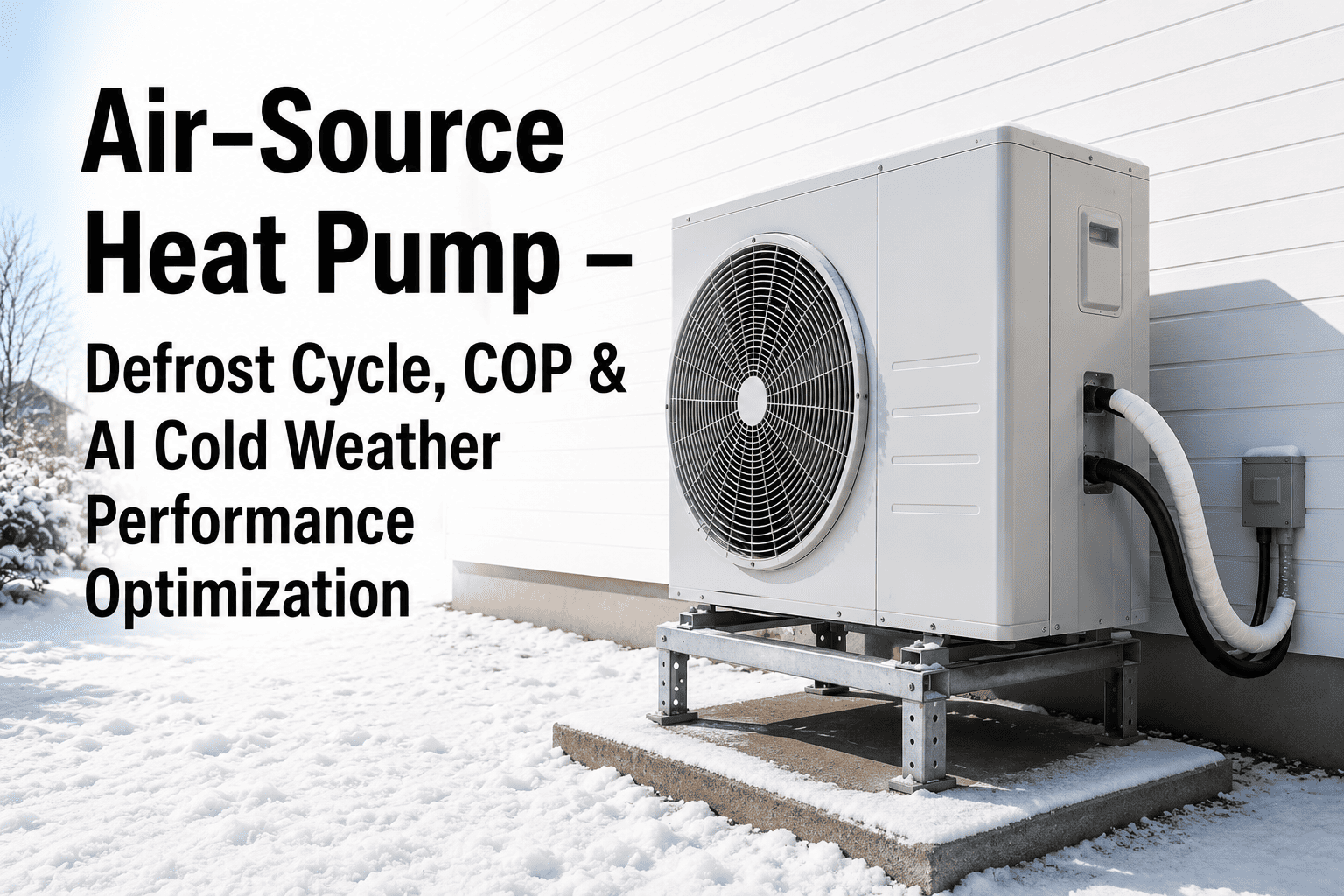
The defrost system is unique to heat pumps and has no analogue in gas furnace service. During heating mode, the outdoor coil absorbs heat from ambient air, and moisture in the air freezes onto the coil surface. When ice accumulation reduces airflow and heat transfer, the system initiates a defrost cycle — reversing to cooling mode temporarily to melt the ice. This cycle must be precisely calibrated: too frequent wastes energy and reduces comfort; too infrequent risks ice damage to the coil and compressor.
Defrost sensors and thermostats must be calibrated annually. Check that defrost drain paths are clear, verify cycle timing against manufacturer specifications, and monitor defrost frequency via IoT data. Outdoor coil cleaning is more critical than with cooling-only systems because any airflow restriction directly reduces heating capacity in the season when it matters most.
Smart Controls, IoT & Firmware
Modern heat pumps are connected devices with embedded sensors, WiFi/BLE connectivity, cloud data platforms, and integration with smart thermostats and building management systems. Maintenance now includes a digital layer: firmware updates, connectivity health checks, sensor calibration, fault log analysis, and IoT platform configuration. Smart heat pumps with IoT-enabled monitoring and predictive maintenance capabilities gained significant traction in 2025, improving operational efficiency and lifecycle performance across the industry.
AI-optimized systems automatically adjust settings based on weather forecasts, energy prices, and occupancy — but this intelligence depends on accurate sensor inputs and reliable connectivity. Temperature sensors (indoor, outdoor, discharge, suction, defrost) that drift even 2-3°F can cause significant efficiency loss and comfort complaints. Explore IoT CMMS integration
Indoor Air Handler & Distribution System
Heat pumps deliver air at lower supply temperatures than furnaces (typically 90-110°F vs 130-160°F for gas), which means ductwork that was "adequate" for a furnace may be undersized for a heat pump. Restricted airflow that was masked by furnace over-capacity becomes a comfort failure and efficiency problem with right-sized heat pump systems. Duct leaks that wasted 10-15% of furnace output become intolerable when heat pump delivery margins are tighter.
Indoor coil maintenance is critical — heat pump coils work in both directions (evaporator in cooling, condenser in heating), doubling fouling exposure. ECM and variable-speed blower motors require different diagnostic approaches than legacy PSC motors. Supplemental electric heat strips must be tested annually as backup for extreme cold conditions.
IoT-Driven Predictive Maintenance for Heat Pump Fleets
Shift from scheduled visits to condition-based service — catching degradation before failure using real-time operating data.
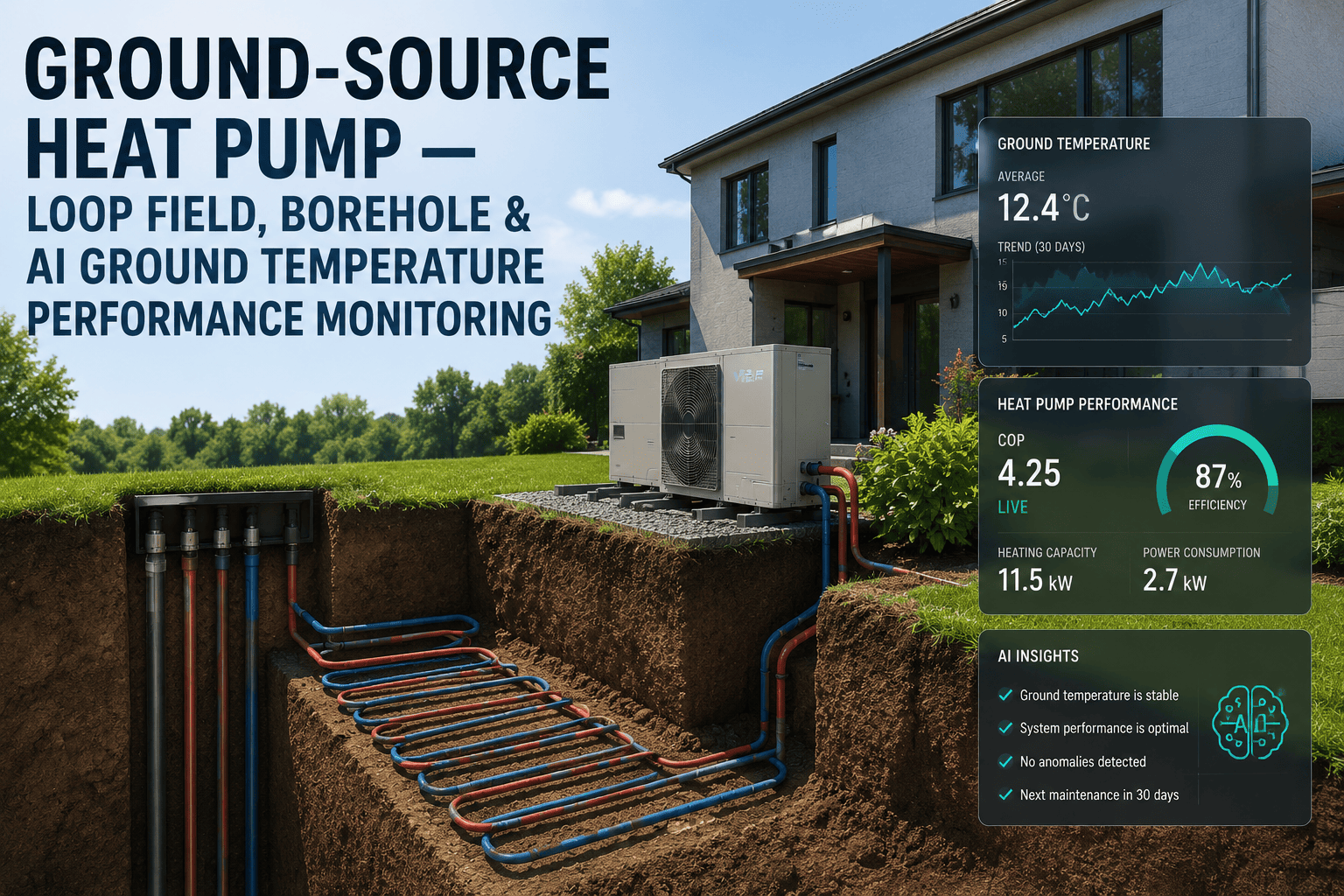
COP Degradation Tracking
Continuous monitoring of actual Coefficient of Performance reveals efficiency losses from fouling, refrigerant loss, or compressor wear weeks before they become noticeable — saving energy costs every operating hour.
Defrost Cycle Analytics
AI identifies units that defrost too often (energy waste), too rarely (ice damage risk), or ineffectively (sensor drift). Optimized defrost saves 5-15% of winter energy. See defrost analytics
Compressor Health Prediction
Current signature analysis, vibration trending, and discharge temperature monitoring predict bearing wear and valve degradation 8-14 weeks before failure. Planned service costs 60-70% less than emergency replacement.
Refrigerant Leak Detection
Real-time superheat, subcooling, and pressure ratio monitoring catches slow leaks that periodic visits miss — critical for R-290 systems where leaks are both a performance and safety concern.
Energy Cost Anomaly Alerts
Correlate operating data with utility rates to flag units whose energy consumption spikes above normal bands — often the first customer-facing sign of a developing maintenance issue.
Automated Work Order Generation
When IoT detects any anomaly — COP drop, defrost issue, current spike, connectivity loss — CMMS automatically generates a prioritized work order with specific diagnostic context, matched to qualified technicians. See auto-dispatch in action
Bridging the Skills Gap — From Gas Furnace Expertise to Heat Pump Mastery
The Challenge
The installed heat pump base is growing at 10%+ annually. HVACR student enrollment jumped 30% in 2025 — but new graduates take years to reach field proficiency. Meanwhile, your existing technicians have decades of gas furnace experience and limited heat pump training. Every misdiagnosed service call costs customer trust, warranty exposure, and callback time.
How CMMS Bridges the Gap
Complete Heat Pump Fleet Management
Fleet Performance Dashboards
Monitor COP trends, fault frequency, energy consumption, and service history across your entire heat pump portfolio — residential, commercial, and industrial. Identify underperforming units before customers complain. Compare performance across brands, installation ages, and climate zones. Drill from fleet view to individual asset in one click.
IoT Sensor Integration
Connect directly to heat pump IoT platforms, BMS systems, and smart thermostats. Real-time operating data feeds into asset records — when anomalies are detected, work orders generate automatically.
Refrigerant Management
Track refrigerant type, charge amounts, recovery records, and leak history per unit. Generate compliance reports for EPA Section 608 and low-GWP refrigerant handling requirements. See compliance tools
Warranty Tracking
Heat pump warranties require documented maintenance. CMMS automatically logs every PM visit, checklist completion, and parts replacement — protecting warranty coverage and reducing disputed claims.
Seasonal PM Automation
Auto-generate spring pre-cooling and autumn pre-heating service schedules across your entire fleet. Assign technicians by skill match and geography. Track completion rates and flag overdue units. Weather-adaptive scheduling shifts priorities based on actual conditions — if an early freeze hits, cold-climate pre-heating PMs get priority automatically.
Every Heat Pump Type and Configuration — Fully Supported
Frequently Asked Questions — Heat Pump Maintenance in the Electrification Era
How does heat pump maintenance frequency compare to gas furnaces?
Heat pumps need roughly twice the maintenance attention because they operate 12 months per year in both heating and cooling modes. Best practice is professional bi-annual service — once before cooling season (spring) and once before heating season (autumn) — plus quarterly filter changes and basic inspections. Cold-climate units may need a third winter-readiness check. IoT-monitored systems can supplement or shift to condition-based maintenance where service triggers come from real-time performance data rather than calendar schedules alone. See automated PM scheduling
What are the most common preventable heat pump failures?
The most frequently preventable failures include slow refrigerant leaks causing efficiency loss and eventual compressor damage, defrost system malfunctions leading to ice buildup and outdoor coil damage, dirty filters and coils reducing COP and triggering pressure faults, compressor bearing wear from oil starvation, reversing valve failure from corrosion or solenoid issues, and sensor drift causing incorrect operating parameters. Regular preventive maintenance catches these 6–14 weeks before system failure — saving 60–70% compared to emergency repair costs.
What changes with low-GWP refrigerant handling?
R-290 (propane) is an A3 flammable refrigerant requiring no open flames during service, approved electronic leak detectors, proper ventilation, and reduced charge limits. R-32 is A2L (mildly flammable) with slightly less stringent requirements but still requiring flammability-rated tools. R-744 (CO₂) operates at much higher pressures (up to 130+ bar) demanding high-pressure-rated gauges, hoses, and recovery equipment. Technicians need manufacturer-specific training and certification for each refrigerant type. CMMS tracks these certifications and routes service calls accordingly. Track refrigerant certifications
How do cold-climate heat pumps require different maintenance?
Cold-climate units operating to -22°F (-30°C) face additional stresses: defrost cycles run more frequently (potentially every 30–40 minutes at extreme temperatures), compressor oil management is critical under sustained high-load operation, outdoor unit drainage must handle increased defrost water volume without freezing at the base, auxiliary heat staging must be verified and lockout temperatures correctly set, and outdoor coil condition is more critical because any airflow restriction directly reduces heating capacity when demand is highest. Pre-winter service is mandatory, not optional.
Can IoT monitoring replace scheduled maintenance visits?
IoT monitoring supplements rather than replaces physical maintenance — but it dramatically improves how visits are prioritized and targeted. Continuous data identifies which units actually need service (condition-based) rather than servicing all units on a calendar. This reduces unnecessary visits while catching developing issues that scheduled visits would miss between service intervals. The combination of IoT monitoring with right-timed physical service is the optimal maintenance strategy for heat pump fleets.
How do we manage the workforce transition from furnace to heat pump expertise?
A structured approach works best: manufacturer-specific heat pump training for existing staff, certification tracking in CMMS, digital checklists that guide technicians through unfamiliar procedures, skill-based routing so heat pump calls go to qualified techs, and photo documentation to build institutional knowledge. New HVACR graduates arrive with more heat pump training — pair them with experienced field technicians for knowledge transfer in both directions. Performance analytics identify which techs need targeted upskilling on specific equipment. See workforce management
The Electrification Era Demands a New Maintenance Playbook
With the global heat pump market surging past $87 billion and installations accelerating worldwide, maintenance organizations that master heat pump service will capture the growth. Those that don't will face callbacks, warranty disputes, and customer churn.