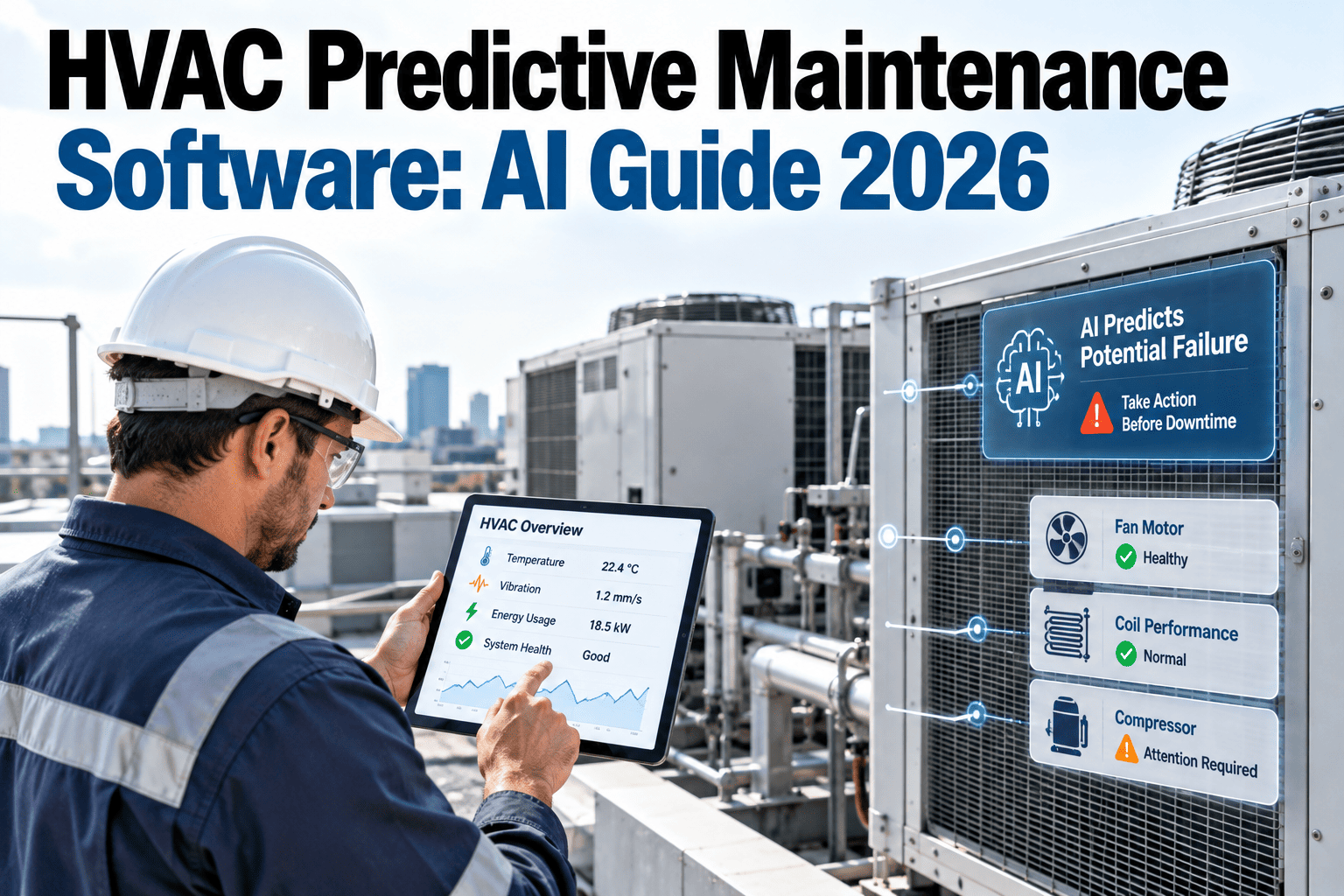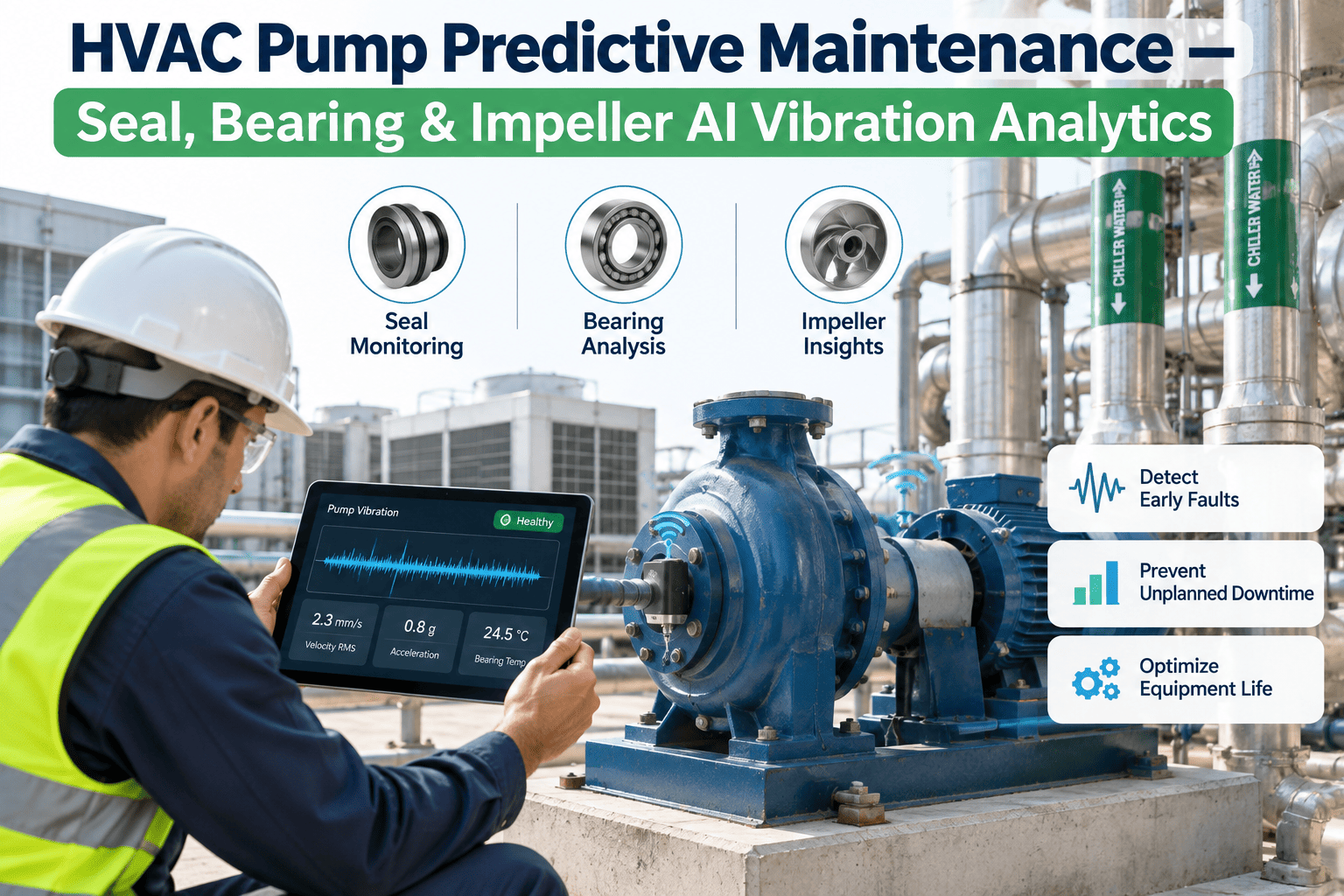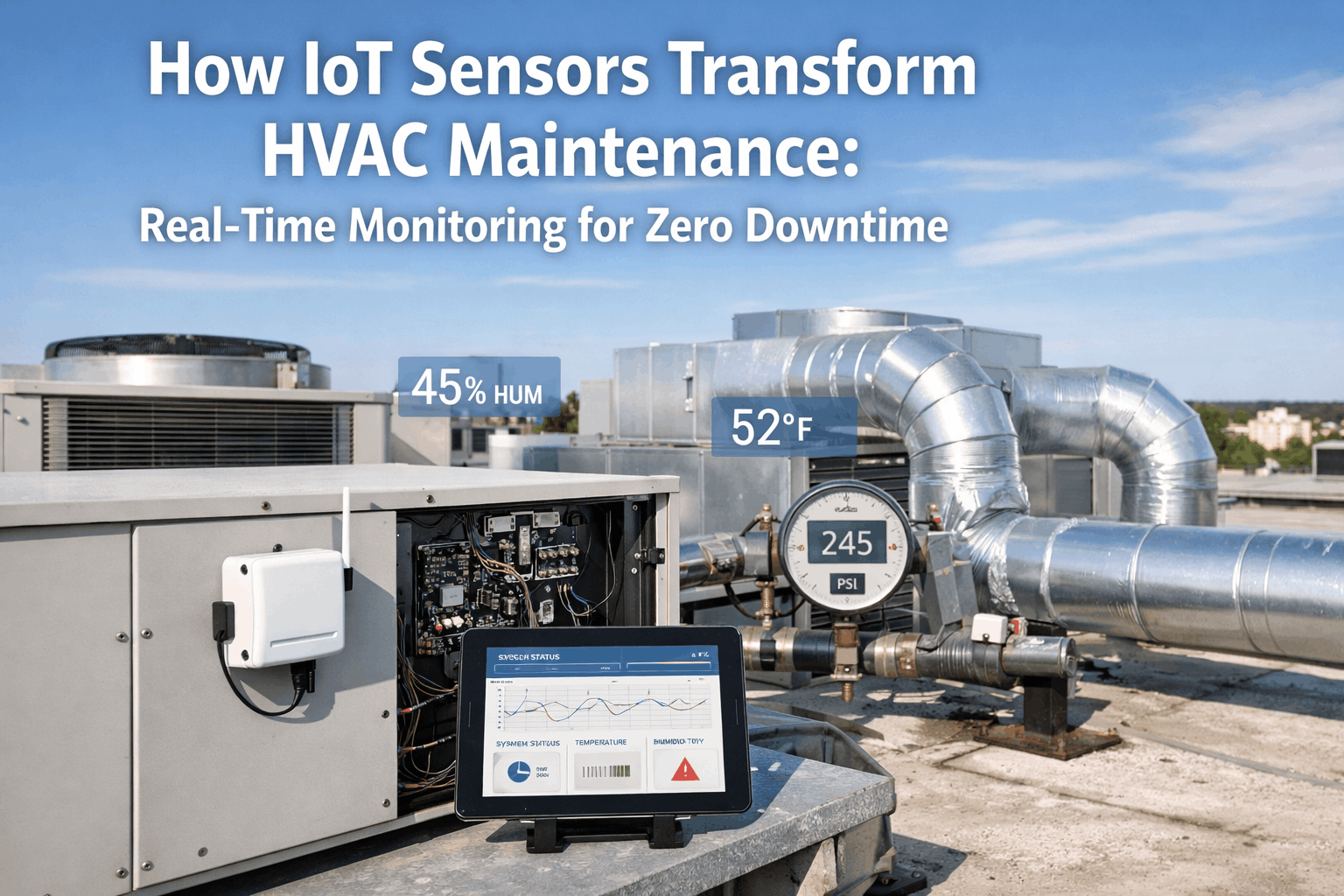
Americans spend $14 billion annually on HVAC services and repairs — and a staggering portion goes toward emergency fixes that proper planning would have prevented. Running equipment to failure costs 3–10× more than proactive maintenance programs. Emergency repairs cost 50–100% more than standard service calls. Yet 52% of industrial facilities still use run-to-failure approaches, and only 51% of all maintenance activities are preventive. The question isn't whether to maintain your HVAC systems — it's which strategy delivers the best cost-per-outcome for each equipment type, building criticality level, and operational context. iFactory's CMMS platform supports reactive, preventive, and predictive maintenance workflows in a single system — so you can apply the right strategy to every unit and transition from reactive to predictive at your own pace. Book a free consultation to see how the platform optimizes your entire HVAC maintenance strategy.
Predictive vs Preventive vs Reactive HVAC Maintenance
Which Strategy Wins?
Predictive maintenance costs 62% less than reactive over equipment lifetime. ASHRAE reports it extends HVAC equipment life by 5–10 years. Siemens estimates 25–40% lower overall maintenance costs. The U.S. DOE projects 10–20% energy savings. But the smartest HVAC operations don't pick one strategy — they match strategy to equipment based on replacement cost, failure consequence, monitoring feasibility, and customer criticality. This is the definitive guide to choosing, implementing, and optimizing your HVAC maintenance strategy.
Predictive vs. Reactive
With Predictive Maintenance
On HVAC Services & Repairs
Reactive · Preventive · Predictive — What Each Strategy Actually Means
Every HVAC operation sits somewhere on a maintenance spectrum. Understanding what each strategy delivers — and what it costs — is the foundation for building an optimized, tiered approach.
The Numbers Don't Lie — Strategy Performance Side by Side
Abstract comparisons are easy to dismiss. Concrete numbers across every measurable metric make the case clear. Here's how each strategy performs based on industry research and real-world data.
| Performance Metric | Reactive | Preventive | Predictive |
|---|---|---|---|
| Repair Cost Per Incident | $600–$3,000+ (emergency) | $200–$500 (planned) | $150–$400 (early intervention) |
| Equipment Lifespan | 10 years average | 15–20 years | 20–25+ years (5–10 yr extension) |
| Lifetime Cost vs. Reactive | Baseline (highest) | 8–12% savings | 62% savings |
| Overall Maintenance Costs | Baseline (highest) | Moderate reduction | 25–40% lower (Siemens) |
| System Breakdowns | Frequent, unpredictable | Reduced | 70–75% reduction |
| Unplanned Downtime | Maximum exposure | Moderate reduction | Up to 50% reduction |
| Energy Efficiency | Up to 40% excess consumption | Optimized at service intervals | 10–20% savings (U.S. DOE) |
| MTBF Improvement | Baseline | Moderate | 90–175 hr increase |
| Profitability Impact | Baseline | Moderate improvement | 210–265% increase vs. reactive |
| Failure Prediction Window | Zero (after the fact) | Between-visit gaps | Weeks in advance |
| Technician Efficiency | Trial-and-error diagnostics | Scheduled but broad | Data-driven, right part in truck |
How AI-Powered HVAC Maintenance Intelligence Works
iFactory's platform supports all three maintenance strategies in a single CMMS — calendar-based PM scheduling, sensor-driven predictive alerts, and emergency work order management — so you can apply the right strategy to each equipment tier.
The Right Strategy for Every HVAC Unit — Tiered by Equipment & Criticality
A $3,500 split system in a storage room doesn't need the same maintenance strategy as a $180,000 chiller serving a hospital surgical wing. Here's how to assign strategy by equipment tier. Book a demo to see how CMMS assigns strategy tiers automatically.
| Equipment Type | Replacement Cost | Failure Consequence | Recommended Strategy | Monitoring Level |
|---|---|---|---|---|
| Central Chillers | $50K–$500K+ | Entire building offline | Predictive | IoT sensors + CMMS alerts |
| Rooftop Units (RTUs) — Critical | $5K–$25K | Occupied zone discomfort | Predictive | IoT sensors + CMMS alerts |
| Boilers & Heating Plant | $20K–$200K | Safety risk + no heat | Predictive | IoT sensors + CMMS alerts |
| Air Handling Units (AHUs) | $10K–$50K | IAQ issues, zone discomfort | Preventive+ | Calendar PM + basic monitoring |
| RTUs — Standard Occupancy | $5K–$15K | Moderate tenant complaints | Preventive+ | Calendar PM + runtime tracking |
| Split Systems — Occupied | $3K–$8K | Single-zone discomfort | Preventive | Calendar PM only |
| VAV Boxes & Terminal Units | $500–$2K | Localized comfort issue | Preventive | Calendar PM only |
| Unit Heaters — Storage/Utility | $500–$1,500 | Minimal operational impact | Reactive | Run to failure |
| Exhaust Fans — Non-Critical | $300–$1,000 | Code issue if prolonged | Reactive | Run to failure |
Your HVAC Maintenance Transformation — Phase by Phase
The biggest mistake is treating every unit the same. The second biggest is trying to go fully predictive overnight. This phased approach delivers ROI from Day 1 while building toward fleet-wide intelligence. Book a demo to scope your transition plan.
Digitize Work Orders & Establish Equipment Registry
Replace paper and spreadsheet work orders with digital CMMS. Catalogue every HVAC unit across your portfolio with make, model, install date, warranty status, and service history. This baseline data is essential for strategy assignment and enables immediate tracking of reactive vs. planned maintenance ratios.
Classify Every Unit by Strategy Tier
Assign each HVAC unit to a maintenance strategy tier based on replacement cost, failure consequence, monitoring feasibility, and building criticality. Tier 1 (predictive) for chillers, critical RTUs, and boilers. Tier 2 (preventive+) for AHUs and standard RTUs. Tier 3 (preventive) for split systems and VAVs. Tier 4 (reactive) for low-cost, low-consequence units where replacement costs less than PM over lifecycle.
Automate Calendar-Based PM for Tier 2–3 Equipment
Deploy automated PM scheduling for all Tier 2 and Tier 3 units — filter changes, coil cleaning, refrigerant checks, belt inspections, electrical connection tightening, and calibration tasks. Auto-generated work orders, assigned to qualified technicians, with mobile checklists that ensure nothing gets skipped. This alone delivers 8–12% cost savings over reactive approaches.
Deploy IoT Sensors on 30–40 Tier 1 Critical Units
Install vibration, power, pressure, airflow, and temperature sensors on your most critical and expensive equipment. Connect to iFactory's AI engine for continuous monitoring and failure prediction. Prove predictive value by documenting prevented failures, avoided emergency calls, and measured ROI. This pilot data justifies fleet-wide expansion.
Expand Predictive to All Tier 1 & Optimize PM Frequencies
Expand sensor deployment to all Tier 1 equipment. Refine PM frequencies for Tier 2 based on actual condition data (why service quarterly if data shows the unit runs clean for 6 months?). Formalize Tier 4 reactive policy with documented run-to-failure approval. Optimize technician routing — predictive alerts enable geographic batching of proactive visits.
Portfolio-Wide Intelligence & Premium Service Contracts
The platform now delivers 41–55% emergency call reduction, 84–91% first-time fix rate, and measurably better outcomes across every metric. Use this data to justify premium service contracts with customers, optimize CapEx planning based on actual equipment condition, and continuously improve AI prediction accuracy through feedback from every resolved work order.
The HVAC Maintenance Market — By the Numbers
See how iFactory CMMS supports reactive, preventive, and predictive workflows in a single system.
Single-Strategy HVAC Maintenance vs. iFactory Tiered Intelligence
Purpose-Built for HVAC Maintenance Operations
All Three Strategies in One Platform
iFactory is the only CMMS that natively supports reactive work order management, calendar-based PM scheduling, and sensor-driven predictive alerts in a single unified system. No juggling separate tools for emergency calls, scheduled PMs, and IoT monitoring. One platform, every strategy tier, every equipment type.
HVAC-Native AI Models
Our predictive models are purpose-trained on HVAC degradation patterns — compressor bearing wear signatures, condenser coil fouling curves, refrigerant leak progression rates, belt tension decay profiles, and electrical connection resistance trending. Not generic industrial ML retrofitted for HVAC.
Equipment Tier Auto-Assignment
When you add equipment to the registry, the platform automatically recommends a maintenance strategy tier based on replacement cost, failure consequence data, building criticality classification, and monitoring feasibility. You approve or override — the system does the analysis.
Mobile-First Technician Experience
Technicians receive work orders on their mobile devices with full equipment history, predicted failure details, required parts, and step-by-step guided checklists. They arrive knowing exactly what's wrong, with the right part on the truck, and complete digital documentation that creates audit-ready records automatically.
Portfolio-Wide Analytics Dashboard
Track reactive vs. planned maintenance ratios, emergency call reduction over time, first-time fix rates, equipment lifecycle costs, and energy efficiency trends across your entire HVAC portfolio. Use this data to optimize strategy tiers, justify premium service contracts, and plan CapEx replacement cycles based on actual condition data.
Transition at Your Own Pace
Start with digital work orders in Week 1. Add PM scheduling in Month 1. Deploy IoT sensors on critical equipment in Month 3–6. Expand predictive coverage as ROI is proven. iFactory grows with your operation — there's no requirement to go fully predictive on Day 1. Every step delivers measurable value.
HVAC Equipment Managed by Maintenance Intelligence
iFactory manages the full spectrum of HVAC equipment — from central plant chillers to individual zone terminals. Book a demo to see which equipment categories deliver the fastest ROI.
HVAC Maintenance Strategy — Common Questions
Which HVAC maintenance strategy is actually the best?
There is no single "best" strategy — the smartest operations match strategy to equipment. Predictive maintenance wins for high-value, high-consequence equipment (chillers, critical RTUs, boilers) where failure costs vastly exceed monitoring costs. Preventive maintenance wins for moderate-value equipment where scheduled servicing prevents most failures cost-effectively. Reactive (run-to-failure) is actually the right choice for low-cost units where replacement is cheaper than ongoing PM over the equipment lifecycle. iFactory lets you apply all three strategies in a single platform. Book a demo to see the tiered approach in action.
How much does predictive HVAC maintenance actually save?
The data is compelling and well-documented. Predictive maintenance costs 62% less than reactive over equipment lifetime. Siemens estimates 25–40% lower overall maintenance costs. ASHRAE reports 5–10 year equipment life extension. The U.S. DOE projects 10–20% energy savings. Research shows 70–75% reduction in system breakdowns and profitability increases of 210–265% compared to reactive approaches. The key is that savings come not from cheaper repairs, but from fewer failures, longer-lasting parts, and planned (not emergency) labor.
What IoT sensors are needed for predictive HVAC maintenance?
Modern predictive HVAC monitoring typically deploys five sensor types: vibration sensors (detecting bearing wear in compressors and fan motors), power consumption meters (identifying units working harder than they should), refrigerant pressure monitors (catching pinhole leaks as they happen), airflow and static pressure sensors (knowing exactly when filters reach their limit), and temperature differential monitors (tracking heat exchange efficiency in real time). These sensors feed data continuously to AI algorithms that learn each unit's normal operating signature and detect deviations weeks before failure.
Is preventive maintenance still worth it if we go predictive?
Yes — but its role changes. Calendar-based PM remains the right strategy for Tier 2 and Tier 3 equipment where IoT sensor deployment isn't cost-justified. Even for Tier 1 predictive equipment, some maintenance tasks (filter changes, coil cleaning, refrigerant level verification) remain calendar-scheduled. The key insight is that predictive data allows you to optimize PM frequencies — if data shows a unit runs clean for 6 months, why service it quarterly? iFactory tracks both PM compliance and predictive alerts in a single system.
When is reactive maintenance actually the right choice?
Reactive (run-to-failure) is the correct strategy when the replacement cost of the equipment is lower than the cumulative cost of preventive maintenance over its lifecycle. A $1,200 unit heater in a storage room that costs $500/year in PM is cheaper to simply replace when it fails. The same logic applies to non-critical exhaust fans, small unit heaters, and other low-consequence equipment. The mistake is applying reactive to everything — including the $180,000 chiller that deserves continuous monitoring.
How long does it take to transition from reactive to predictive?
iFactory recommends a phased 6–12 month transition. Digital work orders deploy in Week 1. PM scheduling automates in Month 1. IoT sensors deploy on 30–40 critical Tier 1 units in Months 3–6 as a pilot. Full fleet expansion happens in Months 6–12 based on pilot ROI data. By Month 12, most operations achieve 41–55% emergency call reduction, 84–91% first-time fix rate, and premium contract pricing justified by measurably better outcomes. Book a demo to scope your transition timeline.
What ROI can we expect from tiered HVAC maintenance?
Operations implementing tiered maintenance strategies typically achieve: 62% lower lifetime costs on Tier 1 equipment vs. reactive, 8–12% savings on Tier 2–3 equipment through optimized PM, 41–55% reduction in emergency dispatches, 84–91% first-time fix rate, 5–10 year equipment life extension on critical assets, and 10–20% energy savings from continuous efficiency monitoring. The predictive maintenance market is growing at 29.5% CAGR — early adopters gain competitive advantage in service contracts and customer retention. Visit our Support Center for case studies.
The Right HVAC Strategy for Every Unit. One Platform to Manage Them All.
Stop over-maintaining cheap equipment. Stop under-maintaining critical assets. Stop reacting to every failure as an emergency. iFactory's tiered maintenance platform lets you assign the right strategy — reactive, preventive, or predictive — to every HVAC unit in your portfolio, and manage all three in a single system. See it working in a free 30-minute demo tailored to your operation.